Alice Queen (AQX:AU) has announced Placement and Bonus Loyalty Options
Download the PDF here.
This post appeared first on investingnews.com

Alice Queen (AQX:AU) has announced Placement and Bonus Loyalty Options
Download the PDF here.
American Uranium (AMU:AU) has announced Drilling Commences at Lo Herma ISR Uranium Project
Download the PDF here.

Chris Vermeulen, chief market strategist at TheTechnicalTraders.com, weighs in on gold’s record-setting price run and what could be next for the metal.
Vermeulen also discusses the outlook for silver, platinum and palladium.
Securities Disclosure: I, Charlotte McLeod, hold no direct investment interest in any company mentioned in this article.

Astron (ASX:ATR) said on Monday (October 20) that Australia has granted major project status to the Donald rare earths and mineral sands project, its joint venture with Energy Fuels (TSX:EFR,NYSEAMERICAN:UUUU).
Donald is located approximately 300 kilometers northwest of Melbourne in Minyip, Victoria, Australia, and is regarded as “one of the world’s most significant rare earths resources outside China.”
It currently holds a total mineral resource of 1.81 billion tonnes grading 4.6 percent.
“This (designation) will streamline our engagement with federal agencies and accelerate our pathway to development,” commented Astron Managing Director Tiger Brown in a press release. “The Donald project will create significant employment opportunities and deliver long-term economic benefits to the Wimmera region of Victoria as well as strengthen Australia’s sovereign capability in critical minerals and advanced technology supply chains.”
Donald has a planned mine life of 58 years, with expected annual output of 9,000 tonnes of rare earths in Phase 1.
In a separate announcement, Energy Fuels said Export Finance Australia (EFA) has expressed support for the project and will provide AU$80 million via senior debt financing. The total amount needed to develop Donald is AU$520 million.
Energy Fuels CEO Mark Chalmers said that the support is a “key additional step” in the project’s financing pathway and a “strong vote of confidence” in the project’s capacity and potential.
“(It) reflects our on-going progress toward delivering one of Australia’s most important rare earth projects, including valuable NdPr, and exceptional concentrations of Dy, Tb and other ‘heavy’ rare earth oxides, which upon project development will be processed and separated into high-purity products at our White Mesa Mill in Utah,” he added.
According to a work plan for Donald published in June, the progression towards a final investment decision for the project is expected within 2025. Commencement of production at Donald is scheduled for 2027.
Rare earths have been heavily spotlighted this month after China dramatically expanded its control over rare earth exports, a sector crucial to global tech and defense industries.
The October 10 announcement from the Ministry of Commerce adds five new elements — holmium, erbium, thulium, europium and ytterbium — along with key refining technologies to its export control list.
The new rules carry a global reach: any foreign company producing rare earth materials or magnets using Chinese-origin equipment or technology must now obtain an export license from Beijing.
Crucially, applications for defense-related or advanced semiconductor projects, including cutting-edge AI with military potential, will face intense scrutiny and are likely to be denied.
Securities Disclosure: I, Gabrielle de la Cruz, hold no direct investment interest in any company mentioned in this article.

IAMGOLD (TSX:IMG,NYSE:IAG) is tightening its grip on one of Québec’s most promising gold districts with back-to-back acquisitions aimed at consolidating control over a vast stretch of the Chibougamau region.
In the span of two days, the mid-tier gold producer announced definitive agreements to acquire Northern Superior Resources (TSXV:SUP,OTCQB:NSUPF) and Mines d’Or Orbec (TSXV:BLUE).
Collectively the deals will expand its landholding to more than 100,000 hectares.
The larger of the two transactions will see IAMGOLD acquire all issued and outstanding shares of Northern Superior Resources in a cash-and-stock deal valued at approximately C$267.4 million.
The acquisition will fold Northern Superior’s Philibert, Chevrier and Croteau projects into IAMGOLD’s existing Nelligan and Monster Lake holdings, creating what the company has branded the Nelligan Mining Complex.
Together, these properties host estimated measured and indicated mineral resources of 3.75 million ounces of gold and inferred resources of 8.65 million ounces, positioning the district as Canada’s fourth largest pre-production gold camp.
“The addition of Northern Superior’s assets to IAMGOLD’s Nelligan Mining Complex in the Chibougamau region of Québec is extremely exciting for IAMGOLD, the region and our mutual shareholders,” said Renaud Adams, IAMGOLD’s president and CEO. “This acquisition aligns with our strategy to become a leading Canadian-focused mid-tier gold producer, bolstering our organic pipeline in Québec where we have maintained a longstanding presence.”
A day earlier, IAMGOLD struck a deal to acquire Mines d’Or Orbec, a junior explorer advancing the Muus project southwest of Chibougamau. IAMGOLD already holds a 6.7 percent equity interest in Orbec and expects to issue roughly 369,000 new shares to complete the purchase. The transaction will bring Muus under IAMGOLD’s control.
Located at the intersection of the Fancamp and Guercheville deformation zones, which are two major mineralized corridors that also host IAMGOLD’s Monster Lake and Nelligan deposits, the 24,979 hectare Muus project has been viewed as a geological link between the company’s existing holdings.
“Over the past several years, we have advanced the Muus project into one of Québec’s most promising gold exploration plays,” Orbec CEO John Tait said.
With the addition of both Northern Superior and Orbec, IAMGOLD is set to more than double its regional footprint.
The company has signaled its intent to pursue a “hub-and-spoke” development strategy in the region, envisioning a central processing facility fed by multiple ore sources within a 17 kilometre radius.
Pending regulatory and shareholder approvals, both acquisitions are expected to close in late 2025 or early 2026.
The price of gold has surged to unprecedented levels this month, reaching an all-time high of around US$4,370 per ounce amid heightened safe-haven demand and expectations of US interest-rate cuts.
However, on Tuesday (October 21), a correction began to set in as the yellow metal pulled back sharply. It fell as much as 5.5 percent to about US$4,115 as profit taking kicked in and the US dollar strengthened.
Securities Disclosure: I, Giann Liguid, hold no direct investment interest in any company mentioned in this article.

Copper prices have seen considerable gains in 2025, reaching a record high on the COMEX of US$5.68 per pound on July 8. Rising prices and supportive policy have elevated many copper stocks.
Copper tariffs were the story surrounding the market to start the third quarter, not only pushing the price for the base metal to record highs but also causing significant volatility.
Ultimately, refined products were exempt from tariffs until 2027 and 2028, a decision that sent the price spiraling and left it to trade on supply and demand fundamentals.
Supply concerns led the price higher following the closure of Freeport-McMoRan’s (NYSE:FCX) Grasberg copper mine late in the quarter, as the market reacted to the loss of production in a strained market.
The mine was closed early in September following an accident that killed seven workers. At the end of the month, Freeport reported revised guidance, stating that significant production is unlikely in 2026, with pre-incident operational levels potentially back online by 2027.
Against that backdrop, how have TSX-listed copper companies performed? Learn about the top five best-performing copper stocks in 2025 by year-to-date gains below.
Data for this article was retrieved on October 15, 2025, using TradingView’s stock screener, and only companies with market capitalizations greater than C$50 million are included.
Year-to-date gain: 602.37 percent
Market cap: C$2.42 billion
Share price: C$11.87
Trilogy Metals is a polymetallic exploration and development company working to advance its Upper Kobuk mineral projects in Northern Alaska, US, which it owns in a 50/50 joint venture with South32 (ASX:S32,OTC Pink:SHTLF).
Its most advanced asset is the Arctic copper, zinc, lead, gold and silver project, which is in the feasibility stage. In an updated feasibility study from February 2023, the company reported annual payable production volumes of 148.68 million pounds of copper, 172.6 million pounds of zinc, 25.75 million pounds of lead, 32,538 ounces of gold and 2.77 million ounces of silver.
After tax, the study pegged the net present value at US$1.11 billion, with an internal rate of return of 22.8 percent and a payback period of 3.1 years.
Trilogy’s other key asset is the Bornite copper-cobalt project located 25 kilometers southwest of its Arctic project. The site hosts widespread mineralization and has seen historic exploration dating back to the 1950s.
A preliminary economic assessment for Bornite, dated January 15, established an after-tax net present value of US$393.9 million, with an internal rate of return of 20 percent and a payback period of 4.4 years. The updated mineral resource included with the report estimates an inferred resource of 6.53 billion pounds of copper with an average grade of 1.42 percent from 208.9 million metric tons of ore.
Trilogy’s Upper Kobuk assets are among the mineral projects dependent on the approval and construction of the Ambler Access Road, a planned 211 kilometer industrial road through Alaska.
Trilogy’s share price saw substantial gains in October after the US Senate repealed a land management plan that prevented the construction of the access road due to environmental concerns, and the current US administration supported its construction.
Additionally, Trilogy reported on October 6 that it had entered into a binding letter of intent that would see the US Department of Defense (DoD) invest US$17.8 million in Trilogy in exchange for 8.22 million Trilogy shares, or 10 percent of the company. The DoD would also hold warrants for an additional 7.5 percent, exercisable only after the road is constructed.
The funds are earmarked for exploration and development of the Upper Kobuk projects.
According to the release, the DoD will work to facilitate financing for the road’s construction and collaborate with Trilogy to expedite mine permitting using the FAST-41 process.
Shares in Trilogy reached a year-to-date high of C$14.70 on October 14.
Year-to-date gain: 393.75 percent
Market cap: C$404.32 million
Share price: C$0.395
St. Augustine Gold and Copper is a development company focused on its King-king copper-gold project in the Philippines’ Davao de Oro province. The project consists of 184 mining claims.
On May 30, St. Augustine entered into an agreement with the National Development Corporation (Nadecor) to acquire a 100 percent interest in Nadecor’s wholly owned subsidiary Kingking Milling, which holds the development rights to King-king.
Under the terms of the deal, Nadecor will receive C$9.02 million convertible into 185 million shares.
The project’s exploration and development permits are held by Kingking Mining, which remains a 40/40/20 joint venture between St. Augustine, Nadecor and Queensberry Mining and Development. The release also includes details of new ore sales and royalty agreements between Kingking Milling and Kingking Mining.
On June 18, St. Augustine completed a debt conversion with Queensberry Mining, converting C$1.67 million in debt owed to Queensbury into 25.31 million common shares in St. Augustine at C$0.066 per share.
A follow-up announcement from Queensberry Mining stated that the shares represent a 2.5 percent stake in St. Augustine, increasing Queensberry’s holdings in the company to 52 percent of the total issued and outstanding shares.
As for Q3, on July 31, the company released an updated feasibility study for the project. Based on a copper price of US$4.30 per pound and a gold price of US$2,150 per ounce, the project’s economics included an after-tax net present value of US$4.18 billion, with an internal rate of return of 34.2 percent and a payback period of 1.9 years.
The report estimates a 31 year mine life with average annual production of 96,411 metric tons of payable copper and 185,828 ounces of gold. The six phase development plan will see higher average production in the first five years at 129,000 metric tons of copper and 330,000 ounces of gold.
St. Augustine’s latest update came on October 8, when it reported that it is advancing the Kingking project to a definitive feasibility study based on the feasibility results. It expects the study to be completed by the fourth quarter of 2026.
Shares in St. Augustine Gold and Copper reached a year-to-date high of C$0.58 on July 28.
Year-to-date gain: 337.65 percent
Market cap: C$2.15 billion
Share price: C$3.72
Northern Dynasty Minerals is an exploration and development company focused on the Pebble project, a copper-molybdenum-gold-silver project located 200 miles southwest of Anchorage in the Bristol Bay region of Alaska.
Pebble, which the company says is “one of the greatest stores of mineral wealth ever discovered,” hosts a measured and indicated copper resource of 6.5 billion metric tons and an inferred copper resource of 4.5 billion metric tons.
The Pebble property’s measured and indicated resources for molybdenum, gold and silver total 1.26 million metric tons, 53.82 million ounces and 249.3 million ounces, respectively.
The project stalled in 2020 during the permitting phase following a US Environmental Protection Agency (EPA) veto that suggested the proposed mine would damage the Bristol Bay watershed.
Early in 2024, the Supreme Court declined to hear the matter on procedural grounds, sending it back to the federal district court and the federal circuit of appeals before the Supreme Court would hear it.
Northern Dynasty spent the rest of 2024 advancing its case in Alaska’s state court. In March of that year, it announced the filing of actions to vacate the EPA’s veto.
In 2025, shares of Northern Dynasty began to surge following Trump’s March 20 executive order that called for expedited approvals for domestic mineral production and included copper as a strategically important mineral.
Since Trump became president, Northern Dynasty has been attempting to work with the EPA to vacate the veto on the project. On February 18, the company agreed to grant the EPA a requested 90 day extension to allow for review by the new leadership in the agency, and granted a further 30 day extension on May 14 and a 20 day extension on June 12.
Although the company had hoped to reach a settlement in early July, it ultimately was forced to file a motion for summary judgment on July 17 to have the EPA veto removed.
The most recent update came on October 8, when Northern Dynasty reported that it had filed a brief with the court and presented arguments as to why the veto should be removed. The company’s president and CEO stated in the release that he believes the company has a strong case.
Shares in Northern Dynasty reached a year-to-date high of C$3.89 on October 14.
Year-to-date gain: 251.63 percent
Market cap: C$1.17 billion
Share price: C$6.47
Imperial Metals is a mine development and production company with operations in British Columbia, Canada.
It holds a 30 percent interest in the Red Chris mine in BC’s Golden Triangle, with the remainder owned by Newmont (TSX:NGT,NYSE:NEM,ASX:NEM). Imperial also fully owns the Mount Polley copper-gold mine, which reopened in June 2022, and the Huckleberry copper mine, which has been under care and maintenance since 2016.
Provincial approvals of a 4 meter raise of the embankment at its Mount Polley tailings storage facility has been the subject of an ongoing lawsuit this year after the Xatśūll First Nation applied for an interim injunction challenging them in April.
A June 30 update reported that the BC Supreme Court reserved judgment on the case following a four-day hearing.
The Supreme Court ultimately dismissed the Xatśūll First Nation’s application for the injunction and judicial review of the approvals on August 6.
Imperials’ most recent update on the case came on September 3, when the Xatśūll First Nation filed a notice of appeal to overturn the dismissal of the judicial reviews. However, they did not appeal the injunction decision, meaning the company can complete the raise and continue mining at Mount Polley.
In an exploration update at the mine on August 12, Imperial reported the discovery of copper mineralization in a 400 meter blind target step-out hole located 4 kilometers from the mill site. The hole showed significant visual native copper, with one intercept returning 0.7 percent copper over 7 meters and another returning a grade of 0.25 percent copper over 20 meters.
The company stated that the results were significant because the hole is 390 meters away from the nearest known mineralized zone and the hole is unique in the prominence of native copper, raising the possibility of other similar-style mineralization in the area.
On August 29, Imperial announced that it received approval for a permit amendment allowing the company to expand Mount Polley’s operations and extend its operating life, including pit development and expansion of storage areas within the existing mine site footprint.
Shares in Imperial reached a year-to-date high of C$6.75 on October 2.
Year-to-date gain: 244 percent
Market cap: C$524.54 billion
Share price: C$1.29
Meridian Mining is an exploration and development company developing its flagship Cabaçal copper-gold project in Mato Grosso, Brazil. The project license covers a 50 square kilometer area and hosts an 11 kilometer volcanogenic massive sulfide corridor containing gold, copper and silver.
A prefeasibility study released March 10 demonstrates a post-tax base case net present value of US$984 million with an internal rate of return of 61 percent and a payback period of 17 months. The project has a predicted mine life of 10.6 years with total life of mine production of 169,647 metric tons of copper.
The included mineral resource estimate for Cabaçal shows a measured and indicated resource of 204,470 metric tons of contained copper from 51.43 million metric tons of ore with an average grade of 0.4 percent. It also hosts significant gold and silver resources.
Additionally, Meridian reported on May 8 that it has hired Ausenco Brazil as the lead engineer to complete a definitive feasibility study for Cabaçal, targeting the first half of 2026 for completion.
Meridian has been carrying out an extensive exploration program at the site as part of the study.
The company announced results from the final phase of the drill program on October 7, when it reported significant copper grades. It highlighted an interval of 1.4 percent copper equivalent over 27.5 meters, including an intersection of 6.1 percent copper equivalent over 6.4 meters.
The company stated that the drill program yielded robust grades of gold, copper and silver mineralization, which will contribute to the mineral resource and reserve upgrades included in the definitive feasibility study. It also reported exploration success at the Cigarra target.
Shares in Meridian reached a year-to-date high of C$1.30 on October 16.
Many experts have a positive long-term outlook for the red metal based on supply concerns and its growing role in the energy transition. Copper’s price has climbed to new all time highs in 2025, bringing many stocks with it.
Investors who are interested in copper should make sure to perform their due diligence, as the volatility and unpredictability of markets and economies at the moment means that nothing is guaranteed.
Copper is used in many industries, from construction to electronics to medical equipment. In fact, in 2022, 32 percent of copper globally was used in equipment manufacturing and 26 percent in building construction.
Two other growing sectors for copper are the burgeoning electric vehicle and green energy industries. Electric vehicles require a significant amount of the red metal per vehicle.
Check out our article on the topic for more copper uses.
Investors can invest in copper in a variety of ways. Holding physical copper is possible, but plenty of storage would be required to hold any significant value of the metal.
For investors looking to invest in the metal without physically holding it, there are a few options. Copper stocks such as those on the TSX, TSXV and ASX are worth looking at. Additionally, there are copper exchange-traded funds and the copper options and futures markets on the London Metal Exchange.
Copper exchange-traded funds (ETFs) focused on mining companies can be a good way to diversify an investment portfolio, and they can be a more stable option compared to individual copper miners or explorers. There are multiple options available on the market, and they can usually be purchased in the same way one could purchase stocks through a broker or trading platform.
In May 2022, Horizons launched Canada’s first copper equities ETF, the Horizons Copper Producers Index ETF (TSX:COPP). This Canadian copper ETF is focused solely on pure-play and diversified copper-mining companies.
There are multiple ETFs available on the US ARCA exchange as well. The Global X Copper Miners ETF (ARCA:COPX) tracks the Solactive Global Copper Miners Index, which includes copper miners, as well as copper explorers and developers. The other option is the United States Copper Index Fund (ARCA:CPER), which gives investors exposure to copper futures contracts by tracking the SummerHaven Copper Index Total Return.
The copper price is tracked in two ways: COMEX copper and London Metal Exchange (LME) copper. The COMEX and LME are both options and futures metal exchanges, with the former being headquartered in New York and the latter in London. COMEX copper is priced by the pound, while LME copper is priced per metric ton.
Once copper is mined, the ore goes through multiple steps to reach a market-ready state. First, the ore is ground to roughly separate the rock from the copper, as copper typically only makes up 1 percent of the mined rock.
The resultant copper is then slurried with water and chemical reagents, after which air is used to float the copper to the top of the mixture. After the copper is removed from this, it is typically at 24 to 40 percent purity.
Copper is mined throughout the world, with significant production found on every continent besides Antarctica. Chile was the top producer in 2024, putting out 5.3 million metric tons of the metal. Other major top copper producers are the Democratic Republic of Congo with 3.3 million metric tons, Peru with 2.6 million metric tons and China with 1.8 million metric tons. Indonesia and the US were tied in 2024 at 1.1 million metric tons of copper.
Article by Dean Belder; FAQs by Lauren Kelly.
Securities Disclosure: I, Dean Belder, own shares of Northern Dynasty Minerals.
Spartan Metals (TSXV:W) is a US-focused explorer advancing its high-grade tungsten and rubidium Eagle Project in Nevada. The company is unlocking critical minerals essential to US defense, technology, and energy independence, supporting onshoring goals under the Defense Production Act.
The Eagle tungsten-silver-rubidium project in eastern Nevada spans 4,936 acres across three historic mine areas — Tungstonia, Rees, and Antelope. With historic production of 8,379 units of WO₃ grading 0.6–0.9 percent, Eagle ranks among the highest-grade past-producing tungsten systems in the US, enriched with rubidium and other defense-critical metals including antimony, bismuth, indium, and arsenic. Spartan is advancing an exploration program to validate and expand this potential using modern geochemistry, geophysics, and tailings drilling.
With multiple mineralized zones, district-scale potential and strong alignment with US strategic metal initiatives, the Eagle project is the cornerstone of Spartan’s growth strategy.
This Spartan Metals profile is part of a paid investor education campaign.*
Click here to connect with Spartan Metals (TSXV:W) to receive an Investor Presentation
Spartan Metals offers a compelling investment opportunity in the US critical minerals sector through its high-grade, 100-percent-owned Eagle tungsten-silver-rubidium project in Nevada. With strong grades, multi-metal exposure, and alignment with US defense and supply chain initiatives, Spartan provides investors with exceptional leverage to the growing demand for domestically sourced strategic critical minerals.
Spartan Metals (TSXV:W) is a US-focused critical minerals explorer advancing its high-grade tungsten and rubidium asset in Nevada. Through its flagship Eagle project, the company is unlocking American critical mineral resources essential to defense, technology and energy independence. Spartan’s projects are strategically positioned to contribute directly to the United States’ onshoring objectives under the Defense Production Act and related supply-chain initiatives.
Eagle project site in Nevada
The Eagle tungsten-silver-rubidium project in eastern Nevada anchors a district-scale opportunity covering 4,936 acres across three historic mine areas – Tungstonia, Rees and Antelope. With historic production of 8,379 units of tungsten trioxide (WO₃) at grades between 0.6 to 0.9 percent, the project hosts one of the highest-grade past-producing tungsten systems in the United States, enriched by rubidium and other US defense-critical metals such as antimony, bismuth, indium and arsenic. Spartan is now executing an exploration program to validate and expand this potential through modern geochemistry, geophysics and tailings drilling.
Led by a team with deep Nevada exploration experience and direct US Department of Defense (DOD) engagement, Spartan is pursuing a partnership-driven approach to project advancement. It combines early-stage exploration and reprocessing opportunities and joint ventures to accelerate development. With a strong insider ownership base (42 percent) and exposure to multiple critical metals, Spartan Metals is an emerging US leader in strategic mineral discovery and domestic supply security.
Spartan’s 100-percent-owned Eagle project in White Pine County, Nevada, is a nationally significant critical mineral asset which includes the past-producing Tungstonia, Rees and Antelope mines. The Eagle project historically produced over 8,000 units of WO₃ between 1915 and 1956, and now presents a rare opportunity to redefine one of the highest-grade tungsten and rubidium systems in the United States.
With multiple mineralized zones, district-scale potential and strong alignment with US strategic metal initiatives, the Eagle project is the cornerstone of Spartan’s growth strategy.
Brett Marsh is a professional geologist with more than 25 years of experience in mineral exploration and project development across North America and internationally. Marsh previously led major exploration initiatives for both junior and mid-tier mining companies and has extensive experience in tungsten and critical mineral systems. He oversees Spartan’s technical and strategic direction and is the company’s “qualified person under NI 43-101..
Rebecca Ball brings over a decade of exploration and operational experience across base, precious and critical minerals. She specializes in greenfield targeting and geological modeling, most recently leading the McDermitt Lithium stratigraphy initiative that expanded its resource significantly. Her expertise is instrumental in defining the next phase of resource development at the Eagle project.
Currently VP Exploration at Ridgeline Minerals, Michael Harp has over 15 years of exploration experience in Nevada, including the discovery of over 5 million ounces of gold in the Carlin Trend’s Railroad-Pinion district. His extensive field and project management experience supports Spartan’s Nevada-focused exploration programs.
Terese Gieselman is a seasoned financial executive with over 30 years of experience in public company management and corporate finance in the mining sector. She brings expertise in governance, financial reporting, and capital markets strategy that will support Spartan’s growth.
Not for distribution to United States newswire services or for dissemination in the United States
Fortune Bay Corp. (TSXV: FOR,OTC:FTBYF) (FWB: 5QN) (OTCQB: FTBYF) (‘Fortune Bay’ or the ‘Company’) is pleased to announce that it has entered into an agreement with Cormark Securities Inc., as lead underwriter and sole bookrunner, on behalf of a syndicate of underwriters (collectively, the ‘Underwriters’) in connection with a ‘bought deal’ private placement of: (i) 1,438,900 common shares of the Company that will qualify as ‘flow-through shares’ (within the meaning of subsection 66(15) of the Income Tax Act (Canada)) (the ‘FT Shares’), at a price of $1.39 per FT Share, for gross proceeds of $2,000,071, and (ii) 6,000,000 common shares of the Company (the ‘HD Shares’), at a price of $1.00 per HD Share, for gross proceeds of $6,000,000, for aggregate gross proceeds to the Company of $8,000,071 (the ‘Offering’).
In addition, the Company has granted the Underwriters an option (the ‘Option‘) to increase the size of the Offering by up to an additional $2,000,000 in HD Shares, on the same terms and conditions, by giving written notice of the exercise of the Option, or a part thereof, to the Company at any time up to 48 hours prior to the Closing Date (as defined below).
The Company will use an amount equal to the gross proceeds received by the Company from the sale of the FT Shares, pursuant to the provisions in the Income Tax Act (Canada), to incur eligible ‘Canadian exploration expenses’ that qualify as ‘flow-through mining expenditures’ as both terms are defined in the Income Tax Act (Canada) (the ‘Qualifying Expenditures‘) related to the Company’s Goldfields Gold Project in Saskatchewan. The Company intends to use the net proceeds of the offered HD Shares for the commencement of permitting activities and studies toward a pre-feasibility study for the Goldfields Gold Project, commencement of exploration at Poma Rosa subject to reaching community exploration agreements and receiving government permits, and working capital and general corporate purposes. Qualifying Expenditures in an aggregate amount not less than the gross proceeds raised from the issue of the FT Shares will be incurred (or deemed to be incurred) by the Company on or before December 31, 2026, and will be renounced by the Company to the initial purchasers of the FT Shares with an effective date no later than December 31, 2025.
The Offering is expected to close on or about October 30, 2025 (the ‘Closing Date‘), or such other date as the Company and the Underwriters may agree and is subject to certain conditions including, but not limited to, the receipt of all necessary regulatory and other approvals, including the conditional approval of the TSX Venture Exchange.
It is anticipated that Numus Capital Corp., a registered Exempt Market Dealer, will act as a finder for the Offering.
Subject to compliance with applicable regulatory requirements and in accordance with National Instrument 45- 106 – Prospectus Exemptions (‘NI 45-106‘), the FT Shares and HD Shares will be offered for sale to purchasers resident in all provinces of Canada, other than Quebec, and/or other qualifying jurisdictions pursuant to the listed issuer financing exemption under Part 5A of NI 45-106, as amended by Coordinated Blanket Order 45-935 – Exemptions from Certain Conditions of the Listed Issuer Financing Exemption (the ‘Listed Issuer Financing Exemption‘). The FT Shares and HD Shares issued to Canadian resident subscribers under the Listed Issuer Financing Exemption will not be subject to a hold period pursuant to applicable Canadian securities laws.
There is an offering document related to the Offering and the use by the Company of the Listed Issuer Financing Exemption that can be accessed under the Company’s profile on SEDAR+ at www.sedarplus.ca and on the Company’s website at www.fortunebaycorp.com. Prospective investors should read this offering document before making an investment decision.
This news release does not constitute an offer to sell or a solicitation of an offer to buy any securities in the United States. The securities have not been and will not be registered under the United States Securities Act of 1933, as amended (the ‘U.S. Securities Act‘) or any state securities laws and may not be offered or sold within the United States or to U.S. Persons unless registered under the U.S. Securities Act and applicable state securities laws or an exemption from such registration is available.
About Fortune Bay
Fortune Bay is a gold exploration and development company advancing high-potential assets in Canada and Mexico. With a strategy focused on discovery, resource growth and early-stage development, the Company targets value creation at the steepest part of the Value Creation Curve – prior to the capital-intensive build phase. Its portfolio includes the development-ready Goldfields Project in Saskatchewan, the resource-expansion Poma Rosa Project in Mexico, and an optioned uranium portfolio in the Athabasca Basin providing non-dilutive capital and upside exposure. Backed by a technically proven team and tight capital structure, Fortune Bay is positioned for multiple near-term catalysts. For more information, visit www.fortunebaycorp.com or contact info@fortunebaycorp.com.
On behalf of Fortune Bay Corp.
‘Dale Verran’
Chief Executive Officer 902-334-1919
Cautionary Statement Regarding Forward-Looking Information
This news release contains certain ‘forward-looking information’ within the meaning of Canadian securities legislation, including, but not limited to, statements regarding the Company’s plans with respect to the Company’s projects and the timing related thereto, the merits of the Company’s projects, the Company’s objectives, plans and strategies, the Offering, the listing of the FT Shares and the HD Shares on the TSX Venture Exchange, the tax treatment of the FT Shares, the use of proceeds of the Offering, the potential exercise of the Option by the Underwriters, and other matters. Although the Company believes that such statements are reasonable, it can give no assurance that such expectations will prove to be correct. Forward-looking statements are statements that are not historical facts; they are generally, but not always, identified by the words ‘expects,’ ‘plans,’ ‘anticipates,’ ‘believes,’ ‘intends,’ ‘estimates,’ ‘projects,’ ‘aims,’ ‘potential,’ ‘goal,’ ‘objective,’, ‘strategy’, ‘prospective,’ and similar expressions, or that events or conditions ‘will,’ ‘would,’ ‘may,’ ‘can,’ ‘could’ or ‘should’ occur, or are those statements, which, by their nature, refer to future events. The Company cautions that forward-looking statements are based on the beliefs, estimates and opinions of the Company’s management on the date the statements are made and they involve a number of risks and uncertainties. Consequently, there can be no assurances that such statements will prove to be accurate and actual results and future events could differ materially from those anticipated in such statements. Except to the extent required by applicable securities laws and the policies of the TSX Venture Exchange, the Company undertakes no obligation to update these forward-looking statements if management’s beliefs, estimates or opinions, or other factors, should change. Factors that could cause future results to differ materially from those anticipated in these forward- looking statements include the risk of accidents and other risks associated with mineral exploration operations, the risk that the Company will encounter unanticipated geological factors, or the possibility that the Company may not be able to secure permitting and other agency or governmental clearances, necessary to carry out the Company’s exploration plans, risks of political uncertainties and regulatory or legal changes in the jurisdictions where the Company carries on its business that might interfere with the Company’s business and prospects. The reader is urged to refer to the Company’s reports, publicly available through the Canadian Securities Administrators’ System for Electronic Data Analysis and Retrieval + (SEDAR+) at www.sedarplus.ca for a more complete discussion of such risk factors and their potential effects.
Neither the TSX Venture Exchange nor its Regulation Services Provider (as that term is defined in the policies of the TSX Venture Exchange) accepts responsibility for the adequacy or accuracy of this release.
SOURCE Fortune Bay Corp.
View original content: http://www.newswire.ca/en/releases/archive/October2025/20/c4700.html
News Provided by Canada Newswire via QuoteMedia
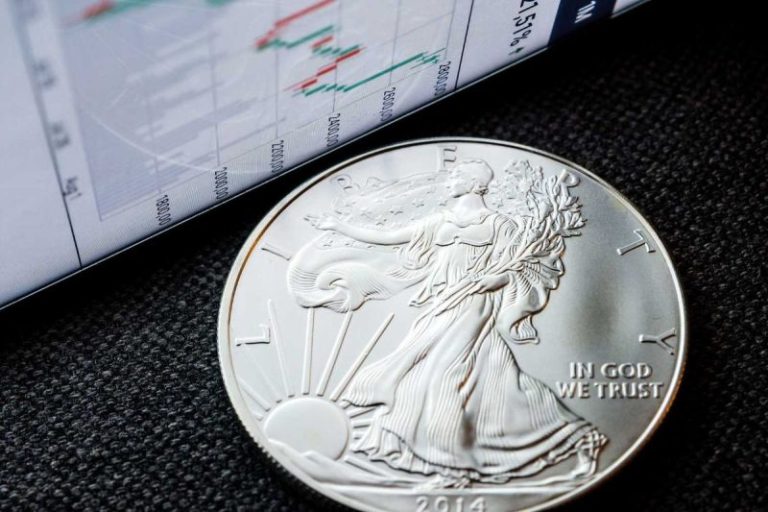
The silver price surged during Q3, climbing to near-record highs before surpassing them at the start of Q4.
The white metal was influenced by many of the same factors as gold, including interest rate cuts from the US Federal Reserve, global economic uncertainty and safe-haven buying from investors.
Silver is also facing a supply deficit that has provided further tailwinds on the back of industrial demand.
Silver started the third quarter near year-to-date highs at US$36.03 per ounce.
Momentum took it to what was then a 2025 high of US$39.30 by July 22, but following that gain, the price began to retreat toward the US$36 level, ending at US$36.72 on July 31.
Silver regained some ground at the start of August, but was largely rangebound, trading around the US$38 mark. However, after Fed Chair Jerome Powell’s remarks at the Jackson Hole Economic Policy Symposium at the end of the month, the precious metal began a steady rise toward the end of the quarter.
Silver price, July 1 to October 17, 2025.
Chart via Trading Economics.
Silver broke the US$40 mark on September 1, then continued on up, rising to US$42.69 on September 15.
By September 30, it was closing in on all-time highs, reaching US$46.66. As the fourth quarter began, the price continued to climb, reaching an all-time high of US$54.47 on October 17.
Silver’s price gains over the past few years have been driven partially by increasing demand from industrial segments, where the metal has various applications, including in the production of photovoltaics (PVs).
An April report from the Silver Institute notes that industrial demand for silver increased for the fourth year in a row in 2024, rising 4 percent and setting a record of 680.5 million ounces.
The rise was attributed mainly to the green economy, which includes PVs, and artificial intelligence (AI).
Although the institute isn’t forecasting gains for 2025, it’s still predicting that silver industrial demand will remain near record levels, at 677.4 million ounces, with 195.7 million ounces coming from PVs.
A key reason for the high demand for solar energy is that production costs have made it more competitive than coal, gas or wind. This has increased the attractiveness of PVs for use in data centers.
Speaking at the Metals Investor Forum in Vancouver, BC, at the end of September, Peter Krauth, editor of Silver Stock Investor and author of ‘The Great Silver Bull,’ discussed the staggering rise in demand for solar energy and noted that during the 2010s, deployment exceeded expectations by 200 percent.
“Data center power demand over the next four years is expected to grow 21 percent, and AI is expected to see a 33 percent annual growth in electricity demand over the next four years,” he said.
He explained that tech companies favor solar over wind three-to-one, and nuclear at a rate of five-to-one. That’s because solar is not only cheaper than other energy forms, but also faster to permit, as long as space is available.
While PVs remain a strong demand driver for silver, it’s not the only one.
“Silver, after oil, is the commodity with the single most applications worldwide,’ said Krauth.
‘So when you say silver is indispensable, it’s irreplaceable in some ways. It has so many applications that if silver were to disappear tomorrow, it would wreak havoc on a lot of industry,’ he continued.
“Silver’s main growth driver is industrial usage. Especially when it comes to electric cars and batteries, silver is nearly irreplaceable,” she said. However, she also noted risks coming from the US and its ability to influence the global market, suggesting that with high uncertainty, commodities can be unpredictable. Additionally, Khandoshko pointed to market saturation in the tech sector, suggesting tailwinds may not be what they once were.
“The technology market is on the verge of a breakthrough, but at the same time, it is close to saturation, and the potential for a sharp increase in demand is limited. As a result, I would say that it is not worth expecting rapid leaps from silver, although for now the metal is in plus,” she said.
Although industrial components have grown in the past few years, they aren’t the only factor that drove silver during the third quarter. Investment demand also helped push it toward record highs.
In a July report, the Silver Institute states that as of June 30, 1.13 billion ounces of silver were held in exchange-traded products, 7 percent below the all-time high set in February 2021. It attributes the rise in silver investment to geopolitical tensions and economic uncertainty as more investors turn to silver as a safe-haven asset.
Additionally, many investors view silver as undervalued compared to gold.
Since 2000, the gold-silver ratio has averaged 69:1; however, in 2025, it has been significantly higher, reaching 104:1 in May. Although it has fallen, the ratio remains above the 25 year average, reaching 79:1 in October.
“If you take US$3,700 (per ounce) gold today, and you use the average going back to 2000, that puts you already at US$54. So we’re beyond that all-time high of silver potentially pretty easily just based on that ratio,” Krauth said.
He added that he expects the gold price to continue climbing, pushing up the potential for an even higher silver price if it approaches that 69:1 average.
As suggested by the Silver Institute, Krauth and Khandoshko, silver is supported not only by supply and demand fundamentals, but also by tailwinds on the investment side.
In his talk, Krauth suggested that US$95 isn’t out of the question for silver over the next 12 to 24 months. He also said that silver producers are likely to benefit from the metal’s increasing price.
“When money starts to flow into the silver stocks, the impact can be really massive,’ he said.
‘If you take the bottom essentially of the last year and a half since late February 2024, silver’s up 105 percent and silver stocks, juniors are up 183 percent so far,’ added Krauth. Although it is difficult to predict how long a cycle will last, Krauth looked to the past and suggested there could still be significant runway ahead.
Securities Disclosure: I, Dean Belder, hold no direct investment interest in any company mentioned in this article.