Author

admin

Browsing

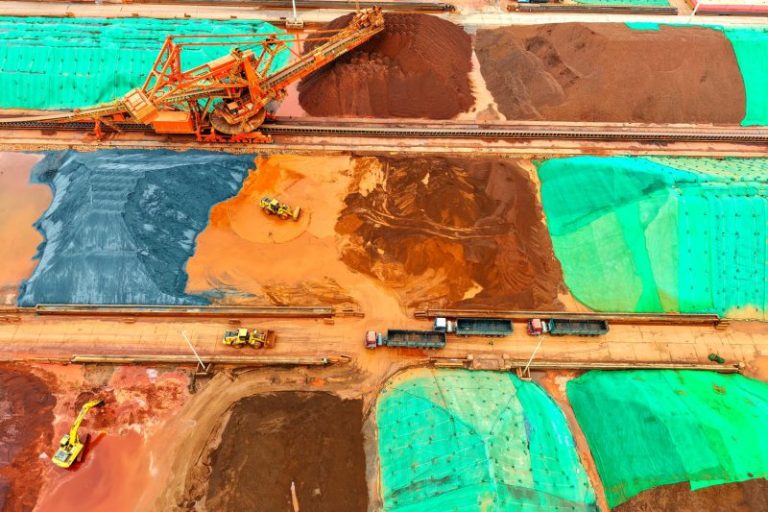
HONG KONG — China outlined new curbs on exports of rare earths and related technologies on Thursday, extending controls over use of the elements critical for many high-tech and military products ahead of a meeting in about three weeks between President Donald Trump and Chinese leader Xi Jinping.

The regulations announced by the Ministry of Commerce require foreign companies to get special approval to export items that contain even small traces of rare earths elements sourced from China. These critical minerals are needed in a broad range of products, from jet engines, radar systems and electric vehicles to consumer electronics including laptops and phones.

Beijing will also impose permitting requirements on exports of technologies related to rare earths mining, smelting, recycling and magnet-making, it said.

China accounts for nearly 70% of the world’s rare earths mining. It also controls roughly 90% of global rare earths processing. Access to such materials is a key point of contention in trade talks between Washington and Beijing.

As Trump has raised tariffs on imports of many products from China, Beijing has doubled down on controls on the strategically vital minerals, raising concerns over potential shortages for manufacturers in the U.S. and elsewhere.

It was not immediately clear how China plans to enforce the new policies overseas.

During a cabinet meeting Thursday, Trump said he had yet to be briefed on the new rules but suggested that the U.S. could stop buying Chinese goods. “We import from China massive amounts,” Trump said. “Maybe we’ll have to stop doing that.”

Neha Mukherjee, a rare earths analyst at Benchmark Mineral Intelligence, called the new export controls “a strategic move by China that mirror some of Washington’s new chip export rules.

“Most rare earth magnet manufacturers in the U.S., Japan and elsewhere remain heavily dependent on rare earths from China, so these restrictions will force some difficult decisions — especially for any company involved in military uses of rare earths because most of those export licenses are expected to be denied, he said.

“The message is clear: if the U.S. and its allies want supply chain security, they must build independent value chains from mine to magnet,” Mukherjee said.

The new restrictions are to “better safeguard national security” and to stop uses in “sensitive fields such as the military” that stem from rare earths processed or sourced from China or from its related technologies, the Commerce Ministry said.

It said some unnamed “overseas bodies and individuals” had transferred rare earths elements and technologies from China abroad for military or other sensitive uses which caused “significant damage” to its national security.

The new curbs were announced just weeks ahead of an expected meeting between Trump and Chinese President Xi Jinping on the sidelines of the Asia-Pacific Economic Cooperation forum in South Korea, that begins at the end of this month.

“Rare earths will continue to be a key part of negotiations for Washington and Beijing,” George Chen, a partner at The Asia Group, said in an emailed comment. “Both sides want more stability but there will be still a lot of noises before the two leaders, President Trump and Xi, can make a final deal next year when they meet. Those noises are all negotiation tactics.”

These new restrictions will likely prompt additional government and private investments in developing a mine-to-magnet supply chain outside of China. Mukherjee said that $520 million of investments in the American rare earths industry were announced just in the second quarter with most of that coming from the government.

And there is some progress already being made with American magnet maker Noveon announcing an agreement with Lynas Rare Earths this week to secure a supply of rare earths outside of China from Lynas’ mine in Australia, and MP Materials preparing to begin producing magnets later this year at its new plant in Texas that uses rare earths from the only U.S. mine that it operates in California.

In July, the U.S. Defense Department agreed to invest $400 million in shares of the Las Vegas company, establish a floor for the price of key elements, and ensure that all of the magnets made at a new plant in the first 10 years are purchased.

An MP Materials spokesperson said China’s action “reinforces the need for forward-leaning U.S. industrial policy. Building resilient supply chains is a matter of economic and national security.”

Wade Senti, president of the U.S. permanent magnet company AML, said it’s time to innovate.

“The game of chess that China is playing underscores the importance of developing innovation that changes the game and puts the United States in leading position,” Senti said.

Nazak Nikakhtar, a former Commerce Department undersecretary, said the new restrictions are “a significant development and escalation” by extending controls to related technology and equipment and to sectors like chipmakers. “This should be a wake-up call to the U.S. government that we need to invest in and appropriate more to domestic capabilities. Both are critical to rebuild America’s rare earths industrial base,” she said.

In April, Chinese authorities imposed export curbs on seven rare earth elements shortly after Trump unveiled his steep tariffs on many trading partners including China.

While supplies remain uncertain, China approved some permits for rare earth exports in June and said it was speeding up its approval processes.

This post appeared first on NBC NEWS

NOT FOR DISTRIBUTION TO U.S. NEWS WIRE SERVICES OR FOR DISSMINATION IN THE UNITED STATES.

Saga Metals Corp. (‘SAGA’ or the ‘Company’) (TSXV: SAGA,OTC:SAGMF) (OTCQB: SAGMF) (FSE: 20H), a North American exploration company focused on critical minerals, is pleased to announce the closing of its previously announced non-brokered private placement pursuant to which the Company raised aggregate gross proceeds of C$2,988,024.64 (the ‘ Offering ‘).

Pursuant to the Offering, the Company issued (i) 7,100,088 flow-through common share units of the Company (the ‘ FT Units ‘) at C$0.28 per FT Unit for gross proceeds of C$1,988,024.64, and (ii) 4,000,000 hard dollar common share units of the Company (the ‘ HD Units ‘, and together with the FT Units, the ‘ Securities ‘) at C$0.25 per HD Unit for gross proceeds of C$1,000,000.

Financing Overview:

Each FT Unit consists of one flow-through common share as defined in subsection 66(15) of the Income Tax Act (Canada) (the ‘ Tax Act ‘), and one-half of one transferable common share purchase warrant (each whole warrant, a ‘ Warrant ‘). Each Warrant will entitle its holder to purchase one common share in the capital of the Company (a ‘ Warrant Share ‘) at a price of C$0.50 until October 10, 2027. The Warrant Shares underlying the FT Units will not qualify as ‘flow-through shares’ under the Tax Act.

Each HD Unit consists of one common share and one-half of one Warrant. Each whole Warrant will entitle its holder to purchase one Warrant Share at a price of C$0.50 until October 10, 2027.

Each of the Warrants will be subject to the right of the Company to accelerate the expiry date of the Warrants to a date that is 30 days following dissemination of a news release announcing such acceleration if, at any time, after October 10, 2025 (the ‘ Closing Date ‘), the closing price of the Company’s common shares equals or exceeds C$0.75 for a period of ten consecutive trading days on the TSX Venture Exchange (the ‘ Exchange ‘).

All securities issued in connection with the Offering are subject to a hold period of four months and one day following the Closing Date pursuant to applicable securities laws, expiring February 11, 2026.

The Company paid cash finder’s fees in the aggregate amount of $130,003 and issued an aggregate of 478,204 finder’s warrants in connection with the Offering. Each finder’s warrant entitles the holder thereof to purchase one common share of the Company at a price of $0.50 per share for a period of 24 months from the Closing Date.

The gross proceeds from the FT Units will be used by the Company for ‘Canadian exploration expenses’ that are ‘flow-through critical mineral mining expenditures’ (as such terms are defined in the Tax Act) on the Company’s Canadian mineral resource properties. The net proceeds of the HD Units will be used by the Company for administrative and general working capital, which may include investor relations activities.

The securities of SAGA have not been and will not be registered under the United States Securities Act of 1933, as amended (the ‘ U.S. Securities Act ‘), or any state securities laws, and may not be offered or sold, within the United States, unless exemptions from the registration requirements of the U.S. Securities Act and applicable state securities laws are available.

No securities regulatory authority has reviewed or approved of the contents of this news release. This news release does not constitute an offer to sell or a solicitation of an offer to buy any securities of SAGA in any jurisdiction in which such offer, solicitation or sale would be unlawful.

Marketing Services Agreement with Capitaliz.

The Company further reports that it has entered into a digital marketing services agreement effective as of October 13, 2025 (the ‘ Capitaliz Agreement ‘) with 1123963 B.C. Ltd. D.B.A. Capitaliz (‘ Capitaliz ‘). Pursuant to the Capitaliz Agreement, Capitaliz will, among other things, provide the Company with certain marketing services to expand investor awareness of the Company’s business and to communicate with the investment community (the ‘ Capitaliz Services ‘). The Capitaliz Services will be provided by Capitaliz over a three-month term. The Capitaliz Agreement may be terminated at any time by either party with 30 days’ notice.

Capitaliz is a content-driven digital marketing agency that connects public companies with social media influencers across all major social media platforms, leveraging a creator network that reaches over 100 million subscribers.

The Capitaliz Services will include, among other things: (i) multimedia content creation and syndication, including the production and distribution of editorial video content; (ii) targeted traffic generation through a combination of pay-per-click advertising, social media marketing, native advertising, search engine optimization, email campaigns, and retargeting strategies; and (iii) strategic social media amplification of campaign content across platforms such as Investorhub and YouTube; and (iv) expanded distribution through established relationships with financial media platforms. In consideration of the Capitaliz Services, and pursuant to the terms and conditions of the Capitaliz Agreement, the Company has agreed to pay Capitaliz a fee of C$200,000 (plus applicable taxes) over a three-month term, which will be paid using the Company’s available working capital.

The Capitaliz Services will be rendered primarily online through a variety of news and investment community communications channels. Jeff Leslie, the principal of Capitaliz – located at 704 – 595 Howe Street, Box 35, Vancouver, BC, V6C 2T5 – will be involved in conducting the Capitaliz Services. Capitaliz and Mr. Leslie do not have any interest, directly or indirectly, in the Company or its securities, or any right or intent to acquire such an interest. The terms and conditions of the Capitaliz Agreement remain subject to approval of the Exchange.

Online Marketing Agreement with i2i Marketing Group, LLC.

In addition, the Company reports that it entered into an online marketing agreement (the ‘ i2i Agreement ‘) with i2i Marketing Group, LLC (‘ i2i ‘). Pursuant to the i2i Agreement, i2i will, among other things, provide the Company with corporate marketing and investor awareness services, including, but not limited to, content creation management, author sourcing, project management and media distribution (the ‘ i2i Services ‘). The i2i Services will be provided by i2i pursuant to an initial US$250,000 budget, which will be paid using the Company’s available working capital, and may continue on a month-to-month basis thereafter until the i2i Agreement is terminated. The i2i Agreement may be terminated by either party upon 10 days’ advance written notice to the other party during the contract term.

The i2i Services will be rendered primarily online through a variety of news and investment community communications channels. Joe Grubb and Kailyn White, principals of i2i will be providing services on behalf of i2i, which has an office located at 1107 Key Plaza #222 Key West, FL 33040. i2i, Mr. Grubb, and Ms. White do not have any interest, directly or indirectly, in the Company or its securities, or any right or intent to acquire such an interest.

The terms and conditions of the i2i Agreement remain subject to approval of the Exchange.

About Saga Metals Corp.

Saga Metals Corp. is a North American mining company focused on the exploration and discovery of a diversified suite of critical minerals that support the global transition to green energy. The Radar Titanium Project comprises 24,175 hectares and entirely encloses the Dykes River intrusive complex, mapped at 160 km² on the surface near Cartwright, Labrador. Exploration to date, including a 2,200m drill program, has confirmed a large and mineralized layered mafic intrusion hosting vanadiferous titanomagnetite (VTM) with strong grades of titanium and vanadium.

The Double Mer Uranium Project, also in Labrador, covers 25,600 hectares featuring uranium radiometrics that highlight an 18km east-west trend, with a confirmed 14km section producing samples as high as 0.428% U 3 O 8 and uranium uranophane was identified in several areas of highest radiometric response (2024 Double Mer Technical Report).

Additionally, SAGA owns the Legacy Lithium Property in Quebec’s Eeyou Istchee James Bay region. This project, developed in partnership with Rio Tinto, has been expanded through the acquisition of the Amirault Lithium Project. Together, these properties cover 65,849 hectares and share significant geological continuity with other major players in the area, including Rio Tinto, Winsome Resources, Azimut Exploration, and Loyal Metals.

With a portfolio that spans key minerals crucial to the green energy transition, SAGA is strategically positioned to play an essential role in the clean energy future.

On Behalf of the Board of Directors

Mike Stier, Chief Executive Officer

For more information, contact:

Rob Guzman, Investor Relations
Saga Metals Corp.
Tel: +1 (844) 724-2638
Email: rob@sagametals.com
www.sagametals.com

Neither the TSX Venture Exchange nor its Regulation Service Provider (as that term is defined in the policies of the TSX Venture Exchange) accepts responsibility for the adequacy or accuracy of this release.

Cautionary Disclaimer

This news release contains forward-looking statements within the meaning of applicable securities laws that are not historical facts. Forward-looking statements are often identified by terms such as ‘will’, ‘may’, ‘should’, ‘anticipates’, ‘expects’, ‘believes’, and similar expressions or the negative of these words or other comparable terminology. All statements other than statements of historical fact, included in this release are forward-looking statements that involve risks and uncertainties. In particular, this news release contains forward-looking statements regarding discussions of future plans, estimates and forecasts and statements as to management’s expectations and intentions with respect to, among other things, the Offering, including the expected use of proceeds from the Offering, the receipt of the Capitaliz Services and the i2i Services, and the terms of the Capitaliz Agreement and the i2i Agreement. There can be no assurance that such statements will prove to be accurate and actual results and future events could differ materially from those anticipated in such statements. Important factors that could cause actual results to differ materially from the Company’s expectations include, but are not limited to, changes in the state of equity and debt markets, fluctuations in commodity prices, delays in obtaining required regulatory or governmental approvals, environmental risks, limitations on insurance coverage, inherent risks and uncertainties involved in the mineral exploration and development industry, particularly given the early-stage nature of the Company’s assets, and the risks detailed in the Company’s continuous disclosure filings with securities regulations from time to time, available under its SEDAR+ profile at www.sedarplus.ca. The reader is cautioned that assumptions used in the preparation of any forward-looking information may prove to be incorrect. Events or circumstances may cause actual results to differ materially from those predicted, as a result of numerous known and unknown risks, uncertainties, and other factors, many of which are beyond the control of the Company. The reader is cautioned not to place undue reliance on any forward-looking information. Such information, although considered reasonable by management at the time of preparation, may prove to be incorrect and actual results may differ materially from those anticipated. Forward-looking statements contained in this news release are expressly qualified by this cautionary statement. The forward-looking statements contained in this news release are made as of the date of this news release and the Company will update or revise publicly any of the included forward-looking statements only as expressly required by applicable law.

News Provided by GlobeNewswire via QuoteMedia

This post appeared first on investingnews.com

VVC Exploration Corporation, dba VVC Resources (‘VVC’ or the ‘Company’) (TSX-V: VVC; OTC: VVCVF) announces that Plateau Helium Corporation (‘PHC’), a wholly owned subsidiary of the Company, has completed the purchase of the Ithaca 1-17 well together with approximately five miles of associated pipeline located in Rush county, Kansas in a prolific helium, gas and oil area known as the Central Kansas Uplift (CKU). The acquisition was initiated in April 2025 and PHC took possession in July 2025. As previously disclosed in our May 30, June 26 and September 2025 MD&As, PHC has a 50% operating interest in the well.

The CKU Project targets helium-rich natural gas within multiple stacked reservoirs in Rush and Pawnee Counties, Kansas, where PHC has now assembled a meaningful lease position, acquired one producing property (Ithaca 1-17) and associated gas gathering system, and identified multiple development well locations. The acquisition of an existing gas gathering system serves to lower initial development cost while expediting the time needed to commence gas/helium sales and provide cashflow.

« Building on a producing asset while securing midstream capacity is a practical way to de-risk our development program in the CKU, » said Bill Kerrigan, President of VVC and PHC. « The Ithaca 1-17 well and pipeline give us a backbone to bring wells online more efficiently. »

About VVC Resources
VVC engages in the exploration, development, and management of natural resources – specializing in scarce and increasingly valuable materials needed to meet the growing, high-tech demands of industries such as manufacturing, technology, medicine, space travel, and the expanding green economy. Our portfolio includes a diverse set of multi-asset, high-growth projects, comprising: Helium & industrial gas production in western U.S.; Gold & associated metals operations in northern Mexico; and Strategic investments in carbon sequestration and other green energy technologies. VVC is a Canada-based, publicly-traded company on the TSXV (TSX-V:VVC). To learn more, visit our website at: www.vvcresources.com .

On behalf of the Board of Directors

Michel J. Lafrance, Secretary-Treasurer

For further information, please contact: For further information in French, please contact:
Emily Bigelow – (615) 504-4621
E-mail: emily@vvcresources.com
Patrick Fernet – (514) 631-2727
E-mail: pfernet@vvcexploration.com

Neither TSX Venture Exchange nor its Regulation Services Provider (as that term is defined in policies of the TSX Venture Exchange) accepts responsibility for the adequacy or accuracy of this release.

2369 Kingston Road, PO Box 28059 Terry Town, Scarborough, ON M1N 4E7 – Tel: 416-619-5304

FORWARD-LOOKING STATEMENTS:

This news release contains ‘forward-looking information’ (within the meaning of applicable Canadian securities laws) and ‘forward-looking statements’ (within the meaning of the U.S. Private Securities Litigation Reform Act of 1995). Such statements are generally identified by words such as ‘anticipate,’ ‘believe,’ ‘expect,’ ‘plan,’ ‘intend,’ ‘potential,’ ‘estimate,’ ‘propose,’ ‘project,’ ‘outlook,’ ‘strategy,’ or similar words suggesting future outcomes or statements regarding an outlook. Such statements include, among others: « … to lower initial development cost while expediting …; … de-risk our development program …; … bring wells online more efficiently. »

Such forward-looking information or statements are based on several risks, uncertainties and assumptions which may cause actual results or other expectations to differ materially from those anticipated and which may prove to be incorrect. Assumptions have been made regarding, among other things, management’s expectations regarding acquisitions, production of helium, oil or gas, future development and growth, plans for and completion of projects by Company’s third-party relationships, availability of capital, and the necessity to incur capital and other expenditures. Actual results could differ materially due to a number of factors, without limitation, operational risks in the completion of Company’s anticipated projects, delays or changes in plans with respect to the development of Company’s anticipated projects by Company’s third-party relationships, risks affecting the ability to develop projects, risks in legislative changes in the applicable jurisdictions, risks inherent in operating in foreign jurisdictions, the ability to attract key personnel, risks in decrease of price of helium, gas or oil. No assurances can be given that the efforts by Company will be successful.

Although the Company believes that the expectations reflected in the forward-looking information or statements are reasonable, prospective investors in the Company’s securities should not place undue reliance on forward-looking statements because the Company can provide no assurance that such expectations will prove to be correct. Forward-looking information and statements contained in this news release are as of the date of this news release and the Company assumes no obligation to update or revise this forward-looking information and statements, except as required by law.

Investors are cautioned that notwithstanding the expectations described herein, there can be no assurance that the plans described herein will be completed as proposed. Trading in the securities of VVC should be considered highly speculative.  All forward-looking statements contained in this press release are expressly qualified in their entirety by these cautionary statements and by those made in our filings with SEDAR in Canada (available at www.sedarplus.ca ).

News Provided by GlobeNewswire via QuoteMedia

This post appeared first on investingnews.com

Perth, Australia (ABN Newswire) – Locksley Resources Ltd (ASX:LKY,OTC:LKYRF) (FRA:X5L) (OTCMKTS:LKYRF) announces a major advancement at its Mojave Project in California. Recent structural mapping has dramatically expanded the target mineralised corridor at the Desert Antimony Mine (DAM) Prospect and identified a parallel structural target, enhancing the potential for a larger mineralised system across multiple mineralised zones. This expanded target has the potential to strengthen Mojave’s position as a strategic U.S. critical minerals hub, aligned with accelerating domestic supply-chain initiatives.

Highlights

– Structural mapping expands target mineralised corridor at Desert Antimony Mine (DAM) fourfold to 1.2 km, dramatically increasing the exploration target footprint and scale potential

– New parallel structural target zone identified 150m west of the main DAM structure, indicating the potential for a multi-zone system

– Updated 3D geological model defines seven priority follow up surface sampling targets, supporting imminent exploration targeting and JORC Exploration Target work

– Regional mapping identifies lamprophyre dykes, highlighting potential for additional critical mineral occurrences including carbonatites

– Mojave emerging as a district-scale critical minerals hub, strategically aligned with accelerating U.S. onshoring policies

– Third phase structural mapping program to commence late November to continue building geological understanding of the project and identify new targets

– High-grade silver assays up to 216 g/t Ag returned from Hendricks Prospect, alongside anomalous Zn, Pb, and Cu, indicating a broader polymetallic system

The structural geology mapping completed in late August/September 2025 at the Mojave Project has expanded the strike extent of the target structure at the Desert Antimony Mine (DAM) Prospect from 0.3 km to 1.2 km, representing a ~400% increase and highlighting the potential of the system. Mapping confirmed the continuity of the NNE-striking structural zone that hosts high-grade stibnite mineralisation at DAM, and identified a second, parallel shear zone, approximately 150 m to the west, exhibiting similar alteration and structural characteristics.

The updated geological interpretation also highlights steep north-plunging intersections between the mapped shear zones and folded host rocks as possible mineralisation plunge controls. Collectively, these findings have been incorporated into a new 3D geological model, which has defined seven priority surface sampling targets to guide the next phase of exploration and support the development of a JORC Exploration Target to guide future drilling programs.

The scale and geometry of these target zones align with the type of high-grade, clean stibnite feedstock required to fast-track U.S. antimony supply chains under programs such as DPA Title III and DOE ARPA-E. The program, undertaken by a specialist structural geologist, delivered five key outcomes:

– Significant expansion of geological mapping to the northeast and southwest of the DAM Prospect, extending the target horizon to 1.2 km of strike and materially increasing the scale potential of the mineralised system.

– Completion of new geological maps for the Hendricks Prospect (2.5km south east of DAM) and the Junipero Prospect (1.1km north of the Mountain Pass Mine).

– Identification of multiple lamprophyre dykes across all areas mapped suggest the presence of deepseated mantle tapping structures.

– Updated 3D geological models across the claim package, providing enhanced structural understanding and supporting refined exploration targeting

– Definition of 18 priority target areas for follow-up detailed mapping and intensive sampling programs to further assess mineralisation potential (to commence in October).

Desert Antimony Mine (DAM)

Mapping at DAM focussed on extending to the NE and SW from the previous mapping campaign, resulting in a comprehensive geological map now covering ~1.8km of strike and the development of an updated 3D geological model (Figure 1*). This work has significantly enhanced the understanding of the structural framework and potential controls to mineralisation. Key highlights from mapping and modelling in this area include:

– Confirmation of continuity of the structural zone (which is host to the mineralisation at DAM) for approximately 400m NNE from the existing adits.

– Identification of a second parallel structural zone located approximately 150m west of the main mineralised trend, exhibiting a comparable alteration signature and kinematics to that seen at DAM.

– Extension of the target mineralisation corridor to ~1.2km (previously ~0.3km) representing a ~400% increase in strike length.

– Improved understanding of mineralisation controls, particularly the role of steep north plunging intersections between mapped shears and folded host rocks.

– Definition of seven priority areas for detailed follow up sampling and mapping to refine exploration targeting.

– Enhanced structural interpretation, revealing clear associations between E-W trending stratigraphy and regional fold hinges and NNE striking shear zones, critical for targeting additional mineralised zones.

– Completion of an updated 3D solid geology model, providing a robust foundation for refined drill planning, target prioritisation and the potential definition of a JORC Exploration Target (Figure 1*).

Hendricks Prospect

First pass mapping was undertaken at the Hendricks Prospect (Figure 1*). The area was selected as a priority target area for mapping due to rock chips previously collected by Locksley being elevated in REE.

A significant finding from the mapping was the identification of a substantial shaft and associated workings not previously known by the Company. Initial grab sampling has returned high-grade silver assays of 216g/t Ag with anomalous lead (0.3% Pb), Zinc (0.9%Zn) and Copper (0.1%).

Highlights from mapping and modelling in this area include:

– The overall structural architecture across the Hendricks prospect area shares many similarities with that surrounding the Desert Antimony Mine (DAM).

– Presence of multiple NNE striking shears throughout the mapping area which mirror the orientation of the mineralisation seen at DAM, demonstrating a regional structural consistency and potential for additional zones of mineralisation.

– Highly weathered and altered ENE to ESE striking shear zones with potential to host mineralisation

– Elevated scintillometer readings acquired from on syenogranite dykes, indicating potential for REE mineralisation.

– Multiple prospecting pits/costeans throughout the area proximal to the Hendricks Shaft targeting discrete NNE striking shear zones.

– Definition of 11 priority areas for detailed follow up sampling and mapping.

– A 3D solid geology model of Hendricks Prospect is underway and will be used for 3D target generation and drill program planning.

Mapping completed at the Hendricks Prospect Area has confirmed that target zones of interest continue to the south and will form part of the priority follow up mapping scheduled for late November 2025.

Junipero Prospect

First pass mapping was completed at the Junipero Prospect located just 1.1km north of the Mountain Pass Mine pit crest. The area was targeted due to a gravity high anomaly, the proximity to Mountain Pass and the potential for carbonatites to be found in the area. Highlights from mapping and modelling in this area include:

– Identification of multiple E-W trending lamprophyre dykes across the mapping area indicating deep seated mantle tapping structures highlighting the potential for REE hosting carbonatites throughout the area which could exploit the same pathways.

– Abundant felsic rocks (Tonalites, Syenogranites) providing potential sources of REE when assimilated with carbonatite magmas from the mantle.

– Collection of samples for multielement analysis and whole rock classification.

– A 3D solid geology model of Junipero Prospect has been completed and forms part of the DAM 3D geological model (Figure 1*) and will be used for ongoing 3D target generation and future activity.

Locksley Resources CEO Kerrie Matthews commented:

‘Our second structural mapping program at the Mojave Project has markedly advanced our geological understanding and confirmed the substantial exploration potential of this critical district. The fourfold expansion of the Desert Antimony Mine (DAM) target horizon has fundamentally changed the scale of the opportunity, demonstrating the potential for a much larger mineralised system. This success, coupled with high-grade silver confirmed at Hendricks and the identification of multiple regional shear zones, has effectively lit up the entire Mojave Project for polymetallic vein discoveries. These outstanding results strongly validate our rapid exploration and development strategy, aligning perfectly with the accelerating U.S. government focus on securing domestic critical mineral supply chains.’

*To view tables and figures, please visit:
https://abnnewswire.net/lnk/7WY0FHM0

About Locksley Resources Limited:

Locksley Resources Limited (ASX:LKY,OTC:LKYRF) (FRA:X5L) (OTCMKTS:LKYRF) is an ASX listed explorer focused on critical minerals in the United States of America. The Company is actively advancing exploration across two key assets: the Mojave Project in California, targeting rare earth elements (REEs) and antimony. Locksley Resources aims to generate shareholder value through strategic exploration, discovery and development in this highly prospective mineral region.

Mojave Project

Located in the Mojave Desert, California, the Mojave Project comprises over 250 claims across two contiguous prospect areas, namely, the North Block/Northeast Block and the El Campo Prospect. The North Block directly abuts claims held by MP Materials, while El Campo lies along strike of the Mountain Pass Mine and is enveloped by MP Materials’ claims, highlighting the strong geological continuity and exploration potential of the project area.

In addition to rare earths, the Mojave Project hosts the historic ‘Desert Antimony Mine’, which last operated in 1937. Despite the United States currently having no domestic antimony production, demand for the metal remains high due to its essential role in defense systems, semiconductors, and metal alloys. With significant surface sample results, the Desert Mine prospect represents one of the highest-grade known antimony occurrences in the U.S.

Locksley’s North American position is further strengthened by rising geopolitical urgency to diversify supply chains away from China, the global leader in both REE & antimony production. With its maiden drilling program planned, the Mojave Project is uniquely positioned to align with U.S. strategic objectives around critical mineral independence and economic security.

Tottenham Project

Locksley’s Australian portfolio comprises the advanced Tottenham Copper-Gold Project in New South Wales, focused on VMS-style mineralisation

Source:
Locksley Resources Limited

Contact:
Locksley Resources Limited
T: +61 8 9481 0389
E: info@locksleyresources.com.au

News Provided by ABN Newswire via QuoteMedia

This post appeared first on investingnews.com

By John Newell

It’s fascinating how investor psychology changes depending on where we are in the cycle. Gold and silver are trading near record highs, major producers are generating more free cash flow than at any time in history, and yet the dominant question I hear is: “When should we sell?”

That’s a fair question, if you believe we’re late in the game. But what if the game has just begun?

When Amazon broke out to new all-time highs in ~2015, no one was asking when to sell or that the RSI was extended. Investors were trying to understand how high it could go. Now, with gold and silver quietly building momentum and mining shares starting to outperform, it’s worth asking whether we’re entering a similar long-duration growth phase.

When you step back and look at the long-term charts, the picture changes completely. The patterns, the ratios and the fundamentals all point to the same conclusion: we are likely in the early innings of a new metals bull market, one that could last the better part of a decade. As Mr. Ross Beatty, chairman of Equinox Gold (TSX:EQX,NYSEAMERICAN:EQX), said in a recent interview, “the real danger that investors are facing is selling to soon.”

The fundamentals: Why gold and silver are rising

The macro backdrop has rarely been this supportive for precious metals and the companies that mine them.

1. Monetary policy and global debt

Governments are trapped in a cycle of deficit spending. Even as central banks talk about “tightening,” real rates remain well below long-term averages. Debt levels are so high that sustained high interest rates would risk destabilizing entire economies. That reality ensures a policy bias toward easy money, and that’s historically bullish for gold.

2. Currency debasement

Since 2020, the global money supply has exploded. The purchasing power of fiat currencies continues to erode as governments print to cover deficits. Investors and central banks alike are turning to tangible stores of value and buying gold. Gold remains the anchor asset in a world of floating currencies.

3. Geopolitical instability

Conflict, sanctions, trade fragmentation and the weaponization of financial systems have made global markets far less predictable. Gold thrives in such environments because it exists outside the control of any single government or central bank.

4. Industrial demand for silver

Silver’s dual role, as both a monetary metal and an industrial material, makes it unique. The accelerating demand for solar energy, electronics and electric vehicles has added an entirely new source of structural demand. In every major bull cycle, silver eventually outperforms gold, and that cycle appears to be setting up again.

5. Mining companies are depleting their own businesses

Every day a miner operates, it consumes a finite resource. As production continues, reserves decline, forcing companies to either buy or discover new deposits to survive. With record profits and cash flow, the majors now face a choice: replace ounces through acquisition or face a long-term production cliff. That dynamic creates a powerful incentive to invest in juniors, the discovery pipeline of the industry.

The technical case: Charts tell the real story

The ratio and index charts reveal what price action alone can’t: we’re seeing early-stage breakouts across multiple timeframes.

1. CDNX Venture Index: The junior renaissance

The TSX Venture (CDNX) has spent years in a deep base, mirroring the early stages of past bull cycles. It has now broken through major resistance levels, meeting and exceeding its first two targets. Historically, once the index clears these levels, it signals renewed appetite for high-risk, high-reward discovery stories.

In prior cycles, this setup led to multi-year advances where the CDNX outperformed both gold and the broader equity markets by wide margins.

2. CDNX vs. gold: A deep discount waiting to revert

The Venture Index once traded at a premium to gold. Today, it trades at a steep discount. If history is any guide, this imbalance won’t last. As capital rotates back into the exploration stage, that relationship could normalize, driving the index, and the companies within it, significantly higher.

3. Dow Jones Gold Miners Index vs. Dow Jones Industrial Average

This ratio has turned decisively higher for the first time in years. It shows that miners are beginning to outperform the general market, a key hallmark of every past bull market in precious metals. The fractal nature of the pattern suggests the move could be substantial, with targets projecting multiple legs higher.

4. Dow/gold ratio: A decade-long turning point

It currently takes about 11.5 ounces of gold to buy one Dow share. At gold’s 1980 peak, that number was 1:1. In 2012, it dropped to about 6:1. The current level sits near the midpoint of the long-term range, not near a top. If this ratio revisits previous lows, gold could trade far higher even if the Dow simply holds its ground.

5. XAU/gold ratio: The catch-up trade

The XAU Index (a basket of gold, silver and copper companies) remains near historic lows relative to gold itself. Historically, when this ratio reverses, the move is sharp and powerful as equities “catch up” to the metal. That catch-up phase is where the biggest gains tend to occur.

6. The S&P 500 vs. gold: A 10 year rotation cycle

The long-term ratio between the S&P 500 and gold reveals a striking rhythm: roughly every decade, leadership flips between paper assets and hard assets.

In the late 1990s through 2000, gold began outperforming stocks for nearly ten years. Then from 2012 to 2022, the pendulum swung back as equities dominated. Now, as the chart shows, that cycle appears to be reversing once again.

The pattern is clear, a broad topping structure has completed, marked by a .618 Fibonacci retracement that often defines the exhaustion point of an equity-dominant phase. If the pattern repeats, we could be entering another 10-year period where gold outperforms the S&P 500.

For investors, this rotation isn’t about short-term trades, it’s about understanding the secular shift underway. In past cycles, those who recognized the turn early captured extraordinary gains as capital flowed out of overvalued equities and into undervalued tangible assets like gold, silver and the mining shares that leverage them.

7. GDX to gold: The senior miners’ breakout

The GDX-to-gold ratio compares the performance of gold mining shares to the price of gold itself. Historically, gold equities have traded at a premium to gold because they offer leverage to rising metal prices.

Today, they trade at a deep discount. The ratio has based for nearly a decade and is now pressing against key resistance levels.

The question is simple: Will gold shares catch up and trade at a premium again?
Each time this ratio has turned higher, such as in 2001 and 2016, it marked the beginning of a powerful multi-year rally for miners. The symmetry is striking “same way down, same way up”. GDX is now attempting to break out from that base, suggesting that institutional money is rotating back into the sector.

If this breakout holds, it could confirm the start of the “catch-up phase,” where gold equities finally begin to outperform the metal once again.

8. GDXJ to gold: The juniors poised to lead

The GDXJ-to-gold ratio tracks junior miners versus gold. This chart captures the heartbeat of the speculative cycle.

After years of decline and a long basing pattern, GDXJ has begun making higher lows, a classic sign that a bull market is taking shape beneath the surface. The ratio is now approaching its “sound barrier”, a resistance line that, once cleared, has historically unleashed sharp, low volume moves higher.

I call this the “hush after the bang”, that effortless movement when sellers are exhausted and buyers begin to chase.
The setup looks like the early 2000s, just before juniors exploded in value as capital flowed down the ladder from producers to explorers.

If this breakout confirms, it will mark the transition from disbelief to recognition, the moment when retail and institutional investors finally return to the exploration trade.

9. The US dollar: Losing strength at the end of a 15 to 16 year cycle

The final piece of the puzzle is the US dollar itself. Every major gold bull market has coincided with a multi-year decline in the US dollar, and the chart suggests that another one may be starting now.

Over the last five decades, the dollar has moved in 15 to 16 year cycles, peaking roughly every decade and a half before undergoing significant multi-year declines. The peaks in 1985, 2001 and 2017 all led to major rallies in gold.

We now appear to be completing another similar cycle. The chart shows a repeating fractal pattern, strong dollar rallies ending in exhaustion, followed by years of gradual weakness. The most recent cycle has lasted about 15 years, placing us right on schedule for the next major turn lower.

If this pattern repeats, the implications are clear: the dollar could be entering a period of long-term structural weakness, which historically corresponds with powerful moves higher in gold, silver and mining equities.

It’s not just about short-term fluctuations; it’s about the end of a currency cycle. When the world’s reserve currency weakens, capital seeks refuge in hard assets. That’s when gold doesn’t just outperform, it re-prices the entire system.

10. Gold’s big picture: A plausible path to US$8,000

The long-term monthly gold chart provides historical perspective. Since the 1970s, every major bull cycle in gold has produced roughly an eightfold increase from its base.The 1970s bull saw gold rise from ~$100 to ~$850. The 2001–2011 cycle took it from ~$250 to ~$1,900, again, about eight times higher.

Using the same logic, the current move that began around $1,000 in 2015 projects to roughly $8,000 per ounce over the coming years. That may sound bold, but it’s simply the historical rhythm of the metal, repeating across decades of inflation, monetary expansion and geopolitical tension.

If we are indeed at the start of a 10-year cycle where gold outperforms stocks and currencies, $8,000 is not an outlier. It’s the logical extension of the same long-term fractal pattern that has played out twice before.

Why timing matters

Markets are driven by psychology as much as fundamentals. The best opportunities rarely appear comfortable.

After years of neglect, the mining sector has become deeply undervalued. Institutional ownership is low, sentiment is muted and yet the backdrop could hardly be more favorable. These are the conditions that have preceded every major bull run in the resource space.

The technical breakouts we’re now seeing, across the CDNX, the Dow/Gold ratio and the miners vs. market indices, signal a profound shift in capital flows. It’s not just about gold hitting new highs; it’s about where the next wave of money goes once investors realize the sector’s relative undervaluation.

Meanwhile, the largest mining companies are making record profits and record free cash flows but always face declining reserves. They will buy growth and /or merge. And they’ll likely buy it from the juniors, the companies that can still create ounces in the ground.

For investors, this means timing isn’t about calling the top; it’s about recognizing when a new multi-year cycle is starting. The evidence suggests it already has.

Conclusion: The early innings of a generational bull market

Every major gold bull market starts in disbelief. The early stages are quiet, defined by slow accumulation and skepticism. Then momentum builds, ratios turn and capital begins to flow.

Today, both the fundamentals and the technicals point in the same direction. Gold and silver are entering a phase of renewed strength, while the equities that mine them are still priced for a bear market that ended long ago.

Investors waiting for a top may be missing the start of something much bigger. If past is prologue, this could be the beginning of a new chapter where the mining sector leads global markets for the first time in decades.

About John Newell

John Newell is the president and CEO of Golden Sky Minerals (TSXV:AUEN) and serves as president and CEO of Thunderbird Minerals (TSXV:BIRD). A seasoned market professional, John has been writing about precious metals and exploration companies since 2001. He has worked as a portfolio manager and precious metals fund manager and now takes a leadership role in the exploration sector, where his company recently completed an earn-in joint venture with a major mining firm. John blends technical analysis with on-the-ground experience to provide a unique perspective on the evolving precious metals markets.

This post appeared first on investingnews.com

Canadian crypto stocks offer investors exposure to the booming cryptocurrency market.

Cryptocurrencies are digital currencies that are independent of traditional banking systems. They exist on a blockchain, a secure and immutable transaction record shared among many computer nodes in a network.

The most well-known crypto is Bitcoin, and the process of generating new Bitcoin units is called mining. When Bitcoin was new, it was easy enough for tech-savvy individuals to mine their own tokens using store-bought hardware. However, as Bitcoin has grown in popularity, mining has become a difficult and expensive process.

That’s why these days most mining is done at the industrial level. Large corporations with capital and the right equipment can mine tens or even hundreds of Bitcoin every day. Buying shares of companies that mine crypto or provide crypto services is a way for investors to reap the potential benefits this industry has to offer without risking major losses.

1. Hut 8 (TSX:HUT)

Year-on-year gain: 252.75 percent
Market cap: C$5.90 billion
Current share price: C$57.78

Hut 8 is an energy infrastructure operator and Bitcoin miner.

It operates data centers across North America and boasts self-mining, hosting and managed services. The company announced plans in August 2025 to develop four new sites across the US, adding more than 1.5 GW of total capacity to its energy infrastructure platform.

Hut 8 has formed alliances with other companies in the blockchain and technology space. An expansion of Hut 8’s partnership with digital currency mining server Bitmain Technologies was announced in September 2024. The two companies collaborated to build and launch liquid-cooled miners that utilize direct liquid-to-chip technology to improve efficiency without compromising performance.

A partnership between the company, Eric Trump and Donald Trump Jr. began with discussions in late 2024 and was formalized with the launch of the joint venture American Bitcoin (NASDAQ:ABTC) on March 31, 2025. The company, in which Hut 8 is the 80 percent owner, began trading on the Nasdaq in September.

According to the partnership announcement, ‘Hut 8 will serve as American Bitcoin’s exclusive infrastructure and operations partner through a series of long-term commercial agreements.’

2. SOL Strategies (CSE:HODL,NASDAQ:STKE)

Year-on-year gain: 214.29 percent
Market cap: C$132.09 million
Current share price: C$6.16

SOL Strategies is a Solana-focused crypto company that invests in projects on the Solana blockchain and operates Solana validators. The company has acquired 435,033 SOL as of September 2025.

Formerly known as Cypherpunk Holdings, the company rebranded in September 2024 alongside its shift in focus exclusively to the altcoin Solana. Its previous mission was to identify and invest in high-potential opportunities in blockchain and cryptocurrency technologies.

In Q3 2025, Sol Strategies approved a 1-for-8 share consolidation to support its Nasdaq listing, aiming to broaden access to US capital markets. SOL began trading on the Nasdaq under the symbol STKE on September 9.

3. Bitcoin Well (TSXV:BTCW,OTCQB:BCNWF)

Year-on-year gain: 80 percent
Market cap: C$19.64 million
Current share price: C$0.14

Established in 2013, Bitcoin Well makes using Bitcoin easy and accessible via an ecosystem of products and services offered through its two revenue-generating business units. The first is its Canada-wide network of Bitcoin ATMs, and the second is its online Bitcoin Portal. The portal went live in Canada in November 2022 and the US in February 2024.

In May of this year, the company announced a Nostr integration that allows its customers in the US to purchase Bitcoin directly from their Nostr profile via direct message.

In June, Bitcoin Well’s new customer registrations for its Bitcoin Portal climbed to a new record of over 3,700, up 107 percent year-over-year. Year-to-date registrations were nearly 49,000 at that time.

More recently, in October, the company used C$1.2 million from a previous funding round to acquire 12.26 BTC, bringing the total Bitcoin held in its reserve to 54.62.

Securities Disclosure: I, Meagen Seatter, hold no direct investment interest in any company mentioned in this article.

This post appeared first on investingnews.com

Revolve Renewable Power Corp. (TSXV:REVV)(OTCQB:REVVF) (‘Revolve‘ or the ‘Company‘), a North American owner, operator and developer of renewable energy projects, is pleased to announce it has signed a partnership agreement dated October 8, 2025 with an experienced Engineer, Procure and Construct company (the ‘EPC Partner‘) in Mexico to develop and build a new portfolio of distributed generation power solutions for commercial and industrial customers (the ‘Partnership Agreement‘). The EPC Partner has previously developed more than 50 MW of distributed generation solar projects and brings valuable expertise to the partnership.

Under the Partnership Agreement, Revolve and the EPC Partner have agreed to target two initial portfolios of commercial projects totalling more than 5 megawatts (‘MW’) of capacity (the ‘Target Projects‘). The partnership is a key element of Revolve’s broader mandate to increase the size of the Company’s operating asset portfolio in Mexico by partnering with EPC groups that have access to pipelines of late stage, investment ready distributed generation projects that deliver innovative power solutions.

This is a watershed partnership for Revolve as we join forces with a new partner to advance this portfolio of distributed generation projects in Mexico,’ said COO, Omar Bojorquez. ‘The aim of the partnership, and others we are pursuing, is to accelerate the development and deployment of commercial power solutions throughout Mexico. This partnership has the potential to accelerate our distributed generation pipeline and bring a meaningful number of projects to us for assessment and execution.’

Following the signing of power purchase agreements of any of the Target Projects, the Company intends to own and operate the projects and will provide financial forecasts once definitive agreements are signed. The Partnership consists of a 70% ownership interest for Revolve and 30% for the EPC Partner, with economic benefits being shared on a pro-rata basis on anything over and above Revolve’s required rate of return. The EPC Partner will contribute project opportunities and construction services to the partnership and Revolve will provide project finance and operating expertise, with the economics determined on a project-by-project basis.

With the growing regulatory certainty in Mexico and a lack of investment in the electricity network over the last number of years companies are increasingly focusing on reducing their energy costs and improving energy resiliency. Mexico’s distributed generation market increased by 32% in 2024, reaching 4.4 gigawatts (‘GW’) from 3.4 GW, primarily driven by solar installations, according to BNamericas. This growth is occurring as companies seek on-site power solutions and decarbonization to alleviate strain on the national power grid. With a history of operating in Mexico since 2012, Revolve is well-positioned to capitalize on this growth.

‘As part of the agreement, the EPC Partner will originate, develop and construct projects and Revolve will finance, own and operate them under long-term power purchase agreements with commercial customers. We are confident this partnership will result in additional distributed generation opportunities for Revolve fueled by increasing electricity demand growth from data centers, electrification and industrial onshoring,’ concluded Bojorquez.

For further information contact:
Myke Clark, CEO
IR@revolve-renewablepower.com
778-946-0072

About Revolve

Revolve was formed in 2012 to capitalize on the growing global demand for renewable power. Revolve develops utility-scale wind, solar, hydro and battery storage projects in the US, Canada and Mexico. Revolve also installs and operates sub 20MW ‘behind the meter’ distributed generation (or ‘DG’) assets. Revolve’s portfolio includes the following:

  • Operating Assets: 12 MW (net) of operating assets under long term power purchase agreements across Canada and Mexico covering wind, solar, battery storage and hydro generation;
  • Development: a diverse portfolio of utility scale development projects across the US, Canada and Mexico with a combined capacity of over 3,000MWs as well as a 140MW+ distributed generation portfolio that is under development.

Revolve has an accomplished management team with a demonstrated track record of taking projects from ‘greenfield’ through to ‘ready to build’ status and successfully concluding project sales to large operators of utility-scale renewable energy projects. To-date, Revolve has developed and sold over 1,550MW of projects.

Going forward, Revolve is targeting 5,000MW of utility-scale projects under development in the US, Canada and Mexico, and in parallel is rapidly growing its portfolio of revenue-generating DG assets.

Forward Looking Information

The forward-looking statements contained in this news release constitute ‘‘forward-looking information” within the meaning of applicable securities laws in each of the provinces and territories of Canada and the respective policies, regulations and rules under such laws and ‘‘forward-looking statements” within the meaning of the U.S. Private Securities Litigation Reform Act of 1995 (collectively, ‘‘forward-looking statements’). The words ‘will’, ‘expects’, ‘estimates’, ‘projections’, ‘forecast’, ‘intends’, ‘anticipates’, ‘believes’, ‘targets’ (and grammatical variations of such terms) and similar expressions are often intended to identify forward-looking statements, although not all forward-looking statements contain these identifying words. Forward looking statements in this press release include statements with respect to the partnership with EPC Partner and the Target Projects, including their acquisition, target construction dates, targeted completion dates, expected power generation and related matters. This forward-looking information and other forward-looking information are based on our opinions, estimates and assumptions considering our experience and perception of historical trends, current conditions and expected future developments, as well as other factors that we currently believe are appropriate and reasonable in the circumstances. Despite a careful process to prepare and review the forward-looking information, there can be no assurance that the underlying opinions, estimates and assumptions will prove to be correct. Material factors underlying forward-looking information and management of the Company’s (‘Management‘) expectations include: the receipt of applicable regulatory approvals; the absence of material adverse regulatory decisions being received and the expectation of regulatory stability; the absence of any material equipment breakdown or failure; availability of financing on commercially reasonable terms and the stability of credit ratings of the Company and its subsidiaries; the absence of unexpected material liabilities or uninsured losses; the continued availability of commodity supplies and stability of commodity prices; the absence of interest rate increases or significant currency exchange rate fluctuations; the absence of significant operational, financial or supply chain disruptions or liability, including relating to import controls and tariffs; the continued ability to maintain systems and facilities to ensure their continued performance; the absence of a severe and prolonged downturn in general economic, credit, social or market conditions; the successful and timely development and construction of new projects; the absence of capital project or financing cost overruns; sufficient liquidity and capital resources; the continuation of long term weather patterns and trends; the absence of significant counterparty defaults; the continued competitiveness of electricity pricing when compared with alternative sources of energy; the realization of the anticipated benefits of the Company’s acquisitions and joint ventures; the absence of a change in applicable laws, political conditions, public policies and directions by governments, materially negatively affecting the Company; the ability to obtain and maintain licenses and permits; maintenance of adequate insurance coverage; the absence of material fluctuations in market energy prices; the absence of material disputes with taxation authorities or changes to applicable tax laws; continued maintenance of information technology infrastructure and the absence of a material breach of cybersecurity; the successful implementation of new information technology systems and infrastructure; favourable relations with external stakeholders; our ability to retain key personnel; our ability to maintain and expand distribution capabilities; and our ability to continue investing in infrastructure to support our growth.

These and other uncertainties and risks could cause actual results to differ materially from those expressed or implied by the forward-looking statements or to cause the underlying assumptions to prove incorrect. Such uncertainties and risks may include, among others, market conditions, delays in obtaining or failure to obtain required regulatory approvals in a timely fashion, or at all; the availability of financing, fluctuating prices, the possibility of project cost overruns, mechanical failure, unavailability of parts and supplies, labour disturbances, interruption in transportation or utilities, adverse weather conditions, and unanticipated costs and expenses, variations in the cost of energy or materials or supplies or environmental impacts on operations, disruptions to the Company’s supply chains; changes to regulatory environment, including interpretation of production tax credits; armed hostilities and geopolitical conflicts; risks related to the development and potential development of the Company’s projects; conclusions of economic evaluations; changes in project parameters as plans continue to be refined; the availability of tax incentives in connection with the development of renewable energy projects and the sale of electrical energy; as well as those factors discussed in the sections relating to risk factors discussed in the Company’s continuous disclosure filings on SEDAR+ at sedarplus.ca. There can be no assurance that such statements will prove to be accurate, and actual results and future events could differ materially from those anticipated in such statements. Readers are cautioned that given these risks, undue reliance should not be placed on these forward-looking statements, which apply only as of their dates.

Future-oriented financial information (‘FOFI‘) and financial outlooks contained in this release, including statements regarding estimated capital costs and projected annual revenues for the Target Projects, are provided for illustrative purposes only and are subject to the same assumptions, risk factors, and uncertainties described above with respect to forward-looking information. Such FOFI reflects Management’s current estimates and assumptions considered reasonable in the circumstances, which may prove incorrect. Actual financial results may differ materially from Management’s expectations, and such variations may be material and adverse. The Company’s financial projections are inherently speculative, were not prepared with a view toward compliance with applicable GAAP and have not been reviewed or audited by independent accountants or other third-party experts, and should not be relied upon as indicative of future results. Such information is presented for illustrative purposes only and may not be an indication of our actual financial position or results of operations.

Other than as specifically required by law, the Company undertakes no obligation to update any forward-looking statements or FOFI to reflect new information, subsequent or otherwise. The Company does not intend, and expressly disclaims any intention or obligation to, update or revise any forward-looking statements or FOFI whether because of new information, future events or otherwise, except as required by law.

‘Neither TSX Venture Exchange nor its Regulation Services Provider (as defined in the policies of the TSX Venture Exchange) accepts responsibility for the adequacy or accuracy of this release.’

Source

This post appeared first on investingnews.com

Oil prices weakened in Q3 as global supply outpaced demand and inventories swelled.

Brent crude fell 1.7 percent to end the quarter at US$65.90 per barrel, while West Texas Intermediate dropped to US$62.33. Deloitte’s latest energy report attributes the decline to rising stockpiles and OPEC+’s early decision to unwind production cuts, adding 1.37 million barrels per day in October.

The US Energy Information Administration noted supply exceeded demand by 1.6 million barrels per day between May and August, pointing to continued stock builds ahead.

“OPEC+ discipline is still somewhat unpredictable — its production signals are becoming more tactical rather than structural,” Isaev wrote. “On the other hand, US shale is adjusting to price signals with a focus on capital restraint instead of just ramping up volume. LNG shipments to Europe and Japan are turning into geopolitical tools, not just simple commercial agreements.”

As for how that could affect energy stocks, he stated, ‘The advantage will go to those (companies) who can skillfully navigate this complexity, foresee critical turning points, and invest their capital with both accuracy and creativity.’

Despite the market volatility, the five top-performing oil and gas stocks on the TSX and TSXV have seen share price growth over Q3 2025. All year-to-date performance and share price data was obtained on October 9, 2025, using TradingView’s stock screener, and oil and gas companies with market caps above C$10 million at that time were considered.

1. Falcon Oil & Gas (TSXV:FO)

Year-to-date gain: 156.25 percent
Market cap: C$221.83 million
Share price: C$0.205

Falcon Oil & Gas is an international oil and gas company specializing in the exploration and development of unconventional oil and gas assets, with interests in assets in Australia, South Africa and Hungary.

The company has a 22.5 percent interest in the Beetaloo joint venture, with Tamboran Resources (NYSE:TBN,ASX:TBN) owning the remainder.

On September 30, Falcon announced it entered into a definitive agreement to be wholly acquired by joint venture partner Tamboran. The combination will create a company with roughly 2.9 million net prospective acres across Australia’s Beetaloo Basin and a projected market cap of US$500 million.

The deal is expected to close in Q1 2026.

Falcon’s share price spiked to a year-to-date high of C$0.21 on October 1.

2. Imperial Oil (TSX:IMO)

Year-to-date gain: 37.78 percent
Market cap: C$63.58 billion
Share price: C$123.56

Calgary-based Imperial Oil is a prominent Canadian energy company involved in the exploration, production, refining and marketing of petroleum products. With a history spanning over 140 years, Imperial operates diverse assets across Canada, including oil sands, conventional crude oil and natural gas assets.

In early August, Imperial released its Q2 2025 results, reporting net income of C$949 million, down from C$1.29 billion in Q1, as weaker upstream realizations and downstream margin capture weighed on results.

Despite lower earnings, the company posted its strongest Q2 upstream production in over three decades, averaging 427,000 barrels of oil equivalent (boe/d), led by record output at Kearl. Refinery capacity utilization averaged 87 percent amid major turnaround work

During the quarter, Imperial also launched Canada’s largest renewable diesel facility, located in Alberta, and returned C$367 million to shareholders through dividends.

Shares of Imperial climbed through much of Q2 and Q3, and reached a year-to-date high of C$130.94 on September 16.

3. Athabasca Oil (TSX:ATH)

Year-to-date gain: 30.91 percent
Market cap: C$3.49 billion
Share price: C$7.03

Athabasca Oil is focused on developing thermal and light oil assets within Alberta’s Western Canadian Sedimentary Basin. The company has established a substantial land base with high-quality resources. Its light oil operations are managed through its private subsidiary, Duvernay Energy, in which the company holds a 70 percent equity interest.

On July 24, Athabasca Oil reported its Q2 2025 results, highlighted by steady production and continued shareholder returns. The company produced an average of 39,088 boe/d, up 4 percent year-over-year. It generated C$127.6 million in adjusted funds flow during the quarter, down from C$165.75 in Q2 2024.

Capital spending totaled C$73 million, largely directed to expanding the company’s cornerstone Leismer project.

Additionally, Athabasca has repurchased 24 million shares year-to-date, reinforcing its “commitment to returning all thermal oil free cash flow to shareholders in 2025.” Its free cash flow from the segment totaled C$66 million in Q2.

A modest uptick in benchmark crude prices supported a stock bump for Athabasca Oil during the second week of October. Shares reached a year-to-date high of C$7.18 on October 8.

4. Parex Resources (TSX:PXT)

Year-to-date gain: 28.68 percent
Market cap: C$1.81 billion
Share price: C$18.80

Headquartered in Calgary, Parex Resources is a Colombia-focused oil and gas producer with six oil-producing assets and one non-operational asset.

Parex’s Q2 results, released on July 30, highlighted an average output rate of 42,542 boe/d, with July production rising to 44,450 boe/d. The company said it is on track to meet its full-year guidance of 43,000 to 47,000 boe/d.

Parex also announced a third quarter dividend of C$0.385 per share.

‘As we enter the second half of the year, strong near-field exploration results in the Southern Llanos, combined with the ramp-up in development drilling, are expected to drive a steady step-up in production through year-end,’ the company stated.

On October 1, the company shared a production update, reporting it averaged 44,000 boe/d in Q3.

Shares of Parex climbed throughout the Q3 to a year-to-date high of C$19.68 on September 25.

5. MEG Energy (TSX:MEG)

Year-to-date gain: 27.4 percent
Market cap: C$7.63 billion
Share price: C$30.50

MEG Energy is an energy company solely focused on in-situ thermal oil production in the southern Athabasca oil region of Alberta, Canada. Utilizing innovative enhanced oil recovery projects, including steam-assisted gravity drainage extraction methods, the company aims to increase oil recovery responsibly while reducing carbon emissions.

In May, Strathcona Resources (TSX:SCR) made an unsolicited C$4.1 billion offer for MEG, a move company executives at MEG quickly denounced. In a subsequent press release shared on June 16, MEG called the offer “inadequate, opportunistic, and NOT in the best interests of MEG or its shareholders.”

In mid-September MEG again urged shareholders to reject a revised offer from Strathcona and instead consider an August offer from Cenovus Energy (TSX:CVE).

On October 8, MEG announced that Cenovus increased its bid to C$8.6 billion, and again suggested shareholders accept the offer.

Following the increased bid, Shares of MEG rose to a year-to-date high of C$30.50 on October 9.

Securities Disclosure: I, Georgia Williams, hold no direct investment interest in any company mentioned in this article.

This post appeared first on investingnews.com

Investor Insight

With its flagship platform, virtualplant, already in commercial use across high-value industrial assets, and a growing global footprint through strategic partnerships, RemSense offers investors a unique opportunity to back a scalable, revenue-generating business at the forefront of digital transformation in the resource and infrastructure sectors.

Overview

RemSense Technologies Limited (ASX:REM) is an Australian technology company enabling digital transformation across resource-heavy industries through advanced asset visualisation and drone services. Originally established in 2006 as a developer of drone systems for the defence and industrial sectors, the company expanded into professional drone services in 2012.

In 2019, RemSense made a strategic expansion into high-resolution 3D asset capture and visualisation, culminating in the development of its flagship product, virtualplant. This strategic shift aligns with macro trends in digital transformation, particularly in asset-heavy industries like energy, resources, infrastructure and utilities. The company was listed on the Australian Securities Exchange in 2021.

RemSense is ideally positioned to leverage the growing adoption of digital twin technologies, particularly across mining, oil & gas, manufacturing, utilities, defence, marine and aerospace industries. These sectors are increasingly embracing digital tools to improve safety, reduce costs, and manage assets more efficiently, creating strong and expanding demand for RemSense’s solutions.

In the first half of FY25, RemSense reported $3.12 million in revenue, representing a 178 percent increase over the same period in FY24. The company also recorded its first-ever net profit of $796,892 and achieved positive operational cashflow of $365,539 – a turning point that demonstrates both commercial traction and disciplined financial execution.

Strategic partnerships with Chevron, Newmont Mining and Woodside Energy highlight RemSense’s growing reputation among Tier-1 clients and its ability to scale internationally. These engagements are not pilot programs, but are real, revenue-generating contracts that reinforce RemSense’s value proposition.

Company Highlights

  • Profitable Growth: Delivered $3.12 million in revenue in H1 FY25 – a 178 percent increase year-over-year
  • Tier-1 Client Base: Trusted by major global operators including Chevron, Newmont and Woodside Energy for digital twin and drone technology services.
  • Flagship Platform – virtualplant: A scalable, cutting edge digital twin solution providing real-time operational insights for industrial facilities and infrastructure.
  • Strong legacy drone operations: RPAS Services features CASA-certified pilots and a fleet of custom-engineered drones supporting multiple industrial applications.
  • Serving Critical Industries: Solutions deployed across energy, resources, utilities and infrastructure sectors undergoing rapid digital transformation.
  • Secured Landmark Shell Energy Contract – First major deal with Shell Energy, showcasing the power of its virtualplant platform and Sentient Computing’s 3D technologies. The project marks a key milestone in RemSense’s global expansion, delivering a transformative digital solution to enhance commissioning accuracy, efficiency, safety, and asset performance.

Key Products and Services

Virtual Plant

Virtualplant is RemSense’s flagship digital platform. It’s a high-resolution 3D asset visualisation solution that allows users to explore and interact with industrial facilities remotely, as if on site. By combining drone-based photogrammetry, terrestrial LiDAR, and 360-degree imaging, virtualplant creates immersive, detailed, interactive models of infrastructure such as gas plants, processing facilities and offshore vessels.

The platform supports a wide range of critical functions including remote inspection, maintenance planning, training, safety management, and compliance documentation. It reduces the need for site travel, improves asset visibility, and helps clients identify and address risks before they become costly failures.

Virtualplant is already deployed in high-value applications. In October 2023, Woodside Energy engaged RemSense to create a visual twin of one of its floating production storage and offloading (FPSO) vessels. In 2024, Chevron signed a series of global services agreement with RemSense to use the platform for photogrammetry scanning at gas plants in South Asia, Northwest Australia and USA, with a total contract value of more than AU$800,000. These projects reflect the platform’s global relevance and enterprise-grade capabilities.

Additional features enhance the platform’s utility:

  • vTag uses AI to automatically identify and tag equipment based on nameplate data, linking it to asset registers in systems like SAP and IBM Maximo.
  • vDetect automatically identifies physical defects such as corrosion, helping prioritise maintenance.
  • vConnect enables real-time integration with external monitoring and data platforms, creating a unified interface for visual and operational intelligence.

These capabilities make virtualplant more than a visualisation tool, as it becomes a central intelligence layer in clients’ asset ecosystems.

RPAS (Drone) Services

RemSense has a strong legacy in drone operations, with CASA-certified pilots and a fleet of custom-engineered drones equipped with high-end imaging and sensing tools. These drone services support asset inspections, geophysical and vegetation surveys, water sampling, environmental monitoring, traffic studies, and building condition assessments.

Drone data is often the first step in creating virtualplant models. This seamless integration of field data acquisition and platform-based analysis ensures RemSense delivers a complete, end-to-end digital solution for industrial clients.

Management Team

Ross Taylor – Non-executive Chairman

Ross Taylor chartered accountant with a global finance background having worked in London, Australia, New York and Tokyo. He has held senior roles at Deutsche Bank, Bankers Trust and Barclays Capital. His experience in international capital markets brings strong governance and financial oversight to RemSense’s board.

Warren Cook – Managing Director & CEO

With over 25 years of experience in technology development and commercialisation, Warren Cook has led projects in mining, energy and environmental sectors across more than a dozen countries, including Australia, US, Brazil, Canada, France, Indonesia, South Africa and the UK. He was the CEO of acQuire Technology Solutions, delivering information management software solutions for the resources industry.

John Clegg – Non-executive Director

John Clegg has been a chartered accountant since 1965 and has supported more than 50 companies through IPOs, restructures, and strategic growth initiatives. Following his 16-year tenure at Arthur Young & Co (now Ernst & Young), he shifted focus to startup ventures, offering directorship and consulting services. As a seasoned investor, director, consultant and mentor to senior executives, Clegg has left a significant mark on numerous ventures.

This post appeared first on investingnews.com

Australia-based Predictive Discovery (ASX:PDI) and Canadian company Robex Resources (ASX:RXR,TSXV:RBX,OTC Pink:RSRBF) have agreed on a merger of equals, creating West Africa’s new mid-tier gold producer.

In a joint announcement, the companies said that Predictive Discovery will indirectly acquire all of Robex Resources’ shares.

“(We expect) to issue an aggregate of approximately 2,115 million PDI shares to Robex shareholders, based on the Robex shares outstanding as at the date of this announcement,” Predictive Discovery said.

Under the AU$2.35 billion deal, Robex shareholders will receive 8.667 PDI shares for each Robex share.

Approximately 51 percent of the combined company will be held by PDI shareholders upon completion of the transaction, with the remaining 49 percent going to Robex shareholders. Moreover, the combined company will remain listed on the ASX and an application to list PDI’s ordinary shares on the TSX Venture Exchange will be made.

Both companies highlighted that their West African gold assets, namely PDI’s Bankan project and Robex’s Kiniero project, are situated within a 30 kilometer radius in Guinea. Bankan currently holds a mineral resource of 5.5 million ounces across four deposits, while Kiniero is aiming for its first gold production in late 2025.

The projects hold a resource of approximately 9.5 million ounces gold, including ore reserves at around 4.5 million ounces gold. By 2029, the projected combined production is over 400 kilo ounces per annum.

“(These are) two of West Africa’s largest and most advanced gold development projects,” said PDI CEO and Managing Director Andrew Pardey. “By combining them and leveraging (both companies’) proven track record, we are creating a company that positions Guinea to become one of Africa’s top five gold producers.”

Robex CEO and Managing Director Matthew Wilcox will assume responsibility as CEO and managing director of the combined company. “I am excited to lead a team that brings together deep operational experience, proven development expertise and a shared commitment to responsible growth in West Africa.”

Subject to customary conditions, the transaction is expected to close towards the end of 2025 or early 2026.

Securities Disclosure: I, Gabrielle de la Cruz, hold no direct investment interest in any company mentioned in this article.

This post appeared first on investingnews.com