Author

admin

Browsing

(TheNewswire)

GRANDE PRAIRIE, ALBERTA (September 26, 2025) TheNewswire – Angkor Resources Corp. (TSXV: ANK,OTC:ANKOF) (‘ANGKOR’ OR ‘THE COMPANY’) The Board of Directors, in recognition of exceptional performance and dedication, announces that they has chosen to   grant a total of 4,775,000 stock options to acquire the same number of common shares of the Company to Directors, Officers and consultants at a price of $0.255 per share, Certain options issued to Consultants are subject to vesting requirements. The options were granted pursuant to the Company’s Stock Option Plan as approved by the Shareholders at the meeting in 2025 and are subject to the terms of the applicable grant agreements and the requirements of the TSX Venture Exchange. 2,600,000 of the options issued to Directors and officers expire 3 years from the date of the grant, with the remaining 2,175,000 options having a term of either 2 or 1 years subject to the optionees continuing to act as consultants of the Company.

Options are issued in accordance with the policies of the Company and are subject to approval of the TSX-V Exchange.

The Company also announces it has contracted King Tide Media LLC  to assist in an awareness campaign.  The agreement is for a one-month period for US $35,000, commencing on September 22, 2025.  King Tide, services includes digital marketing and content creation. The Company and King Tide maintain an arm’s-length relationship, and no securities will be issued as compensation for marketing services.

ABOUT Angkor Resources CORPORATION:

Angkor Resources Corp. is a public company, listed on the TSX-Venture Exchange, and is a leading resource optimizer in Cambodia working towards mineral and energy solutions across Canada and Cambodia.  The company’s mineral subsidiary, Angkor Gold Corp. in Cambodia holds two mineral exploration licenses in Cambodia and its Cambodian energy subsidiary, EnerCam Resources, is actively exploring Cambodia’s onshore Block VIII of 4200 square kilometers in the southwest quadrant of Cambodia.   Since 2022, Angkor’s Canadian subsidiary, EnerCam Exploration Ltd., has been involved in gas/carbon capture and oil and gas production in Saskatchewan, Canada.

CONTACT: Delayne Weeks – CEO

Email: info@angkorresources.com Website: angkor resources.com Telephone: +1 (780) 831-8722

Please follow @AngkorResources on , , , Instagram and .

Neither TSX Venture Exchange nor its Regulation Services Provider (as that term is defined in the policies of the TSX Venture Exchange) accepts responsibility for the adequacy or accuracy of this release.

Certain information set forth in this news release may contain forward-looking statements that involve substantial known and unknown risks and uncertainties. These forward-looking statements are subject to numerous risks and uncertainties, certain of which are beyond the control of the Company, including, but not limited to the potential for gold and/or other minerals at any of the Company’s properties, the prospective nature of any claims comprising the Company’s property interests, the impact of general economic conditions, industry conditions, dependence upon regulatory approvals, uncertainty of sample results, timing and results o f future exploration, and the availability of financing.  Readers are cautioned that the assumptions used in the preparation of such information, although considered reasonable at the time of preparation, may prove to be imprecise and, as such, undue reliance should not be placed on forward-looking statements.

Copyright (c) 2025 TheNewswire – All rights reserved.

News Provided by TheNewsWire via QuoteMedia

This post appeared first on investingnews.com

SEATTLE — Amazon has reached a historic $2.5 billion settlement with the Federal Trade Commission, which said the online retail giant tricked customers into signing up for its Prime memberships and made it difficult for them to cancel after doing so.

The Seattle company will pay $1 billion in civil penalties — the largest fine in FTC history, and $1.5 billion will be paid to consumers who were unintentionally enrolled in Prime, or were deterred from canceling their subscriptions, the agency said Thursday. Eligible Prime customers include those who may have signed up for a membership via the company’s “Single Page Checkout” between June 23, 2019 to June 23, 2025.

The Federal Trade Commission sued Amazon in U.S. District Court in Seattle two years ago alleging more than a decade of legal violations. That included a violation of the Restore Online Shoppers’ Confidence Act, a 2010 law designed to ensure that people know what they’re being charged for online.

Amazon admitted no wrong-doing in the settlement. It did not immediately respond to requests by The Associated Press for comment Thursday.

Amazon Prime provides subscribers with perks that include faster shipping, video streaming and discounts at Whole Foods for a fee of $139 annually, or $14.99 a month.

It’s a key and growing part of Amazon’s business, with more than 200 million members. In its latest financial report, the company reported in July that it booked more than $12 billion in net revenue for subscription services, a 12% increase from the same period last year. That figure includes annual and monthly fees associated with Prime memberships, as well as other subscription services such as its music and e-books platforms.

The company has said that it clearly explains Prime’s terms before charging customers, and that it offers simple ways to cancel membership, including by phone, online and by online chat.

“Occasional customer frustrations and mistakes are inevitable — especially for a program as popular as Amazon Prime,” Amazon said in a trial brief filed last month.

But the FTC said Amazon deliberately made it difficult for customers to purchase an item without also subscribing to Prime. In some cases, consumers were presented with a button to complete their transactions — which did not clearly state it would also enroll them in Prime, the agency said.

Getting out of a subscription was often too complicated, and Amazon leadership slowed or rejected changes that would have made canceling easier, according to an FTC complaint.

Internally, Amazon called the process “Iliad,” a reference to the ancient Greek poem about the lengthy siege of Troy during the Trojan war. The process requires the customer to affirm on three pages their desire to cancel membership.

The FTC began looking into Amazon’s Prime subscription practices in 2021 during the first Trump administration, but the lawsuit was filed in 2023 under former FTC Chair Lina Khan, an antitrust expert who had been appointed by Biden.

The agency filed the case months before it submitted an antitrust lawsuit against the retail and technology company, accusing it of having monopolistic control over online markets.

This post appeared first on NBC NEWS

Investing in silver futures is one of many options for those interested in entering the silver market.

The highest price for silver to date was reached half a century ago, when the precious metal hit US$48.70 per ounce. With the silver price hitting US$44 per ounce following the US Federal Reserve’s September 2025 rate cut, investors are wondering if the white metal will it break past its record. Some silver bulls believe that could happen in the near future, with a few market insiders even calling for a triple-digit silver price.

Trading silver futures is not the same as owning physical bullion, but it’s a popular strategy for advanced investors with a higher risk tolerance. Read on to learn more about how silver futures work and what role they can play in a portfolio.

What are silver futures?

Silver futures trading involves an agreement between a buyer and a seller in which physical silver will be bought by the buyer and delivered by the seller for a fixed price at a date set in the future.

Most traders (especially short-term traders) aren’t concerned about delivery when it comes to silver futures — they typically use cash to settle their long or short positions before they expire or defer them to the next available delivery month. Overall, very few silver futures contracts traded each year actually result in the delivery of the underlying commodity.

What exchanges are silver futures traded on?

Silver futures can be traded on various global exchanges, but the COMEX is a common option. The COMEX is one of four exchanges that make up CME Group, which bills itself as the world’s leading derivatives marketplace.

On the COMEX, monthly silver futures contracts are listed for the current calendar month or the following two calendar months, plus any January, March, May or September within a 23 month period. July and December are also included should they fall within a 60 month period, beginning with the current month. The material offered must assay to a minimum of 999 fineness.

According to Investopedia, silver futures on the COMEX are quoted in US dollars per troy ounce and are traded in units of various sizes, ranging from 1,000 (known as micro contracts) to 2,500 (E-mini contracts) to 5,000 (full contracts) troy ounces. For example, a price quote of US$24 for 5,000 troy ounces would cost approximately US$120,000.

In the case of a full contract, investors who wait for their silver futures to mature will either receive or deliver a 5,000 troy ounce COMEX silver warrant for a full-sized silver future, depending on if they are the buyer or the seller. One warrant entitles the holder to ownership of equivalent bars of silver in designated depositories, such as with the The Brink’s Co (NYSE:BCO), HSBC Holdings (NYSE:HSBC, LSE:HSBA), Manfra Tordella & Brookes, Delaware Depository and JPMorgan Chase & Co. (NYSE:JPM).

The COMEX settlement process is different for smaller silver futures contracts.

Silver futures are also traded electronically on the Indian National Commodity & Derivatives Exchange (NCDEX), the Dubai Gold & Commodities Exchange (DGCX), the Multi Commodity Exchange of India (MCX) and the Tokyo Commodity Exchange (TOCOM).

Why invest in silver futures?

Silver typically follows in the footsteps of gold and is considered a safe-haven asset. Investors tend to flock to precious metals in times of turmoil, which bumps up demand, and if gold is too expensive, silver is a cheaper option.

Futures offer a limit on potential losses to buyers, which attracts those interested in hedging. Hedgers such as producers, portfolio managers and consumers often use futures to mitigate price risk — their goal is to protect themselves from inflation and to reap the rewards of favorable price movements. On the flip side, speculative investors can use silver futures to gain exposure to the white metal while only putting up a fraction of the total cost for a contract.

Of course, silver has equal potential to suffer large losses in the futures market — due to the leverage involved, investors can lose funds in their accounts quickly. For that reason, experts often encourage inexperienced market participants to avoid the futures market until they have a good idea of their desired risk profile, time horizon and cost considerations.

Securities Disclosure: I, Melissa Pistilli, hold no direct investment interest in any company mentioned in this article.

This post appeared first on investingnews.com

Perth, Australia (ABN Newswire) – American Uranium Limited (ASX:AMU,OTC:GTRIF) (OTCMKTS:GTRIF) is pleased to advise that The State of Wyoming’s Land Quality Division (LQD) has now approved AMU’s resource development drilling program. The first phase of drilling is expected to commence during the coming quarter with further details the timing of the drilling and hydrogeolical testing to be provided in due course.

Highlights

– Lo Herma resource expansion and infill drilling campaign approval received

– Phase one drilling to focus on resource expansion and is expected to start Q4 2025

AMU CEO and Executive Director Bruce Lane commented:

‘We are delighted that our upcoming resource expansion drilling program at Lo Herma is now approved to proceed. The first phase of the program will target expansion of the resource base with a focus on extensions of the known trends to the north of planned mine units one and two. The program is targeting an increase of the current 8.57Mlbs (32% indicated) eU3O8Mineral Resource Estimate by converting Exploration Target Range mineralisation for Lo Herma which currently stands at 5.6 to 7.1 million tonnes at a grade range of 500 ppm to 700 ppm eU3O8. This work is expected to feed into an updated Mineral Resource Estimate and Scoping Study in 2026 positioning us to deliver value from America’s nuclear energy revival.’

The potential quantity and grade of the exploration target is conceptual in nature, there has been insufficient exploration to determine a mineral resource and there is no certainty that further exploration work will result in the determination of mineral resources.

Lo Herma Resource Development Drilling

As previously advised on 18 September 2025, AMU’s drilling permit is for up to 121 drill hole locations with up to 37,500 metres (approximately 123,000 feet) of drilling.

The drilling is designed to achieve multiple objectives critical to advancing the Lo Herma Project. The primary goals include an initial phase of step-out drilling to target resource expansion to the north of both proposed MU1 and MU2, (Figure 1) where there is potential to increase the Project’s overall resource base. A second phase of infill drilling is planned to upgrade Inferred Mineral Resources to Indicated or Measured category within MU1 and MU2, thereby increasing resource confidence.

*To view tables and figures, please visit:
https://abnnewswire.net/lnk/D19Q15DL

About American Uranium Limited:

Lo Herma is American Uranium Limited’s (ASX:AMU,OTC:GTRIF) (OTCMKTS:GTRIF) flagship and most advanced ISR uranium development project, leading our project portfolio and strong presence in Wyoming’s Powder River Basin. Whilst Lo Herma is AMU’s first priority, we also hold significant projects in Wyoming’s Great Divide Basin/Green Mountain district and Utah’s Henry Mountains with each offering potential for further growth across proven uranium districts. Located in Wyoming’s premier uranium basin, the 13,500-acre Lo Herma project hosts a JORC compliant resource of 8.57 Mlb U3O8 with substantial growth potential. A recent positive Interim Scoping Study confirms low-cost development potential with drilling ready to expand and upgrade the resource. Surrounded by major ISR producers and backed by strategic investors, Lo Herma is well positioned to support America’s future uranium supply independence.

Source:
American Uranium Limited

Contact:
Jane Morgan
Investor and Media Relations Manager
jm@janemorganmanagement.com.au

News Provided by ABN Newswire via QuoteMedia

This post appeared first on investingnews.com

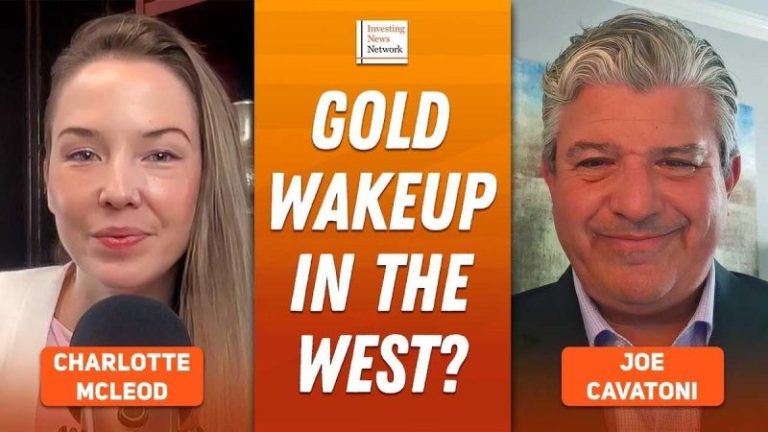
Joe Cavatoni, senior market strategist, Americas, at the World Gold Council, discusses gold’s ongoing price run, highlighting its key role in risk diversification.

He also notes that western investors are beginning to take a keener interest in gold.

Securities Disclosure: I, Charlotte McLeod, hold no direct investment interest in any company mentioned in this article.

This post appeared first on investingnews.com
The valuation of China’s Zijin Mining Group (OTC Pink:ZIJMF,HKEX:2899,SHA:601899) has topped US$100 billion for the first time despite the firm’s delayed initial public offering (IPO).

Shares of the Fujian-based miner closed at a record high in Shanghai on Thursday (September 25), giving the company a market capitalization of about 732 billion yuan (around US$132.4 billion), according to a Bloomberg report.

That puts Zijin just behind global heavyweights Rio Tinto (ASX:RIO,NYSE:RIO,LSE:RIO), worth roughly US$112 billion, and BHP (ASX:BHP,NYSE:BHP,LSE:BHP) at about US$140 billion.

Founded by geologist Chen Jinghe in the 1980s with a small gold mine in Southeastern China, Zijin concentrated its expansion heavily on gold and copper, which together made up 77 percent of its revenue in the first half of 2025.

That focus has paid off handsomely in the current market climate, with copper prices hitting record averages and gold smashing through historical highs. Gold has been trading at unprecedented levels throughout September, with futures opening on Thursday at US$3,768.30 per ounce, up 1 percent from the previous day’s close of US$3,732.10.

Prices have consistently held above US$3,700 since September 22. Earlier this month, bullion reached an all-time peak of US$3,788.33, eclipsing the inflation-adjusted record set in January 1980.

Analysts attribute the rally to a weaker US dollar and widespread expectations of further US interest rate cuts.

Gold’s strength has reinforced Zijin’s plans to spin off and list its overseas gold assets.

Zijin Gold International, which controls the company’s non-China gold mines, is seeking to raise about US$3.2 billion in what would be the world’s second largest IPO of 2025. The Hong Kong listing was initially scheduled for September 29, but has been pushed back a day to September 30 after Super Typhoon Ragasa battered the city.

The delay stems from Hong Kong exchange rules that automatically extend IPO subscription deadlines when a No. 8 or higher storm warning coincides with the final morning of the retail order period. Because Ragasa effectively shut down financial activity on Wednesday (September 24), Zijin’s offering was forced to adjust by 24 hours.

Despite the storm disruption, Zijin’s offering is expected to draw strong demand. Investors have been closely tracking the company’s trajectory, noting its ability to align growth with bullish commodity cycles.

Market observers say the IPO will also test investor appetite for large-scale resource listings in Hong Kong, which has seen a slowdown in new deals amid geopolitical tensions.

A US$3.2 billion raise would make Zijin Gold’s debut the largest in the city this year and second worldwide.

Securities Disclosure: I, Giann Liguid, hold no direct investment interest in any company mentioned in this article.

This post appeared first on investingnews.com

Gold royalty companies offer investors exposure to gold and silver with the benefits of diversification, lower risk and a steady income stream.

Royalty companies operating in the resource sector will typically agree to provide funding for the exploration or development of a resource in exchange for a percentage of revenue from the deposit if it begins producing. Similarly, a company with a streaming model may work out an agreement with a resource company for a share of the metal produced from a deposit in exchange for an investment.

These kinds of arrangements benefit both parties. Streamers get access to the underlying commodity at a fixed price and are shielded from cost overruns and spikes in production. Further, if there is a price decrease the metals can be warehoused until the market conditions improve. In both cases, mining companies receive considerable upfront investment during the expensive construction and expansion phases, and unlike loans these investments have longer-term payouts at a fixed amount.

Let’s take a deeper look at how royalties and streaming works, their benefits and the gold and silver royalty and streaming stocks you can invest in.

In this article

    How do gold and silver royalties work?

    Gold and silver royalty agreements involve royalty companies agreeing to provide funding for the exploration or development of a precious metals resource in exchange for a percentage of revenue from the deposit if it begins producing metals.

    The foundation for royalties dates back a few hundred years. Originally, they were payments made to the British monarchy in exchange for miners’ rights to operate gold and silver mining operations on lands held by the crown. Today, these arrangements still exist, with mining operators paying the government a share of the revenues generated from exploiting resources on public lands.

    The first royalty paid to a company in the gold sector was an agreement in 1986 in which Franco-Nevada (TSX:FNV,NYSE:FNV) made a US$2 million investment into Western States Minerals’ Goldstrike small heap-leach mine in Nevada, US, for a 4 percent share of revenues collected from the mine. Western States was sold the same year to Barrick Gold (TSX:ABX,NYSE:GOLD). Barrick discovered a far larger resource at the site and the royalty has since earned Franco-Nevada more than US$1 billion.

    This early example set a precedent for the industry. It saw Franco-Nevada, which was then a gold exploration company, lock itself into what became one of the largest gold mineral resources in the world at a relatively low overhead while avoiding future costs associated with the growth and maintenance of the mine.

    How do gold and silver streams work?

    Gold and silver streams work in a similar manner to the royalty model but returns are in the form of physical metals rather than funds. In return for investing in an asset, a gold streaming company may work out an agreement with a resource company for a share of the metal produced from a deposit, or for the ability to purchase the metal at a lower price than market value.

    This is also a popular model with base metal mining companies whose operations result in gold and/or silver by-products. In these cases, gold and silver streaming companies may work out a deal with a base metal mining operation to take delivery of a certain amount of precious metals at an agreed upon price.

    The Goldstrike royalty made Franco-Nevada what it is today, but its largest contributing asset in its portfolio is a deal with Lundin Mining (TSX:LUN,OTC Pink:LUNMF) for a stream of the gold and silver resources extracted from its Candelaria copper mine in Chile.

    Under the terms of the deal, which was part of Lundin’s 2014 acquisition of Freeport-McMoRan’s (NYSE:FCX) stake in Candelaria, Franco-Nevada provided a US$648 million deposit in exchange for a 68 percent stream of the asset’s silver and gold. This will lower to 40 percent once 720,000 ounces of gold and 12 million ounces of silver have been delivered, which the company currently predicts will take place in 2027.

    While Franco-Nevada does have to pay for the metal, the agreed upon amount is far under the current market value. At the time, the deal was set at US$400 for each ounce of gold and US$4 per ounce of silver with a 1 percent inflationary adjustment, or market price if that was less.

    Are royalty and streaming companies a good investment?

    Royalty and streaming companies are largely seen as a lower-risk investment than mining companies. Lower operational costs and higher portfolio diversification means they are hedged against a mine shutdown, natural disaster, market forces or the politics that may affect the nature of an operation or project. However, that’s not to say royalty and streaming deals aren’t without their risks.

    In many ways, gold royalty companies are like venture capitalists in the tech industry, working to fund many projects in the hopes that some will see big payoffs that offset the loss from the ones that don’t make it. This means they need large access to funding in order to build their portfolios.

    To get funding, royalty and streaming companies have several options: using cash on hand, raising debt through loans or issuing more shares. Each of these options carries risk. Using cash to pay for investments could reduce the size of the safety net and eat into company liquidity, debt needs to be managed to ensure that payments don’t exceed income and the issuance of stock could lead to an overall devaluation of share price and impact investor sentiment.

    Once companies have developed strong cash flows and good liquidity, they are able to take advantage of their own reserves, without the need to worry about loans or stock dilution. The same cannot be said for the up-and-coming companies who need to rely on external funding to make deals, making them riskier.

    These companies provide a good entry point for investors with lower share price, and have more potential to return higher percentage gains in share price, they also bear more risk. With more reliance on raising external capital, there is a greater need for deals to be successful and a greater chance for a company to incur more debt load or stock dilution.

    Diverse portfolios can help reduce the risk associated with a royalty company, and companies like Franco-Nevada have the industry knowledge and financial capital to take some risks. As of February 2025, the company has 430 assets on their books; of those, 119 are producing, and 38 are in the advanced stages of development. It’s the 273 more that are in the exploration phase, many of which will never provide returns, that represent the greatest risk.

    Of course, unforeseen events can affect both mining and royalty companies alike, particularly when assets that take up a larger percentage or a portfolio are affected. Franco-Nevada had more than US$1 billion invested in First Quantum’s (TSX:FM,OTC Pink:FQVLF) Cobre Panama mine before it was shuttered by the Panamanian government following protests at the end of 2023. The mine brought in US$223.3 million for Franco-Nevada in 2022 and represented nearly a quarter of its precious metal income. While it fared better than First Quantum, the royalty company’s share price took a significant hit.

    Gold and silver royalty companies

    The biggest companies in the precious metals royalty and streaming space have long histories and have built positive reputations on the backs of strong investments. They offer a means for investors to de-risk an entry into the gold sector by maintaining an arms-length attachment to it.

    The five gold and silver royalty and streaming companies on this list had market caps above $1 billion in their respective currencies as of September 23, 2025.

    1. Wheaton Precious Metals (TSX:WPM,NYSE:WPM)

    Market cap: C$67.59 billion

    Wheaton Precious Metals was established in 2004 as Silver Wheaton with a focus on silver streaming. Goldcorp held a majority interest, but began to reduce it in 2006 and by 2008 had completely divested itself. By that time, Silver Wheaton had begun to diversify into other precious metals. The following year, Silver Wheaton acquired rival silver streaming stock Silverstone Resources in a C$190 million deal.

    Silver Wheaton changed its name in 2017 to Wheaton Precious Metals and has since built itself into one of the largest players in the gold and silver royalty and streaming space, with investments in 16 operating mines and 23 development projects across five continents.

    Included in Wheaton’s assets are investments in Newmont’s (TSX:NGT,NYSE:NEM,ASX:NEM) Peñasquito mine in Mexico, Sibanye Stillwater’s (NYSE:SBSW) Stillwater and East Boulder mines in Montana, US, and Hudbay Minerals’ (TSX:HBM,NYSE:HBM) Copper World Complex project in Arizona, US.

    2. Franco-Nevada (TSX:FNV,NYSE:FNV)

    Market cap: C$57 billion

    A trailblazer in the gold royalty business, Franco-Nevada has set a high bar. The current iteration of the company was spun out of Newmont in what became a C$1.1 billion initial public offering, one of the biggest IPOs of 2007.

    Franco-Nevada now has a portfolio of royalties and streams on 119 producing assets around the world including gold, silver, base metal and oil and gas operations, which generate more than US$1.2 billion for the company annually.

    Among the producing assets for which Franco-Nevada has precious metals streams and royalties are Glencore’s (LSE:GLEN,OTC Pink:GLCNF) Antapaccay mine in Peru, Agnico Eagle’s (NYSE:AEM,TSX:AEM) Detour Lake mine in Ontario, Canada, and Gold Fields’ (NYSE:GFI) Salares Norte mine in Chile.

    See the sections above for more information on Franco-Nevada’s royalty and streaming deals.

    3. Royal Gold (NASDAQ:RGLD)

    Market cap: US$13.63 billion

    Royal Gold got its start in 1981 as oil and gas exploration and production company Royal Resources.

    Responding to shifts in the overall resource market, by 1987, Royal Gold was born with a focus on building a portfolio of minority positions in significant gold properties operated by major mining firms.

    Today, Royal Gold is a leading precious metals streaming and royalty company with interest in 175 properties, of which 42 are producing assets, across 17 countries.

    Among its assets are Barrick Mining (TSX:ABX,NYSE:B) and Newmont’s Cortez mine in Nevada, US, Teck’s (TSX:TECK.A,TECK.B,NYSE:TECK) Andacollo mine in Chile and Centerra Gold’s (TSX:CG,NYSE:CGAU) Mount Milligan mine in British Columbia, Canada.

    Royal Gold is planning to acquire Sandstorm Gold, the fifth largest gold royalty company on this list. The deal is expected to close in the fourth quarter of 2025.

    4. OR Royalties (TSX:OR,NYSE:OR)

    Market cap: C$5.1 billion

    Previously named Osisko Gold Royalties, OR Royalties was created in 2014 as a spinoff deal between Osisko Mining (TSX:OSK), Yamana Gold and Agnico Eagle Mines (TSX:AEM,NYSE:AEM). The deal was made in an attempt to prevent a hostile takeover of Osisko Mining and its Canadian Malartic gold complex by Goldcorp, now part of Newmont.

    In the deal, OR Royalties carried with it a 5 percent net smelter return royalty from the Canadian Malartic mine. Now owned by Agnico Eagle, the complex in Québec remains a cornerstone of the royalty company’s business today.

    The gold and silver royalty and streaming company has gone on to amass royalties, streams and offtakes for 195 assets, 21 of which are producing, across six continents.

    The majority are located in North America, including one of the most well-known gold-producing mines in the world, Agnico Eagle’s Canadian Malartic complex in Québec, as well as SSR Mining’s (NASDAQ:SSRM,TSX:SSRM) Seabee mine in Saskatchewan, Canada, and Kinross Gold’s (TSX:K,NYSE:KGC) Bald Mountain mine in Nevada.

    5. Sandstorm Gold (TSX:SSL,NYSE:SAND)

    Market cap: C$3.51 billion

    Sandstorm Gold Royalties was founded in 2008 as a small startup and has since become a multi-billion dollar gold and silver royalty and streaming company.

    Sandstorm’s royalty portfolio boasts more than 230 assets, of which 40 are producing assets, located across more than a dozen countries.

    Its producing assets include Pan American Silver’s (TSX:PAAS,NYSE:PAAS) Ceo Moro mine and Cerrado Gold’s (TSX:CERT,OTCQX:CRDOF) Las Calandrias mine, both located in Argentina, as well as Ivanhoe’s (TSX:IVN,OTCQX:IVPAF) Platreef mine in South Africa.

    Sandstorm is set to be acquired by fellow royalty company Royalty Gold in a deal expected to close in Q4.

    Small-cap gold and silver royalty companies

    There are also small-cap gold and silver royalty and streaming companies you can invest in and offer a lower-cost option for investors who are comfortable with a little more risk. Like their larger counterparts, small-cap gold royalty stocks offer a lower-risk investment than getting into a small-cap mining company but still provide access to the underlying precious metals market.

    The five small-cap gold and silver royalty companies on this list had market caps above $10 million in their respective currencies as of September 23, 2025.

    1. Gold Royalty (NYSEAMERICAN:GROY)

    Market cap: US$648.7 million

    Gold Royalty is building a diversified portfolio of more than 240 gold royalty and gold streaming interests based on net smelter return royalties on properties in the Americas.

    The company’s revenue generating investments include Agnico Eagle’s Canadian Malartic complex in Québec, Dundee Precious Metals’ (TSX:DPM) Vareš mine in Bosnia and Herzegovina, and Discovery Silver’s (TSX:DSV,OTCQX:DSVSF) Borden mine in Ontario.

    2. Metalla Royalty & Streaming (TSXV:MTA)

    Market cap: C$752.37 million

    Metalla Royalty & Streaming focuses on gold, silver and copper projects. The company’s royalty model involves acquiring royalties and streams by offering resource companies Metalla shares and cash.

    The mid-tier royalty and streaming company’s asset portfolio includes more than 100 projects across North America, South America and Australia. Its cornerstone assets include IAMGOLD (TSX:IMG,NYSE:IAG) and Sumitomo Metal Mining’s (OTC Pink:SSUMF,TSE:5713) Côté gold mine in Ontario, Canada, and First Quantum Minerals’ (TSX:FM) Taca Taca project in Argentina.

    3. Sailfish Royalty (TSXV:FISH,OTCQX:SROYF)

    Market cap: C$227.57 million

    Founded in 2014, Sailfish Royalty’s asset portfolio is much smaller than the other gold royalty stocks on this list. It consists of one producing mine as well as two development-stage and two exploration-stage properties in the Americas.

    In Nicaragua, Sailfish has a gold stream equivalent to a 3 percent net smelter return on Mako Mining’s (TSXV:MKO,OTCQX:MAKOF) San Albino gold mine and a 2 percent net smelter return on the area surrounding the mine. The company also holds a 13,500 ounce per quarter silver stream at the property, which was set to expire in May 2025. At the end of April, Sailfish chose to exercise its option to purchase all silver for the life of the mine.

    4. Empress Royalty (TSXV:EMPR,OTCQX:EMPYF)

    Market cap: C$113.23 million

    Empress Royalty’s business model involves investing in mining companies in various stages of exploration through production who need further non-dilutive capital to fund their projects and operations.

    Empress’ gold and silver royalty and streaming portfolio includes 10 exploration assets in Canada and four producing assets, with two in the Americas and two in Africa: the privately owned Sierra Antapite mine in Peru, Luca Mining’s (TSXV:LUCA,OTCQX:LUCMF) Tahuehueto mine in Mexico, the privately owned Manica mine in Mozambique and Golconda Gold’s (TSXV:GG,OTCQB:GGGOF) Galaxy gold mine in South Africa.

    Empress has a silver stream for Tahuehueto and gold streams for the other three mines.

    5. Silver Crown Royalties (CBOE:SCRI,OTCQX:SLCRF)

    Market cap: C$17.34 million

    Silver Crown Royalties is a revenue-generating silver-only royalty company focusing on silver as by-product credits. The company targets royalty originations on producing or near-producing assets in tier 1 jurisdictions.

    Silver Crown has royalties on two producing assets in its portfolio: Gold Mountain Mining’s (TSX:GMTN) Elk gold project in British Columbia, Canada, and private Canadian company Pilar Gold’s PGDM mine in Brazil.

    Gold and silver royalty ETFs

    Those who want more broad exposure to the precious metals markets may want to buy shares of an exchange-traded fund that includes gold and silver royalty and streaming stocks. Here are a few to get you started, including ASX gold ETFs and a US gold ETF.

    Betashares Global Royalties ETF (ASX:ROYL)
    The Betashares Global Royalties ETF is an Australian ETF that tracks the performance of an index of global companies that earn a significant amount of their revenue from royalty income, royalty-related income and intellectual property income. The fund’s top two holdings are Wheaton Precious Metals and Franco-Nevada, with Royal Gold and OR Royalties also among its significant holdings.

    Betashares Global Gold Miners ETF (ASX:MNRS)
    The Betashares Global Gold Miners ETF tracks the performance of an index of the world’s largest gold mining companies outside of Australia, hedged into Australian dollars. Wheaton Precious Metals, Franco-Nevada and Royal Gold are also among the fund’s top holdings.

    VanEck Gold Miners ETF (ARCA:GDX)
    The VanEck Gold Miners ETF is a US gold ETF that aims to replicate the performance of the MarketVector Global Gold Miners Index by holding large-cap gold mining stocks and precious metals royalty companies. As with the other gold ETFs on this list, its top holdings include Franco-Nevada, Wheaton Precious Metals and Royal Gold.

    Securities Disclosure: I, Dean Belder, hold no direct investment interest in any company mentioned in this article.

    This post appeared first on investingnews.com
    (TheNewswire)

    Vancouver, British Columbia / September 26, 2025 ‑ TheNewswire – Harvest Gold Corporation (TSXV: HVG,OTC:HVGDF) (‘ Harvest Gold ‘ or the ‘ Company ‘) i s pleased to report on the progress of its ongoing drill program at Mosseau, its flagship property in the Urban Barry Belt in Quebec’s Abitibi region.

    Rick Mark, CEO of Harvest Gold, commented: ‘The confirmation that the Kiask River Corridor extends southeast into the LaBelle property is an important step forward in our regional exploration model. Combined with the progress of our ongoing drill program, we are steadily advancing our understanding of the gold potential at Mosseau and LaBelle. We look forward to receiving our first batch of assay results next month and continuing to unlock the value of this highly prospective land package.’

    DRILLING UPDATE

    To date, 11 drill holes have been completed for a total of 2,191 metres. The completed holes targeted the northern portion of the property, where historical prospecting and diamond drilling work suggested strong potential and continuity of the gold mineralization (See Figure 1). Samples are sent to the lab as the logging of each hole is completed and assay results from the initial holes are expected over the next few weeks.

    Drilling is now transitioning toward the central part of the property, where additional priority targets have been identified based on recent prospecting, geophysics and soil sampling.

    AIRBORNE MAGNETIC SURVEY

    We have now received the results of the successful high-resolution magnetic survey covering the southeastern part of the Mosseau and the adjoining LaBelle properties.

    The survey results have identified and confirmed the extension of the magnetic domain hosting the Kiask River Corridor to the southeast, extending into the LaBelle property. The Kiask River Corridor can now be traced for 31 km in a northwest – southeast direction, with a width up to 2.3 km. This represents a significant development in the Company’s understanding of the structural and lithological controls on gold mineralization in the area, providing additional high-priority exploration targets for follow-up. (See Figure 2)

    Looking ahead, the Company is planning a fall exploration program, which will include soil sampling and prospecting across parts of the Mosseau and LaBelle properties. These activities are designed to build on the recent magnetic survey results and further refine drill targets for future exploration campaigns.

    About Harvest Gold Corporation

    Harvest Gold is focused on exploring for near-surface gold deposits and copper-gold porphyry deposits in politically stable mining jurisdictions. Harvest Gold’s board of directors, management team and technical advisors have collective geological and financing experience exceeding 400 years.

    Harvest Gold has three active gold projects focused in the Urban Barry area, totalling 377 claims covering 20,016.87 ha , located approximately 45-70 km west of Gold Fields Limited’s – Windfall Deposit (Figure 3).

    Harvest Gold acknowledges that the Mosseau Gold Project straddles the Eeyou Istchee-James Bay and Abitibi territories.  Harvest Gold is committed to developing positive and mutually beneficial relationships based on respect and transparency with local Indigenous communities.

    Harvest Gold’s three properties, Mosseau, Urban-Barry and LaBelle, together cover over 50 km of favorable strike along mineralized shear zones.


    Click Image To View Full Size

    Figure 1: Progress of drill holes completed – Northern Target Area


    Click Image To View Full Size

    Figure 2: Magnetic Domain extending across the southeastern portion of Mosseau and LaBelle


    Click Image To View Full Size

    Figure 3: Project Location: Urban-Barry Greenstone Belt

    Sampling, QAQC, and Laboratory Analysis Summary

    All core logging and sampling completed by Harvest Gold as part of its diamond drilling program is subject to a strict standard for Quality Control and Quality Assurance (QAQC), which includes the insertion of certified reference materials (standards), blank materials, and field duplicate analysis. NQ-diameter sawed half-core samples from the drilling program at Swanson were securely sent by Company geologists to AGAT Laboratories Ltd. (AGAT), with sample preparation in Val-d’Or, Québec and analysis in Thunder Bay, Ontario, where samples were processed for gold analysis by 50-gram fire assay with an atomic absorption finish. Samples from selected holes were securely sent to AGAT in Calgary, Alberta, for multi-element analysis (including silver) by inductively coupled plasma (ICP) method with a four-acid digestion. AGAT sample preparation and laboratory analysis procedures conform to requirements of ISO/IEC Standard 17025 guidelines and meet the requirements under NI 43-101 and CIM best practice guidelines. AGAT is independent of LaFleur Minerals.

    Qualified Person Statement

    All scientific and technical information in this news release has been prepared and approved by Louis Martin, P.Geo., Technical Advisor to the Company and considered a Qualified Person for the purposes of NI 43-101.

    ON BEHALF OF THE BOARD OF DIRECTORS

    Rick Mark
    President and CEO
    Harvest Gold Corporation

    For more information please contact:

    Rick Mark or Jan Urata
    @ 604.737.2303 or
    info@harvestgoldcorp.com

    Neither TSX Venture Exchange nor its Regulation Services Provider (as that term is defined in the policies of the TSX Venture Exchange) accepts responsibility for the adequacy or accuracy of this release.

    Forward Looking Information

    This news release includes certain statements that may be deemed ‘forward looking statements’. All statements in this news release, other than statements of historical facts, that address events or developments that Harvest Gold expects to occur, are forward looking statements. Forward looking statements are statements that are not historical facts and are generally, but not always, identified by the words ‘expects’, ‘plans’, ‘anticipates’, ‘believes’, ‘intends’, ‘estimates’, ‘projects’, ‘potential’ and similar expressions, or that events or conditions ‘will’, ‘would’, ‘may’, ‘could’ or ‘should’ occur.

    Although the Company believes the expectations expressed in such forward-looking statements are based on reasonable assumptions, such statements are not guarantees of future performance and actual results may differ materially from those in the forward-looking statements. Factors that could cause the actual results to differ materially from those in forward looking statements include market prices, exploitation and exploration successes, and continued availability of capital and financing, and general economic, market or business conditions. Investors are cautioned that any such statements are not guarantees of future performance and actual results or developments may differ materially from those projected in the forward-looking statements. Forward looking statements are based on the beliefs, estimates and opinions of the Company’s management on the date the statements are made. Except as required by securities laws, the Company undertakes no obligation to update these forward-looking statements in the event that management’s beliefs, estimates or opinions, or other factors, should change.

    Copyright (c) 2025 TheNewswire – All rights reserved.

    News Provided by TheNewsWire via QuoteMedia

    This post appeared first on investingnews.com
     Fortune Bay Corp. (TSXV: FOR,OTC:FTBYF) (FWB: 5QN) (OTCQB: FTBYF) (‘Fortune Bay’ or the ‘Company’) is pleased to announce that summer drilling has commenced at its Murmac Uranium Project (‘Murmac’ or the ‘Project’), located in northern Saskatchewan near Uranium City . A limited suite of high priority targets has been selected for testing.

    Exploration work at Murmac is being funded by Aero Energy Limited (TSXV: AERO) (OTC Pink: AAUGF) (FSE: UU3) (‘Aero’), and is being operated by Fortune Bay, under an Option Agreement that was executed on December 15, 2023 .

    Gareth Garlick , VP Technical Services of Fortune Bay, commented, ‘ This drilling program represents an excellent opportunity to test high-priority uranium targets with strong geophysical signatures in a proven district. The current drill program has been carefully designed to evaluate structural and conductive settings that have historically delivered uranium mineralization in the Athabasca Basin margin. By capitalizing on shared mobilization and operational efficiencies, we are able to advance exploration in a technically rigorous and cost-effective manner.’ Dale Verran , CEO of Fortune Bay, added, ‘Our partner-funded exploration at Murmac demonstrates how we can unlock value from our uranium portfolio on a non-dilutive basis for shareholders. This strategy allows us to preserve capital and maintain focus on advancing our 100%-owned gold assets, while retaining significant exposure to upside from uranium discoveries.’

    Drill Targets

    Target selection has been based on airborne electromagnetic and ground gravity survey results, targeting features along buried basement-hosted conductive graphitic units at their intersection with known mineralized cross faults identified during historical and current prospecting activities, including spectrometer surveying and geochemical sampling. Drilling will focus on the northern end of the Armbruster Conductor, which the Company has not yet drill tested. This program has been planned at short notice to benefit from significant cost savings related to the presence of another exploration group in Uranium City carrying out a separate drill program using the same drill contractor. Shared mobilization and operational costs are allowing the Company to cost effectively test three selected high priority targets (Figure 1) in the summer window.

    • A19: Low amplitude EM high target on a conductor inflection, with an associated diffuse gravity low anomaly. The targeted graphitic horizon underlies a small lake, at the location of an intersection of the Armbruster Conductor with a major conductor-parallel fault.
    • A18: Low amplitude EM high feature coincident with a high priority gravity low target at a location where the Armbruster Conductor is apparently terminated by a cross-cutting mineralized fault.
    • A9: A broad EM high anomaly on the edge of a conductor termination, with a small down-dip gravity low. This target is aimed a structural confluence of several known mineralized cross-faults with the Armbruster Conductor.

    Technical Disclosure

    Further details regarding the historical exploration/drilling and exploration results noted in this news release can be found within the Saskatchewan Mineral Assessment Database (SMAD) and the Saskatchewan Mineral Deposit Index (SMDI). Fortune Bay has verified several of these occurrences through field prospecting and sampling, however there is a risk that any future confirmation work and exploration may produce results that substantially differ from the unverified historical results. Historical drill hole locations, captured from georeferenced assessment report maps, are subject to uncertainty (considered accurate to +/-50 meters. The Company considers these unverified historical results relevant to assess the mineralization and economic potential of the property. The historical information referenced derives from SMAD references 74N07-0011, 74N07-0173 and 74N07-0277.

    Qualified Person

    The technical and scientific information in this news release has been reviewed and approved by Gareth Garlick , P.Geo., Technical Director of the Company, who is a Qualified Person as defined by NI 43-101. Mr. Garlick is an employee of Fortune Bay and is not independent of the Company under NI 43-101.

    About Fortune Bay

    Fortune Bay Corp. (TSXV:FOR,OTC:FTBYF; FWB:5QN; OTCQB:FTBYF) is a gold exploration and development company advancing high-potential assets in Canada and Mexico. With a strategy focused on discovery, resource growth and early-stage development, the Company targets value creation at the steepest part of the Value Creation Curve—prior to the capital-intensive build phase. Its portfolio includes the development-ready Goldfields Project in Saskatchewan , the resource-expansion Poma Rosa Project in Mexico , and an optioned uranium portfolio in the Athabasca Basin providing non-dilutive capital and upside exposure. Backed by a technically proven team and tight capital structure, Fortune Bay is positioned for multiple near-term catalysts. For more information, visit www.fortunebaycorp.com or contact info@fortunebaycorp.com .

    On behalf of Fortune Bay Corp.

    ‘Dale Verran’
    Chief Executive Officer
    902-334-1919

    Cautionary Statement Regarding Forward-Looking Information
    Information set forth in this news release contains forward-looking statements that are based on assumptions as of the date of this news release. These statements reflect management’s current estimates, beliefs, intentions, and expectations. They are not guarantees of future performance. Words such as ‘expects’, ‘aims’, ‘anticipates’, ‘targets’, ‘goals’, ‘projects’, ‘intends’, ‘plans’, ‘believes’, ‘seeks’, ‘estimates’, ‘continues’, ‘may’, variations of such words, and similar expressions and references to future periods, are intended to identify such forward-looking statements.

    Since forward-looking statements are based on assumptions and address future events and conditions, by their very nature they involve inherent risks and uncertainties. Although these statements are based on information currently available to the Company, the Company provides no assurance that actual results will meet management’s expectations. Risks, uncertainties and other factors involved with forward-looking information could cause actual events, results, performance, prospects and opportunities to differ materially from those expressed or implied by such forward-looking information. Forward looking information in this news release includes, but is not limited to, the Company’s objectives, goals, intentions or future plans, statements, exploration results, potential mineralization, timing of the commencement of operations and estimates of market conditions. Factors that could cause actual results to differ materially from such forward-looking information include, but are not limited to failure to identify targets or mineralization, delays in obtaining or failures to obtain required governmental, environmental or other project approvals, political risks, inability to fulfill the duty to accommodate First Nations and other indigenous peoples, inability to reach access agreements with other Project communities, amendments to applicable mining laws, uncertainties relating to the availability and costs of financing or partnerships needed in the future, changes in equity markets, inflation, changes in exchange rates, fluctuations in commodity prices, delays in the development of projects, capital and operating costs varying significantly from estimates and the other risks involved in the mineral exploration and development industry, and those risks set out in the Company’s public documents filed on SEDAR+. Although the Company believes that the assumptions and factors used in preparing the forward-looking information in this news release are reasonable, undue reliance should not be placed on such information, which only applies as of the date of this news release, and no assurance can be given that such events will occur in the disclosed time frames or at all. The Company disclaims any intention or obligation to update or revise any forward-looking information, whether as a result of new information, future events or otherwise, other than as required by law. For more information on Fortune Bay, readers should refer to Fortune Bay’s website at www.fortunebaycorp.com .

    Neither TSX Venture Exchange nor its Regulation Services Provider (as that term is defined in policies of TSX Venture Exchange) accepts responsibility for the adequacy or accuracy of this release.

    SOURCE Fortune Bay Corp.

    View original content to download multimedia: http://www.newswire.ca/en/releases/archive/September2025/26/c9916.html

    News Provided by Canada Newswire via QuoteMedia

    This post appeared first on investingnews.com
    Questcorp Mining Inc. (CSE: QQQ,OTC:QQCMF) (OTCQB: QQCMF) (FSE: D910) (the ‘Company’ or ‘Questcorp’) is pleased to announce that it will offer (the ‘Offering’) up to 17,500,000 units (each, a ‘Unit’) by way of non-brokered private placement at a price of $0.20 per Unit for gross proceeds of up to $3,500,000. Each Unit will consist of one common share of the Company (each, a ‘Share’) and one-half-of-one share purchase warrant (each whole warrant, a ‘Warrant’). Each Warrant will entitle the holder to acquire an additional common share of the Company at a price of $0.30 for a period of twenty-four months following closing of the Offering, subject to accelerated expiry in the event the closing price of the Shares is $0.50 or higher for ten consecutive trading days.

    The Company expects to utilize the proceeds of the Offering for advancement of ongoing exploration and drill work at the La Union Gold and Silver Project, upcoming exploration work at its North Island Copper Property and for general working capital purposes.

    In connection with completion of the Offering, the Company will pay finders’ fees to eligible third-parties who have introduced subscribers to the Offering. All securities issued in connection with the Offering will be subject to restrictions on resale for a period of four-months-and-one-day in accordance with applicable securities laws. Completion of the Offering remains subject to receipt of regulatory approvals.

    About Questcorp Mining Inc.

    Questcorp Mining Inc. is engaged in the business of the acquisition and exploration of mineral properties in North America, with the objective of locating and developing economic precious and base metals properties of merit. The Company holds an option to acquire an undivided 100% interest in and to mineral claims totaling 1,168.09 hectares comprising the North Island Copper Property, on Vancouver Island, British Columbia, subject to a royalty obligation. The Company also holds an option to acquire an undivided 100% interest in and to mineral claims totaling 2,520.2 hectares comprising the La Union Project located in Sonora, Mexico, subject to a royalty obligation.

    Contact Information

    Questcorp Mining Corp.

    Saf Dhillon, President & CEO

    Email: saf@questcorpmining.ca
    Telephone: (604) 484-3031

    This news release includes certain ‘forward-looking statements’ under applicable Canadian securities legislation. Forward-looking statements include, but are not limited to, statements with respect to the intended use of proceeds from the Offering. Forward-looking statements are necessarily based upon a number of estimates and assumptions that, while considered reasonable, are subject to known and unknown risks, uncertainties, and other factors which may cause the actual results and future events to differ materially from those expressed or implied by such forward-looking statements. Such factors include but are not limited to: the ability of Riverside to secure geophysical contractors to undertake orientation surveys and follow up detailed survey to confirm and enhance the drill targets as contemplated or at all, general business, economic, competitive, political and social uncertainties, uncertain capital markets; and delay or failure to receive board or regulatory approvals. There can be no assurance that the geophysical surveys will be completed as contemplated or at all and that such statements will prove to be accurate, as actual results and future events could differ materially from those anticipated in such statements. Accordingly, readers should not place undue reliance on forward-looking statements. The Company disclaims any intention or obligation to update or revise any forward-looking statements, whether as a result of new information, future events or otherwise, except as required by law.

    To view the source version of this press release, please visit https://www.newsfilecorp.com/release/268095

    News Provided by Newsfile via QuoteMedia

    This post appeared first on investingnews.com