Author

admin

Browsing

Graphene is often heralded as the “wonder material” of the 21st century, and investing in graphene companies offers investors exposure to a growing number of graphene applications across a diverse set of industries.

Technological advancements in the electronics industry has given rise to new applications for graphene given its high electrical and thermal conductivity. This includes flexible display screens, wearable devices, high-speed transistors, and advanced energy storage systems.

Demand for graphene coatings and composites is rising from the energy storage, aerospace and automotive industries, among others. Graphene coatings are used in batteries, conductors and generators to improve energy efficiency and performance, while lightweight graphene composites are being used in aircraft and automobiles.

For those interested in how to invest in graphene, here’s a look at several publicly traded graphene companies making moves in the market today. These top graphene stocks are listed in alphabetical order, and all data was accurate as of August 28, 2025.

1. Black Swan Graphene (TSXV:SWAN)

Market cap: C$102.83 million

Black Swan Graphene describes itself as an emerging powerhouse in the bulk graphene business. UK-based global chemicals manufacturer Thomas Swan & Co. holds a 15 percent interest in Black Swan and brings a portfolio of patents and intellectual property related to graphene production. Through this partnership, Black Swan is building out a fully integrated supply chain from mine to graphene products.

Black Swan launched a number of new graphene products in 2024, such as its GraphCore 01 family of graphene nanoplatelets products, which includes powders and polymer-ready masterbatches designed for the polymer industry.

In addition, the company formed a commercial partnership with advanced materials engineering company Graphene Composites that will see Black Swan’s graphene used in the fabrication of GC Shield, a patented ballistic protection technology. It also secured a distribution and sales agreement with UK-based manufacturer of plastic materials Broadway Colours to incorporate Black Swan’s graphene nanoplatelets in the manufacture of graphene enhanced masterbatches for plastic manufacturing.

Black Swan closed on a C$6 million equity financing in February 2025 which will help to fund its capacity expansion and global commercialization plans for 2025.

This includes Black Swan’s newly formed strategic partnership with thermoplastic compounds and concentrates manufacturer Modern Dispersions (MDI). Under the preferred compounder agreement, Black Swan will provide graphene nanoplatelets to Modern Dispersions, which will manufacture Graphene Enhanced Masterbatch for graphene applications.

In July and August 2025, Black Swan grew its global distribution and sales network through agreements with METCO Resources, Ferro and Thomas Swan.

Black Swan is in the process of more than tripling its production capacity from 40 metric tons of high-quality graphene annually to 140 metric tons per year by installing further capacity at its Thomas Swan facility in the UK.

2. CVD Equipment (NASDAQ:CVV)

Market cap: US$18.82 million

CVD Equipment produces chemical vapor deposition, gas control and other types of equipment and process solutions for developing and creating materials and coatings for a range of industrial applications, including aerospace engine components, medical implants, semiconductors, battery nanomaterials and solar cells.

CVD’s processing can be used to produce graphene and nanomaterials such as carbon nanotubes and silicon nanowires. Its PVT200 system is designed to grow silicon carbide crystals for the manufacture of 200 millimeter wafers. In November 2024, CVD reported a US$3.5 million follow on order for a production chemical vapor infiltration system to produce advanced, energy efficient materials for use within gas turbine engines.

CVD’s 2024 financials show revenue of US$26.9 million, up 11.5 percent year-over-year on higher revenues from its aerospace contracts and semiconductor segment. This momentum carried into 2025, with revenue for the first half of the year up 19.2 percent to US$13.4 million over the prior half-year period. This was driven by its Q1 performance, with the company reporting its revenues for the quarter were up by 69 percent year-over-year to reach US$8.3 million.

3. Directa Plus (LSE:DCTA)

Market cap: GBP 11.24 million

Leading graphene nanoplatelet producer Directa Plus makes products designed for commercial applications such as textiles and composites. The Italy-based firm has developed a patented graphene material named G+ Graphene Plus, which is both portable and scalable. Directa Plus casts a wide net, even using its graphene for golf balls with the aim of improving users’ control and swings using elasticity.

Directa Plus inked in December 2023 what it called a ‘landmark agreement’ to acquire a proprietary system for preparing graphene compounds for market-ready battery and polymer applications, opening up two more potential markets for Directa Plus products.

Its graphene products also include its proprietary Grafysorber nanoplatelets-based technology that can absorb 100 times its own weight to recover oil and hydrocarbons through treating water, sludge and emulsions. The company stated it is seeing market traction in environmental contracts through its subsidiary Setcar, which is an environmental services company, and its Grafysorber tech.

Setcar secured a 1.5 million euro contract in February 2025 with Midia International to provide tank cleaning and waste disposal services using Grafysorber for Midia’s offshore drilling campaign in the Black Sea. That same month, Setcar renewed a 1.1 million euro contract with Ford Otosan, a Romanian subsidiary of Ford Motor (NASDAQ:F), to deliver total waste management services.

Later in April, Setcar reported another contract extension, this time with OMV Petrom worth 1.59 million euros for the use of Grafysorber technology to treat oil sludges, emulsions and contaminated water.

4. First Graphene (ASX:FGR,OTCQB:FGPHF)

Market cap: AU$39.14 million

First Graphene is an advanced materials company that has developed an environmentally sound method of converting ultra-high-grade graphite into the competitively priced, high-quality graphene in bulk quantities. First Graphene is part of a nine-member consortium working to develop and commercialize lightweight impermeable cryogenic all-composite tanks for the safe storage and transport of liquid hydrogen.

The firm is working with three Australian universities on developing graphene products and associated intellectual properties, including PureGRAPH, its graphene powder. First Graphene is vertically integrated, and applications for its products extend to fire retardancy, energy storage and concrete, among others.

First Graphene has secured funding for a collaborative research project aimed at commercializing its Kainos technology for the production of ‘high-quality, battery-grade synthetic graphite and pristine graphene from petroleum feedstock using a scalable hydrodynamic cavitation manufacturing process.’

First Graphene kicked off the new year in 2025 by announcing its Kainos technology secured patents from the Australian and South Korean governments. The following month, the company completed a AU$2.4 million private placement to help fund the acceleration of its global commercial pipeline.

In May 2025, the company secured an exclusive supply agreement with Indonesian industrial safety boots manufacturer Alasmas Berkat Utama. The contract will see First Graphene provide approximately 2.5 metric tons of PureGRAPH 10 masterbatch over the first two years to be used in safety footwear for workers in the Southeast Asia mining industry. The company’s fiscal year 2025 annual income was estimated at AU$1.2 million in its June 2025 quarterly report.

First Graphene initiated a 10 month project in partnership with Imperial College London and University College London in July 2025 aimed at incorporating graphene in the 3D printing of metal components for use in high-end applications in the aerospace and motor sports industries.

5. Graphene Manufacturing Group (TSXV:GMG,OTCQX:GMGMF)

Market cap: C$101.09 million

Graphene Manufacturing Group (GMG) is a clean-technology company bringing to market energy saving and energy storage solutions based on its proprietary graphene production process.

Its products include graphene enhanced energy-saving coatings for HVAC, electronic heat sinks, industrial process plants and data center applications, as well as a graphene lubricant additive for diesel and gasoline engines. The company is also working to develop and commercialize graphene aluminum-ion batteries in collaboration with Rio Tinto (ASX:RIO,NYSE:RIO,LSE:RIO) and the University of Queensland with funding from the Australian government.

In May 2025, GMG’s board of directors approved an AU$900,000 expenditure for the early works of its planned Gen 2.0 Graphene Manufacturing Technology plant will be built at GMG’s existing manufacturing facility in Queensland, Australia. With an estimated total capital cost of AU$2.3 million, the Gen 2.0 plant is expected to be online by end of June 2026. It will initially operate at 1 metric ton per annum, work will commence shortly after to upgrade its capacity to an expected 10 metric tons per annum.

That same month, GMG launched a website for direct sales of its engine performance enhancing graphene liquid concentrate G Lubricant, and in July it commenced direct sales to end customers in Australia, the UK, Europe, China, Canada and the US.

6. Haydale Graphene Industries (LSE:HAYD)

Market cap: GBP 23.78 million

Through its subsidiaries, Haydale Graphene Industries designs, develops and commercializes advanced materials. The company is focused on commercializing its proprietary heating ink-based technology and integrating graphene and other nanomaterials into next-generation industrial applications.

Haydale has a partnership with the University of Manchester’s Graphene Engineering Innovation Centre (GEIC), through which it is researching and developing graphene-based innovations such as conductive ink heating applications for the automotive and future homes sectors.

In March 2025, the company announced it had secured new commercial contracts for its new heating systems from Affordable Warmth Solutions to develop a further graphene heater ink product, and with the national gas grid, National Gas Transmission, for the use of its technology in upgrading the gas network.

The following month, Haydale shared that its JustHeat graphene-based heating system had achieved CE marking certification, meaning that it meets European safety and environmental standards compliance.

7. HydroGraph Clean Power (CSE:HG,OTCQB:HGRAF)

Market cap: C$518.48 million

HydroGraph Clean Power produces cost-effective, high-purity graphene, hydrogen and other strategic nanomaterials. The company has an exclusive license from Kansas State University to produce graphene and hydrogen via the organization’s patented detonation process, which results in 99.8 percent pure carbon content graphene.

At the top of the year, results from a research study conducted with Arizona State University demonstrated that HydroGraph’s Fractal Graphene is an ideal material for ultra-high-performance concrete and 3D-printed structures. Then, in February, the company announced a technical collaboration with an unnamed global leader to use graphene technology in high-performance fiber applications.

HydroGraph launched an advanced graphene dispersions product line in March which is designed to produce high-performance electrodes for use in energy storage solutions. The line was developed in collaboration with battery materials and testing services company NEI.

In July, Hydrograph kicked off a Compounding Partner Program aimed at reaching commercial-scale production of its high-performance Fractal Graphene in thermoplastics. The first group of certified partners are in the automotive and packaging sectors.

Hydrograph’s graphene products also have applications in the medical sector. In August, the company announced a new commercialization agreement that will see Ease Healthcare market the LEAP early detection lung cancer test that incorporates HydroGraph’s patented fractal graphene with Hawkeye Bio’s patented biosensor.

8. NanoXplore (TSXV:GRA,OTCQX:NNXPF)

Market cap: C$536.64 million

Established in 2011, NanoXplore is able to produce high volumes of graphene at affordable prices due to its unique and environmentally friendly production process. The company’s GrapheneBlack graphene powder can be used in plastic products to greatly increase their reusability and recyclability.

NanoXplore is also targeting lithium-ion batteries with its patented SiliconGraphene battery anode material solution, which employs GrapheneBlack as a coating agent around silicon to make a safer, more reliable cell. NanoXplore’s graphene products are also being used in internal combustion engine vehicles.

As part of its five year strategic plan, last year NanoXplore increased the production capacity at its plant in Québec, Canada. The capacity expansion will enable the company to meet increased demand from an existing customer for its graphene-enhanced composite products. The customer assumed a significant portion of the expansion costs.

In its fiscal Q3 2025 financials for the quarter ended March 31, 2025, the company reported total revenues of C$30.45 million for the quarter, down 10 percent from the same quarter in the previous year. NanoXplore highlighted increases in its adjusted earnings before interest, taxes, depreciation and amortization, which totaled C$1,420,555 compared to C$571,968 in Q3 2024.

9. Talga Group (ASX:TLG,OTCQX:TLGRF)

Market cap: AU$230.05 million

Talga Group is a vertically integrated battery anode and materials company, mining its own graphite and producing anodes. It has operations in Sweden, Japan, Australia, Germany and the UK. The company also produces graphene additives for use by materials manufacturers in applications such as concrete, coatings, plastics and energy storage.

Talga has the Talphite and Talphene lines of graphene products, which include conductive additives for battery cathode and anode products, solid-state anodes and graphite recycling.

In April, the Swedish Agency for Economic and Regional Growth granted Talgas’ Luleå anode refinery in Sweden Net-Zero Strategic Project status under the EU Net-Zero Industry Act. Luleå will be supplied by graphite from its Vittangi graphite project in Sweden. Two months later, the company announced that the Swedish government gave the greenlight to its mining permit for the Nunasvaara South natural graphite mine in Northern Sweden.

As for its end products, in May Talga secured a binding offtake agreement with battery charging technology company Nyobolt for approximately 3,000 metric tons of Talga’s flagship battery anode product, Talnode-C, for an initial term of four years starting May 13, 2025. The anodes will be supplied from the Luleå anode refinery.

In mid-August, Talga launched a new proprietary graphite anode product, Talnode-R, made from recycled lithium-ion battery waste from two recycling streams: gigafactory production scrap and spent anodes from end-of-life batteries.

Private graphene companies

The graphene stocks listed above are by no means the only graphene-focused companies. Investors interested in graphene would also do well to learn more about the private companies focused on graphene technology, including ACS Material, Advanced Graphene Products, Graphene Platform, Graphenea, Grafoid and Universal Matter.

FAQs for graphene

What is graphene?

Graphene is a single layer of carbon atoms arranged in a hexagonal lattice. First produced in 2004, when professors at England’s University of Manchester used Scotch tape to peel flakes of graphene off of graphite, the material is 200 times stronger than steel and thinner than a single sheet of paper. Graphene has many possible applications in various fields, such as batteries, sensors, solar panels, electronics, medical equipment and sports gear.

What are some good properties of graphene?

Graphene’s outstanding properties include high thermal and electrical conductivity, high elasticity and flexibility, high hardness and resistance, transparency and the ability to generate electricity via exposure to sunlight.

What is the difference between graphene and graphite?

Graphene and graphite are both allotropes of carbon, meaning they are structurally different forms of the same element. A key difference between them is that graphene is a single layer of graphite.

Securities Disclosure: I, Melissa Pistilli, hold no direct investment interest in any company mentioned in this article.
This post appeared first on investingnews.com

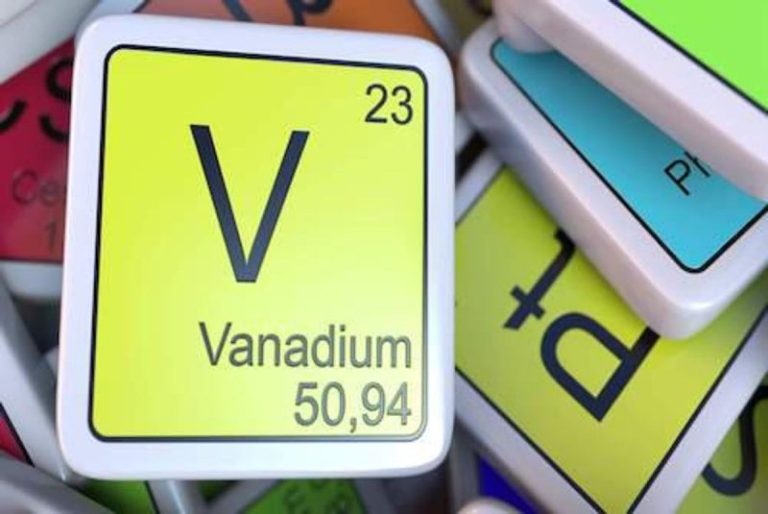
Vanadium is an important metal for both the steel and battery manufacturing industries.

Both of these sectors play key roles in economic growth and a new era in defense and energy security. Supply and demand fundamentals for the metal indicate a strong long-term outlook for the vanadium market.

Many investors believe the vanadium industry is compelling and are interested in getting involved in this evolving market. Read on for a brief overview of the metal, from supply and demand to how to invest in this exciting industrial and battery metal.

In this article

    What is vanadium?

    Named after Vanadis, the Norse god of beauty, vanadium is a silvery-gray transition metal that was discovered in 1801.

    Vanadium occurs in about 65 different minerals, and is mined as a by-product of other metals, usually uranium. It is also found in deposits of phosphate rock, titaniferous magnetite, uraniferous sandstone and siltstone. Aside from that, it is present in bauxite and in carboniferous materials such as crude oil, coal, oil shale and tar sands.

    Vanadium demand trends

    Vanadium applications have grown in recent years, contributing to price growth. The vast majority of vanadium is used as an additive in the steel industry to make a high-strength product that is lighter, stronger and more resistant to shock and corrosion.

    Vanadium content of less than 0.1 percent is needed to double the strength of steel, and although other metals — including manganese, molybdenum, niobium, titanium and tungsten — can be interchanged with vanadium for alloying with steel, there is no substitute for vanadium in aerospace titanium alloys.

    Over the last few years, China has increased its vanadium use, producing steel rebar with high tensile strength for construction. Vanadium compounds are also used in nuclear reactors because they have low neutron-absorbing properties. Vanadium oxide is used as a pigment for ceramics and glass, and can act as a catalyst in the production of superconducting magnets.

    In addition to the steel alloy sector, the metal is often used to make parts for jet engines, as well as crankshafts, axles and gears. What’s more, vanadium redox batteries (VRFB) are currently generating excitement because they are reusable over semi-infinite cycles, and do not degrade for at least 20 years, allowing energy storage systems the ability to bank renewable energy.

    However, these batteries are quite large compared to lithium-ion batteries, and are better suited for industrial or commercial use rather than for use in electric vehicles. That said, there are a number of companies around the world working on developing the technology for residential and smaller-scale use.

    Vanadium supply trends

    The top vanadium producing countries are China, Russia and South Africa, and worldwide vanadium production totaled 100,000 metric tons (MT) in 2024. China was the world’s largest producer of vanadium by far, contributing 70,000 metric tons of vanadium. Russia came in at a distant second with output of 21,000 MT, and South Africa was in third place with 8,000 MT.

    Russian-owned Evraz is a large vanadium producer with assets in Russia and Czechia, and is a major supplier of ferrovanadium to the European steel market. In the first half of 2022, Russia’s invasion of Ukraine and subsequent trade sanctions have prompted end-users to look for more secure vanadium supplies. By the end of 2024, Russian vanadium pentoxide exports to China had dried up, and supply uncertainties were also reported in South Africa.

    For his part, CRU Group’s Goel believes other nations are also interested in boosting domestic vanadium production. “Governments worldwide have recognized vanadium as a critical mineral, leading to increased support for emerging vanadium projects,” he said. Goel cited as an example the private Australian company Vecco Group, which received an AU$3.8 million grant to advance the feasibility and design of its vanadium project in Brisbane.

    However, vanadium will have to break free from the current low pricing environment if ex-China projects are to move from discovery to production.

    How to invest in vanadium stocks

    Vanadium bullion is available from private individuals, but the metal is not publicly traded, and so most experts do not advise investing in physical vanadium. Instead, vanadium stocks are a common way to gain exposure.

    There are several publicly traded companies currently producing vanadium for investors to consider, as well as many companies exploring or developing vanadium projects, including as a by-product of other minerals. See the list of vanadium stocks you can invest in below for more details on their operations.

    [shortcode-js-qm-watchlist-widget stocks=’AVL:AU,BMN:LN,EFR:CC,LGO,NEXT:CC,QEM:AU,SR:CC,VRB:CC,WUC:CC’

    Australian Vanadium (ASX:AVL)
    Australian Vanadium is building a vanadium pit-to-battery value chain in Western Australia that will incorporate its flagship Australian Vanadium project, considered one of the most advanced vanadium projects being developed globally.

    Bushveld Minerals (LSE:BMN)
    Bushveld Minerals is a primary vanadium mining company with one of the world’s largest high-grade primary vanadium resources. The company’s assets, all in South Africa, include two of the world’s four operating primary vanadium production processing facilities and an under-construction vanadium electrolyte production facility.

    Energy Fuels (TSX:EFR,NYSEAMERICAN:UUUU)
    Energy Fuels is primarily focused on uranium and rare earth metals, but its White Mesa mill in Utah, US, has the ability to process uranium-bearing ore from its mines into vanadium pentoxide (V2O5) as well. While the company is not currently producing vanadium, it has a stockpile of finished V2O5, with production and sales awaiting stronger market prices.

    Largo Resources (TSX:LGO,NASDAQ:LGO)
    Largo Resources owns and operates the Maracas Menchen mine in Brazil, and has annual V2O5 equivalent production guidance of between 9,000 and 11,000 MT. The company supplies vanadium products for multiple applications, and has developed vanadium redox battery systems for advanced renewable energy storage solutions.

    Manuka Resources (ASX:MKR)
    Manuka Resources holds two fully permitted precious metals projects in the Cobar Basin of New South Wales, Australia. Through its wholly owned subsidiary, it is also advancing the Taranaki VTM iron-vanadium-titanium project, which would extract vanadium-rich iron sands from the seabed of the New Zealand exclusive economic zone.

    NextSource Materials (TSX:NEXT,OTCQB:NSRCF)
    NextSource Materials’ advanced-stage Green Giant in-situ vanadium project in Madagascar is one of the world’s largest-known vanadium deposits, with a resource estimate of 60 million MT of V2O5 at an average grade of almost 0.7 percent. Green Giant is adjacent to NextSource’s Molo graphite mine.

    QEM (ASX:QEM)
    QEM is advancing its flagship Julia Creek vanadium and energy project in Queensland’s North West Minerals Province. The project hosts one of the largest vanadium deposits in the world, with a JORC resource of 2.87 billion MT at 0.31 percent V2O5, and a contingent oil resource of up to 654 million barrels.

    Strategic Resources (TSXV:SR)
    Strategic Resources is targeting the green steel market with its flagship BlackRock vanadium-titanium-iron project in the Eeyou Istchee James Bay region of Québec, Canada. The project, which will host a mine and concentrator, is fully permitted and construction ready. The company will also have a metallurgical facility located in the Port of Saguenay.

    VanadiumCorp Resource (TSX:VRB)
    VanadiumCorp’s goal is to become a fully integrated producer of high-quality vanadium electrolytes for vanadium flow batteries. It plans to source material from its Lac Doré vanadium- and titanium-bearing magnetite deposit in the Eeyou Istchee James Bay region of Québec.

    Western Uranium and Vanadium (CSE:WUC,OTCQX:WSTRF)
    Western Uranium and Vanadium is developing high-grade uranium and vanadium production at its Sunday Mine Complex in Colorado, US, and licensing and developing the nearby Mustang mineral processing plant. In Q2 2025, it delivered stockpiled and new production from Sunday to Energy Fuels’ White Mesa mill through an ore purchase agreement.

    Securities Disclosure: I, Melissa Pistilli, hold no direct investment interest in any company mentioned in this article.

    This post appeared first on investingnews.com

    Resolution Minerals Ltd (RML or Company) (ASX: RML) is pleased to announce it has received firm commitments for a placement of fully paid ordinary shares in the Company (Shares) to sophisticated investors to raise a total of $25.1 million (before costs) at an issue price of $ 0.05 per Share (Placement).

    Highlights

    • Commitments received for a successful placement of $25.1 million at $0.05 per share
    • Placement supported by a range of high net worth and global institutions including John Hancock’s Family Office, Astrotricha Capital SEZC and S3 Consortium (Stocks Digital), as well as director participation of $200,000
    • The placement has institutionalised the Company’s register, including $7.75m cornerstoned by high-calibre, supportive and value-add local and international investor groups
    • RML’s medium term work programs and working capital requirements are now fully funded
    • RML balance sheet strengthened ahead of the proposed NASDAQ listing
    • RML is aiming to become a major player in the US critical minerals space and is aiming to meet the needs of the current White House Administration’s and the Department of War’s critical mineral US national security supply requirements

    Of the total $25.1 million placement funds, $18,400,000 (Tranche 1) will be settled on or around 26 September 2025, and the remaining $6,700,000 (Tranche 2) (total of $25.1 million) is anticipated to settle within approximately 60 days, and following the next shareholder meeting.

    Subject to receipt of shareholder approval in a general meeting (anticipated mid November 2025), participants in the Placement will also be issued one (1) option for every two (2) Shares issued under the Placement, for no additional consideration. The Options will have an exercise price of $0.10 per Share and expire on 30 November 2029 – key terms included in this announcement (Option). The Options will be listed, subject to ASX listing requirements being met.

    The Placement will be conducted via two (2) tranches, as follows:

    (a) Tranche 1: 422,000,000 Shares as follows:

    (i) 150,000,000 Shares will be issued under the Company’s existing pre-approved placement capacity that was approved by shareholders at the general meeting held on 25 July 2025; and

    (ii) 272,000,000 Shares will otherwise be issued under the Company’s Listing Rule 7.1 & 7.1A capacity (146,542,986 Shares under Listing Rule 7.1 and 125,457,014 Shares under Listing Rule 7.1A); and

    (b) Tranche 2: subject to shareholder approval under Listing Rule 7.1, via the issue of 80,000,000 Shares and up to 251,000,000 attaching Options (subject to rounding).

    Click here for the full ASX Release

    This post appeared first on investingnews.com

    The US Federal Reserve held its sixth meeting of 2025 from Tuesday (September 16) to Wednesday (September 17) amid slowing growth in the country’s jobs market.

    The central bank met analysts’ expectations by lowering the federal funds rate by 25 basis points to the 4 to 4.25 percent range. It marks the first cut of 2025, after holding at the 4.25 to 4.5 percent range since December 2024.

    Despite August consumer price index (CPI) data showing inflation rose to 2.9 percent from 2.7 percent in July, a weakening labor market became the focus of the Fed’s dual mandate of stable prices and maximum employment.

    “The case for a persistent inflation outbreak is less, and that’s why we think it’s time for us to acknowledge the risks to the other mandate have grown, and we should move in the direction of neutral,” said Chair Jerome Powell.

    The most recent US jobs report indicates that August brought an increase of just 22,000 new workers, while the unemployment rate ticked up to 4.3 percent from 4.2 percent in July. Additionally, the Bureau of Labor Statistics, which produced the report, announced a downward revision to June’s figures, showing a loss of 13,000 jobs.

    Similarly, July’s report, released on August 1, marked a significant weakening in the labor force, bringing the three month average to just 28,000 new jobs after growth of 192,000 in the February to April period.

    Following that report, US President Donald Trump fired the head of the Bureau of Labor Statistics, suggesting the jobs data was “rigged” to make his administration look bad. Both the slowing American labor market and rising inflation over the past few months have been blamed on the effects of Trump’s tariffs trickling into the economy.

    Trump has been critical of the Fed and Powell in particular, saying they haven’t moved quickly enough to lower rates.

    While he is unable to remove Powell, in August Trump attempted to fire Fed Governor Lisa Cook over alleged mortgage fraud stemming from mortgage applications where she listed two homes as principal residences. Recent documents have shown those allegations to be false, and that Cook listed one of the homes as a vacation property.

    On Monday (September 15), an appeals court blocked Cook’s removal from the Fed’s Board of Governors, allowing her to participate in this week’s meeting. Also this week, the Senate confirmed Stephen Miran to the board in a 48 to 47 decision along party lines. He will be replacing Adriana Kugler, who resigned in August.

    Miran is on leave from his position at the White House’s Council of Economic Advisers and increases Trump’s influence over the seven member board. The nomination process for a new board member usually lasts months, but Miran’s appointment took just six weeks, allowing him to participate in this week’s meeting.

    The gold price rose to a record high of US$3,707.34 per ounce shortly after the decision, but quickly fell back to the US$3,650 level. Silver spiked as high as US$42.24 per ounce following the meeting, still trading near 14 year highs.

    Equities were mixed on Wednesday, with the S&P 500 (INDEXSP:INX) losing 0.31 percent to reach 6,586. Meanwhile, the Nasdaq-100 (INDEXNASDAQ:NDX) shed 1.03 percent to come in at 24,036, and the Dow Jones Industrial Average (INDEXDJX:DJI) gained 0.5 percent, coming to 45,084.

    Securities Disclosure: I, Dean Belder, hold no direct investment interest in any company mentioned in this article.

    This post appeared first on investingnews.com

    Osisko Metals Incorporated (the ‘ Company ‘ or ‘ Osisko Metals ‘) ( TSX: OM,OTC:OMZNF ; OTCQX: OMZNF ; FRANKFURT: 0B51 ) is pleased to announce new drill results from the Gaspé Copper Project, located in the Gaspé Peninsula of Eastern Québec.

    Osisko Metals CEO Robert Wares commented: ‘The growth potential of the Gaspé Copper deposit continues to be demonstrated with today’s new high-grade results. Holes 30-1106 and 30-1109 reveal the presence of a thick, higher grade tabular zone lying at depth around the E Zone horizon near the eastern margin of our 2024 MRE model. This tabular zone may extend significantly to the east if it correlates to historical drilling results. Our expansion drilling is exceeding expectations, hand-in-hand with the solid infill results on our main resource area.’

    New analytical results are presented below (see Table 1), including 26 mineralized intercepts from six new drill holes. Infill intercepts are located inside the 2024 MRE model ( see November 14, 2024 news release ), and are focused on upgrading inferred mineral resources to measured or indicated categories, as applicable. Expansion intercepts are located outside the 2024 MRE model and may potentially lead to additional resources that will be classified appropriately within the next MRE update. Some of the reported intercepts have contiguous shallower infill as well as deeper expansion (noted on Table 1 below as ‘Both’). Maps showing hole locations are available at www.osiskometals.com .

    Highlights:

    • Drill hole 30-1110
      • 1091.5 metres averaging 0.20% Cu (infill and expansion)
    • Drill hole 30-1109
      • 133.7 metres averaging 1.04% Cu (expansion)
    • Drill hole 30-1106
      • 159.1 metres averaging 0.45% Cu (expansion)
    • Drill hole 30-1103
      • 167.9 metres averaging 0.24% Cu (infill)
    • Drill hole 30-1108
      • 134.8 metres averaging 0.22% Cu (infill and expansion)
    • Drill hole 30-1111
      • 304.5 metres averaging 0.17% Cu (infill)
      • 206.3 metres averaging 0.33% Cu (expansion)

    Table 1: Infill and Expansion Drilling Results

    DDH No. From (m) To (m) Length (m) Cu % Ag g/t Mo % CuEq* Type**
    30-1103 14.6 144.0 129.4 0.17 1.40 0.19 Infill
    And 322.6 490.5 167.9 0.24 1.84 0.014 0.30 Infill
    And 510.0 583.5 73.5 0.27 2.02 0.029 0.40 Expansion
    And 618.0 714.0 96.0 0.12 1.09 0.024 0.20 Expansion
    And 790.5 854.0 63.5 0.26 1.38 0.010 0.30 Expansion
    30-1106 595.5 634.5 39.0 0.40 3.58 0.44 Infill
    And 694.0 716.0 22.0 0.29 1.60 0.008 0.32 Expansion
    And 741.0 802.5 61.5 0.18 0.97 0.014 0.23 Expansion
    And 844.7 1003.8 159.1 0.45 1.95 0.011 0.50 Expansion
    (including) 864.2 898.0 33.8 1.04 3.60 0.011 1.10 Expansion
    30-1108 9.0 53.0 44.0 0.20 1.80 0.21 Infill
    And 67.0 96.0 29.0 0.17 1.62 0.19 Infill
    And 160.5 199.5 39.0 0.12 1.05 0.008 0.16 Infill
    And 354.0 417.0 63.0 0.19 1.42 0.006 0.22 Infill
    And 442.2 579.0 134.8 0.22 1.17 0.030 0.34 Both
    And 662.7 695.8 33.1 0.22 0.75 0.021 0.31 Expansion
    And 877.5 900.3 22.8 0.62 5.14 0.67 Expansion
    30-1109 463.5 487.5 24.0 0.36 2.83 0.39 Infill
    And 543.0 583.5 40.5 1.35 8.29 0.012 1.44 Infill
    And 727.3 861.0 133.7 1.04 6.48 0.017 1.14 Expansion
    30-1110 8.0 1099.5 1091.5 0.20 1.52 0.017 0.28 Both
    (including) 8.0 743.6 735.6 0.20 1.50 0.015 0.27 Infill
    (including) 743.6 1099.5 355.9 0.21 1.55 0.021 0.30 Expansion
    And 1138.5 1177.5 39.0 0.12 0.90 0.014 0.17 Expansion
    30-1111 28.5 333.0 304.5 0.17 0.80 0.007 0.20 Infill
    And 391.5 602.5 210.5 0.16 0.78 0.028 0.27 Infill
    And 634.7 682.5 47.8 0.13 1.06 0.008 0.16 Expansion
    And 730.0 936.3 206.3 0.33 2.39 0.016 0.41 Expansion

    * See explanatory notes below on copper equivalent values and Quality Assurance/Quality Controls.
    ** ‘Both’ indicates drill holes that have contiguous shallower infill as well as deeper expansion intercepts.

    Discussion

    Drill holes 30-1103 and 30-1108, both located near the western margin of the 2024 MRE model, cut multiple intersections of mineralized material, 20 to 168 metres thick, distributed in ‘layer cake’ fashion from surface to a vertical depth of 854 and 900 metres, respectively.

    Drill hole 30-1106, located near the eastern margin of the 2024 MRE model, cut unmineralized material to a depth of about 600 metres, followed by four mineralized intervals to a vertical depth of 1004 metres. These include a higher-grade interval of 33.8 metres averaging 1.04% Cu and 3.60 g/t Ag located at the level of (and immediately below) the E Zone skarn horizon.

    Drill hole 30-1109, also located near the eastern margin of the 2024 MRE model, cut unmineralized material to a depth of about 460 metres, followed by three mineralized intervals to a vertical depth of 860 metres. These also include a higher-grade interval of 133.7 metres averaging 1.04% Cu and 6.48 g/t Ag located in skarn and porcellanites above and below the E Zone skarn horizon.

    Both 30-1106 and 30-1109 suggest potential for the presence of a higher-grade tabular deposit around the E Zone horizon that, when combined with historical drilling data, indicates a potential extension eastward towards the previously mined E-32 Zone over a lateral distance of 800 metres.

    Drill hole 30-1110, located on top of Copper Mountain near the central part of the 2024 MRE model, intersected 1091.5 metres averaging 0.20% Cu, 1.52 g/t Ag, and 0.017% Mo (0.28% CuEq), including 735.6 metres averaging 0.20% Cu, 1.50 g/t Ag, and 0.015% Mo (infill) and 355.9 metres averaging 0.21% Cu, 1.55 g/t Ag, and 0.021% Mo (expansion), extending mineralization to a vertical depth of 1100 metres and again confirming continuity of mineralization in the core of the deposit.

    Drill hole 30-1111, located immediately west of Copper Mountain near the southern lip of the pit, intersected 304.5 metres (from surface) averaging 0.17% Cu and 0.80 g/t Ag followed by three more intersections that included expansion at depth of 206.3 metres averaging 0.33% Cu, 2.39 g/t Ag, and 0.016% Mo, extending mineralization in this area to a vertical depth of 936 metres. The central porphyry intrusion was then intersected and returned 76 metres averaging negligible copper (0.08% Cu) but significant molybdenum (0.023% Mo).

    Mineralization at Gaspé Copper is of porphyry copper/skarn type and occurs as disseminations and stockworks of chalcopyrite with pyrite or pyrrhotite and minor bornite and molybdenite. At least five retrograde vein/stockwork mineralizing events have been recognized at Copper Mountain, which overprint earlier prograde skarn and porcellanite-hosted mineralization throughout the Gaspé Copper system. Porcellanite is a historical mining term used to describe bleached, pale green to white potassic-altered hornfels. Subvertical stockwork mineralization dominates at Copper Mountain whereas prograde bedding-replacement mineralization, that is mostly stratigraphically controlled, dominates in the area of Needle Mountain, Needle East, and Copper Brook. High molybdenum grades (up to 0.5% Mo) were locally obtained in both the C Zone and E Zone skarns away from Copper Mountain.

    The 2022 to 2024 Osisko Metals drill programs were focused on defining open-pit resources within the Copper Mountain stockwork mineralization ( see May 6, 2024 MRE press release ). Extending the resource model south of Copper Mountain into the poorly-drilled prograde skarn/porcellanite portion of the system subsequently led to a significantly increased resource, mostly in the Inferred category ( see November 14, 2024 MRE press release ).

    The current drill program is designed to convert the November 2024 MRE to Measured and Indicated categories, as well as test the expansion of the system deeper into the stratigraphy and laterally to the south and southwest towards Needle East and Needle Mountain respectively. The November 2024 MRE was limited at depth to the base of the L1 skarn horizon (C Zone), and all mineralized intersections below this horizon represent potential depth extensions to the deposit, to be included in the next scheduled MRE update in Q1 2026.

    All holes are being drilled sub-vertically into the altered calcareous stratigraphy, which dips 20 to 25 degrees to the north. The L1 (C Zone) the L2 (E Zone) skarn/marble horizons were intersected in most holes, as well as intervening porcellanites that host the bulk of the disseminated copper mineralization.

    Table 2: Drill hole locations

    DDH No. Azimuth (°) Dip (°) Length (m) UTM E UTM N Elevation
    30-1103 0.00 -90.00 930.0 316056.0 5426038.0 634.7
    30-1106 0.00 -90.00 1131.0 316500.0 5426360.0 628.7
    30-1108 0.00 -90.00 960.00 315900.0 5426136.0 638.9
    30-1109 0.00 -90.00 861.00 316600.0 5426205.0 608.2
    30-1110 0.00 -90.00 1200.00 316077.0 5426355.0 742.7
    30-1111 0.00 -90.00 1014.00 315600.0 5426408.0 590.0

    Explanatory note regarding copper-equivalent grades

    Copper Equivalent grades are expressed for purposes of simplicity and are calculated taking into account: 1) metal grades; 2) estimated long-term prices of metals: US$4.25/lb copper, US$20.00/lb molybdenum, and US$24.00/oz silver; 3) estimated recoveries of 92%, 70%, and 70% for Cu, Mo, and Ag respectively; and 4) net smelter return value of metals as percentage of the price, estimated at 86.5%, 90.7%, and 75.0% for Cu, Mo, and Ag respectively.

    Qualified Person

    The scientific and technical content of this news release has been reviewed and approved by Mr. Bernard-Olivier Martel, P. Geo. (OGQ 492), an independent ‘qualified person’ as defined by National Instrument 43-101 – Standards of Disclosure for Mineral Projects (‘NI 43-101’).

    Quality Assurance / Quality Control

    Mineralized intervals reported herein are calculated using an average 0.12% CuEq lower cut-off over contiguous 20-metre intersections (shorter intervals as the case may be at the upper and lower limits of reported intervals). Intervals of 20 metres or less are not reported unless indicating significantly higher grades . True widths are estimated at 90- 92% of the reported core length intervals.

    Osisko Metals adheres to a strict QA/QC program for core handling, sampling, sample transportation and analyses, including insertion of blanks and standards in the sample stream. Drill core is drilled in HQ or NQ diameter and securely transported to its core processing facility on site, where it is logged, cut and sampled. Samples selected for assay are sealed and shipped to ALS Canada Ltd.’s preparation facility in Sudbury. Sample preparation details (code PREP-31DH) are available on the ALS Canada website. Pulps are analyzed at the ALS Canada Ltd. facility in North Vancouver, BC. All samples are analyzed by four acid digestion followed by both ICP-AES and ICP-MS for Cu, Mo and Ag.

    About Osisko Metals

    Osisko Metals Incorporated is a Canadian exploration and development company creating value in the critical metals sector, with a focus on copper and zinc. The Company acquired a 100% interest in the past-producing Gaspé Copper mine from Glencore Canada Corporation in July 2023. The Gaspé Copper mine is located near Murdochville in Québec s Gaspé Peninsula. The Company is currently focused on resource expansion of the Gaspé Copper system, with current Indicated Mineral Resources of 824 Mt averaging 0.34% CuEq and Inferred Mineral Resources of 670 Mt averaging 0.38% CuEq (in compliance with NI 43-101). For more information, see Osisko Metals’ November 14, 2024 news release entitled ‘Osisko Metals Announces Significant Increase in Mineral Resource at Gaspé Copper’. Gaspé Copper hosts the largest undeveloped copper resource in eastern North America, strategically located near existing infrastructure in the mining-friendly province of Québec.

    In addition to the Gaspé Copper project, the Company is working with Appian Capital Advisory LLP through the Pine Point Mining Limited joint venture to advance one of Canada s largest past-producing zinc mining camps, the Pine Point project, located in the Northwest Territories. The current mineral resource estimate for the Pine Point project consists of Indicated Mineral Resources of 49.5 Mt averaging 5.52% ZnEq and Inferred Mineral Resources of 8.3 Mt averaging 5.64% ZnEq (in compliance with NI 43-101). For more information, see Osisko Metals June 25, 2024 news release entitled ‘Osisko Metals releases Pine Point mineral resource estimate: 49.5 million tonnes of indicated resources at 5.52% ZnEq’. The Pine Point project is located on the south shore of Great Slave Lake, NWT, close to infrastructure, with paved road access, an electrical substation and 100 kilometres of viable haul roads.

    For further information on this news release, visit www.osiskometals.com or contact:

    Don Njegovan, President
    Email: info@osiskometals.com
    Phone: (416) 500-4129

    Cautionary Statement on Forward-Looking Information

    This news release contains ‘forward-looking information’ within the meaning of applicable Canadian securities legislation based on expectations, estimates and projections as at the date of this news release. Any statement that involves predictions, expectations, interpretations, beliefs, plans, projections, objectives, assumptions, future events or performance (often, but not always, using phrases such as ‘expects’, or ‘does not expect’, ‘is expected’, ‘interpreted’, ‘management’s view’, ‘anticipates’ or ‘does not anticipate’, ‘plans’, ‘budget’, ‘scheduled’, ‘forecasts’, ‘estimates’, ‘potential’, ‘feasibility’, ‘believes’ or ‘intends’ or variations of such words and phrases or stating that certain actions, events or results ‘may’ or ‘could’, ‘would’, ‘might’ or ‘will’ be taken, occur or be achieved) are not statements of historical fact and may be forward-looking information and are intended to identify forward-looking information. This news release contains forward-looking information pertaining to, among other things: the tax treatment of the FT Units; the timing of incurring the Qualifying Expenditures and the renunciation of the Qualifying Expenditures; the ability to advance Gaspé Copper to a construction decision (if at all); the ability to increase the Company’s trading liquidity and enhance its capital markets presence; the potential re-rating of the Company; the ability for the Company to unlock the full potential of its assets and achieve success; the ability for the Company to create value for its shareholders; the advancement of the Pine Point project; the anticipated resource expansion of the Gaspé Copper system and Gaspé Copper hosting the largest undeveloped copper resource in eastern North America.

    Forward-looking information is not a guarantee of future performance and is based upon a number of estimates and assumptions of management, in light of management’s experience and perception of trends, current conditions and expected developments, as well as other factors that management believes to be relevant and reasonable in the circumstances, including, without limitation, assumptions about: the ability of exploration results, including drilling, to accurately predict mineralization; errors in geological modelling; insufficient data; equity and debt capital markets; future spot prices of copper and zinc; the timing and results of exploration and drilling programs; the accuracy of mineral resource estimates; production costs; political and regulatory stability; the receipt of governmental and third party approvals; licenses and permits being received on favourable terms; sustained labour stability; stability in financial and capital markets; availability of mining equipment and positive relations with local communities and groups. Forward-looking information involves risks, uncertainties and other factors that could cause actual events, results, performance, prospects and opportunities to differ materially from those expressed or implied by such forward-looking information. Factors that could cause actual results to differ materially from such forward-looking information are set out in the Company’s public disclosure record on SEDAR+ (www.sedarplus.ca) under Osisko Metals’ issuer profile. Although the Company believes that the assumptions and factors used in preparing the forward-looking information in this news release are reasonable, undue reliance should not be placed on such information, which only applies as of the date of this news release, and no assurance can be given that such events will occur in the disclosed time frames or at all. The Company disclaims any intention or obligation to update or revise any forward- looking information, whether as a result of new information, future events or otherwise, other than as required by law.

    Neither the TSX Exchange nor its Regulation Services Provider (as that term is defined in the policies of the TSX Exchange) accept responsibility for the adequacy or accuracy of this news release. No stock exchange, securities commission, or other regulatory authority has approved or disapproved the information contained herein.

    Photos accompanying this announcement are available at

    https://www.globenewswire.com/NewsRoom/AttachmentNg/1435bbf7-6580-47e7-9906-c67a832e9456

    https://www.globenewswire.com/NewsRoom/AttachmentNg/ffb2d0f5-e4f4-4672-8e6e-e41e07fc2f68

    News Provided by GlobeNewswire via QuoteMedia

    This post appeared first on investingnews.com

    Jerry Greenfield, co-founder of the Ben & Jerry’s ice cream brand, has stepped down from the company he started 47 years ago citing a retreat from its campaigning spirit under parent company Unilever.

    Greenfield wrote in an open letter late Tuesday night — shared on X by his co-founder Ben Cohen — that he could no longer ‘in good conscience’ remain an employee of the company and said the company had been ‘silenced.’

    He said the company’s values and campaigning work on ‘peace, justice, and human rights’ allowed it to be ‘more than just an ice cream company’ and said the independence to pursue this was guaranteed when Anglo-Dutch packaged food giant Unilever bought the brand in 2000 for $326 million.

    Cohen’s statement didn’t mention Israel’s ongoing military operation in Gaza, but Ben & Jerry’s has been outspoken on the treatment of Palestinians for years and in 2021 withdrew sales from Israeli settlements in what it called ‘Occupied Palestinian Territory.’

    Greenfield’s resignation comes five months after Ben & Jerry’s filed a lawsuit accusing Unilever of firing its chief executive, David Stever, over his support for the brand’s political activism. In November last year Ben & Jerry’s filed another lawsuit accusing Unilever of silencing its public statements in support of Palestinian refugees.

    ‘It’s profoundly disappointing to come to the conclusion that that independence, the very basis of our sale to Unilever, is gone,’ Greenfield said.

    ‘And it’s happening at a time when our country’s current administration is attacking civil rights, voting rights, the rights of immigrants, women, and the LGBTQ community,’ he added.

    Jerry Greenfield, left, and Bennett Cohen, the founders of Ben and Jerry’s founders, in Burlington, Vt., in 1987.Toby Talbot / AP file

    Richard Goldstein, the then president of Unilever Foods North America, said in a statement after the sale in 2000 that Unilever was ‘in an ideal position to bring the Ben & Jerry’s brand, values and socially responsible message to consumers worldwide.’

    But now Greenfield claims Ben & Jerry’s ‘has been silenced, sidelined for fear of upsetting those in power.’ He said he would carry on campaigning on social justice issues outside the company.

    The financial performance of the Ben & Jerry’s brand isn’t made public but Unilever’s ice cream division made 8.3 billion Euros ($9.8 billion) in revenue in 2024. Unilever is in the process of spinning off its ice cream division, however, into a separate entity which involves cutting some 7,500 jobs across its brands globally.

    Cohen and Greenfield founded the business in 1978 in Burlington, Vermont, where it is still based.

    NBC News has contacted Unilever for comment overnight but had not received any at the time of publication.

    This post appeared first on NBC NEWS

    Investor Insight

    Purpose-built for today’s energy transition, xU3O8 sits at the intersection of technology, finance, and nuclear energy, offering a simplified and transparent alternative to legacy uranium investments amid surging global demand. The xU3O8 token, now accessible on leading global exchanges, is a groundbreaking digital asset that provides direct, efficient exposure to the uranium market.

    Overview

    Uranium.io is a next-generation platform revolutionizing how investors access and trade physical uranium (U3O8). By leveraging blockchain technology, it enables individuals and institutions to directly own and trade uranium, bypassing many of the inefficiencies, opacity and high costs traditionally associated with uranium exposure. Each xU3O8 token represents real, physical uranium stored securely in a regulated depository operated by Cameco, with Archax, a UK-regulated digital asset firm, as the custodian for the physical uranium ensuring transparency and trust in asset backing.

    The platform is designed to meet growing investor demand for exposure to uranium, a commodity that is a critical component of the global energy transition. As countries commit to reducing carbon emissions, nuclear energy is increasingly seen as a reliable and scalable source of low-carbon electricity. Governments across North America, Europe and Asia are ramping up their nuclear energy capacities, as part of their net-zero targets. This includes restarting idled reactors, constructing new reactors, and accelerating the development of small modular reactors.

    Nuclear power is also emerging as a stable and scalable option for supporting artificial intelligence (AI) data centers, which require massive amounts of electricity to operate. Industry leaders, including Microsoft, have announced nuclear energy investments, and several technology firms have secured long-term agreements for nuclear power.

    Like gold and silver before it, uranium is entering a phase of financialization — with physical holding trusts, ETFs, and now platforms like uranium.io offering direct physical uranium ownership via xU3O8, making it more accessible to a wider set of investors.

    As traditional financial markets converge with digital innovation, tokenized assets are becoming a preferred vehicle for commodities investing. Uranium.io’s use of the Etherlink blockchain ensures secure, real-time trading with minimal friction — a distinct advantage in an increasingly digitized investment landscape.

    Development of the uranium.io platform is led by the team at London-based Trilitech, a group of entrepreneurs and technologists driving blockchain innovations.

    With its emphasis on direct fractional ownership and 24/7 worldwide accessibility, xU3O8 is uniquely positioned to serve as the gateway to physical uranium exposure for a global investor base. Alignment with broader energy and digital asset trends makes it a compelling vehicle for those seeking to capitalize on uranium’s strong fundamentals and the disruptive power of decentralized finance.

    In July 2025, the company launched its xU3O8 token on KuCoin, MEXC, and Gate.io — ushering in a new era of uranium investment. This simultaneous, multi-platform listing marks a major milestone in the evolution of real-world asset (RWA) tokenization, delivering institutional-grade exposure to uranium markets to a combined audience of over 115 million global traders.

    By debuting across multiple top-tier platforms, xU3O8 ensures broad accessibility and liquidity for investors:

    • KuCoin – With over 41 million users in 200+ countries, KuCoin offers a full suite of trading services—spot, margin, options, and futures. As a technology-first exchange focused on accessibility, KuCoin shares xU3O8’s mission to dismantle traditional investment barriers.
    • MEXC – Founded in 2018, MEXC serves 36 million users globally and has seen explosive 2024 growth: 143 percent increase in spot trading and 118 percent in futures. Its intuitive platform makes crypto trading “simple, accessible, and rewarding,” mirroring xU3O8’s goal of democratizing uranium investment.
    • Gate.io – Ranked among the top 3 global crypto exchanges by real trading volume, Gate.io boasts 32 million users and supports over 3,600 digital assets. With institutional-grade security and a commitment to 100 percent reserve holdings, Gate.io provides the infrastructure essential for tokenized commodity trading.
    Each xU3O8 token represents fractional ownership of physical uranium ore concentrate (yellowcake) securely stored by Cameco in regulated facilities, eliminating the high barriers to entry that once restricted uranium investment to institutions and major corporations.

    Company Highlights

    • Uranium.io is a pioneering platform for buying and selling uranium, providing direct ownership of physical uranium via a blockchain-powered token xU3O8.
    • Built on Etherlink, powered by Tezos technology, enabling transparency, low fees, energy efficiency and programmable compliance.
    • FCA-regulated digital asset custodian, Archax, holds physical uranium in trust on behalf of token holders.
    • Physical supply is brokered by Curzon Uranium, a trusted uranium trading and logistics partner with deep industry roots and over $1 billion in uranium trades.
    • The uranium bought on the platform is physically stored at a regulated depository owned and operated by Cameco, one of the world’s leading global uranium providers/converters.
    • Global 24/7 market access offering fractionalized and direct uranium exposure with real-time settlement and cross-border accessibility.
    • Capitalizing on nuclear energy’s role in clean energy transition and the financialization of critical minerals.
    • The company has launched the xU3O8 token across three of the world’s leading cryptocurrency exchanges: KuCoin, MEXC, and Gate.io.
    • Uranium.io launches a near-real-time pricing oracle, disrupting uranium market opacity and delivering unmatched transparency and efficiency.

    Technology Platform

    Uranium.io is built on a secure, decentralized technology stack that integrates blockchain infrastructure, digital asset custody, and real-world commodity supply — delivering unprecedented access and transparency to the uranium market. The platform bridges traditional commodities trading with Web3 innovation, allowing users to seamlessly acquire, hold and trade physical uranium via xU3O8 tokens.

    Uranium.io unveiled the world’s first uranium spot pricing oracle, aimed at addressing the price opacity issues in the uranium market. Unlike oil, gold, base metals, and agricultural commodities, uranium pricing has traditionally relied on fragmented, privately negotiated over-the-counter deals, leaving market participants in the dark and creating inefficiencies and uncertainty that limit broad participation.

    Uranium.io’s oracle transforms this landscape with:

    • Real-time pricing oracle: Launched to tackle uranium market opacity, providing near-instant spot price updates and boosting transparency and efficiency.
    • Tokenized uranium trading: Investors can trade fractional shares of physical uranium, democratizing access to a traditionally restricted market.
    • Market interest surging: Uranium-related financial instruments, including ETFs, have outperformed Bitcoin in 2025, reflecting growing investor demand.
    • Data-driven insights: Aggregates dozens of sources—spot feeds, nuclear equities, commodity funds—and uses algorithms to mirror uranium’s complex market dynamics.

    Blockchain Infrastructure: Etherlink, Powered by Tezos

    At the heart of xU3O8’s digital asset engine is the Tezos blockchain, a highly secure, energy-efficient and self-amending Layer 1 protocol. Tezos is uniquely suited to power real-world asset tokenization due to its low transaction costs and energy efficiency; on-chain governance and smart contract flexibility; and enterprise-grade security and decentralization.

    Tezos’ track record with real-world assets, including tokenized real estate and art, positions it as an ideal foundation for the secure, scalable digitization of uranium ownership.

    Digital Custody: Archax

    To ensure that each xU3O8 token is backed with physical uranium, uranium.io is supported by Archax, a London-based, digital asset custodian and exchange regulated by the Financial Conduct Authority. Archax provides regulated asset custody, KYC/AML-compliant onboarding, and real-time asset reconciliation.

    Archax brings institutional-grade governance and accountability to the storage and oversight of physical uranium, ensuring that investor holdings are not just theoretical but physically secured.

    Physical Supply: Curzon Uranium

    Access to physical uranium is facilitated by its partnership with Curzon Uranium, a specialized uranium trading and logistics firm. Curzon acts as the platform’s uranium provider, sourcing, purchasing and delivering uranium from trusted upstream suppliers to secure storage.

    Curzon’s decades of experience in uranium procurement adds physical credibility and market depth to the xU3O8 ecosystem — making the platform more than just a digital asset project, but a fully integrated uranium trading platform.

    Physical uranium storage: Cameco

    The physical uranium ore concentrate (U3O8) is securely stored at a regulated storage facility, operated by Cameco, one of the three globally recognized uranium conversion and storage providers. For transparency, Proof of Reserves is always available on the website and is updated with monthly statements from Cameco.

    Together, Tezos, Archax and Curzon Uranium form the digital, custodial and physical backbone of the uranium.io platform. This trio of technologies and partnerships ensures a secure, compliant and efficient path for investors to gain physical uranium exposure — fractionalized, tokenized and tradable 24/7 on a global scale.

    This post appeared first on investingnews.com

    Manganese is an important industrial metal with applications in both the fabrication of steel and lithium-ion batteries for electric vehicles (EVs) and energy storage systems.

    Lithium-ion batteries are the fastest growing segment for the manganese market, and one that is expected to play a much larger role in the future outlook for the metal. However, for now, between 85 to 90 percent of global consumption remains closely tied to the steel and construction sectors as of 2024, with China as a major consumer of the commodity.

    Read on for a closer look at manganese supply and demand dynamics, an overview of why the metal could be a compelling investment choice in the coming years, and manganese mining companies and junior stocks to consider.

    In this article

      What is manganese?

      Manganese is a silvery white transition metal that is nearly as abundant in the earth’s crust as another transition metal, iron. It has many of the same properties of iron, but is harder and more brittle. Manganese is also an essential nutrient for plant growth and human health.

      What is manganese used for?

      The steel sector accounts for most manganese demand, and its use in batteries is the largest demand growth driver.

      Used as an alloy constituent, manganese improves the strength, toughness and stiffness of steel. Manganese is also mixed with aluminum to manufacture tin cans. In addition, manganese may be used as an additive in refined oil to help coat and protect vehicle engines.

      Manganese dioxide has long been used as a cathode material in alkaline batteries, but this is not the manganese battery market that is now the most interesting. Manganese is drawing attention for its role in several types of lithium-ion battery cathodes that require the metal, including the popular nickel-manganese-cobalt (NMC) and lithium manganese iron phosphate (LMFP) batteries.

      NMC batteries are in high demand in the electric vehicle sector as they improve energy loading and lifespan, and electric vehicles using this cathode type have been popular in North America. LMFP batteries show improved energy density, capacity and low-temperature performance over lithium-iron-phosphate (LFP) batteries by adding manganese. Battery makers seeking to reduce costs and secure supply chains have been adopting this battery chemistry as an alternative to nickel and cobalt chemistries.

      Manganese supply and demand trends

      The battery industry is the second largest consumer of manganese today, and many market watchers believe that demand from this sector could be set to increase in the future. However, the steel sector still remains the biggest drive of manganese demand.

      However, mining companies are increasingly focusing on the growing battery market for their projects.

      “When looking for investment, companies like to align their projects with growing market sectors, so when companies are talking about new mine investments, they often reference the EV supply chain — even if in practice, most of the ore will likely go to ferroalloy producers for consumption in steel production,’ Hanna added.

      That strategy on the part of manganese miners makes sense given Fastmarkets’ forecast for the metal’s role in the battery metal in the next decade. “We expect demand to grow from now and into the 2030s, driven in part by new chemistries like LMFP,” the firm stated.

      China represents the geographical focal point of the manganese market as the country is the largest producer and consumer of steel. It also dominates the manganese battery market as it is the top producer of high purity manganese sulphate. Investors keen on the manganese space should watch for signs of strength or instability in the Chinese economy, particularly the real estate, infrastructure and EV markets.

      Looking at supply, the three top manganese producing countries are South Africa, Gabon and Australia. Global manganese production reached 20 million metric tons in 2024, a slight increase of 400,000 metric tons from 2022, as per the US Geological Survey.

      With an output of 7.4 million metric tons, South Africa accounts for about 37 percent of total global manganese production. The country is also home to almost 33 percent of global economic manganese mineral reserves.

      South32 (ASX:S32), which has operations in South Africa and Australia through the Samancor 60/40 joint venture with Anglo American (LSE:AAL,OTCQX:NGLOY), is the world’s largest manganese-producing company. Disruptions to its operations can have major impacts on the manganese market and prices for the metal.

      For example, the suspension of operations at its Australia-based Groote Eylandt Mining Company (GEMCO) operations in March 2024 due to a tropical cyclone was one of the key drivers of manganese prices that year.

      While a phased return to mining began in June 2024, the severity of the flooding brought about by the cyclone damaged the wharf with which the company exported its products to the global market. The company officially opened its reconstructed wharf in late August 2025.

      How to invest in manganese

      As the manganese story has picked up speed in recent years with its necessity to popular electric vehicle cathodes, more publicly traded companies are focused on manganese, offering investors more choices for exposure to the metal.

      Manganese mining and junior stocks

      Large-cap manganese stocks

      While there are plenty of large companies are involved in manganese production, many of them are private. Still, there are a few major publicly traded mining companies currently producing manganese products for the steel and battery industries.

      Anglo American (LSE:AAL,OTCQX:NGLOY)
      Anglo American is a British multinational miner that owns 40 percent of the Samancor manganese joint venture alongside operator South32. Samancor’s operations include the GEMCO manganese mine in Australia’s Northern Territory and the South Africa Manganese operation. GEMCO is the world’s second largest manganese mine.

      Eramet (EPA:ERA)
      Eramet produces manganese ore from the Moanda mines in Gabon. Eramet is the largest producer of manganese worldwide and also produces manganese alloy at its plants in four countries.

      Jupiter Mines (ASX:JMS)
      Jupiter Mines operates the Tshipi Borwa manganese mine in South Africa’s Kalahari Manganese Field, considered the largest manganese mine in the country by export volume and one of the largest in the world. Jupiter holds a 49.9 percent interest in the Tshipi joint venture.

      South32 (ASX:S32)
      South32 is the operator of multiple manganese operations through its 60/40 Samancor joint venture with Anglo American. Samancor holds a 74 percent interest in the South Africa Manganese operations in South Africa’s Kalahari Basin alongside Broad-based Black Economic Empowerment entities. South32 is also the operator of the joint venture’s wholly owned Groote Eylandt, or GEMCO, mine in Australia.

      Junior manganese mining stocks

      Investors interested in smaller-cap manganese companies may want to look at junior manganese mining stocks. These manganese stocks are some of the options available to investors. They had market caps above $20 million as of September 16.

      Element 25 (ASX:E25,OTCQX:ELMTF)
      Element 25 is working on an expansion and a restart to operations at its Butcherbird manganese mine in Western Australia by 2026. The company is also planning to build a battery-grade high-purity manganese sulphate monohydrate refinery in Louisiana, US.

      Euro Manganese (TSXV:EMN)
      Euro Manganese is developing its Chvaletice manganese project in Czechia. Instead of mining manganese, the company plans to recycle tailings from a past-producing mine to produce manganese and decontaminate the site. The EU designated it as a strategic project under the Critical Raw Materials Act.

      Firebird Metals (ASX:FRB)
      Firebird Metals aims to create a vertically integrated manganese company, mining high-purity manganese from its Oakover project in Western Australia, and processing it into battery-grade manganese sulfate at its proposed plant in China.

      Giyani Metals (TSXV:EMM)
      Giyani Metals has a portfolio of manganese oxide projects in Botswana, including its flagship K.Hill project, from which it plans to produce high-purity manganese sulfate monohydrate, with first production on track for Q3 2025.

      Manganese X Energy (TSXV:MN,OTCQB:MNXXF)
      Manganese X Energy is exploring and developing its Battery Hill manganese project in New Brunswick, Canada, with the goal of producing high-purity manganese for the North American market.

      OM Holdings (ASX:OMH,OTCQX:OMHI)
      OM Holdings is a vertically integrated manganese ore and ferroalloys company based in Singapore with global operations. It holds a 26 percent interest in the Tshipi joint venture that owns the Tshipi Borwa manganese mine in South Africa.

      RecycLiCo Battery Materials (TSXV:AMY,OTCQB:AMYZF)
      RecycLiCo Battery Materials’ technology recycles cathode materials from battery waste and upcycles them into lithium and battery cathode precursors. The company designs and installs on-site battery material recycling plants globally.

      Securities Disclosure: I, Melissa Pistilli, hold no direct investment interest in any company mentioned in this article.

      This post appeared first on investingnews.com