Author

admin

Browsing

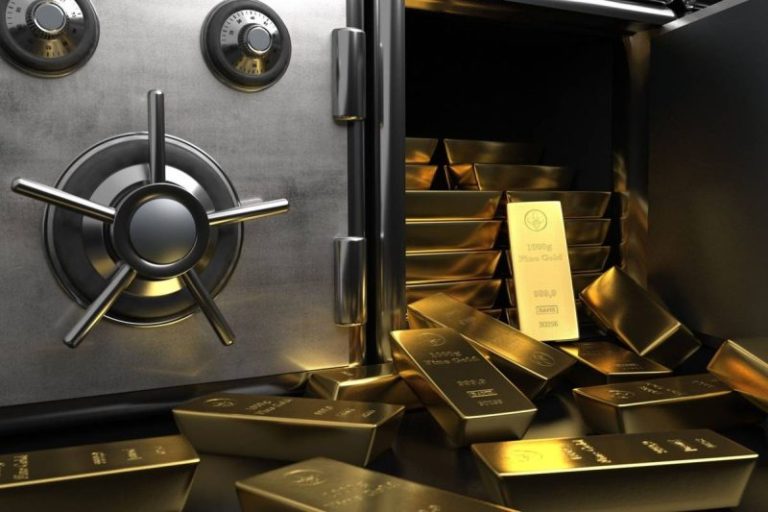
Global central banks own about 17 percent of all the gold ever mined, with reserves topping 36,520.7 metric tons (MT) at the end of November 2025. They acquired the vast majority after becoming net buyers of the metal in 2010.

Central banks purchase gold for a number of reasons: to mitigate risk, to hedge against inflation and to promote economic stability. Increased concerns over another global financial crisis have as expected led central banks once again to build up their gold reserves.

In a mid-2025 survey, the World Gold Council (WGC) said that 95 percent of the central bankers it polled expect global gold reserves to increase over the next 12 months. The precious metal’s ‘performance during times of crisis’ was cited by 85 percent of respondents as highly or somewhat relevant to their decision, while 80 percent cited its long-term store of value.

Central banks added 863.3 metric tons of gold to their vaults in 2025. While this was lower than the previous three years, which all topped 1,000 MT each, the reserve gains were still well above the 2010 to 2021 annual average of 473 MT.

Yearly central bank gold purchases since 2019.

Chart via the WGC.

A record 95 percent of respondents to the WGC survey stated their belief that central banks will continue to grow their holdings, with 5 percent suggesting they would hold at current levels. For the second year in a row, no respondents expected reserves to decrease.

The Council found that sentiment was consistent across advanced and emerging economies and reflected the strategic role of gold amid dynamic economic and geopolitical uncertainty.

Which central banks hold the most gold?

Read on to find out the 10 top countries by central bank gold holdings, as per data from the WGC, including recent Q4 2024 and full-year 2024 reports.

1. United States

Gold reserves: 8,133.46 metric tons

When it comes to the largest gold depository in the world, the American central bank is number one with 8,133.46 metric tons of gold.

A large percentage of US gold is held in “deep storage” in Denver, Fort Knox and West Point. As the US Treasury explains, deep storage is “that portion of the US Government-owned gold bullion reserve which the Mint secures in sealed vaults that are examined annually by the Treasury Department’s Office of the Inspector General and consists primarily of gold bars.”

The rest of US-owned reserves are held as working stock, which the country’s mint uses as raw material to mint congressionally authorized coins.

2. Germany

Gold reserves: 3,350.3 metric tons

The Bundesbank, Germany’s central bank, currently owns 3,351.53 metric tons of gold. Like many of the central banks on this list, the German national bank stores a significant portion of its gold in foreign central banks.

Today, just over half of Germany’s gold holdings are stored within Frankfurt, while internationally 1,236 MT of gold is stored in the vaults of the New York Federal Reserve, and 12 percent of its holdings are in London.

The Bundesbank’s foreign gold reserves came into question in 2012, when the German Federal Court of Auditors, the Bundesrechnungshof, was openly critical of the Bundesbank’s gold auditing. The German bank issued a public statement defending the security of foreign banks. Privately, the Bundesbank then began the arduous process of repatriating some of its gold stock back to German soil. By 2016, more than 583 MT of gold had been transferred back to Germany.

The economic upheaval and geopolitical volatility brought about by US President Donald Trump’s tariff wars and adversarial posturing toward Europe has led to calls for Germany to consider further repatriating its gold, reported The Guardian in January 2026.

3. Italy

Gold reserves: 2,451.9 metric tons

Banca d’Italia, the national bank of Italy, holds 2,451.84 metric tons of gold. The central bank began amassing its gold in 1893, when three separate financial institutions merged into one. From there, its 78 MT of holdings slowly grew into the large gold reserves it holds today.

Like Germany, Italy stores parts of its reserves offshore. In total, 141.2 MT are located in the UK, 149.3 MT are in Switzerland and 1,061 MT are kept in the US Federal Reserve. Italy houses 1,100 MT of gold domestically.

4. France

Gold reserves: 2,437 metric tons

The Banque de France has 2,437 metric tons of gold reserves, all of which it keeps on hand. The precious metal is stored in the bank’s secure underground vault, dubbed La Souterraine, which is located 27 meters below street level.

La Souterraine’s gold vaults are one of the four designated gold depositories of the International Monetary Fund.

According to Investopedia, the collapse of the Bretton Woods gold standard system was in part due to former French President Charles de Gaulle, who “called the U.S. bluff and began actually trading dollars in for gold from the Fort Knox reserves.” At the time, US President Richard Nixon “was forced to take the U.S. off the gold standard, ending the dollar’s automatic convertibility into gold.”

5. Russia

Gold reserves: 2,326.5 metric tons

The Bank of Russia is the official central bank of the Russian Federation and owns 2,332.74 metric tons of gold. Like France, Russia’s central bank has opted to store all its physical gold domestically. The Bank of Russia stores two-thirds of its gold reserves in a bank building in Moscow, and the remaining one-third in Saint Petersburg.

The majority of the yellow metal is in the form of large, variable-weight standard gold bars weighing between 10 and 14 kilograms. There are also smaller bars on site weighing as much as 1 kilogram each.

Russia, which is the second largest gold producer by country, has been a steady purchaser of the precious metal since roughly 2007, with sales ramping up significantly between 2015 and 2020. However, Russia’s refineries were banned from selling gold bullion into the London market following the country’s invasion of Ukraine. Sanctions by the west also include a freeze on about half of Russia’s gold reserves.

In early 2022, Russia tied its currency, the ruble, to the yellow metal. ‘The plan was to shift the currency away from a pegged value and into the gold standard itself so the ruble would become a credible gold substitute at a fixed rate,’ according to Robert Huish, an Associate Professor in International Development Studies at Dalhousie University.

6. China

Gold reserves: 2,306.3 metric tons

The central bank for Mainland China is the People’s Bank of China (PBoC), located in Beijing. According to the WGC, the national financial institute stores 2,279.56 metric tons of gold, most which has been purchased since 2000. In 2001, the PBoC had 400 MT of gold in reserve, but in just a little more than two decades that total has climbed by 459 percent.

The PBoC issues the Panda gold coin, which was first created in 1982. The Panda coin is now one of the top five bullion coins issued by a central bank. It is among the ranks of the American Eagle, Canadian Maple Leaf, South African Krugerrand and Australian Gold Nugget.

The PBoC was one of the top gold buyers of the world’s central banks for 2024 and 2025, purchasing 44 MT and 27 MT of gold during the years respectively. April 2024 marked the 18th consecutive month of gold buying for China’s central bank, which paused its purchases afterward until picking them up again in November. As of January 2026, it has purchased gold for a further 15 consecutive months.

7. Switzerland

Gold reserves: 1,039.9 metric tons

The Swiss National Bank (SNB) holds the seventh largest central bank gold reserves. Its 1,039.94 metric tons of gold are owned by the state of Switzerland, but the central bank manages and maintains the reserve. The Swiss constitution allows the SNB to buy and sell gold with market trends, but it is not required to report the sales.

After years of opaqueness regarding the country’s golden treasure trove and increased selling in 2011 as prices rose, the Swiss Gold Initiative was launched in 2011.

The initiative called for an amendment to the constitution to add three new points to it. The first was a mandate for all reserve gold to be held physically in Switzerland. The other two dealt with the central bank’s ability to sell its gold reserves, along with a decree that 20 percent of the Swiss bank’s assets be held in gold.

This culminated in a national referendum in 2014 that failed to reach a majority of votes. However, the public conversation did prompt the bank to be more transparent.

According to a 2013 release, the central bank reported that 70 percent of its gold reserve was held domestically, 20 percent was located at the Bank of England and 10 percent was stored with the Bank of Canada.

8. India

Gold reserves: 880.2 metric tons

The Reserve Bank of India is another central bank that has fervently acted to increase its holdings in recent years. It began adding to its gold assets in 2017; however, the majority of its purchases have taken place in the past four years.

Strikingly, after India’s central bank purchased 16 MT of gold in 2023, the institution scooped up another 72 MT of the precious metal in 2024. However, its 2025 purchases totaled just 4 MT, its lowest in eight years.

While more than half of its gold is held overseas in safe custody with the Bank of England and the Bank of International Settlements, about a third of its gold is held domestically. In June 2024, India repatriated 100 MT of gold from the United Kingdom. This was the first time since 1991 that the Reserve Bank of India moved its overseas gold holdings back home.

9. Japan

Gold reserves: 846 metric tons

The Bank of Japan currently holds 846 metric tons of gold. Public information about the Bank of Japan’s gold reserves is hard to come by.

In 2000, the island nation was holding approximately 753 MT of the yellow metal, and by 2004, the Bank of Japan’s gold store had grown to 765.2 MT. Its gold reserves remained at that level until March 2021, when the country purchased 80.76 MT of gold, bringing it to its current total.

10. Turkey

Gold reserves: 613.7 metric tons

The Central Bank of Turkey holds 613.7 metric tons of gold. Turkey has been a consistent gold buyer over the past several years, with its central bank adding 75 MT to its holdings in 2024. While the pace of the country’s buying slowed in 2025, the country accumulated another 27 metric tons through the end of November, making it the year’s fifth-largest gold buyer.

*11. International Monetary Fund

Gold reserves: 2,814 metric tons

The gold reserve held by the International Monetary Fund is the third largest in terms of size at 2,814 metric tons. The large gold reserve was amassed primarily during the founding of the international organization in 1944.

In that inaugural year, it was decided that “25 percent of initial quota subscriptions and subsequent quota increases were to be paid in gold.”

Since 1944, the International Monetary Fund has added gold through the repayment of debts owed by member countries. Nations can also exchange gold for another member country’s currency.

Securities Disclosure: I, Melissa Pistilli, hold no direct investment interest in any company mentioned in this article.

Securities Disclosure: I, Dean Belder, hold no direct investment interest in any company mentioned in this article.
This post appeared first on investingnews.com

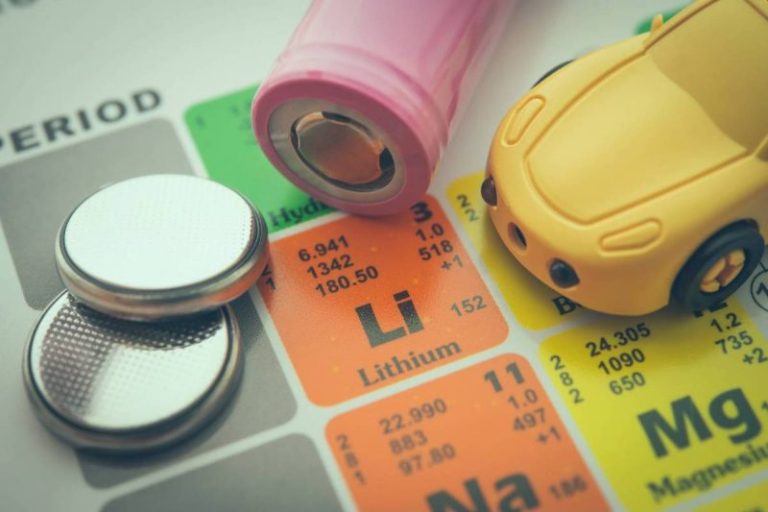
Sigma Lithium (TSXV:SGML,NASDAQ:SGML) has secured another large-scale sale of high-purity lithium fines and activated a production-backed revolving credit facility as it ramps up operations in Brazil.

The lithium producer announced it has agreed to sell 150,000 metric tons (MT) of high-purity lithium fines containing 1 percent lithium oxide at a net final price of US$140 per MT upon warehouse delivery at the port of Vitória.

The buyer has the option to purchase a further 350,000 MT at market prices.

Sigma, which refers to the high-purity fines as a low-grade product, said the optional volumes provide flexibility to respond to market conditions and customer requirements.

According to the company, the sale of its low-grade product could generate proceeds equivalent to the sale of 70,000 MT of its high-grade lithium oxide concentrate. Sigma attributes the marketability of the fines to the processing technology at its Greentech plant, which uses dense media separation and dry stacking.

According to the São Paulo-based company, clients have achieved up to 60 percent recovery when reprocessing the material, producing lithium concentrate with over 4 percent lithium oxide content.

That higher-grade concentrate is currently priced at about US$1,370 per MT on average by Shanghai Metals Market.

“Our sequential sales of the Low Grade Product show how this material can generate recurring value, demonstrating its marketability,” said Marina Bernardini, Sigma vice president of business development. “Continuous demand for the Low Grade Product has supported the creation of an additional revenue stream for the Company.”

The February 13 agreement follows Sigma’s January sale of 100,000 MT of high-purity lithium fines.

At the time, the company reiterated that mining remobilization was proceeding as planned and pushed back against what it described as inaccurate media reports regarding an administrative process related to waste piles.

Alongside the new sale, Sigma confirmed that the resumption of production of its high-grade lithium oxide concentrate has triggered the start of pre-payments under a US$96 million revolving facility.

The unsecured binding agreement, signed with what the company describes as a leading company in the battery materials supply chain, calls for the delivery of 70,500 MT of high-grade concentrate in 2026.

Under the terms, fixed pre-payments of US$8 million are made 30 days prior to production and delivery to the port of Vitória. The first pre-payment was disbursed on January 13.

Each pre-payment carries interest at SOFR plus 1 percent for 30 days until final sale upon delivery. Pricing for each shipment is tied to prevailing spot market prices for high-grade lithium concentrate, as reflected in major industry indexes.

Securities Disclosure: I, Giann Liguid, hold no direct investment interest in any company mentioned in this article.
This post appeared first on investingnews.com

Silverco Mining (TSXV:SICO) is a production-stage silver company targeting opportunities in Mexico’s Sierra Madre Occidental belt. Its primary technical focus is optimizing the wholly owned Cusi Mining Complex in Chihuahua, an 11,665-hectare district-scale property. The site benefits from established, institutional-quality infrastructure—such as direct access to the national power grid and paved roads—significantly lowering the capital requirements for restarting operations.

The company is undertaking a definitive transition toward mid-tier producer status through a binding agreement to acquire Nuevo Silver. This deal gives Silverco control of the La Negra mine in Querétaro, a currently producing asset that delivers immediate top-line revenue. By pairing the near-term restart of the Cusi 1,200 tpd mill with ongoing production at La Negra, Silverco is effectively bypassing the multi-year development cycle typically faced by junior miners.

This “buy-and-build” strategy is driven by a technical team with specialized expertise in Mexican epithermal vein systems and complex underground mine engineering, positioning the company to accelerate growth while maintaining operational discipline.

Company Highlights

  • The $62.5 million upsized bought deal financing (closing Q1 2026) and Eric Sprott’s $10 million lead order provide cornerstone validation from a legendary mining investor and the necessary liquidity to fast-track production restarts.
  • The updated Mineral Resource Estimate of 41.2 million ounces of silver equivalent (AgEq) in the Measured and Indicated category establishes a high-confidence geological foundation at Cusi, supporting long-term mine planning.
  • The dual-track growth strategy involving the Cusi restart and the Nuevo Silver/La Negra acquisition provides immediate production scale and a diversified cash-flow profile across two distinct Mexican mining jurisdictions.
  • Pure-play silver exposure with significant de-risking is achieved via the 1,200 tonne-per-day (tpd) Cusi mill, which was producing as recently as 2023, ensuring that surface infrastructure is ‘warm’ and capable of a rapid return to service.
  • Imminent exploration catalysts exist following the completion of a 15,000-metre drill program at Cusi; results are currently pending and are expected to define high-grade extensions at the San Miguel vein.

This Silverco Mining profile is part of a paid investor education campaign.*

Click here to connect with Silverco Mining (TSXV:SICO) to receive an Investor Presentation

This post appeared first on investingnews.com

Surface Metals Inc. (CSE: SUR,OTC:SURMF) (OTCQB: SURMF) (the ‘Company’, or ‘Surface Metals’) is pleased to announce it has engaged Danayi Capital Corp. (‘Danayi’), a full service marketing firm based out of Vancouver, BC, to provide digital marketing services for a 6-month term commencing on February 16, 2026. Under the terms of the agreement between Surface Metals and Danayi, the Company has agreed to pay Danayi one hundred and fifty thousand USD. No compensation in securities of the Company will be paid to Danayi. Danayi Capital Corp., an arm’s length party, is owned by Mehran Bagherzadeh. Based at 550 – 800 West Pender Street, Vancouver, BC, V6C 2V6 (e-mail: mehran@danayi.co; tel: 604-767-2983), Danayi specializes in marketing, advertising and public awareness within the mining and metals sector. To the knowledge of the Company, Danayi does not own any securities of the Company.

About Surface Metals Inc.

Surface Metals Inc. (CSE: SUR,OTC:SURMF) (OTCQB: SURMF) is a North American mineral exploration company focused on advancing a diversified portfolio of gold and lithium projects in Nevada, USA. The Company’s Cimarron Gold Project is located in Nye County, Nevada, in a historically productive gold district. Surface’s Clayton Valley Lithium Brine Project hosts an inferred resource of approximately 302,900 tonnes LCE adjacent to Albemarle’s Silver Peak Mine. Surface Metals is also advancing a sedimentary claystone lithium project in Fish Lake Valley, Nevada.

For more information, please visit: www.surfacemetals.com

On behalf of the Board of Directors
Steve Hanson
Chief Executive Officer, President, and Director
Telephone: (604) 564-9045
info@surfacemetals.com

Neither the CSE nor its regulations service providers accept responsibility for the adequacy or accuracy of this news release. This news release contains certain statements which may constitute forward-looking information within the meaning of applicable securities laws (‘forward-looking statements’). These include statements regarding the amount of funds to be raised under the Offering, and the use of such funds. There is no guarantee the Offering will be completed on the terms outlined above, or at all. Use of funds is subject to the discretion of the Company’s board of directors, and as such may be used for purposes other than as set out above. Any forward-looking statement speaks only as of the date it is made and, except as may be required by applicable securities laws, the Company disclaims any intent or obligation to update any forward-looking statement, whether as a result of new information, future events or results or otherwise.

To view the source version of this press release, please visit https://www.newsfilecorp.com/release/283975

News Provided by TMX Newsfile via QuoteMedia

This post appeared first on investingnews.com

Over the past year, the spot price of silver has surged past a 40 year record and into triple-digit territory, reaching a high of US$121 per ounce this past January.

For silver investors who bought into the physical market when the price was low, this first leg of the silver bull market has provided an opportunity to take ample profits.

At the Vancouver Resource Investment Conference, Rick Rule, proprietor at Rule Investment Media, shared his strategy for leveraging profits made in the physical silver market.

“That’s how I save. I maintain liquidity in US currency and I save in gold,” he said.

What did Rule do with the remaining half of his gains from selling physical silver?

He deposited those profits into high-quality silver-mining stocks.

“My reasoning being as follows: If silver goes nowhere for a year, if it stays rangebound, the best silver producers are discounting US$45 silver a year from now. If the price is at US$75 or US$80 they’ll be discounting US$75 or US$80 silver, which means the stock will be up 50, 60, 70 percent,” said Rule.

“The speculative outlook for the silver stocks seemed to be better than the speculative outcome for silver. If silver stays flat for a year, by definition silver won’t give me any return. But if it stays flat, the silver stocks would give me 50 or 60 percent. So it was a better speculative outcome,’ he added.

Here’s a look at the five silver stocks Rule invested in after selling his physical silver. Market cap figures were accurate as of February 12, 2026.

1. Wheaton Precious Metals (TSX:WPM,NYSE:WPM)

TSX market cap: C$88.43 billion
NYSE market cap: US$64.53 billion

Wheaton Precious Metals is the world’s biggest precious metals streaming company.

Its business model involves making upfront payments to precious metals companies in order to gain the right to purchase all or a portion of their metal production at a low, fixed cost. Investors benefit from gaining exposure to a wide range of precious metals companies operating in politically stable jurisdictions, while reducing the risk associated with investing in individual mining stocks. The company pays a quarterly dividend.

Wheaton currently has streaming agreements in place for 23 operating mines and 25 development-stage projects across five continents. This includes investments in Newmont’s (NYSE:NEM,ASX:NEM) Peñasquito mine in Mexico, Sibanye Stillwater’s (NYSE:SBSW) Stillwater and East Boulder mines in Montana, US, and Glencore’s (LSE:GLEN,OTCPL:GLCNF) Antamina silver mine in Peru.

2. Pan American Silver (TSX:PAAS,NASDAQ:PAAS)

TSX market cap: C$33.3 billion
NASDAQ market cap: US$23.67 billion

Pan American Silver holds interest in five silver-producing mines located in four Latin American countries.

This includes its three wholly owned mines: Huaron in Peru, Cerro Moro in Argentina and La Colorada in Mexico — its largest silver-producing asset. The company also holds a 95 percent interest in the San Vicente mine in Bolivia and a 44 percent stake in the Juanicipio mine in Mexico, operated by Fresnillo (LSE:FRES,OTCPL:FNLPF). Pan American’s gold-producing segment includes its second largest silver mine by production, the El Peñon gold-silver mine in Chile.

Ranked among the world’s largest primary silver producers, Pan American’s 2025 silver production total came in at 22.8 million ounces, alongside 742,200 ounces of gold. It’s set its silver production guidance for 2026 to between 25 million and 27 million ounces, white its expected gold production for the year is 700,000 to 750,000 ounces.

3. Industrias Penoles (OTCPL:IPOAF)

OTC market cap: US$26.14 billion

Founded in 1887, Mexico-based Industrias Peñoles is a vertically integrated metals company and a global leader in refined silver production. The company holds a majority stake in Fresnillo, the world’s leading primary silver producer.

Industrias Peñoles is also a top producer of refined gold and lead in Latin America, and one of the world’s leading producers of refined zinc and sodium sulfate. Its mining portfolio includes the Sabinas mine in Zacatecas, the Tizapa mine in Zacazonapan and the Velardeña mine in Durango. In the first half of 2025, Industrias Peñoles’ overall silver production from its mining operations came in at 30.3 million ounces of the metal.

4. AbraSilver Resource (TSXV:ABRA,OTCQX:ABBRF)

TSXV market cap: C$2.15 billion
OTC market cap: US$1.57 billion

Canadian junior Abrasilver Resource’s wholly owned flagship asset is the advanced-stage Diablillos silver-gold project in Salta, Argentina. It hosts five significant deposits: Oculto, JAC, Fantasma, Laderas and Sombra.

In December 2024, the company published an updated prefeasibility study for Diablillos, outlining a net present value (NPV) of US$747 million after tax at a 5 percent discount, as well as a 27.6 percent internal rate of return (IRR) and a two year payback period. An updated mineral resource estimate from July 2025 totals approximately 199 million ounces of silver and 1.72 million ounces of gold in the measured and indicated category.

Abrasilver has been busy expanding the upside potential at Diablillos via a Phase 6 drill program. The 15,000 meter campaign is aimed at extensions across various exploration targets. Results coming in from previous campaigns continue to demonstrate the potential for identifying gold and silver resources outside of the current resource estimate.

5. Vizsla Silver (TSXV:VZLA,NYSEAMERICAN:VZLA)

TSX market cap: C$1.73 billion
NYSEAMERICAN market cap: US$1.25 billion

Vizsla Silver is advancing toward production at its Panuco silver-gold project in Sinaloa, Mexico. Its expected to reach first silver production in the second half of 2027. In May 2025, the company acquired the producing Santa Fe silver-gold mine and property located to the south of Panuco. Production at the mine between 2020 and 2024 amounted to 370,366 metric tons of ore, with an average head grade of 203 grams per metric ton (g/t) silver and 2.17 g/t gold.

At Panuco, Vizsla completed a feasibility study in November 2025, outlining over 17.4 million ounces of silver equivalent production annually over an initial 9.4 year mine life, an after-tax NPV of US$1.8 billion at a 5 percent discount, an 111 percent IRR and a seven month payback at US$35.50 silver and US$3,100 per ounce gold.

The company has several upcoming catalysts for 2026. In the first half of the year, management is focused on completing detailed engineering, underground drilling, geophysical surveys and optimization work in order to make a construction decision in the second half of 2026 once permits are received. Throughout 2026, Vizsla is expecting to conduct 60,000 meters of diamond drilling across the Panuco district. A fifth phase of metallurgical testwork to optimize silver and gold recoveries using material from a 10,000 tonne bulk sample program is also planned.

After the interview with Rule took place, 10 workers were abducted from Panuco. Mexican authorities have since recovered 10 bodies as part of an investigation into the incident, with five being identified as Vizsla workers. The company has suspended operations at the site, although engineering-based remote work continues.

Securities Disclosure: I, Melissa Pistilli, hold no direct investment interest in any company mentioned in this article.

This post appeared first on investingnews.com

PERTH, AUSTRALIA AND VANCOUVER, BC / ACCESS Newswire / February 16, 2026 / Sarama Resources Ltd. (‘Sarama‘ or the ‘Company‘) (ASX:SRR)(TSXV:SWA) is pleased to announce it has appointed Davidson & Company LLP (‘Davidson & Co’) as Sarama’s audit firm, effective 13 February 2026.

Davidson & Co was appointed following the receipt by Sarama of the resignation of HLB Mann Judd, effective 10 February 2026. The Audit Committee of the Board of Directors accepted the resignation of HLB Mann Judd and recommended the appointment of Davidson & Co. The Board of Directors of Sarama, on the recommendation of the Audit Committee, appointed Davidson & Co as the new auditor until the next Annual General Meeting of Sarama.

Sarama sent a Notice of Change of Auditor (the ‘Notice‘) to HLB Mann Judd and to Davidson & Co and has received a letter from each, addressed to the securities commissions in each jurisdiction where Sarama is reporting, stating that they agree with the information contained in the Notice. The Notice and letters (the ‘Change of Auditor Package‘) have been reviewed and approved by Sarama’s Audit Committee and the Board of Directors.

The Change of Auditor Package is available under Sarama’s SEDAR+ profile at www.sedarplus.ca.

This announcement was authorised for release to the ASX by the Board of Sarama Resources Ltd.

Neither TSX Venture Exchange nor its Regulation Services Provider (as that term is defined in policies of the TSX Venture Exchange) accepts responsibility for the adequacy or accuracy of this release.

For further information, please contact:

Andrew Dinning
Sarama Resources Ltd
e: info@saramaresources.com
t: +61 8 9363 7600

SOURCE: Sarama Resources Ltd.

View the original press release on ACCESS Newswire

News Provided by ACCESS Newswire via QuoteMedia

This post appeared first on investingnews.com

Bragason has held senior leadership roles in 650 mW+ of Geothermal Energy Infrastructure Deployment Totalling ~$3.3b, Including the World’s Largest Geothermal Power Plant, Hellisheidi in Iceland.

Syntholene Energy CORP (TSXV: ESAF,OTC:SYNTF) (FSE: 3DD0) (OTCQB: SYNTF) (‘Syntholene’), announces the appointment of Eirikur Bragason as Lead Project Manager for Syntholene’s planned synthetic fuel demonstration facility and future commercial scale-up at its cornerstone production footprint in Iceland. Mr. Bragason will support Syntholene’s infrastructure development strategy, project governance, technical risk management, and expansion efforts.

Mr. Bragason brings more than 25 years of experience in geothermal energy development, large-scale power infrastructure, and complex project execution across Europe, Asia, and the Americas, strengthening the Company’s depth in geothermal energy, power plant construction, and large-scale energy infrastructure delivery.

Mr. Bragason has acted as Chief Project Manager or Senior Technical Lead on some of the world’s most significant geothermal and renewable energy projects. These include the Hellisheidi Geothermal Power Plant in Iceland, a combined 300 megawatt electric and 400 megawatt thermal facility recognized as the largest geothermal power plant on Earth. He also served as the Deputy General Manager of Sinopec Green Energy, overseeing a total of 4.2 gigawatts of thermal energy in operation encompassing a total investment of approximately $6 billion. Mr. Bragarson has further overseen major geothermal project development across Indonesia, the Philippines, Hungary, China, and Central Europe.

‘Syntholene is pursuing a technically rigorous and commercially disciplined approach to synthetic fuel production, differentiated by its unique integration of geothermal energy,’ commented Mr. Bragason. ‘I look forward to supporting the company as it transitions from demonstration facility to commercial scale, showcasing its potential to materially improve the economics of clean fuels.’

‘Eirikur is one of the most experienced geothermal project leaders in the world,’ said Dan Sutton, CEO of Syntholene. ‘His direct experience delivering utility-scale geothermal infrastructure, managing multinational development teams, and executing complex energy projects is aligned with Syntholene’s commercial scale-up strategy. As we advance our thermal hybrid power-to-liquids platform and deploy geothermal-anchored synthetic fuel production, his insight and operational discipline will be invaluable.’

Mr. Bragason is a globally recognized expert in geothermal power plant project management. Most recently, he served as Chief Operating Officer of Arctic Green Energy, where he oversaw international geothermal platform development and operational execution. Prior to that, he was Chief Executive Officer and Chief Project Manager of KS Orka Renewables and Orka Energy in Singapore, leading the development and delivery of geothermal assets across multiple jurisdictions.

About Geothermal Energy in Iceland

Iceland’s unique geological position atop the Mid-Atlantic Ridge provides exceptional access to high-temperature geothermal energy, which today serves as a cornerstone of its 100% renewable electricity grid, as well as providing over 90% of the nation’s district heating. This baseload power is characterized by its high capacity factors, often exceeding 90%, providing a level of grid stability that distinguishes it from intermittent renewables like wind and solar.

According to data from the Low-Carbon Power 2025 Report, Iceland’s geothermal infrastructure currently boasts an installed capacity of approximately 799 megawatts electrical equivalent (e), contributing nearly 28% of the country’s total electricity generation. The existing infrastructure, managed by leaders such as Landsvirkjun and ON Power, includes world-class facilities like the Hellisheidi and Reykjanes plants, which are increasingly integrating carbon capture and storage (CCS) technologies to move toward carbon-negative operations.

The National Energy Authority of Iceland (Orkustofnun) identifies a massive ‘understood potential’ for future development through the Master Plan for Nature Protection and Energy Utilization. Current estimates suggest that Iceland’s total geothermal energy potential for electricity generation is approximately 20 terawatt hours per year of high-enthalpy energy available for industrial scaling.

This stable political and geological environment has positioned Iceland as a hub for long-term industrial expandability, particularly for high-energy users in the eFuel and Digital Infrastructure sectors. Reports from atNorth and Country Reports note that the ‘predictable, low-cost nature of Icelandic geothermal power’ is attracting a new wave of industrial tenants, including eFuel producers and AI-ready data centers, who require scalable, 24/7 renewable energy to meet global ESG mandates.

Iceland continues to leverage its ‘geothermal-first’ policy to foster strategic collaborations between energy producers and prospective industrial customers. This synergy bolsters confidence that industrial users can secure long-term power purchase agreements (PPAs) that are insulated from the volatility of global fossil fuel markets, solidifying Iceland’s role as an energy powerhouse of the North Atlantic.

About Syntholene

Syntholene is actively commercializing its novel Hybrid Thermal Production System for low-cost clean fuel synthesis. The target output is ultrapure synthetic jet fuel, manufactured at 70% lower cost than the nearest competing technology today. The company’s mission is to deliver the world’s first truly high-performance, low-cost, and carbon-neutral synthetic fuel at an industrial scale, unlocking the potential to produce clean synthetic fuel at lower cost than fossil fuels, for the first time.

Syntholene’s power-to-liquid strategy harnesses thermal energy to power proprietary integrations of hydrogen production and fuel synthesis. Syntholene has secured 20MW of dedicated energy to support the Company’s upcoming demonstration facility and commercial scale-up.

Founded by experienced operators across advanced energy infrastructure, nuclear technology, low-emissions steel refining, process engineering, and capital markets, Syntholene aims to be the first team to deliver a scalable modular production platform for cost-competitive synthetic fuel, thus accelerating the commercialization of carbon-neutral eFuels across global markets.

For further information, please contact:
Dan Sutton, CEO
comms@syntholene.com 
www.syntholene.com
+1 608-305-4835

X: @Syntholene
Linkedin: Syntholene Energy
Youtube: Syntholene Energy

Investor Relations
KIN Communications Inc.
604-684-6730
ESAF@kincommunications.com

Neither TSX Venture Exchange nor its Regulation Services Provider (as that term is defined in policies of the TSX Venture Exchange) accepts responsibility for the adequacy or accuracy of this release.

Forward-Looking Statements

This press release contains forward-looking statements within the meaning of applicable securities laws. The use of any of the words ‘expect’, ‘anticipate’, ‘aims’, ‘continue’, ‘estimate’, ‘objective’, ‘may’, ‘will’, ‘project’, ‘should’, ‘believe’, ‘plans’, ‘intends’ and similar expressions are intended to identify forward-looking information or statements. All statements, other than statements of historical fact, including but not limited to statements regarding the completion of the demonstration facility, commencement commercialization efforts, potential to materially improve the economics of clean fuel, the successful implementation of the test facility, commercial scalability, technical and economic viability, anticipated geothermal power availability, anticipated benefit of eFuel, and future commercial opportunities, are forward-looking statements.

The forward-looking statements and information are based on certain key expectations and assumptions made by the Company, including without limitation the assumption that the Company will be able to execute its business plan, that the eFuel will have its expected benefits, that there will be market adoption, and that the Company will be able to access financing as needed to fund its business plan. Although the Company believes that the expectations and assumptions on which such forward-looking statements and information are based are reasonable, undue reliance should not be placed on the forward-looking statements and information because the Company can give no assurance that they will prove to be correct. Since forward-looking statements and information address future events and conditions, by their very nature, they involve inherent risks and uncertainties.

Actual results could differ materially from those currently anticipated due to a number of factors and risks, including, without limitation, Syntholene’s ability to meet production targets, realize projected economic benefits, overcome technical challenges, secure financing, maintain regulatory compliance, manage geopolitical risks, and successfully negotiate definitive terms. Syntholene does not undertake any obligation to update or revise these forward-looking statements, except as required by applicable securities laws.

Readers are advised to exercise caution and not to place undue reliance on these forward-looking statements.

To view the source version of this press release, please visit https://www.newsfilecorp.com/release/284115

News Provided by TMX Newsfile via QuoteMedia

This post appeared first on investingnews.com

Silver surged past US$100 per ounce for the first time in January before retreating below the US$80 level, marking a volatile start to 2026 as the precious metal faces renewed investor appeal.

In its latest annual outlook, published on February 10, the Silver Institute notes that the rally comes after a year when silver saw its strongest annual performance since 1979. Investor interest accelerated into early 2026 and pushed the price to multiple record highs, driving the gold-silver ratio below 50 for the first time since 2012.

Looking forward, global silver investment is expected to remain strong this year as the market posts its sixth consecutive annual deficit. The Institute’s forecast, based on analysis by London-based consultancy Metals Focus, points to a 67 million ounce shortfall in 2026, with total demand once again outstripping total supply.

Silver supply in 2026

On the supply side, total global silver output is forecast to increase by 1.5 percent in 2026 to 1.05 billion ounces, the highest level in a decade. Mine production is expected to edge up 1 percent to 820 million ounces, supported by stronger output from existing operations and newly commissioned projects.

Mexico is forecast to deliver much of the growth from primary silver mines. In China, higher output is expected from China Gold International Resources’ (TSX:CGG,OTCPL:JINFF) Jiama polymetallic mine as expansion continues.

Canada is projected to see gains from projects such as Hecla Mining’s (NYSE:HL) Keno Hill and New Gold’s (TSX:NGD,NYSEAMERICAN:NGD) New Afton, which is being acquired by Coeur Mining (NYSE:CDE). Morocco’s Zgounder mine is also ramping up production, while Peru is expected to record declines at certain operations.

By-product silver from primary gold mines is forecast to increase. Contributions are expected from Barrick Mining’s (TSX:ABX,NYSE:B) Pueblo Viejo in the Dominican Republic, Gold Fields’ (NYSE:GFI) Salares Norte in Chile and the Nezhda project in Russia, owned by SolidCore (formerly Polymetal International).

Output from primary silver mines is expected to remain largely flat, accounting for 28 percent of total mine supply.

Silver recycling supply is projected to rise 7 percent, exceeding 200 million ounces for the first time since 2012, as elevated price levels encourage scrap flows, particularly from silverware.

Although the silver price has cooled since this year’s highs, the Institute notes that it’s established technical support and remains underpinned by tight physical supply and ongoing macroeconomic uncertainty.

Many forces that drove silver in 2025 remain in place. Constrained physical availability in London, geopolitical tensions, US policy uncertainty and concerns about the US Federal Reserve’s independence continue to provide support.

Silver demand in 2026

On the demand side, total global silver consumption is forecast to remain broadly flat in 2026. Gains in physical investment are expected to offset weakness in jewelry, silverware and some industrial segments.

Meanwhile, industrial fabrication, the largest component of silver demand, is projected to decline by 2 percent to around 650 million ounces, marking a four year low.

As in 2025, the drag is seen coming primarily from the photovoltaic (PV) sector.

Although solar installations worldwide are expected to continue expanding, manufacturers are reducing silver use per panel through thrifting and substitution, resulting in lower silver demand from PV applications.

Other industrial uses offer partial relief. Growth in data centers, artificial intelligence technologies and automotive electronics is expected to sustain silver consumption across several end uses, mitigating some of the PV losses.

Consumer demand, however, remains under pressure from record-high prices. Jewelry demand is forecast to fall more than 9 percent to 178 million ounces, marking the lowest level since 2020.

In contrast, physical investment demand is set to strengthen considerably.

The Institute projects a 20 percent rise to a three year high in physical investment to 227 million ounces.

After three consecutive annual declines, western retail demand is expected to rebound as investors respond to silver’s price momentum and persistent macroeconomic risks.

Exchange-traded product holdings currently stand at an estimated 1.31 billion ounces, and coin and bar demand has firmed in recent months. As of February 9, the silver price was up 11 percent year-to-date.

Silver deficit to persist

Even with higher supply and recycling, the silver deficit is set to persist. The Institute notes that the global silver market will continue to rely on the drawdown of aboveground bullion inventories to bridge the gap.

While volatility is likely to continue, the Institute forecasts that strength in gold and sustained physical tightness may help cushion risks for silver as it navigates another year defined by deficit and demand.

Securities Disclosure: I, Giann Liguid, hold no direct investment interest in any company mentioned in this article.

This post appeared first on investingnews.com