Author

admin

Browsing

Gold often dominates conversations at the annual Vancouver Resource Investment Conference (VRIC), but silver’s price surge, which began in 2025 and continued into January, placed the metal firmly in the spotlight.

At this year’s silver forecast panel, Commodity Culture host and producer Jesse Day sat down with Maria Smirnova, senior portfolio manager and senior investment officer Sprott (TSX:SII,NYSE:SII); GoldSeek President and CEO Peter Spina; Peter Krauth, editor of Silver Stock Investor and Silver Advisor; and Silver Tiger Metals (TSXV:SLVR,OTCQX:SLVTF) President and CEO Glenn Jessome to discuss silver’s meteoric performance and where it could be headed next.

Significant tailwinds supporting silver

Over the past five years, the silver price has largely stagnated, trading between US$20 and US$25 per ounce until mid-2024 when the white metal crossed the US$30 mark. Even then, the price mostly held steady until 2025, when it crossed the US$35 mark in June, then passed US$40 in September and US$50 in October.

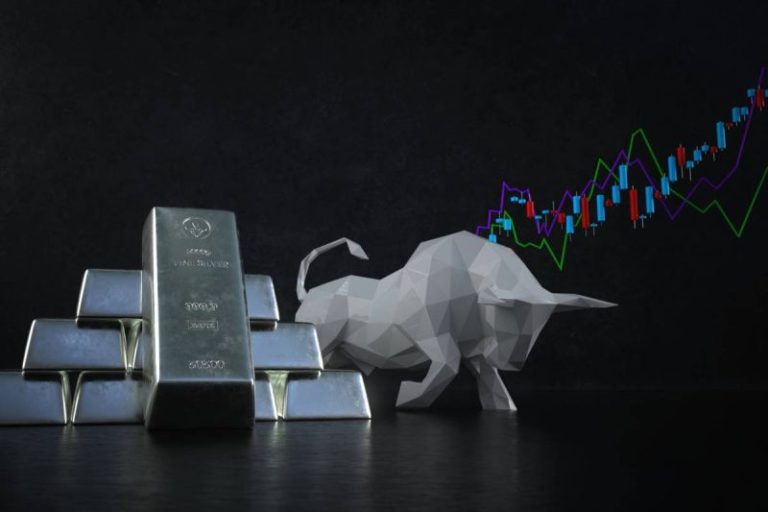
However, the most significant rise came at the start of December, when momentum took over, sending silver on a historic run that pushed it to a record high of US$116 by the end of January.

Behind these meteoric gains was a highly volatile silver market, which, despite strong fundamentals, became highly speculative and attractive to investors seeking an alternative to gold, which is also trading at all-time highs.

“You buy gold to prevent losing money, and you buy silver to make money, to buy more gold,” Spina said.

Silver is in the midst of a six-year structural supply deficit, with the expectation that it will continue through 2026.

A key driver of this deficit is silver’s growing role in industrial applications. Although its biggest gains have come from its use in solar panel production, it’s also important to several other sectors, including automotive and defense.

“We wouldn’t have a modern civilization without silver. It’s used in a myriad of different places, and what is interesting now is that silver is very critical to the national defense of the US, of China, of big superpowers. So it’s becoming weaponized,” Spina explained. He noted that the US designated silver a critical mineral in 2025, placing it alongside copper for strategic purposes, and suggested that stockpiling is likely underway.

In addition to demand driving the silver price, Spina also noted that investors who had been absent from the market for many years moved into net-buying positions last year, which has helped to accelerate the market.

“Its more serious than the gold market, because silver is so essential in our daily lives,” Spina said.

While demand increases, a serious situation is developing on the supply side. The majority of silver produced today comes as a byproduct from mining other metals like copper and zinc.

Jessome outlined how perilous the supply side is, noting that in 2025 there were just 52 primary silver mines worldwide; by the end of 2026, that number is expected to fall to 46, and in 2027 to 39.

With so few mines and high prices, the expectation is that there would be new production set to come online, and although there are some in the pipeline, including Jessome’s Silver Tiger, the reality is that starting a new mine is fraught with challenges. He noted that, from the first drill hole to production, the average time is 17 years.

“From that first drill hole to a commercial mine, it’s one in 1,000. So if you think that we’re going to solve this 39 in the next year, it’s not easy, it’s hard,” Jessome told the VRIC audience.

He continued to explain that, regardless of what happens with the price, people don’t realize there’s not enough silver.

Bull markets, retractions and getting ahead

Even though silver’s fundamentals support high prices, the questions on many lips throughout VRIC were: ‘Is it too much too soon?’ and ‘Is it a bull market or is it a bubble?’

The consensus was that the metal remains in a bull market, but is exhibiting some bubble-like characteristics; investors can expect corrections, but silver will likely maintain momentum.

“We’re multiple percent above the 200 day moving average. This is not something that’s sustainable. If we continue at this pace, it would suck all the money from the markets into this one asset. It’s not likely to continue,” Krauth said just days prior to a significant correction that took the silver price back below US$70.

He pointed to the 2001 to 2011 bull market: silver rose from US$4 to nearly US$50, but along the way, there were corrections. “There were five corrections of 15 percent or more. The average correction was 30 percent. That would take us to US$75, US$80 right now,” Krauth emphasized to the audience at VRIC.

While the expert explained that a silver correction of that magnitude wouldn’t be shocking, he also pointed out that miners would still be pretty happy at those prices.

Given the market volatility, Spina echoed much of Krauth’s belief that there is reason for investors to be excited but also urged caution, commenting, “I would be very, very cautious in trying to trade this, especially with leverage or anything like that, but I do think that we’re in the revaluation phase. Silver could go a lot higher, but along the way, we can get some very vicious pullbacks, and so one has to be ready for those events.’

Smirnova urged calm, and that she was hopeful for a correction, agreeing with Krauth that the parabolic trajectory of silver wasn’t sustainable, and saying she sees gold market as more steady.

She also suggested that, rather than chasing opportunities, investors should be patient and wait for them to come to them, rather than being fearful in such a volatile market.

“I would urge people to think, sit back, and think about the reasons why silver ran in the first place, and whether those reasons are continuing right now, and they will. I think the fundamentals haven’t changed for silver, using corrections as opportunities to reload, to enter, to buy things that you know you like as an investor,” Smirnova said.

Investor takeaway

Overall, the panel was in agreement that the main factors fueling a strong silver market, supply and demand, investment, and a bifurcated market, aren’t going anywhere anytime soon.

Demand for silver goes beyond investment and is set to play a crucial role in the energy transition, AI and technology, and national defense. However, they also agreed that it’s probably run up to fast, and needs a correction, which started to happen on January 29, but none expected the bull market to come to an end.

Smirnova did an excellent job of putting the changing silver market into perspective for investors.

“We mine and produce, between scrap and mining supply, 1 billion ounces a year at US$30. That was a US$30 billion market. At US$100 it’s a US$100 billion market. It’s nothing. We have companies trading at trillion-dollar valuations in the market. The whole silver market is $100 billion a year, so it really does not take a lot of money to move the price, and that’s why I think it’s gone from US$30 to US$100 in no time at all,” she said.

While these price shifts don’t require significant capital inflows, they make a significant difference across the sector. Krauth noted that the price of silver hasn’t really been factored in for silver developers or producers because their projections are currently based on prices that are two-thirds lower.

“Almost nobody ever uses spot prices. They’re arguably two-thirds below spot price,’ he said.

‘So when the next few quarters come in and the market starts to realize what kind of cash these projects are generating, I think that’s when the reality will start to set in,” Krauth added.

The panel was largely optimistic that opportunities will continue to arise in the silver market. They noted that physical silver prices tend to be more volatile, but there are safer options for investors who don’t want to miss out.

Securities Disclosure: I, Dean Belder, hold no direct investment interest in any company mentioned in this article.

This post appeared first on investingnews.com

Clear Commodity Network CEO and Mining Stock Daily host Trevor Hall opened his talk at the Vancouver Resource Investment Conference (VRIC) with a strong message: It is still possible to go broke in a bull market.

“I want to start with the simple but uncomfortable truth: most investors don’t lose money in bear markets,” he said.

“They lose it in bull markets. Bear markets are honest. Liquidity disappears; prices fall. Risk is obvious, and fear keeps people cautious. Bull markets, on the other hand, are deceptive.”

According to Hall, bull markets feed the idea that everything is working well.

Charts and spreadsheet data convince investors and business owners that it is the perfect time to make big decisions, making this the phase of the cycle where moves are based on impulse.

“Rising prices get confused with good business, compelling stores get confused with durable assets. Bull markets don’t expose bad ideas immediately; they carry, and that’s why the damage is so severe when cycles turn.”

For short, people get too excited, focusing on the potential weight of what they can earn soon without realizing how much they could lose in the long run.

Supercycle review

Ultimately, what is needed is a shift in mindset. Hall specified that the first point that has to be recognised is that bull markets do not mean that everyone is making money.

“High prices produce a false sense of security. They made marginal assets look competitive,” he said. “They mask permitting challenges, metallurgy issues, infrastructure gaps in management, weaknesses and too much capital changed too many projects simply because the spreadsheet said it works. Investors have need to learn from that in today’s market.”

Momentum is not directly proportional to skill, and government involvement does not eliminate risk.

He cited 2011 as the last super cycle that created enormous opportunities, but also created enormous mistakes.

At the time, companies jumped into spending on huge projects and capital expenditure blowout, not accounting for returns.

Some companies also lost control and went all in on mergers and acquisitions, while developers “pursued production growth for the sake of growth.”

The sector focused on volume, therefore burning investors. The market funded every project that screams as economic at high spot prices.

This lack of discipline led to over a decade’s worth of rebuilding mining credibility.

Now, the sector has changed. This time, companies that generate durable margins, stick to realistic timelines, manage risk and focus on humility will be rewarded.

It’s all in discipline.

Advice for companies

Hall specified certain aspects he believes investors who have learned from the super cycle are now looking for. We summarised them into five points:
  • Concrete de-risk plans with achievable milestones
  • Strict capital discipline, especially on operating and construction costs
  • Management teams with experience in leadership, permitting, engineering and community relations
  • Productive offtakes

“Capital is no longer betting solely on geology. It’s betting on execution,” the CEO stated. “Investors want to see alignment with users, so institutional investors are screening for policy alignment projects that strengthen domestic supply chains, support energy security and fit federal or state strategic priorities.”

Above all, across all this is transparency. Hall said that it is a must and called it “the new currency of trust in this sector.”

Advice for investors

“Many deposits look promising, far fewer have teams capable of construction and operations,” Hall said, adding that while high metal prices do help the sector, they also encourage a wave of marginal projects that do not deserve capital.

Maintaining high standards amidst high prices is vital. He advised investors to ask the following questions before making decisions:

  • Does the project work within conservative price limits or not? Does it have structural advantages?
  • Does it have grade, jurisdiction, scale and production cost?
  • Does the project matter? Does it solve a supply deficit?
  • Does it serve a strategic need, or is it simply additive but unnecessary?
  • Can management actually build it?

Making the right moves

Hall likened his industry recommendations to that of a chess game: make decisive moves and manage risks. It’s not just about what’s in front of you; it’s how you can win.

The industry is entering a new era where the investment cycle is not only driven by numbers and market forces, but by strategic necessity.

It is also the first time in decades that government capital, institutional capital and private capital are moving in the same direction, posing bigger opportunities.

Companies must learn to listen and execute to remain in the game for the next decade of resource development, and investors should come into the space with clear expectations.

“I think the ultimate word is check your discipline, because your discipline and your expectations need to be in line and more in tune than ever before,” Hall told companies.

“And for investors out there listening, you have to remember this: bull markets don’t make people rich by default; they reveal who already have the discipline.”

Securities Disclosure: I, Gabrielle de la Cruz, hold no direct investment interest in any company mentioned in this article.

This post appeared first on investingnews.com

Here’s a quick recap of the crypto landscape for Friday (February 6) as of 9:00 p.m. UTC.

Get the latest insights on Bitcoin, Ether and altcoins, along with a round-up of key cryptocurrency market news.

Bitcoin (BTC) was priced at US$70,178.66, up by 11.3 percent over 24 hours.

Bitcoin price performance, February 6, 2026.

Chart via TradingView.

Despite Friday’s gains, Bitcoin has fallen over 14 percent this week to lows below US$62,000.

Bitcoin has stopped behaving as an alternative safe-haven asset and has realigned with the risk asset cycle. Its high correlation with traditional financial markets, including a broad selloff in technology stocks, precious metals and equities, suggests a scenario of systemic stress and scarce liquidity.

Downward pressure intensified after key technical levels were broken, causing nearly US$770 million in leveraged long positions to be liquidated in 24 hours, suggesting the market’s ‘cleansing phase’ is ongoing.

The decline was exacerbated by a strong US dollar and rising bond yields, which reduced the appeal of non-yielding assets like cryptocurrencies, prompting a rotation into defensive assets.

In the short term, price action will be limited and vulnerable to renewed selling pressure as long as restrictive financial conditions and a defensive tone prevail in global markets. Stabilization requires an improvement in global financial conditions and Bitcoin’s ability to rebuild solid technical support.

Ether (ETH) was priced at US$2,052.03, up by 10 percent over the last 24 hours.

Altcoin price update

  • XRP (XRP) was priced at US$1.46, up by 25.2 over 24 hours.
  • Solana (SOL) was trading at US$87.37, up by 10.4 percent over 24 hours.

Securities Disclosure: I, Meagen Seatter, hold no direct investment interest in any company mentioned in this article.
This post appeared first on investingnews.com

A Chinese billionaire trader known for profiting from gold’s multi-year rally has turned sharply bearish on silver, building a short position now worth nearly US$300 million as prices slide.

Bian Ximing, who earned billions riding gold’s multi-year rally and later turned aggressively bullish on copper, is now positioned for a sharp reversal in silver—a bet that is already paying off as prices retreat from record highs.

According to exchange data analyzed by Bloomberg and people familiar with his positions, Bian has assembled the Shanghai Futures Exchange’s largest known net short position in silver, held through Zhongcai Futures Co.

The position, composed of roughly 30,000 contracts, or about 450 metric tons, has swung sharply into profit following silver’s more than 16 percent drop since late January.

The contrast with Bian’s copper strategy just a year ago could hardly be sharper.

In 2024, Bian emerged as China’s most prominent copper bull, building the largest net long position on the Shanghai Futures Exchange at a time when many traders were retreating amid trade tensions and growth concerns.

His thesis then centered on copper’s central role in electrification, grid expansion and industrial upgrading. That trade was built patiently and scaled over months, with Bian accumulating long positions across multiple contracts.

By the time copper prices surged, the position had generated hundreds of millions of dollars in gains.

Silver, by contrast, appears to have triggered Bian’s skepticism. While silver often trades alongside gold, its recent surge was increasingly viewed by market participants as driven by speculative positioning rather than fundamental shifts in industrial demand.

Unlike copper, where supply bottlenecks and electrification narratives were front and center, silver’s rally accelerated rapidly by drawing in leveraged traders and momentum funds.

Exchange data show that Bian began building silver shorts in the final week of January, as prices pushed into record territory in Shanghai. His exposure expanded quickly from about 18,000 contracts on January 28 to roughly 28,000 two days later, even as prices continued climbing.

The timing was costly at first, as volatility forced partial liquidations and earlier losses trimmed gains from prior silver longs.

However, Bian’s patience was rewarded when silver broke sharply lower.The short is now estimated to be worth roughly 2 billion yuan (US$288 million) in paper gains. After accounting for earlier losses, Bian’s net profit is estimated at around 1 billion yuan based on recent prices.

Whether the current selloff proves lasting remains an open question. Bian, who resides largely in Gibraltar and rarely speaks publicly, did not respond to requests for comment. Zhongcai Futures also declined to comment.

Securities Disclosure: I, Giann Liguid, hold no direct investment interest in any company mentioned in this article.
This post appeared first on investingnews.com

Saga Metals Corp. (‘SAGA’ or the ‘Company’) (TSXV: SAGA,OTC:SAGMF) (OTCQB: SAGMF) (FSE: 20H), a North American exploration company focused on critical mineral discoveries, acknowledges the recent announcement by The White House and Donald Trump of ‘Project Vault,’ a large-scale U.S. strategic stockpile initiative intended to strengthen domestic supply chains, advance national security priorities, and reduce reliance on foreign-controlled sources of critical minerals and raw materials.

Project Vault—announced in the Oval Office with participation from Export-Import Bank of the United States (‘EXIM’) — establishes the U.S. Strategic Critical Minerals Reserve as an independently governed public-private partnership designed to store essential raw materials across U.S. facilities.

EXIM has approved a Direct Loan of up to US$10 billion to support Project Vault, providing long-term financing for a partnership between original equipment manufacturers and private-sector capital providers—an effort EXIM has positioned as strengthening U.S. production and processing capacity, insulating manufacturers from supply shocks, and advancing U.S. national economic security objectives.

The stockpile is the latest move by the Trump administration to build a Western supply chain to counter China’s dominance in critical minerals — especially when it comes to refining. Beijing sought to cut off exports of rare earths, a subset of critical minerals, last year during trade disputes with the U.S.

A Media Snippet accompanying this announcement is available by clicking on this link.

Preferential trade alignment and allied coordination on display at the Critical Minerals Ministerial in Washington, D.C.

The U.S. efforts to diversify and stabilize critical minerals supply chains are expanding beyond domestic stockpiling toward allied coordination. On February 4, U.S. Vice President JD Vance outlined plans aimed at organizing partners into a preferential trade framework for critical minerals, including mechanisms intended to promote market stability and reduce vulnerability to price undercutting and supply disruption.

Canada’s Foreign Affairs Minister Anita Anand was in Washington on Wednesday as the Trump administration made a case for international partners to join a preferential trade zone for critical minerals with forced price floors.

Canada and the U.S. Department of Defense already have a co-investment deal to accelerate Canadian mining development and strengthen critical minerals supply chains.

A Media Snippet accompanying this announcement is available by clicking on this link.

Titanium: A national defense critical mineral facing supply chain constraints

Titanium remains a cornerstone material for aerospace and defense platforms, infrastructure, and high-performance industrial uses, and continues to be a strategic concern for Western supply chains due to limited domestic sourcing and processing capacity. Titanium is deemed a critical metal by the U.S., EU and Canada and is essential for defense and aerospace applications due to its strength-to-weight ratio and corrosion resistance.

Titanium is characterized as a critical mineral for defense and aerospace, with supply-chain risk concentrated in titanium metal pathways (including aerospace-grade sponge capacity and certification) rather than in pigment markets. The vast majority – over 90% globally of mined titanium is processed into the pigment – a looming supply chain gap UK-headquartered market intelligence company Project Blue outlines in a recent report.

‘Titanium is essentially a defence metal – it can be up to 20% or more of the markets for total titanium consumption that goes into defence. An F 15 can be up to 40% in weight of titanium. There’s some serious volume going in these jet planes,’ Project Blue Founder and Director, Dr. Nils Backeberg

Saga Metals’ Project Focus: Critical Minerals and Titanium Exploration in Labrador

Saga Metals believes the evolving policy environment reinforces the strategic relevance of North American Critical Minerals projects that can support secure, resilient supply chains for defense, aerospace, and advanced manufacturing. The Company’s flagship Radar Ti-V-Fe Project is located in Labrador near the port community of Cartwright and is supported by existing infrastructure, including road access and proximity to tidewater logistics. Saga recently announced a 100% drilling success rate in 2025 with exceptional grades of titanium, vanadium, and iron in all 15 drill holes completed at the Radar Critical Minerals Project. The company is advancing towards a Mineral Resource Estimate and has completed four diamond drill holes in 2026 to start the year.

Mike Stier, CEO & Director of Saga Metals commented: ‘The U.S. government’s focus on critical mineral stockpiling reinforces the strategic importance of secure, allied sources of materials such as titanium—particularly for North American national security and defense-related supply chains. Saga Metals continues to advance its portfolio with a focus on critical minerals that support supply-chain security, advanced manufacturing, and future-facing technologies. We believe this policy momentum highlights the importance of investing in strategic mining projects that can help build resilience—diversifying supply, strengthening domestic and allied production capacity, and supporting stable investment conditions for the critical materials that power our economies and protect our industries.’

Key implications Saga Metals sees from Project Vault and allied initiatives

Saga Metals recognizes several key implications from Project Vault and the broader allied push toward critical-minerals security:

  • Rising strategic value of titanium and other critical metals in defense readiness, aerospace manufacturing, and industrial policy.
  • Potential acceleration of investment in North American exploration, development, and processing capacity as governments prioritize secure supply.
  • Expanded public-private cooperation to create resilient, domestically aligned supply chains and mitigate market disruption risk.
  • Increased allied coordination on pricing stability, trade frameworks, and supply diversification to reduce dependency on concentrated refining and processing pathways.

About Critical Minerals

Critical minerals are the foundation upon which modern technology is built. They are used in a wide range of essential products ranging from mobile phones and solar panels to electric vehicle batteries, medical devices and defense applications. Canada’s critical minerals list identifies 34 minerals and metals while the U.S.A identifies 60 minerals and metals as critical.

Investor Relations Agreement

Additionally, the Company and GRA Enterprises LLC DBA National Inflation Association (‘NIA’) entered into a consulting agreement (the ‘NIA Agreement’) for investor relations and communication services. The NIA Agreement has an initial term of twelve (12) months, at an aggregate cost of USD$100,000 for the term. Following the initial term, the NIA Agreement can be extended by three (3) months for an additional USD$30,000, six (6) months for an additional USD$50,000 or one year for an additional USD$100,000. NIA will leverage its expansive distribution channels – including targeted email lists, website features, and blog content – to highlight the Company’s growth story and project developments.

NIA, based in Mooresville, North Carolina, has a strong track record of investor communications for publicly traded companies. The Company will not issue any securities to NIA as compensation. NIA and its principals are at arm’s length to the Company. NIA currently has no direct or indirect interest in the securities of the Company, or any right or intent to acquire such an interest.

For more information about NIA: Contact ga@gerardadams.com or visit them at 112 Camp Lane, Mooresville, North Carolina, 28117.

Qualified Person

Paul J. McGuigan, P. Geo., is an Independent Qualified Person as defined under National Instrument 43-101 and has reviewed and approved the technical information disclosed in this news release.

About Saga Metals Corp.

Saga Metals Corp. is a North American mining company focused on the exploration and discovery of a diversified suite of critical minerals that support the North American transition to supply security. The Radar Ti-V-Fe Project comprises 24,175 hectares and entirely encloses the Dykes River intrusive complex, mapped at 160 km² on the surface near Cartwright, Labrador. Exploration to date, including 4,250 m of drilling, has confirmed a large, mineralized layered mafic intrusion hosting vanadiferous titanomagnetite (VTM) and ilmenite mineralization with strong grades of titanium and vanadium.

The Double Mer Uranium Project, also in Labrador, covers 25,600 hectares and features uranium radiometrics that highlight an 18km east-west trend, with a confirmed 14km section producing samples as high as 0.428% U3O8. Uranium uranophane was identified in several areas of highest radiometric response (2024 Double Mer Technical Report).

Additionally, SAGA owns the Legacy Lithium Property in Quebec’s Eeyou Istchee James Bay region. This project, developed in partnership with Rio Tinto, has been expanded through the acquisition of the Amirault Lithium Project. Together, these properties cover 65,849 hectares and share significant geological continuity with other major players in the area, including Rio Tinto, Winsome Resources, Azimut Exploration, and Loyal Metals.

With a portfolio spanning key commodities critical to the clean energy future, SAGA is strategically positioned to play an essential role in critical mineral security.

On Behalf of the Board of Directors

Mike Stier, Chief Executive Officer

For more information, contact:

Rob Guzman, Investor Relations
Saga Metals Corp.
Tel: +1 (844) 724-2638
Email: rob@sagametals.com
www.sagametals.com

Neither the TSX Venture Exchange nor its Regulation Service Provider (as that term is defined in the policies of the TSX Venture Exchange) accepts responsibility for the adequacy or accuracy of this release.

Cautionary Disclaimer
This news release contains forward-looking statements within the meaning of applicable securities laws that are not historical facts. Forward-looking statements are often identified by terms such as ‘will’, ‘may’, ‘should’, ‘anticipates’, ‘expects’, ‘believes’, and similar expressions or the negative of these words or other comparable terminology. All statements other than statements of historical fact, included in this release are forward-looking statements that involve risks and uncertainties. In particular, this news release contains forward-looking information pertaining to the Company’s Radar Project and IR agreements listed herein. There can be no assurance that such statements will prove to be accurate and actual results and future events could differ materially from those anticipated in such statements. Important factors that could cause actual results to differ materially from the Company’s expectations include, but are not limited to, changes in the state of equity and debt markets, fluctuations in commodity prices, delays in obtaining required regulatory or governmental approvals, environmental risks, limitations on insurance coverage, inherent risks and uncertainties involved in the mineral exploration and development industry, particularly given the early-stage nature of the Company’s assets, and the risks detailed in the Company’s continuous disclosure filings with securities regulations from time to time, available under its SEDAR+ profile at www.sedarplus.ca. The reader is cautioned that assumptions used in the preparation of any forward-looking information may prove to be incorrect. Events or circumstances may cause actual results to differ materially from those predicted, as a result of numerous known and unknown risks, uncertainties, and other factors, many of which are beyond the control of the Company. The reader is cautioned not to place undue reliance on any forward-looking information. Such information, although considered reasonable by management at the time of preparation, may prove to be incorrect and actual results may differ materially from those anticipated. Forward-looking statements contained in this news release are expressly qualified by this cautionary statement. The forward-looking statements contained in this news release are made as of the date of this news release and the Company will update or revise publicly any of the included forward-looking statements only as expressly required by applicable law.

News Provided by GlobeNewswire via QuoteMedia

This post appeared first on investingnews.com

Blackrock Silver Corp. (TSXV: BRC,OTC:BKRRF) (OTCQX: BKRRF) (FSE: AHZ0) (‘Blackrock’ or the ‘Company’) is pleased to announce that Andrew Pollard, President & Chief Executive Officer of the Company, will present live at the Precious Metals & Critical Minerals Virtual Investor Conference hosted by VirtualInvestorConferences.com, on February 10th, 2026 at 2PM ET

Blackrock invites individual and institutional investors, as well as advisors and analysts, to attend online at VirtualInvestorConferences.com.

DATE: February 10th
TIME: 2:00PM ET
LINK:https://www.virtualinvestorconferences.com/wcc/eh/4814904/lp/5226511/blackrock-silver-corp-otcqx-bkrrf-tsxv-brc

This will be a live, interactive online event where investors are invited to ask the Company questions in real-time. If attendees are not able to join the event live on the day of the conference, an archived webcast will also be made available after the event.

It is recommended that online investors pre-register and run the online system check to expedite participation and receive event updates.

Learn more about the event at www.virtualinvestorconferences.com.

Marketing Agreement

The Company also announces that that it has entered into a marketing agreement (the ‘Agreement‘) with Epstein Research (‘ER‘), led by Peter Epstein, pursuant to which Mr. Epstein will provide investor relations services to the Company for a six (6) month term beginning on February 6, 2026 and ending on August 6, 2026 in consideration for a cash fee of US$2,500 per month, payable by way of a one time aggregate payment of US$15,000, paid in advance, subject to approval by the TSX Venture Exchange.

In accordance with the terms of the Agreement, ER will work with the Company on posting on social media and producing articles, interviews and commentary designed to increase awareness of the Company.

There are no performance factors contained in the Agreement and ER will not receive any securities of the Company as compensation.

Mr. Epstein does not beneficially own, directly or indirectly, any securities of the Company or any right to acquire securities of the Company. Mr. Epstein operates www.epsteinresearch.com, is an arm’s-length party to the Company, and has over 20 years experience in buy-side analyst roles.

Epstein Research is a research and analysis firm operated by Peter Epstein, located in the state of New Jersey, USA, specializing in investor relations and market awareness for public companies.

About Blackrock Silver Corp.

Blackrock Silver Corp. is an American-focused emerging primary silver developer systematically advancing the high-grade Tonopah West Project, situated in the historic ‘Queen of the Silver Camps’ in a jurisdiction consistently ranked as one of the top mining regions globally. The Company is backstopped by a veteran board and technical team with a proven track record of discovering, financing, and building major precious metal mines in Nevada and globally. Blackrock is committed to establishing a secure, high-margin, domestic supply of silver and gold.

Additional information on Blackrock Silver Corp. can be found on its website at www.blackrocksilver.com and by reviewing its profile on SEDAR+ at www.sedarplus.ca.

For further information, please contact:

Andrew Pollard, President & Chief Executive Officer
Blackrock Silver Corp.
Phone: 604 817-6044
Email: andrew@blackrocksilver.com

Sean Thompson, Head of Investor Relations
Blackrock Silver Corp.
Email: sean@blackrocksilver.com

Neither TSX Venture Exchange nor its Regulation Services Provider (as that term is defined in policies of the TSX Venture Exchange) accepts responsibility for the adequacy or accuracy of this release.

To view the source version of this press release, please visit https://www.newsfilecorp.com/release/282934

News Provided by TMX Newsfile via QuoteMedia

This post appeared first on investingnews.com

We also break down next week’s catalysts to watch to help you prepare for the week ahead.

In this article:

    This week’s tech sector performance

    Tech stocks extended their selloff into their second week, with the Nasdaq Composite (INDEXNASDAQ:.IXIC) posting its steepest two‑day decline since last April.

    Monday (February 2) saw an early rotation out of tech ahead of Palantir Technologies (NASDAQ:PLTR) earnings report. NVIDIA (NASDAQ:NVDA) slipped on news that its proposed OpenAI‑backed investment hit a snag, dragging AI‑chip names like Advanced Micro Devices (NASDAQ:AMD), Broadcom (NASDAQ:AVGO) and other semiconductor leaders.

    Palantir’s earnings, which beat expectations and included an aggressive revenue growth guide, lifted shares in an early surge on Tuesday (February 3); however, Nvidia’s OpenAI‑investment‑snag news, plus general AI‑disruption worries and positioning, weighed on the broader tech stack, sparking a tech‑growth selloff that impacted NVIDIA, Microsoft (NASDAQ:MSFT) and other software‑heavy names.

    The Nasdaq fell deeper on Wednesday (February 4) as influential tech names such as AMD and other chip and software stocks reversed post‑earnings gains. AMD saw a sharp intraday plunge following its after‑hours earnings print on Tuesday. Its losses dragged the broader index lower.

    Tech selloffs extended into Thursday (February 5), with the Nasdaq closing down 1.6 percent as major tech stocks saw profit‑taking and forward‑looking capex‑related concerns, later crystallized by Alphabet (NASDAQ:GOOGL) and Amazon (NASDAQ:AMZN) aggressive 2026 spending plans.

    The Nasdaq made an impressive recovery on Friday (February 6) as a rally in chip stocks helped pare earlier week losses, despite ongoing volatility in the mega‑caps.

    3 tech stocks moving markets this week

    1.Teradyne (NASDAQ:TER)

    After reporting Q4 2025 earnings results and strong AI-driven guidance on Monday, the stock rose sharply. The semiconductor‑test and robotics‑automation company makes equipment used to test chips, including AI‑related compute and memory and industrial robots.

    2. Skyworks (NASDAQ:SWKS)

    The analog and RF‑semiconductor company, which designs and manufactures components used in smartphones, 5G infrastructure, automotive and IoT devices, reported Q1 fiscal 2026 results on Tuesday, beating expectations and guiding up, which helped it outperform the broader tech selloff.

    3. Apple (NASDAQ:AAPL)

    Apple’s strong performance this week was driven by a wave of analyst upgrades and bullish notes that reinforced the positive narrative from last week’s record‑breaking Q1 print, especially around iPhone demand and China‑market strength.

    Skyworks Solutions, Teradyne and Apple performance, February 2 to 6, 2025.

    Chart via Google Finance.

    Top tech news of the week

      • Canada led an AI delegation to the 2026 World Governments Summit (WGS) in Dubai this week, led by SCALE AI.
        • Alphabet Q4 numbers were driven by search revenue growth, which accelerated by nearly 17 percent, and Google Cloud revenue that jumped 48 percent YoY, helping ease fears that AI chatbots would eat into search. Despite the strong print, the stock dipped as the company said it plans to increase capital expenditures to between US$175 billion and US$185 billion, more than its 2025 cash generation.
        • Palantir’s earnings triggered a pop on Tuesday as it beat revenue expectations and laid out an aggressive 2026 growth guide. The company reported Q4 2025 revenue of US$1.41 billion, up 70 percentYoY, with US commercial revenue surging 137 percent and government revenue rising 66 percent, while guiding full‑year 2026 revenue to about US$7.2 billion
        • Amazon also posted a solid quarter, but said it will spend roughly US$200 billion this year on capital expenditures, a 56 percent jump from 2025, to fund AI‑related infrastructure, data centers and custom chips for AWS. Revenue rose approximately 14 percent to US$213.4 billion, driven by AWS reaccelerating to 24 percent growth and advertising increasing by 22 percent, despite free cash flow collapsing due to a capex surge.

          Tech ETF performance

          Tech exchange-traded funds (ETFs) track baskets of major tech stocks, meaning their performance helps investors gauge the overall performance of the niches they cover.

          This week, the iShares Semiconductor ETF (NASDAQ:SOXX) advanced by 1.89 percent, while the Invesco PHLX Semiconductor ETF (NASDAQ:SOXQ) advanced by 1.66 percent.

          The VanEck Semiconductor ETF (NASDAQ:SMH) also increased by 0.75 percent.

          Tech news to watch next week

          Next week is another earnings‑heavy, tech‑adjacent stretch, with a mix of big‑name reports and key macro data that will like keep markets sensitive to AI capex and earnings.

          Coinbase (NASDAQ:COIN) and Robinhood Markets (NASDAQ:HOOD) will be among the most‑watched names tied to crypto and retail trading. Cisco (NASDAQ:CSCO) also reports midweek.

          In addition to US wholesale inventories, Employment Cost Index and CPI reports, the FOMC minutes will be released on February 11, so rate policy and inflation will stay front‑of‑mind.

          Securities Disclosure: I, Meagen Seatter, hold no direct investment interest in any company mentioned in this article.
          This post appeared first on investingnews.com

          Equity Metals Corporation (TSXV: EQTY,OTC:EQMEF) (FSE: EGSD) (OTCQB: EQMEF) (‘Equity’ or the ‘Company’) is pleased to advise that it will be exhibiting at the annual 2026 Prospectors & Development Association of Canada (PDAC) Convention, the world’s premier mineral exploration & mining event.

          To learn more about Equity Metals’ Silver Queen, silver-gold project in British, we invite you to visit the team at Booth # 2541 in the Investors Exchange, Level 800, at the Metro Toronto Convention Centre, South Building from Sunday March 1st through Wednesday March 4th.

          An updated version of our Corporate Presentation is now available on the Company’s website: www.equitymetalscorporation.com

          About PDAC

          PDAC 2025: The World’s Premier Mineral Exploration & Mining Convention is the leading event for people, companies and organizations connected to mineral exploration. This annual convention in Toronto, Canada is known for attracting up to 30,000 attendees from over 130+ countries for its educational programming, networking events, outstanding business opportunities.

          Since it began in 1932, the PDAC Convention has grown in size, stature and influence. Today, it is the event of choice for the world’s mineral industry hosting more than 1,100 exhibitors and 2,500 investors. Visit PDAC’s website for registration and ticketing information.

          Corporate Update

          Further, the Company reports that it has engaged Research Capital Corporation (‘RCC’) as a financial advisor to provide advice and assistance in connection with defining strategic and financial objectives over a one-month term. Equity will compensate RCC by payment of $24,000 and issuance of 150,000 share purchase warrants (‘Advisory Warrants’) valued at $30,000 (calculated using a share price of $0.40 with warrants valued at half that of shares). Each Advisory Warrant is exercisable for one common share of the Company for a period of 36 months at an exercise price equal to $0.40 per share. Such Advisory Warrants have been issued are subject to a hold period expiring June 7, 2026. RCC is arm’s length to the Company.

          About Equity Metals Corporation

          Equity Metals Corporation is a member of the Malaspina-Manex Group. The Company owns 100% interest, with no underlying royalty, in the Silver Queen project, located along the Skeena Arch in the Omineca Mining Division, British Columbia. The property hosts high-grade, precious- and base-metal veins related to a buried porphyry system, which has been only partially delineated. The Company also has a controlling JV interest (57.49%) in the Monument Diamond project, NWT, strategically located in the Lac De Gras district within 40 km of both the Ekati and Diavik diamond mines. As well, the Company has an option to acquire a 100% interest in the Arlington Property, located within the Boundary District of south-central British Columbia where 2025 exploration work consisted of geophysics and diamond drilling designed to identify and delineate an apparent gold system.

          On behalf of the Board of Directors,

          ‘Lawrence Page, K.C.’

          Lawrence Page, K.C.
          Chairman, Director, Equity Metals Corporation

          For further information, visit the website at https://www.equitymetalscorporation.com; or contact us at 604.641.2759 or by email at corpdev@mnxltd.com.

          Neither TSX Venture Exchange nor its Regulation Services Provider (as that term is defined in the policies of the TSX Venture Exchange) accepts responsibility for the adequacy or accuracy of this release.

          This news release contains forward-looking statements. Forward-looking statements address future events and conditions and therefore involve inherent risks and uncertainties. Actual results may differ materially from those currently anticipated in such statements. Factors that could cause actual results to differ materially from those in forward looking statements include the timing and receipt of government and regulatory approvals, and continued availability of capital and financing and general economic, market or business conditions. Equity Metals Corporation does not assume any obligation to update or revise its forward-looking statements, whether as a result of new information, future events or otherwise, except to the extent required by applicable law.

          To view the source version of this press release, please visit https://www.newsfilecorp.com/release/282959

          News Provided by TMX Newsfile via QuoteMedia

          This post appeared first on investingnews.com

          AFDG, now Copper Intelligence, has successfully entered a binding contract for the transaction closing of the Butembo mining concession in Eastern DRC. In conjunction with the SPA, AFDG shares have been issued to the license holders, with ownership of the mining interest now held by the US domiciled entity, thus completing the Reverse Takeover transaction (RTO).

          The transaction was signed in parallel with a Strategic Minerals roundtable held in Washington DC in conjunction with the launch of Project Vault by US President Trump, and the attendance by His Excellency, President Felix Tshisekedi of DRC, Aldo Cesano, Director of Copper Intelligence, and the inaugural Critical Minerals Ministerial hosted by Secretary of State Marco Rubio at the Department of State in Washington, D.C.

          Copper Intelligence, Inc is now the first stand-alone DRC company to be publicly traded in the United States.

          Andrew Groves, Chairman of Copper Intelligence stated, ‘ We are delighted to hold this status as a dedicated US company operating in Africa, aggregating assets in the DRC’s highest grade copper deposits in the world. The geology, and DRC’s prospective superlative yields, affords us the opportunity to create a unique, and dedicated copper exploration company. The Technical Team will now drive shareholder value through a methodical exploration program, asset addition, and validation of results.’

          Aldo Cesano, Director added, ‘We believe Copper Intelligence will make a significant contribution to the people and communities of the DRC in which we work.’

          Alan Kessler, Director and Founder concluded, ‘We are confident Copper Intelligence holds the resources, timing and execution capability to embrace the global copper shortage, and create shareholder value as a pioneering African company.’

          About the Butembo Copper Project

          Butembo is a near surface, low strip, Tier one exploration opportunity, located near the Ruwenzori mountain location of Uganda’s biggest copper mine (Kilembe with 4 million tons of verified reserves), located only 50km from the Ugandan border with verified access to rail. The High-grade copper samples thus far have returned 18% Copper assays, which if maintained at production would rank amongst the highest globally.

          Industry and DRC positioning

          According to The Washington Post, projected demand scenarios suggest that annual copper deficits could reach or exceed 6 million tons by 2035. The U.N. Conference on Trade and Development (UNCTAD) estimates that closing this gap would require opening around 80 major new mines by 2030.

          Click here to continue reading.

          Media Contact:

          www.copperintelligence.com
          Maxine Gordon
          mg@africandiscoverygroup.com
          (917) 478-0406

          View original content:https://www.prnewswire.com/news-releases/african-discovery-group-afdg-announces-signing-of-definitive-sales-and-purchase-agreement-spa-for-butembo-copper-asset-in-the-democratic-republic-of-congo-name-change-to-copper-intelligence-inc-302681359.html

          SOURCE African Discovery Group

          News Provided by PR Newswire via QuoteMedia

          This post appeared first on investingnews.com