Author

admin

Browsing

Syntheia Corp. (CSE: SYAI) (‘Syntheia’ or the ‘Company’) (Syntheia.ai) is pleased to announce that it intends to settle an aggregate of $590,768.28 of indebtedness to certain creditors of the Company through the issuance of 4,923,069 common shares in the capital of the Company (the ‘Common Shares’) at a price of $0.12 per Common Share (the ‘Debt Settlement’). The indebtedness related to fees for services, expenses and payments made relating to consulting agreements with certain officers and consultants of the Company. The Common Shares issued pursuant to the debt settlement are subject to a four-month hold period and completion of the transaction remains subject to final acceptance of the Canadian Securities Exchange.

The Debt Settlement constituted a ‘related party transaction’ as defined in Multilateral Instrument 61-101 – Protection of Minority Securityholders in Special Transactions (‘MI 61-101‘), as insiders of the Company received an aggregate of 4,923,069 Common Shares. The Company is relying on the exemptions from the valuation and minority shareholder approval requirements of MI 61-101 contained in sections 5.5(a) and 5.7(1)(a) of MI 61-101, as neither the fair market value of such Common Shares nor the Debt Settlement exceeds 25% of the Company’s market capitalization. The Company did not file a material change report in respect of the related party transaction at least 21 days before the closing of the Debt Settlement, which the Company deems reasonable.

About Syntheia

Syntheia is an artificial intelligence technology company which is developing and commercializing proprietary algorithms to deliver human-like conversations and deploying our technology to enhance customer satisfaction while dramatically reducing turnover and traditional staffing issues.

For further information, please contact:

Tony Di Benedetto
Chief Executive Officer
Tel: (844) 796-8434

Cautionary Statement

Neither the Canadian Securities Exchange nor its Market Regulator (as that term is defined in the policies of the Canadian Securities Exchange) accepts responsibility for the adequacy or accuracy of this news release.

This news release contains certain ‘forward-looking information’ within the meaning of applicable securities law. Forward-looking information is frequently characterized by words such as ‘plan’, ‘expect’, ‘project’, ‘intend’, ‘believe’, ‘anticipate’, ‘estimate’, ‘may’, ‘will’, ‘would’, ‘potential’, ‘proposed’ and other similar words, or statements that certain events or conditions ‘may’ or ‘will’ occur. These statements are only predictions. Forward-looking information is based on the opinions and estimates of management at the date the information is provided and is subject to a variety of risks and uncertainties and other factors that could cause actual events or results to differ materially from those projected in the forward-looking information. Forward-looking statements in this news release includes, but are not limited to, the synergies derived from the acquisition of the assets in the Transaction. Readers are cautioned that forward‐looking information is not based on historical facts but instead reflects the Company’s management’s expectations, estimates or projections concerning the business of the Company’s future results or events based on the opinions, assumptions and estimates of management considered reasonable at the date the statements are made.

Although the Company believes that the expectations reflected in such forward‐looking information are reasonable, such information involves risks and uncertainties, and undue reliance should not be placed on such information, as unknown or unpredictable factors could have material adverse effects on future results, performance or achievements. Please refer to the Company’s listing statement available on SEDAR+ for a list of risks and key factors that could cause actual results to differ materially from those projected in the forward‐looking information. Should one or more of these risks or uncertainties materialize, or should assumptions underlying the forward‐looking information prove incorrect, actual results may vary materially from those described herein as intended, planned, anticipated, believed, estimated or expected.

Although the Company has attempted to identify important risks, uncertainties and factors which could cause actual results to differ materially, there may be others that cause results not to be as anticipated, estimated or intended. The Company undertakes no obligation to update forward-looking information if circumstances or management’s estimates or opinions should change unless required by law. The reader is cautioned not to place undue reliance on forward-looking information.

The securities of the Company have not been and will not be registered under the United States Securities Act of 1933, as amended and may not be offered or sold in the United States absent registration or an applicable exemption from the registration requirement. This press release shall not constitute an offer to sell or the solicitation of an offer to buy nor shall there be any sale of the securities in any jurisdiction in which such offer, solicitation or sale would be unlawful.

To view the source version of this press release, please visit https://www.newsfilecorp.com/release/274634

News Provided by Newsfile via QuoteMedia

This post appeared first on investingnews.com

Mike Maloney, founder of GoldSilver.com, explains why this time really is different for gold and silver, pointing to factors including growing mainstream adoption.

‘This to me signals the beginning of the third and final phase of the bull market — and that is where you have the greatest amount of gains in the shortest period of time,’ he said.

Securities Disclosure: I, Charlotte McLeod, hold no direct investment interest in any company mentioned in this article.

This post appeared first on investingnews.com

The gold price was back in action this week, breaking above the US$4,200 per ounce level after spending about two weeks trading at lower price points.

Silver was on the rise again as well, pushing briefly past US$54 per ounce.

Both precious metals saw their biggest gains midway through the week as the US government shutdown came to an end. At 43 days, it was the longest in history, and finished on Wednesday (November 12) as eight Democrats broke ranks to vote in line with Republicans on a funding package.

US economic data has been scarce during the shutdown, and government agencies are now beginning to play catch up as workers return to their posts. While some reports are scheduled to come out next week, others could take weeks or may never be released at all.

‘Based on past shutdowns, we anticipate data originally scheduled for release in the first half of October — primarily data covering September — will be released fairly quickly. However, the timetable will vary depending on the normal data collection process for each indicator’ — Nancy Vanden Houten, Oxford Economics

From a gold perspective, all eyes are on numbers that may impact the US Federal Reserve’s interest rate decision next month. While the Fed has now made two cuts in 2025, Chair Jerome Powell emphasized after the central bank’s last meeting that a December reduction is not guaranteed.

More recent commentary from other Fed officials points to continued dissent, and CME Group’s (NASDAQ:CME) FedWatch tool currently shows an almost even split between a cut or a pause.

That uncertainty weighed on gold and silver prices as the week drew to a close. Gold was at the US$4,080 level as of Friday (November 14) afternoon, while silver was around US$50.60.

Bullet briefing — New Orleans takeaways

For our bullet briefing this week, I want to share a few highlights from the New Orleans Investment Conference, which our team attended from November 2 to 5.

At the time, the gold price was around US$4,000 and the silver price was in the US$48 dollar range, and my main takeaway from the experts I heard from was that the pullback would be temporary.

Given this week’s price activity, it looks like that idea is already being proven right. That said, it’s worth noting that most of the people I heard from weren’t expecting such a quick turnaround — in general, the consensus was that prices could remain at lower levels for weeks or months, with some saying gold could fall as low as US$3,600.

Does that mean a deeper correction is coming? Time will tell…

On that note, another topic that came up at the event frequently was taking profits. Quite a few people discussed how they did some trimming in October, when gold and silver prices were really running, and then put the money to work in other parts of the market.

For example, Rick Rule of Rule Investment Media talked about how he sold 25 percent of his junior gold stocks at that time. Here’s how he explained his decision:

‘We were in a period five weeks ago where there were no asks, there were all bids. And I’ve learned in the market to do what’s easy. If there’s no bids, be a bid. If there’s no asks, be an ask. And the sector was white hot. There were so many junior financings, and when a company’s financing, they’re telling you that your cash is worth more than their stock. Well, they should know what their stock is worth. Since they were selling, I decided I would sell some too.

‘But what was most important to me was personal. I’ve been a heavy investor in the sector since 2020, and I was at a period of time where I could, by selling a quarter of my position, recoup all of my capital and pay the capital gains tax and have the rest for free. I can be very patient with that remaining 75 percent.’

He redeployed the cash he got from selling gold juniors into physical gold, Agnico Eagle Mines (TSX:AEM,NYSE:AEM), Franco-Nevada (TSX:FNV,NYSE:FNV), Wheaton Precious Metals (TSX:WPM,NYSE:WPM) and oil and gas stocks.

Finally, while I’m always keen to understand what’s happening now, I also wanted to use this conference to start talking about what sectors will do well in 2026.

I asked almost all of my interviewees what they think next year’s top-performing asset will be, and I was surprised to get a fairly wide variety of responses.

Precious metals were definitely mentioned, with multiple people saying that while silver has made impressive moves this year, it hasn’t truly had a chance to shine.

But copper was also brought up numerous times, as was uranium. And I got a couple of outlier responses, including emerging markets, which Peter Schiff of Euro Pacific Asset Management discussed, and oil and gas, which Rule said would be his pick for top-performing asset in terms of risk to reward.

Rule also highlighted small-scale community banks in the US.

You can view the full New Orleans Investment Conference playlist here.

Securities Disclosure: I, Charlotte McLeod, hold no direct investment interest in any company mentioned in this article.

This post appeared first on investingnews.com

During the Mining Share panel at the New Orleans Investment Conference, participants underscored that the gold bull market will continue — however, just where we are in that bull run was up for debate.

For conference host and Gold Newsletter editor Brien Lundin, there is still some way to go.

“The gold bull market is still in place. We don’t know how long it’s going to last. That’s the hard part. I think gold’s going to US$6,000 to US$8,000 (per ounce) in the cycle, maybe more. (The) mining share bull market, I would say we’re probably in the fourth inning, fifth inning, maybe. But you know, we could go to extra innings,” he said.

Strategic investor Jeff Phillips also believes the gold bull market is at an early stage.

‘I would say that we are in the third or fourth inning,” he said. “This is early on in the bull market, but I do think there’ll be a rain delay, since we’re talking about baseball terminology. I think this is an epic bull market that we’re in.”

Phillips went on to compare today’s setup to past cycles, noting the strong run gold saw between 2003 and 2007, before the financial crisis briefly derailed momentum. Although he anticipates another correction at some point, he remains confident in the broader bull market and said he is continuing to buy and stay patient.

For Jordan Roy-Byrne, understanding the difference between a secular and cyclical bull market is imperative.

“Secular — that’s the major long-term trend that usually lasts a decade or longer. Cyclically, it can be anywhere from two to five years or so,’ explained the editor and publisher of the Daily Gold.

“I think the cyclical bull has three or four more years left. The risk when that gets long in the tooth is then you have what happened at 1975 to 1976, and also 2008 — that’s when you have your 65 or 60 percent decline in the shares.”

Although Roy-Byrne believes that type of correction is “far off into the future,” he was adamant that something like that will happen before the current secular bull market comes to an end.

Jennifer Shaigec, principal at Sandpiper Trading, said central bank buying shows the bull market is in its infancy.

“I think we’re still actually in fairly early innings,” she said. “The underlying fundamentals for why central banks have been buying gold have not changed. In fact, I can see it accelerating.”

Shaigec went on to acknowledge that gold often experiences a seasonal dip at this time of year, and that some investors may be waiting for a pullback. But she emphasized that the broader fundamentals remain strong.

Drawing a parallel to 2008, when gold fell about 22 percent before rebounding above previous highs within six months, she urged investors to keep a long-term perspective and be mentally prepared for short-term volatility. Shaigec also pointed out that gold has historically been among the first assets to recover after market downturns.

Rounding out the panel, Nick Hodge, publisher at Digest Publishing, told attendees that the gold correction has found short-term support at the US$4000 level, but longer-term support is around US$3,600.

“All the fundamental drivers, ie. the debt, central bank buying, etc., are still in place and haven’t abated,” he said. “Silver hasn’t had its move yet, so that tells me we still have some time to go. And GDX, GDXJ just started outperforming the gold price in August, so it’s still early to the middle days in the precious metal bull market.”

What’s next for the gold price?

From there, panel moderator and well-known investor Rick Rule, proprietor at Rule Investment Media, emphasized that the recent pullback in gold is minor in the context of a much larger, long-running bull market.

Rule agreed with Roy-Byrne’s distinction between cyclical dips and broader secular trends, noting that many investors seem rattled by what is essentially a normal fluctuation.

He pointed out that gold is still up dramatically over the past year, and that past cycles have seen far sharper drops — including a 50 percent decline in 1975 — that ultimately didn’t break the long-term trend.

Noting that precious metals cycles tend to follow a familiar pattern, beginning with strength in gold and moving outward into other segments, Rule asked the panel participants which companies in the gold sector — explorers, developers or potential M&A targets — are now best positioned as the market progresses.

For Hodge, exploration and brownfields development are a strong choice as the precious metals cycle evolves.

He noted that the VanEck Gold Miners ETF (ARCA:GDX) outperformed gold over the summer, prompting some investors to take profits and rotate capital into earlier-stage opportunities — momentum he expects to continue.

Hodge added that market cycles now move faster due to the speed of information, accelerating the shift from producers to companies further down the value chain as miners look to replace reserves.

Additionally, he pointed to a growing influx of risk-tolerant investors who cut their teeth in crypto and are increasingly drawn to gold and mining equities as they learn about fiat currency and counterparty risk. Their appetite for speculation, he said, is likely to push more capital into smaller, higher-risk exploration names over the next year.

Shaigec echoed Hodge’s sentiment.

“I agree there’s a lot of speculative money that has yet to rotate over to precious metals,” she said.

“I’m seeing a lot of oversubscribed private placements. I just think that juniors are still the place to be. There’s some grassroots exploration, which actually hit an all-time low in 2023, and we’ve still had decades of lack of investment in exploration. We have a lot of room yet to run there,’ Shaigec added.

Roy-Byrne advised watching silver, underscoring the value that gold’s sister metal has yet to gain.

“Silver, after this correction, has a chance to make a historic move,” he told the audience. “We’re probably going to see a lot of money jump in next year when that happens.”

Referring to an analogy he once heard, Phillips compared a precious metals bull market to the crack of a whip: producers move first, followed by mid-tier and single-asset developers, with exploration companies snapping into action at the very end. In his view, the market is only just reaching that final stage, and explorers have yet to see real upside.

Phillips also echoed other panelists’ comments that younger crypto investors are becoming more aware of inflation, money printing and the value of hard assets.

That shift, he said, is already showing up in unconventional moves, from stablecoin companies buying gold royalties to major tech firms and even governments directing capital into mining-related assets.

All of that suggests the speculative end of the sector is only beginning to come alive, he said.

Expert stock picks — Gold, silver, copper, nickel and uranium

Toward the end of the discussion, Rule asked each panelist to provide stock picks for the attentive audience.

First was Lundin, who praised the list of more than 100 exhibitors at the 51st New Orleans Investment Conference.

He recommended Delta Resources (TSXV:DLTA,OTCQB:DTARF), highlighting its “large, still undefined, gold resource in the Thunder Bay region.” He also likes Getchell Gold (CSE:GTCH,OTCQB:GGLDF), a company focused on gold in Nevada, and Seabridge Gold (TSX:SEA,NYSE:SA), which he dubbed a “permanent optionality play.”

For Phillips, Empress Royalty’s (TSXV:EMPR,OTCQB:EMPYF) management team, cashflow-positive status and focus on gold and silver puts the company at the top of his list.

Almadex Minerals (TSXV:DEX,OTCQX:AAMMF), where management has a history of finding multimillion-ounce deposits, and prospect generator Headwater Gold (CSE:HWG,OTCQB:HWAUF), were also among his stock selections.

Shaigec veered away from precious metals in recommending SPC Nickel (TSXV:SPC,OTCQX:SPCNF), a company with good geology and a management team that owns 36 percent of the firm’s shares.

She also mentioned Pacifica Silver (CSE:PSIL,OTCQB:PAGFF) citing the company’s recent private placement, which included First Majestic Silver (TSX:AG,NYSE:AG). Her last stock pick and “absolute favorite” is Camino Minerals (TSXV:COR,OTCID:CAMZF), a Peru-focused copper company with good management.

Rounding out the list were Hodge’s selections, starting with Northshore Uranium (TSXV:NSU) due to its US deposit. He also chose Kincora Copper (TSXV:KCC,OTCQB:BZDLF), citing its small market cap, strong investor interest and robust portfolio, and Kingsmen Resources (TSXV:KNG,OTCQX:KNGRF), a company that has seen its share price grow from C$0.25 to C$0.75 in the last year.

Securities Disclosure: I, Georgia Williams, hold no direct investment interest in any company mentioned in this article.

This post appeared first on investingnews.com

On Thursday (November 13), Canadian Prime Minister Mark Carney announced a second round of nation-building projects that will be referred to the Major Projects Office. The office was established earlier in the year to streamline the regulatory and funding processes for projects deemed to be in the national interest.

The first set of projects, announced on September 11, included support for the expansion of Newmont’s (NYSE:NEM,ASX:NEM) Red Chris mine in Northern British Columbia, LNG Canada’s phase 2 expansion of its facility in Kitimat, BC, and Foran Mining’s (TSX:FOM) McIlvenna Bay copper-zinc project in Saskatchewan.

According to the Prime Minister’s Office (PMO), the new set of projects represents more than C$56 billion in new investment and supports the creation of 68,000 new jobs.

Critical mineral projects on the list consist of:

        Outside of critical minerals projects, the announcement included support for the Ksi Lisims liquefied natural gas (LNG) project near Prince Rupert in Northwest BC. The Nisga’a First Nation is leading the project and, when complete, it will become Canada’s second-largest LNG facility after LNG Canada’s Kitimat facility. According to the PMO, the project is expected to generate almost C$30 billion in investment and create thousands of jobs.

        Additionally, support will be made available for the North Coast Transmission line, which will provide low-cost electricity and improved telecommunications to communities along BC’s north coast. Likewise, the Iqaluit Nukkiksautiit hydro energy project will receive support to provide hydroelectric energy to communities in Nunavut and reduce the reliance on diesel imports.

        For more on what’s moving markets this week, check out our top market news round-up.

        Markets and commodities react

        Canadian equity markets were mixed this week.

        The S&P/TSX Composite Index (INDEXTSI:OSPTX) rose 1.89 percent over the week to close Friday (November 14) at 30,326.46.

        Meanwhile, the S&P/TSX Venture Composite Index (INDEXTSI:JX) rebounded to gain 1.33 percent to 879.88. The CSE Composite Index (CSE:CSECOMP) had another bad week, plunging 9.01 percent to close at 150.19.

        The gold price rose significantly this week, climbing from its open of US$4,000 to US$4,243 by Thursday morning. However, it pulled back to end the week up 2.01 percent at US$4,080.64 per ounce by 4:00 p.m. EST Friday.

        The silver price performed even better. After opening at US$48.35, it tested all-time highs at US$54.31 Thursday before ultimately ending the week up 4.57 at US$50.56.

        Meanwhile, in base metals, the copper price gained 1.79 percent to US$5.11 per pound.

        The S&P Goldman Sachs Commodities Index (INDEXSP:SPGSCI) rose 1.28 percent to end Friday at 559.27.

        Top Canadian mining stocks this week

        How did mining stocks perform against this backdrop?

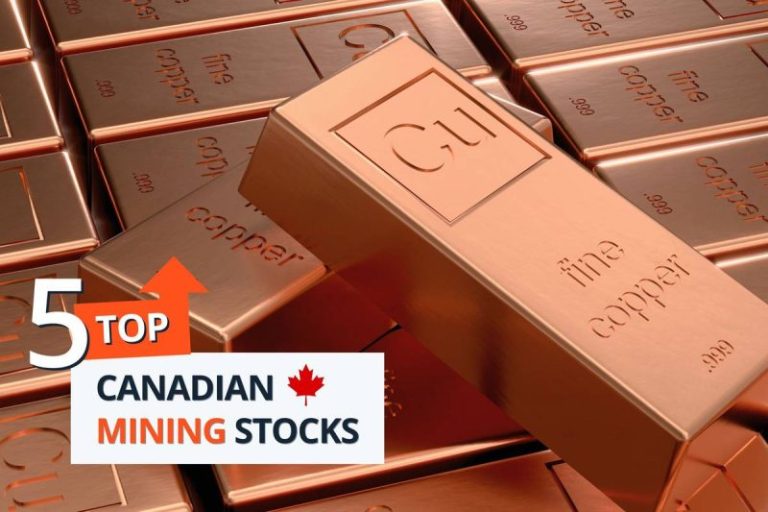
        Take a look at this week’s five best-performing Canadian mining stocks below.

        Stocks data for this article was retrieved at 4:00 p.m. EST on Friday using TradingView’s stock screener. Only companies trading on the TSX, TSXV and CSE with market caps greater than C$10 million are included. Mineral companies within the non-energy minerals, energy minerals, process industry and producer manufacturing sectors were considered.

        1. Adex Mining (TSXV:ADE)

        Weekly gain: 157.14 percent
        Market cap: C$40.63 million
        Share price: C$0.09

        Adex Mining is an exploration company that holds a 100 percent stake in the Mount Pleasant project in Southwest New Brunswick, Canada.

        The property contains two main deposits: the Fire Tower zone, which hosts tungsten and molybdenum mineralization, and the North zone, which hosts tin, zinc and indium.

        The asset consists of 102 mineral claims covering 1,600 hectares, as well as equipment and facilities from historic mining operations conducted by BHP (ASX:BHP,NYSE:BHP,LSE:BHP) between 1983 and 1985.

        According to its most recent investor presentation released on June 11, the property hosts the world’s largest indium reserve and North America’s largest tin deposit. Indicated resources for the North zone demonstrated contained metal values of 47 million kilograms of tin, and 789,000 kilograms of indium from 12.4 million metric tons with average grades of 0.38 percent tin and 64 parts per million indium.

        Additionally, the company engaged Moneta Securities in June to oversee selling the mine following a strategic review.

        Adex has not released news in the past week. However, its Fire Tower zone bears similarities to Northcliff’s Sisson tungsten-molybdenum project in New Brunswick, which the Canadian government referred to the Major Projects Office on Thursday.

        2. Trident Resources (TSXV:ROCK)

        Weekly gain: 118.82 percent
        Market cap: C$42.58 million
        Share price: C$1.86

        Trident Resources, formerly Eros Resources, is a gold and copper exploration company focused on projects in Saskatchewan, Canada.

        A three-way merger in early 2025 between Eros Resources, MAS Gold and Rockridge Resources allowed the companies to consolidate a portfolio of assets in Saskatchewan, including the Contact Lake and Greywacke gold projects in the La Ronge gold belt as well as the Knife Lake copper project.

        Its primary focus has been on its flagship Contact Lake gold project, a 21,440 hectare property located near La Ronge, Saskatchewan. The project hosts four primary deposits: Contact Lake, Preview SW, Preview North and North Lake.

        On Wednesday (November 12), the company released assay results from diamond drilling at Contact Lake, the first exploration conducted on the property in nearly 30 years. Highlights from the initial three holes included one hole with 7.03 grams per metric ton (g/t) gold over 43.25 meters, including an intersection of 30.06 g/t gold over 9.25 meters.

        The company noted that, while it was still in the early stages of exploration at the property, it was encouraged by results that bore similarities to early results of other significant high-grade discoveries in the region.

        3. Northcliff Resources (TSX:NCF)

        Weekly gain: 116.22 percent
        Market cap: C$279.18 million
        Share price: C$0.4

        Northcliff Resources is a development and exploration company advancing its Sisson tungsten-molybdenum project in New Brunswick, Canada.

        The 14,140 hectare property has seen extensive exploration dating back to the early 1980s.

        A 2013 mineral reserve estimate demonstrated total proven and probable quantities of 22.2 million metric tons of tungsten oxide and 154.8 million pounds of molybdenum from 334.36 million metric tons of ore with average grades of 0.07 percent tungsten oxide and 0.02 percent molybdenum.

        The project is currently in the development stage, and on Friday, it announced it was granted a five-year extension to the construction commencement timeline by New Brunswick’s Department of Environment and Climate Change. Construction is now anticipated to begin in December 2025.

        The project was also one of six that were included in the second-tranche of Canadian nation-building projects referred to the Major Projects Office on Thursday. The inclusion on the list will give Northcliff access to a streamlined regulatory process and open funding assistance to facilitate the development of Sisson.

        Commenting on the news, Northcliff Chairman, President and CEO Andrew Ing indicated the company is excited with its inclusion and that its goal is to contribute to building a resilient critical mineral supply chain.

        The release also outlined significant financial funding received since the start of the year, including US$15 million from the US Department of Defense and C$8.21 million from Natural Resources Canada.

        4. Canada Nickel (TSXV:CNC)

        Weekly gain: 61.54 percent
        Market cap: C$334.66 million
        Share price: C$1.68

        Canada Nickel is an exploration and development company advancing its flagship Crawford nickel sulphide project in Ontario, Canada.

        The property consists of 116 crown patents and 150 single- and multi-cell mining claims covering an area of approximately 9,600 hectares near Timmins and has seen exploration dating back to the 1960s.

        A feasibility study released in October 2023 demonstrated the project’s economics, with a post-tax net present value of US$2.48 billion and an internal rate of return of 17.1 percent.

        The included ore reserve estimate reported proven and probable reserves of contained metal values of 3.7 million metric tons of nickel, 9.7 million metric tons of chromium, 215,000 metric tons of copper, 777,000 ounces of palladium, and 519,000 ounces of platinum.

        The metal is contained in 1.72 billion metric tons of ore with average grades of 0.22 percent nickel, 0.57 percent chromium, 0.013 percent copper, 0.014 g/t palladium and 0.01 g/t platinum.

        Shares in Canada Nickel rose sharply this week after Crawford was included in the second round of projects referred to the Canadian government’s Major Project Office.

        In its release following the announcement, Canada Nickel’s CEO said that the company looks forward to working with the government and the MPO to secure financing and permits to begin construction at Crawford by the end of 2026.

        He also stated that the project represents a secure, domestic supply of critical minerals, including nickel and North America’s only source of chromium.

        5. Gold Terra Resources (TSXV:YGT)

        Weekly gain: 57.89 percent
        Market cap: C$51.71 million
        Share price: C$0.15

        Gold Terra is an exploration company advancing the Con Mine gold property in the Northwest Territories, Canada.

        The project was initially acquired as part of a 2021 agreement with Newmont that gave Gold Terra the option to earn a 100 percent interest in the asset for meeting certain exploration milestones and regulatory approvals, along with a C$8 million cash payment to Newmont.

        The agreement was then amended in September 2024, extending the timeline by 2 years to November 21, 2027.

        The property consists of 138 mining leases and 165 claims covering a total area of 79,046 hectares and hosts the historic Con Mine, which produced more than 6.1 million ounces of gold.

        A mineral resource estimate included in an October 2022 technical report demonstrated a total inferred resource of 1.21 million ounces of gold from 24.3 million metric tons with an average grade of 1.54 g/t gold.

        Shares in Gold Terra gained this week after the company announced a C$6.3 million non-brokered private placement that included a new strategic investment from Franco-Nevada (TSX:FNV,NYSE:FNV) Co-Founder David Harquail and existing shareholder Eric Sprott.

        The company said it will use proceeds for general corporate purposes and to fund a drilling program scheduled for January 2026 at the southern end of the Campbell Shear target at the Con Mine property. The program aims to expand the property’s indicated and inferred resources.

        FAQs for Canadian mining stocks

        What is the difference between the TSX and TSXV?

        The TSX, or Toronto Stock Exchange, is used by senior companies with larger market caps, and the TSXV, or TSX Venture Exchange, is used by smaller-cap companies. Companies listed on the TSXV can graduate to the senior exchange.

        How many mining companies are listed on the TSX and TSXV?

        As of May 2025, there were 1,565 companies listed on the TSXV, 910 of which were mining companies. Comparatively, the TSX was home to 1,899 companies, with 181 of those being mining companies.

        Together, the TSX and TSXV host around 40 percent of the world’s public mining companies.

        How much does it cost to list on the TSXV?

        There are a variety of different fees that companies must pay to list on the TSXV, and according to the exchange, they can vary based on the transaction’s nature and complexity. The listing fee alone will most likely cost between C$10,000 to C$70,000. Accounting and auditing fees could rack up between C$25,000 and C$100,000, while legal fees are expected to be over C$75,000 and an underwriters’ commission may hit up to 12 percent.

        The exchange lists a handful of other fees and expenses companies can expect, including but not limited to security commission and transfer agency fees, investor relations costs and director and officer liability insurance.

        These are all just for the initial listing, of course. There are ongoing expenses once companies are trading, such as sustaining fees and additional listing fees, plus the costs associated with filing regular reports.

        How do you trade on the TSXV?

        Investors can trade on the TSXV the way they would trade stocks on any exchange. This means they can use a stock broker or an individual investment account to buy and sell shares of TSXV-listed companies during the exchange’s trading hours.

        Article by Dean Belder; FAQs by Lauren Kelly.

        Securities Disclosure: I, Dean Belder, hold no direct investment interest in any company mentioned in this article.

        Securities Disclosure: I, Lauren Kelly, hold no direct investment interest in any company mentioned in this article.

        This post appeared first on investingnews.com

        More than 1,000 unionized Starbucks workers went on strike at 65 U.S. stores Thursday to protest a lack of progress in labor negotiations with the company.

        The strike was intended to disrupt Starbucks’ Red Cup Day, which is typically one of the company’s busiest days of the year. Since 2018, Starbucks has given out free, reusable cups on that day to customers who buy a holiday drink. Starbucks Workers United, the union organizing baristas, said Thursday morning that the strike had already closed some stores and was expected to force more to close later in the day.

        Starbucks Workers United said stores in 45 cities would be impacted, including New York, Philadelphia, Minneapolis, San Diego, St. Louis, Dallas, Columbus, Ohio, and Starbucks’ home city of Seattle. There is no date set for the strike to end, and more stores are prepared to join if Starbucks doesn’t reach a contract agreement with the union, organizers said.

        Starbucks emphasized that the vast majority of its U.S. stores would be open and operating as usual Thursday. The coffee giant has 10,000 company-owned stores in the U.S., as well as 7,000 licensed locations in places like grocery stores and airports.

        As of noon Thursday on the East Coast, Starbucks said it was on track to meet or exceed its sales expectations for the day at its company-owned stores.

        “The day is off to an incredible start,” the company said in a statement.

        Around 550 company-owned U.S. Starbucks stores are unionized. More have voted to unionize, but Starbucks closed 59 unionized stores in September as part of a larger reorganization campaign.

        Here’s what’s behind the strike.

        Striking workers say they’re protesting because Starbucks has yet to reach a contract agreement with the union. Starbucks workers first voted to unionize at a store in Buffalo in 2021. In December 2023, Starbucks vowed to finalize an agreement by the end of 2024. But in August of last year, the company ousted Laxman Narasimhan, the CEO who made that promise. The union said progress has stalled under Brian Niccol, the company’s current chairman and CEO. The two sides haven’t been at the bargaining table since April.

        Workers say they’re seeking better hours and improved staffing in stores, where they say long customer wait times are routine. They also want higher pay, pointing out that executives like Niccol are making millions and the company spent $81 million in June on a conference in Las Vegas for 14,000 store managers and regional leaders.

        Dochi Spoltore, a barista from Pittsburgh, said in a union conference call Thursday that it’s hard for workers to be assigned more than 19 hours per week, which leaves them short of the 20 hours they would need to be eligible for Starbucks’ benefits. Spoltore said she makes $16 per hour.

        “I want Starbucks to succeed. My livelihood depends on it,” Spoltore said. “We’re proud of our work, but we’re tired of being treated like we’re disposable.”

        The union also wants the company to resolve hundreds of unfair labor practice charges filed by workers, who say the company has fired baristas in retaliation for unionizing and has failed to bargain over changes in policy that workers must enforce, like its decision earlier this year to limit restroom use to paying customers.

        Starbucks says it offers the best wage and benefit package in retail, worth an average of $30 per hour. Among the company’s benefits are up to 18 weeks of paid family leave and 100% tuition coverage for a four-year college degree. In a letter to employees last week, Starbucks’ Chief Partner Officer Sara Kelly said the union walked away from the bargaining table in the spring.

        Kelly said some of the union’s proposals would significantly alter Starbucks’ operations, such as giving workers the ability to shut down mobile ordering if a store has more than five orders in the queue.

        Kelly said Starbucks remained ready to talk and “believes we can move quickly to a reasonable deal.” Kelly also said surveys showed that most employees like working for the company, and its barista turnover rates are half the industry average.

        Unionized workers have gone on strike at Starbucks before. In 2022 and 2023, workers walked off the job on Red Cup Day. Last year, a five-day strike ahead of Christmas closed 59 U.S. stores. Each time, Starbucks said the disruption to its operations was minimal. Starbucks Workers United said the new strike is open-ended and could spread to many more unionized locations.

        The number of non-union Starbucks locations dwarfs the number of unionized ones. But Todd Vachon, a union expert at the Rutgers School of Management and Labor Relations, said any strike could be highly visible and educate the public on baristas’ concerns.

        Unlike manufacturers, Vachon said, retail industries depend on the connection between their employees and their customers. That makes shaming a potentially powerful weapon in the union’s arsenal, he said.

        Starbucks’ same-store sales, or sales at locations open at least a year, rose 1% in the July-September period. It was the first time in nearly two years that the company had posted an increase. In his first year at the company, Niccol set new hospitality standards, redesigned stores to be cozier and more welcoming, and adjusted staffing levels to better handle peak hours.

        Starbucks also is trying to prioritize in-store orders over mobile ones. Last week, the company’s holiday drink rollout in the U.S. was so successful that it almost immediately sold out of its glass Bearista cup. Starbucks said demand for the cup exceeded its expectations, but it wouldn’t say if the Bearista will return before the holidays are ove

        This post appeared first on NBC NEWS

        Equity Metals Corporation (TSXV: EQTY,OTC:EQMEF) (FSE: EGSD) is pleased to announce the company is participating in the upcoming 121 Mining Investment Conference in London. Rob Macdonald, VP of Exploration of Equity Metals Corporation will be presenting about the Company’s recent and future planned activities.

        121 Mining Investment London will be hosting over 150 mining companies and more than 500 sophisticated investors for two days of pre-arranged, targeted 1-2-1 meetings.

        Alongside the curated schedule of pre-booked meetings matching investors with appropriate projects, the conference programme will provide expert commentary and the latest market intelligence on key industry developments.

        This year’s event is being held on Nov 17-18.

        Any investors who would like to attend 121 Mining Investment London can register for a free pass here.

        About 121 Mining Investment

        The 121 Mining Investment global event series connects portfolio managers and analysts from institutional funds, private equity groups and family offices with mining company management teams for 1-2-1, private in-person meetings.

        121 Mining Investment has an ever-expanding global portfolio, currently covering London, New York, Cape Town, Dubai and Singapore, as well as online editions throughout the year.

        About Equity Metals Corporation

        Equity Metals Corporation is a Malaspina-Manex Group Company. The Company owns 100% interest, with no underlying royalty, in the Silver Queen project, located along the Skeena Arch in the Omineca Mining Division, British Columbia. The property hosts high-grade, precious- and base-metal veins related to a buried porphyry system, which has been only partially delineated. The Company also has a controlling JV interest (57.49%) in the Monument Diamond project, NWT, strategically located in the Lac De Gras district within 40 km of both the Ekati and Diavik diamond mines and an option to earn a 100% interest in the Arlington Au-Ag-Cu property in Southern BC.

        For additional information, please contact:

        Equity Metals Corporation
        Jay Oness
        VP of Corporate Development
        6046412759
        corpdev@mnxltd.com
        https://equitymetalscorporation.com/

        News Provided by Newsfile via QuoteMedia

        This post appeared first on investingnews.com

        The investment management landscape is undergoing a fundamental shift.

        The once-standard 60/40 portfolio approach, which balances equities and bonds, is being challenged by market volatility, the crowding of mega-cap tech stocks and rapid technological innovation reshaping the economy.

        Navigating this environment requires a new mindset that embraces a blend of passive, active and alternative strategies to build resilient portfolios prepared for both risks and emerging opportunities.

        Unbundling portfolios for resilience

        Mersch advises unbundling traditional portfolios. Instead of relying solely on equity and fixed income, investors should blend a passive core with active management and alternative asset allocations.

        “You might need to…alternative asset classes that might have either lower or even sometimes negative correlations, and start to think about the attributes that you want to build in a lot of resiliency around periods of volatility.”

        Digital assets and gold are effective diversifiers in this landscape, contributing to what Mersch calls the ability “to zig while other paper assets zag.”

        Active approaches enable investors to explore attractive opportunities beyond mega-cap concentration; however, dynamic risk budgeting and continuous reassessment are critical, especially when markets exhibit complacency or crowding in dominant sectors like tech.

        “That’s where you can take a much more active approach in terms of betting on… other pockets or corners of the market.

        “What I would encourage people to look at is the cost savings that we’re seeing in a lot of core businesses. A lot of businesses that operate in the real economy are starting to gain some real operating leverage because they’re implementing these tools as well.”

        Thematic investment in technology and AI

        AI infrastructure and semiconductors stand at the forefront of modern investment themes. Long-term infrastructure buildouts promise a transformative impact.

        Mersch highlighted the accelerating buildout of data centers, which are critical to powering AI advancements, noting an expected leap in US electricity demand. “If you look at total electricity growth in the US from 2001 to 2024, it grew around 0.5 percent on an annualized basis. Over the next five years, it’s going to grow 4 percent,” he explained.

        This surge underscores the energy-intensive nature of AI, creating substantial structural tailwinds for related real assets and thematic investment vehicles like ETFs.

        The semiconductor industry exemplifies the globalization and complexity of technological innovation. Mersch described it as “one of the most global operating systems in the world,” spanning diverse geographies from chip design and fabrication to lithography and memory production.

        However, escalating geopolitical tensions and US trade restrictions introduce layers of risk that demand active management and meticulous stock selection.

        He also addressed concerns about circular financing risks in AI infrastructure. “When you have vendor financing, you’re essentially front running and creating that artificial demand,” he said, adding that vigilance regarding genuine adoption indicators, such as compute token usage reflecting actual AI workflow application, is needed to guard against this. “All signs right now are pointing to yes,” he said.

        While echoes of prior tech cycles suggest potential boom and bust phases, Mersch noted that the scale and pace of capital expenditure in AI infrastructure signify foundational change with likely enduring impact. Complementarily, cybersecurity continues to gain importance as data proliferation accelerates and AI’s dual role as protector and attack vector. Companies specialized in endpoint protection and innovative security solutions play a key part in making tech portfolios more robust.

        Meanwhile, speculative avenues like quantum computing offer future innovation frontiers. “I think Canada has definitely a really exciting future when it comes to quantum,” he added, noting Xanadu’s recent IPO announcement. “They kind of have these capabilities that only two other labs in the world have achieved.”

        Mersch was referencing the company’s Aurora system, which uses photons as quantum bits, commonly referred to as qubits. “So we’re seeing a lot of that expertise being grown out here.”

        Emerging strategies for future growth

        Mersch also highlighted venture capital and private equity as core components of alternatives that complement passive and active strategies.

        He noted the evolving accessibility of venture capital, with some democratization happening via fractional ownership and tokenization.

        However, he cautions that top quartile funds still dominate returns, making established track records and fees critical considerations for investors.

        In a similar vein, secondary market platforms offer new gateways by allowing access to direct listings and share sales, but come with layered fees and risks.

        Long and short equity strategies also play a pivotal role in reducing correlation to broader markets. These funds can capitalize on thematic disruptions by taking long positions in companies leading structural change while shorting those likely to be disrupted.

        Practical insight and forward-looking considerations

        The modern paradigm of portfolio construction demands a sophisticated and dynamic approach, moving beyond simple stock and bond allocations. A resilient portfolio must now strategically integrate the three aforementioned key components.

        Mersch’s insights offer a roadmap for investors navigating a rapidly evolving dynamic. In this landscape, embracing technology-driven themes is not merely optional but essential for future growth; however, any introduction of higher-risk assets requires both optimism and caution amid volatile and geopolitically complex markets.

        Ultimately, building a resilient portfolio for the future means moving beyond old paradigms and proactively integrating new technologies and strategies with disciplined risk management.

        Securities Disclosure: I, Meagen Seatter, hold no direct investment interest in any company mentioned in this article.

        This post appeared first on investingnews.com

        Lahontan Gold Corp. (TSXV:LG)(OTCQB:LGCXF)(FSE:Y2F) (the ‘Company‘ or ‘Lahontan‘) is pleased to announce that the Federal Bureau of Land Management (‘BLM‘) has published its Decision Record (‘DR‘), Finding of No Significant Impact (‘FONSI‘), and approval of the Company’s Exploration Plan of Operations (‘EPOO‘) for the Santa Fe Mine project, on the BLM’s website: https://eplanning.blm.gov/eplanning-ui/home. This decision concludes the National Environmental Policy Act (‘NEPA‘) Environmental Assessment (‘EA‘) process and authorizes Lahontan to move forward with its greatly expanded exploration drilling and mine development program at Santa Fe.

        The recently approved Exploration Plan of Operations (‘EPOO’) allows Lahontan to conduct exploration drilling across a 12.2 km² area of the Santa Fe Mine project, enabling the Company to test multiple new targets, well beyond the currently defined gold and silver resources (see map below)*. Previous Lahontan drilling programs focused on validating historical drill results, defining and expanding resources adjacent to the past-producing open pits, and collecting data to support detailed mine planning and scheduling.

        With the EPOO in place, Lahontan can now initiate true exploration programs across the broader project area. The EPOO encompasses over 700 permitted drill holes targeting well-defined geologic and geochemical anomalies, as well as previously drilled areas that returned significant gold and silver intercepts that require follow-up drilling. Priority targets include the Pinnacles area, hosted in a similar geologic setting to Fortitude Gold’s nearby Isabella Pearl Mine, as well as important historic drilling at the Guzzler target south of the Santa Fe open pit, along with multiple untested zones between the known resource areas at Santa Fe (see map below).

        Map of the recently approved EPOO for Santa Fe. The yellow shading outlines the area included in the EPOO, dark red indicates the historic pits including the Isabella Pearl pit west of the project boundary, the red lines shows the surface projection of known gold and silver resources*.

        Kimberly Ann, Lahontan Gold Corp. Executive Chair, Founder, CEO, and President commented: ‘Receiving approval of the Santa Fe Mine project EPOO represents a landmark milestone for Lahontan. Until now, the Company’s exploration activities were limited to a five-acre disturbance area, significantly restricting its ability to step out from known resources and fully assess the exploration potential of the Santa Fe Mine Project. With the approval of the EPOO, Lahontan can now explore a 12.2 km² area encompassing multiple well-defined geological and geochemical targets located between and adjacent to existing gold and silver resources. The expanded permit area also allows for drill testing of the historical heap leach pads, which may contain remnant mineralization of potential economic interest. This approval positions the Company to evaluate the broader gold and silver endowment of the Santa Fe Mine project and to unlock the full potential of its strategic land position in Nevada’s Walker Lane. Lahontan would also like to thank the staff of the Carson City office of the BLM for their efficient and timely completion of the EPOO.’

        Map of exploration targets at the Santa Fe Mine Project.

        About Lahontan Gold Corp.

        Lahontan Gold Corp. is a Canadian mine development and mineral exploration company that holds, through its US subsidiaries, four gold and silver exploration properties in the Walker Lane of mining friendly Nevada. Lahontan’s flagship property, the 28.3 km2 Santa Fe Mine project, had past production of 359,202 ounces of gold and 702,067 ounces of silver between 1988 and 1995 from open pit mines utilizing heap-leach processing. The Santa Fe Mine has a Canadian National Instrument 43-101 compliant Indicated Mineral Resource of 1,539,000 oz Au Eq(48,393,000 tonnes grading 0.92 g/t Au and 7.18 g/t Ag, together grading 0.99 g/t Au Eq) and an Inferred Mineral Resource of 411,000 oz Au Eq (16,760,000 grading 0.74 g/t Au and 3.25 g/t Ag, together grading 0.76 g/t Au Eq), all pit constrained (Au Eq is inclusive of recovery, please see Santa Fe Project Technical Report and note below*). The Company plans to continue advancing the Santa Fe Mine project towards production, update the Santa Fe Preliminary Economic Assessment, and drill test its satellite West Santa Fe project during 2025. For more information, please visit our website: www.lahontangoldcorp.com

        * Please see the ‘Preliminary Economic Assessment, NI 43-101 Technical Report, Santa Fe Project’, Authors: Kenji Umeno, P. Eng., Thomas Dyer, PE, Kyle Murphy, PE, Trevor Rabb, P. Geo, Darcy Baker, PhD, P. Geo., and John M. Young, SME-RM; Effective Date: December 10, 2024, Report Date: January 24, 2025. The Technical Report is available on the Company’s website and SEDAR+. Mineral resources are reported using a cut-off grade of 0.15 g/t AuEq for oxide resources and 0.60 g/t AuEq for non-oxide resources. AuEq for the purpose of cut-off grade and reporting the Mineral Resources is based on the following assumptions gold price of US$1,950/oz gold, silver price of US$23.50/oz silver, and oxide gold recoveries ranging from 28% to 79%, oxide silver recoveries ranging from 8% to 30%, and non-oxide gold and silver recoveries of 71%.

        Qualified Person

        Brian J. Maher, M.Sc., CPG-12342, is a ‘Qualified Person’ as defined under Canadian National Instrument 43-101, Standards of Disclosure for Mineral Projects, and has reviewed and approved the content of this news release in respect of all technical disclosure other than the Mineral Resource Estimate as noted above.‎ Mr. Maher is Vice President-Exploration for Lahontan Gold and has verified the data disclosed in this news release, including the sampling, ‎‎analytical and test data underlying the disclosure.

        On behalf of the Board of Directors

        Kimberly Ann

        Founder, CEO, President, and Director

        FOR FURTHER INFORMATION, PLEASE CONTACT:

        Lahontan Gold Corp.

        Kimberly Ann
        Founder, Chief Executive Officer, President, Director
        Phone: 1-530-414-4400

        Email:
        Kimberly.ann@lahontangoldcorp.com

        Website: www.lahontangoldcorp.com

        Cautionary Note Regarding Forward-Looking Statements:

        Neither TSX Venture Exchange nor its Regulation Services Provider (as that term is defined in policies of the TSX Venture Exchange) accepts responsibility for the adequacy or accuracy of this release. Except for statements of historical fact, this news release contains certain ‘forward-looking information’ within the meaning of applicable securities law. Forward-looking information is frequently characterized by words such as ‘plan’, ‘expect’, ‘project’, ‘intend’, ‘believe’, ‘anticipate’, ‘estimate’ and other similar words, or statements that certain events or conditions ‘may’ or ‘will’ occur. Forward-looking statements are based on the opinions and estimates at the date the statements are made and are subject to a variety of risks and uncertainties and other factors that could cause actual events or results to differ materially from those anticipated in the forward-looking statements including, but not limited to delays or uncertainties with regulatory approvals, including that of the TSXV. There are uncertainties inherent in forward-looking information, including factors beyond the Company’s control. The Company undertakes no obligation to update forward-looking information if circumstances or management’s estimates or opinions should change except as required by law. The reader is cautioned not to place undue reliance on forward-looking statements. Additional information identifying risks and uncertainties that could affect financial results is contained in the Company’s filings with Canadian securities regulators, which filings are available at www.sedar.com

        Source

        Click here to connect with Lahontan Gold Corp. (TSXV:LG)(OTCQB:LGCXF)(FSE:Y2F) to receive an Investor Presentation

        This post appeared first on investingnews.com

        Empire Metals Limited, the AIM-quoted and OTCQX-traded exploration and development company, is pleased to announce the appointment of Canaccord Genuity Limited (‘Canaccord‘) as joint corporate broker with immediate effect. Canaccord will work alongside S. P. Angel Corporate Finance LLP and Shard Capital Partners LLP.

        For further information please visit www.empiremetals.co.uk or contact:

        Empire Metals Ltd

        Shaun Bunn / Greg Kuenzel / Arabella Burwell

        Tel: 020 4583 1440

        S. P. Angel Corporate Finance LLP (Nomad & Joint Broker)

        Ewan Leggat / Adam Cowl

        Tel: 020 3470 0470

        Canaccord Genuity Limited (Joint Broker)

        James Asensio / Christian Calabrese / Charlie Hammond

        Tel: 020 7523 8000

        Shard Capital Partners LLP (Joint Broker)

        Damon Heath

        Tel: 020 7186 9950

        Tavistock (Financial PR)

        Emily Moss / Josephine Clerkin

        empiremetals@tavistock.co.uk

        Tel: 020 7920 3150

        About Empire Metals Limited

        Empire Metals Ltd (AIM:EEE and OTCQX:EPMLF) is an exploration and resource development company focused on the rapid commercialisation of the Pitfield Titanium Project, located in Western Australia. The titanium discovery at Pitfield is of unprecedented scale and hosts one of the largest and highest-grade titanium resources reported globally, with a Mineral Resource Estimate (MRE) totalling 2.2 billion tonnes grading 5.1% TiO₂ for 113 million tonnes of contained TiO₂.

        The MRE, which covers only the Thomas and Cosgrove deposits, includes a weathered zone resource of 1.26 billion tonnes at 5.2% TiO₂ and a significant Indicated Resource of 697 million tonnes at 5.3% TiO₂, predominantly from the Thomas deposit. Titanium mineralisation at Pitfield occurs from surface and displays exceptional grade continuity along strike and down dip. The MRE extends across just 20% of the known mineralised footprint, providing substantial potential for further resource expansion.

        Conventional processing has already produced a high-purity product grading 99.25% TiO₂, suitable for titanium sponge metal or pigment feedstock. The friable, in-situ weathered zone supports low-cost, strip mining without the need for blasting or overburden removal.

        With excellent logistics and established infrastructure, including rail links to deep-water ports with direct access to Asia, the USA, Europe and Saudi Arabia, Pitfield is strategically positioned to supply the growing global demand for titanium and other critical minerals.

        Empire is now accelerating the economic development of Pitfield, with a vision to produce a high-value titanium metal and/or pigment quality product at Pitfield, to realise the full value potential of this exceptional deposit.

        The Company also has two further exploration projects in Australia; the Eclipse Project and the Walton Project in Western Australia, in addition to three precious metals projects located in a historically high-grade gold producing region of Austria.

        This information is provided by RNS, the news service of the London Stock Exchange. RNS is approved by the Financial Conduct Authority to act as a Primary Information Provider in the United Kingdom. Terms and conditions relating to the use and distribution of this information may apply. For further information, please contact rns@lseg.com or visit www.rns.com.

        Source

        Click here to connect with Empire Metals Ltd (AIM:EEE and OTCQX:EPMLF) to receive an Investor Presentation

        This post appeared first on investingnews.com