Rapid Critical Metals (RCM:AU) has announced Latest Intercepts Confirm Continuity Across Drill Program
Download the PDF here.
This post appeared first on investingnews.com

Rapid Critical Metals (RCM:AU) has announced Latest Intercepts Confirm Continuity Across Drill Program
Download the PDF here.
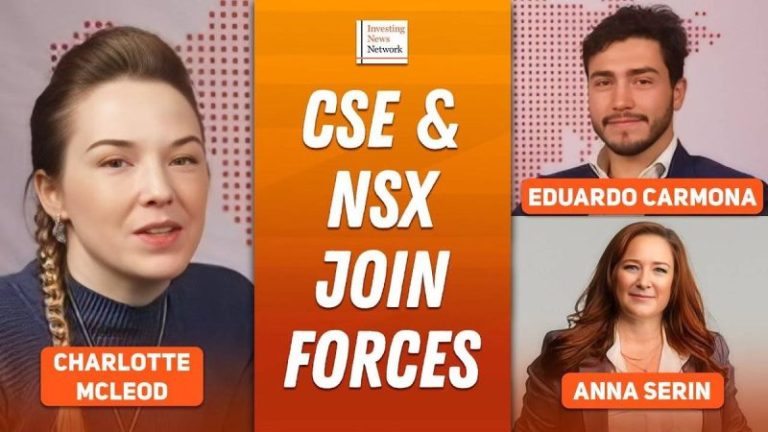
Anna Serin of the Canadian Securities Exchange (CSE) and Eduardo Carmona of the National Stock Exchange of Australia (NSX) discuss the CSE’s recent acquisition of the NSX, outlining what it means for both companies and investors.
‘What we’re hoping to create, and where we think the opportunity lies in Australia, is creating the venture market a little bit like the CSE’s done (in Canada),’ Carmona explained.
Securities Disclosure: I, Charlotte McLeod, hold no direct investment interest in any company mentioned in this article.

For investors who want to gain exposure to artificial intelligence stocks, exchange-traded funds (ETFs) are a popular avenue, because AI ETFs allow investors exposure to the overall market rather than individual AI stocks.
AI investing has exploded in popularity in recent years, particularly with the proliferation and advancement of generative AI technology. Today, many of the world’s largest tech stocks are focused on increasing their AI capabilities, or developing and supplying the hardware and technology needed to support the industry.
However, the sector has a long history. The phrase ‘artificial intelligence’ has been around since 1955, when it was used to describe a new computer science subdiscipline. Today, we use AI to describe simulated intelligence in machines. In other words, machines with AI are capable of simulating thinking like people and mimicking their actions.
As applications for AI rapidly expand, it’s clear that this market isn’t going away anytime soon.
Assets under management: US$7.97 billion
The Global X Artificial Intelligence & Technology ETF is passively managed, tracking the Indxx Artificial Intelligence & Big Data Index. The Global X fund, which was established in May 2018, has an expense ratio of 0.68 percent.
‘AIQ is passively managed to invest in developed market companies that are involved in the use of artificial intelligence to analyze big data, whether for their own operations, as a service to other companies, or through the production of related hardware,’ according to ETF.com.
The Global X Artificial Intelligence & Technology ETF’s 87 holdings include Samsung Electronics (KRX:005930), Alphabet (NASDAQ:GOOGL) and Micron Technology (NASDAQ:MU).
Assets under management: US$3.67 billion
The Defiance Quantum ETF launched in September 2018. It tracks an index composed of 84 companies that derive at least half of their annual revenues from quantum computing and machine learning technology development activities.
The fund has the lowest expense ratio of the five AI funds on this list at 0.4 percent.
Some of the ETF’s top holdings include Quantum Emotion (TSX:QNC), Micron Technology and MKS (NASDAQ:MKSI).
Assets under management: US$1.04 billion
The newest addition to this list, the Dan Ives Wedbush AI Revolution ETF launched on June 4, 2025, as Wedbush Fund’s inaugural ETF. The ETF’s holdings are based on the research of Dan Ives, Wedbush’s Global Head of Technology Research, and on the IVES AI 30 list, which is updated on a quarterly basis. It has an expense ratio of 0.75 percent.
The Dan Ives Wedbush AI Revolution ETF has 32 holdings comprising mostly large-cap tech stocks based in North America. Its top holdings include Micron Technology, Taiwan Semiconductor Manufacturing Company (NYSE:TSM) and NVIDIA (NASDAQ:NVDA).
Assets under management: US$1.036 billion
The Roundhill Generative AI & Technology ETF launched on May 13, 2023, and focuses on companies that will benefit from the growth of generative AI. Companies must derive 50 percent of their revenue from generative AI or tech to qualify for its portfolio.
This AI ETF is actively managed and does not track an index. It has an expense ratio of 0.75 percent.
The ETF has 49 holdings, with 98 percent being large-cap companies. Its top holdings include Alphabet, NVIDIA and Microsoft (NASDAQ:MSFT), and it offers exposure to North American and Asian tech firms.
Assets under management: US$715.8 million
The last AI ETF on this list is the Invesco AI and Next Gen Software ETF. It is the longest running compared to the other ETFs on this list, having launched in June 2005. The fund has an expense ratio of 0.58 percent.
It is based on the STOXX World AC NexGen Software Development Index and tracks the performance of companies that derive a direct revenue from technologies or products that contribute to future software development.
The Invesco AI and Next Gen Software ETF’s 100 holdings include Micron Technology, Meta Platforms (NASDAQ:META) and Advanced Micro Devices (NASDAQ:AMD).
Securities Disclosure: I, Lauren Kelly, hold no direct investment interest in any company mentioned in this article.
LaFleur Minerals Inc. (CSE: LFLR,OTC:LFLRF) (FSE: 3WK0) (‘LaFleur Minerals’ or the ‘Company’ or ‘Issuer’) is pleased to announce that it has granted incentive stock options (‘Options’) to management and consultants of the Company to acquire an aggregate of 1,000,000 common shares at $0.50 per share, for a period of three years. These Options have been granted in accordance with the Company’s stock option plan.
About LaFleur Minerals Inc.
LaFleur Minerals Inc. (CSE: LFLR,OTC:LFLRF) (OTCQB: LFLRF) (FSE: 3WK0) is focused on the development of district-scale gold projects in the Abitibi Gold Belt near Val-d’Or, Québec. Our mission is to advance mining projects with a laser focus on our resource-stage Swanson Gold Project and the Beacon Gold Mill, which have significant potential to deliver long-term value. The Swanson Gold Project is approximately 16,600 hectares (166 km2) in size and includes several prospects rich in gold and critical metals previously held by Monarch Mining, Abcourt Mines, and Globex Mining. LaFleur has recently consolidated a large land package along a major structural break that hosts the Swanson, Bartec, and Jolin gold deposits and several other showings which make up the Swanson Gold Project. The Swanson Gold Project is easily accessible by road with a rail line running through the property allowing direct access to several nearby gold mills, further enhancing its development potential. LaFleur Minerals’ fully-refurbished and permitted Beacon Gold Mill is capable of processing over 750 tonnes per day and is being considered for processing mineralized material at Swanson and for custom milling operations for other nearby gold projects.
ON BEHALF OF LaFleur Minerals INC.
Paul Ténière, M.Sc., P.Geo.
Chief Executive Officer
E: info@lafleurminerals.com
LaFleur Minerals Inc.
1500-1055 West Georgia Street
Vancouver, BC V6E 4N7
Neither the Canadian Securities Exchange nor its Regulation Services Provider accepts responsibility for the adequacy or accuracy of this news release.
Cautionary Statement Regarding ‘Forward-Looking’ Information
This news release includes certain statements that may be deemed ‘forward-looking statements’. All statements in this new release, other than statements of historical facts, that address events or developments that the Company expects to occur, are forward-looking statements. Forward-looking statements are statements that are not historical facts and are generally, but not always, identified by the words ‘expects’, ‘plans’, ‘anticipates’, ‘believes’, ‘intends’, ‘estimates’, ‘projects’, ‘potential’ and similar expressions, or that events or conditions ‘will’, ‘would’, ‘may’, ‘could’ or ‘should’ occur. Forward-looking statements in this news release include, without limitation, statements related to the use of proceeds from the Offering. Although the Company believes the expectations expressed in such forward-looking statements are based on reasonable assumptions, such statements are not guarantees of future performance and actual results may differ materially from those in the forward-looking statements. Factors that could cause the actual results to differ materially from those in forward-looking statements include market prices, continued availability of capital and financing, and general economic, market or business conditions. Investors are cautioned that any such statements are not guarantees of future performance and actual results or developments may differ materially from those projected in the forward-looking statements. Forward-looking statements are based on the beliefs, estimates and opinions of the Company’s management on the date the statements are made. Except as required by applicable securities laws, the Company undertakes no obligation to update these forward-looking statements in the event that management’s beliefs, estimates or opinions, or other factors, should change.
To view the source version of this press release, please visit https://www.newsfilecorp.com/release/282966
News Provided by TMX Newsfile via QuoteMedia

It’s been a wild week of ups and downs for precious metals prices.
Gold, silver and platinum have already recorded new all-time highs in 2026. But this week, the rally reversed course — only briefly, but in a big way, as is the case with such highly volatile markets.
Let’s take a look at what got the precious metals moving over the past week.
After hitting a record high of close to US$5,600 per ounce, gold closed out January by embarking on one of the biggest price slides it’s seen in decades. By early morning trading on Monday (February 2), the yellow metal had dropped as low as US$4,400 for a significant loss of more than 21 percent.
However, gold regained much of that lost ground by Tuesday’s (February 3) close, trading back above US$4,935. By Wednesday (February 4) morning, gold was once again back above the key psychological US$5,000 mark, although it couldn’t maintain that level for long and slipped back down into the US$4,900 range.
Gold price chart, January 28, 2025, to February 4, 2026.
The primary drivers for gold this past week are:
The silver price has tracked gold on these macro trends. The white metal fell from the all-time high of more than US$120 per ounce that it reached on January 29 to a low of about US$71 on Monday.
Silver price chart, January 28, 2025, to February 4, 2026.
Although silver lost 35 percent from its peak in such a short time, the precious metal has rebounded to an intraday high of US$92.32 as its fundamentals remain strong.
Platinum tracked its precious metal sisters down from a January 29 high of US$2,816 per ounce to as low as US$1,882. By Tuesday, the metal was back above US$2,200 and has traded mostly around that price mark for Wednesday.
Platinum price chart, January 28, 2025, to February 4, 2026.
Platinum is one of the top-performing metals over the past year, reaching 12 year highs in recent weeks. Demand is being driven by the metal’s essential role in the emerging hydrogen economy. Its also still seeing robust demand from the auto sector despite the emergence of electric vehicles and uneasy consumer confidence in the economy.
On the supply side, global platinum reserves remain critically low, especially as the world’s biggest producer, South Africa, continues to be plagued by power shortages and operational disruptions.
Palladium has been the black sheep of the precious metals family for the past few years, remaining well below its March 2022 all-time record of US$3,440.76 per ounce.
On January 29, palladium got in on the party and rallied to an intraday high of US$2,172.50.
Then on Monday it came along for the slide, falling as low as US$1,529. After a slight rebound on Tuesday, the precious metal has traded around US$1,700 to US$1,800.
Palladium price chart, January 28, 2025, to February 4, 2026.
The palladium price is being held down by a slump in demand for electric vehicles and a looming oversupply situation. Analysts at Heraeus and Metals Focus predict the palladium market may move into a surplus in 2026 as secondary supply from recycling increases by 10 percent.
Securities Disclosure: I, Melissa Pistilli, hold no direct investment interest in any company mentioned in this article.
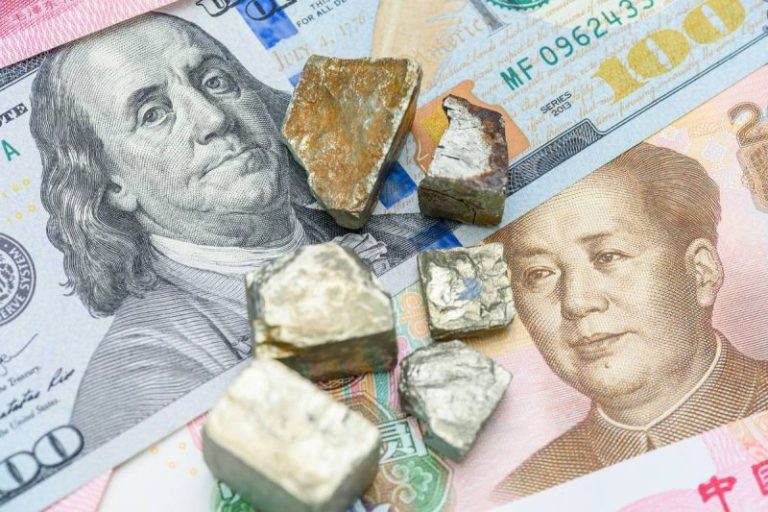
The US Department of State held its first Critical Minerals Ministerial on Wednesday (February 4), drawing together officials from more than 50 countries in Washington, DC.
The initiative is geared at challenging China’s dominance in critical minerals supply chains, and comes just two days after the US announced plans for a US$12 billion critical minerals stockpile called Project Vault.
Offering opening remarks at the ministerial were: Vice President JD Vance; Secretary of State Marco Rubio; Japanese State Minister for Foreign Affairs Horii Iwao; Special Assistant to the President of the US and Senior Director for Global Supply Chains David Copley; and Under Secretary of State for Economic Affairs Jacob Helberg.
Chief among the topics they discussed was the establishment of a preferential critical minerals trade zone with ‘enforceable’ price floors maintained by tariffs.
Vance framed the initiative as a way to prevent domestic critical minerals producers from being undercut by cheap foreign supply sources, saying preferential trade zone prices will stay consistent.
Here’s a look at five key quotes on critical minerals from the event.
‘And as much as we talk about the modern economy, the digital economy, the high-tech economy, the President said something that was very, very important, and I think should inform a lot of how we think about future growth, which is that as much as data centers and technology and all of these incredible things that we’re all working on matter, fundamentally you still have an economy that runs on real things. And there is no realer thing than oil — and I would add to that there’s no realer thing than critical minerals.’
‘So, this morning, the Trump Administration is proposing a concrete mechanism to return the global critical minerals market to a healthier, more competitive state — a preferential trade zone for critical minerals, protected from external disruptions through enforceable price floors. We will establish reference prices for critical minerals at each stage of production, pricing that reflects real-world, fair-market value.
‘And for members of the preferential zone, these reference prices will operate as a floor, maintained through adjustable tariffs to uphold pricing integrity. We want to eliminate that problem of people flooding into our markets with cheap critical minerals to undercut our domestic manufacturers because we know, of course, that as soon as they’ve undercut our domestic makers, they — the domestic markers — they’d leave the market and the people who undercut them then jack up the price to a completely unfair level. We’re going to fix that problem.’
‘The United States used to produce its own critical minerals and derivative products like rare earth magnets. Back in 1949, miners in Mountain Pass, California discovered one of the world’s richest mineral deposits. By 1952, the United States, we were mining rare earths there, and that discovery sparked a revolution.
‘American scientists and engineers, alongside innovators from many of the countries that are here today, rushed to discover new applications for these minerals and, with these new technologies, ushered in the jet age, we ushered in the space age, we ushered in the computer age.
‘And then we became blinded, blinded by the potential of the technologies those metals enabled, but we neglected their importance. Mining is less glamorous than building computers. It’s less glamorous than building cars or airplanes. But building computers and cars and airplanes is less glamorous than designing them.
‘As we embraced what was new and glamorous, we outsourced what seemed old and unfashionable. We allowed, for example, Mountain Pass — and with it, most of America’s critical mineral industry — to wither and to die so that we could focus on manufacturing. Then we outsourced the manufacturing.
‘And I know this is a story I’m telling, but it’s a story many of the advanced economies represented here today understand well. We outsourced the manufacturing so we could focus on designing these goods. And then one day we woke up and we realized we had outsourced our economic security and our very future. We were at the mercy of whoever controlled supply chains for these minerals. So my hope is that we are gathered here today as the first but important step to rectifying this mistake, to bring together our collective talent for innovation, when our advantage over rivals — where our advantage over rivals has only grown, and to apply it to bringing back manufacturing and reopening mines here in the United States, but also in all the partner nations represented here today.’
‘Japan strongly believes that FORGE will become an important venue and a vehicle for us to focus on supply chain diversification and ensure policy coordination. Japan stands ready to actively contribute to discussions to further deepen collaboration with partners and to ensure the effective implementation of this initiative.
‘So how should we move forward from here? On the supply side, diversification is essential. Diversity as opposed to concentration is what makes us resilient. This has to be one of the — our major guiding principles.’
‘So, four key initiatives — we’re investing, we’re stockpiling, we’re going to protect our mining companies, and we’re fixing our mining ecosystem — because this industry is so important to our national development, as I know it is to your countries as well. But most importantly, under President Trump’s leadership, we are no longer standing around admiring the problem. We’re not spending our time writing 200-page book reports about how important critical minerals are. We have a plan, and we’re focused on project execution — getting deals done, getting companies their permits, stockpiling minerals, and hopefully moving forward with all of you, our international partners, to protect our mining companies and to rebuild global mining in a fair and balanced way.’
Securities Disclosure: I, Charlotte McLeod, hold no direct investment interest in any company mentioned in this article.

South Harz Potash Limited (SHP:AU) has announced Ongoing progress at Glava-Klinten and Torsby West
Download the PDF here.
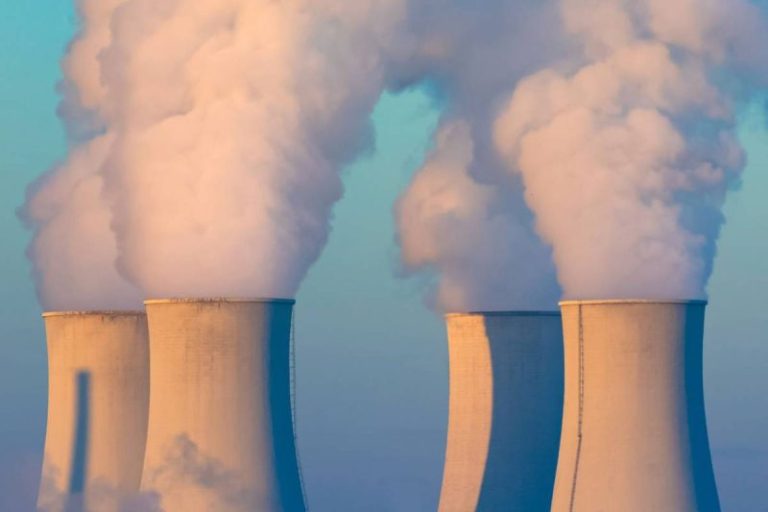
Uranium’s resurgence has been one of the resource sector’s most durable stories of the past five years, but as prices hover near multi-year highs, investors are increasingly asking the same question: How late is it?
At the Vancouver Resource Investment Conference (VRIC), panelists Rick Rule, Lobo Tiggre and Standard Uranium (TSXV:STND,OTCQB:STTDF) CEO John Bey suggested the answer is more nuanced than simple price charts imply.
While uranium equities have already delivered substantial gains since 2020, the speakers argued that structural changes in the market, not speculative enthusiasm, continue to underpin the bull case.
“This doesn’t feel like a mania,” Bey said, pointing to projections from the World Nuclear Association (WNA), which estimates that global nuclear capacity must roughly triple by 2050 to meet decarbonization and electrification goals.
The US, meanwhile, has floated ambitions to quadruple domestic nuclear capacity, a narrative that has recentered uranium as a strategic fuel rather than a legacy commodity.
Despite those ambitions, supply has struggled to keep pace. Global uranium production remains below pre-Fukushima levels, while years of underinvestment have hollowed out the project pipeline.
According to the WNA, primary mine supply currently meets only about 75 percent of annual reactor demand, with the balance filled by inventories and secondary sources that are steadily being depleted.
For Tiggre, CEO of IndependentSpeculator.com, that imbalance remains the core driver, and it has yet to be resolved.
“The idea that high prices would quickly cure high prices just hasn’t played out,” he explained. “Projects haven’t come online on schedule, and some never got funded at all.”
Even at a spot price above US$80 per pound, major producers such as Cameco (TSX:CCO,NYSE:CCJ) and Kazatomprom have been cautious about committing capital to new large-scale developments.
Rule, proprietor at Rule Investment Media, sees that hesitation as telling. “If the incentive price were really US$80, they’d be building,” he said. “They’re not. That tells you the real incentive price is higher.”
Rule also argued that many investors are still missing the most important development in uranium — a quiet structural shift away from spot pricing toward long-term contracting.
While uranium equities continue to trade off a thinly traded spot market — which accounts for roughly a quarter of annual transaction volume in a good year — utilities are increasingly locking in multi-year supply agreements.
“Unlike almost any other commodity, uranium producers can pre-sell material under contracts that specify price and terms,” Rule said. “That changes everything.” Those contracts, he explained, can serve as collateral, lowering financing risk and enabling projects that would have been unbankable five years ago.
The impact is already visible. Utilities have been steadily re-entering the term market since 2022, with Cameco reporting an expanding contract book and higher realized prices year over year.
Meanwhile, physical uranium investment vehicles, particularly the Sprott Physical Uranium Trust (TSX:U.U,OTCQX:SRUUF), have removed tens of millions of pounds from circulation, tightening availability even further.
That tightening is occurring alongside geopolitical fragmentation.
Sanctions and self-imposed trade barriers have effectively split the uranium market, with Russian and some Central Asian material flowing east, while western utilities scramble to secure non-Russian supply.
As Bey put it, “That uranium isn’t coming back west.”
The question, then, is where new uranium supply will come from. Canada’s Athabasca Basin, home to the world’s highest-grade uranium deposits, remains central to that answer.
Several advanced projects, including Denison Mines’ (TSX:DML,NYSEAMERICAN:DNN) Wheeler River operation and NexGen Energy’s (TSX:NXE,NYSE:NXE) Rook I asset, are both approaching key permitting milestones, potentially clearing the way for construction later this decade.
After decades without a new uranium mine approval in Canada, momentum appears to be shifting.
Bey said regulators are becoming more familiar with uranium-specific permitting, while First Nations partners are increasingly vocal in their support for project development.
Exploration also remains critical, though not without challenges. Bey noted a shrinking pipeline of trained uranium geologists, with graduating class sizes sharply lower than a decade ago. “Teams matter more than ever,” he said. “A good discovery today will get bought — and at a multiple that will surprise people.”
Rule was blunter. Of roughly 125 uranium juniors globally, he expects only 10 to 15 to generate meaningful returns.
“The rest go to their intrinsic value, which is zero,” he said.
Success, he added, comes down to people, geology and jurisdiction — in that order.
Jurisdictional risk itself sparked debate. Rule argued that political risk is often misunderstood, noting that supply disruptions in places like Niger tend to reroute material rather than remove it from the global market.
Tiggre, while broadly agreeing, said investors are justified in demanding a discount for higher-risk regions. “If I need a military escort, that’s not a positive check mark,” he said.
Despite their bullish long-term outlooks, all three panelists emphasized that volatility is unavoidable.
Narrative-driven selloffs, whether tied to artificial intelligence (AI) hype, data center demand or broader risk-off sentiment, can whipsaw uranium equities even when fundamentals remain intact.
“That’s when opportunity shows up,” Tiggre said, pointing to sharp pullbacks in 2024 that preceded new highs later in the year. “Fundamentals and narratives aren’t the same thing.”
Rule offered a starker reminder. “If you aren’t willing to accept a small probability of catastrophic loss, don’t be here,” he said, referencing the ever-present tail risk of a major nuclear accident.
For investors willing to accept that risk, the panel’s message was clear: uranium’s bull run appears to be maturing, but is far from over. The easy money may be gone — but, as Rule put it, “the sure money may still lie ahead.”
If the first half of the uranium bull market was driven by supply discipline and long-overdue utilities contracting, the next phase may be shaped by something far larger: electricity itself.
That was the gist of comments from Uranium Energy (NYSEAMERICAN:UEC) CEO Amir Adnani at VRIC.
He framed nuclear power, and by extension uranium, as a central pillar of the emerging AI economy, not merely a decarbonization tool. What stands out, Adnani argued, is not just the scale of demand that’s coming into view, but also the political and corporate alignment forming around it.
At this year’s World Economic Forum in Davos, global leaders, including US President Donald Trump, publicly identified grid fragility and electricity shortages as national security risks in the AI era.
For Adnani, the shift in tone was telling. “When leaders stop talking only about inflation and start talking about power and electricity, that’s a sign of the times we’re in,” he said.
Crucially, nuclear energy has become one of the few areas of bipartisan consensus in the US.
While Democrats often emphasize decarbonization, Republicans increasingly frame nuclear as a strategic asset tied to energy independence and security. “This isn’t a four-year story,” Adnani emphasized to the audience. “We’re talking about multi-decade growth underpinned by bipartisan political support.”
The urgency, however, collides with reality.
AI-driven electricity demand is accelerating far faster than new generation can be built. Adnani cited a Morgan Stanley (NYSE:MS) estimate calling for roughly 150 gigawatts of additional power capacity globally over the next three years from data centers alone — equivalent to powering more than 150 cities the size of Philadelphia.
“One gigawatt is a city of 2 million people,” he said. “And we’re talking about adding more than 100 of those.”
That buildout could require as much as US$3 trillion in investment. Governments, Adnani noted, cannot shoulder that burden alone. Instead, balance sheets from tech giants such as Microsoft (NASDAQ:MSFT), Amazon (NASDAQ:AMZN), Alphabet (NASDAQ:GOOGL) and Meta Platforms (NASDAQ:META) are increasingly being deployed to secure reliable, long-term power — a dynamic that favors baseload generation over intermittent sources.
“This isn’t just political signaling,” he said. “This is the private sector committing real capital, as fast as possible, to infrastructure that works 24/7.”
For uranium, the implications are direct. Global pledges now call for nuclear capacity to triple by 2050, while the US has set its sights on quadrupling domestic capacity. That ambition implies a parallel expansion in uranium supply, something the market is currently ill-equipped to deliver.
At the same time, the supply picture is already strained.
The US consumes roughly 50 million pounds of uranium annually, but produces less than 4 million pounds, leaving it more than 90 percent dependent on imports, much of them from geopolitically sensitive regions.
In Adnani’s view, reshoring critical mineral supply chains — uranium included — has become a strategic imperative.
“This bifurcated world is a total game changer,” he said. “The US wants control over its supply chains, and uranium is now squarely in that category.”
Adnani also pushed back against the idea that uranium prices have already peaked.
The spot price spiked above US$100 in late January and has since stabilized near US$96, a level that remains well below the 2007 high of US$140, even as the market is structurally tighter than it was nearly two decades ago.
Adjusted against gold’s performance since that peak, Adnani argued, uranium remains historically cheap.
“On a gold equivalent basis, uranium would be closer to US$1,000,” he said. “That’s the headroom.”
Positioning for that upside, he explained, requires scale, patience and balance sheet strength, qualities Uranium Energy has spent two decades assembling.
The company built its asset base during the downturn, acquiring more than US$1 billion in projects when uranium traded near US$20. Today, it operates as the largest US-focused uranium producer, with ambitions to become vertically integrated from mining through conversion — a capability that does not currently exist domestically.
Uranium Energy’s unhedged strategy underscores its conviction. “We don’t put ceilings on our upside,” Adnani said. “We want maximum exposure to what we believe will be an unprecedented bull market.”
Overall his message echoed that of others at VRIC: commodities — and energy in particular — are entering a new cycle.
“This is another industrial revolution,” he said. “And it’s an energy-hungry one. We’re still in the early innings.”
Securities Disclosure: I, Georgia Williams, hold no direct investment interest in any company mentioned in this article.

Gold has seen wild swings over the last week, hitting record highs near US$5,600 per ounce before plunging nearly 10 percent to around US$4,700 in the sharpest drop in over a decade. The real story, though, isn’t just the price action, but how tokenized gold is modernizing one of the world’s oldest reserve assets for a new era.
Leading this charge is Gold Token SA (GTSA), the gold tokenization arm of Swiss precious metals giant MKS PAMP.
Under the leadership of CEO Kurt Hemecker, GTSA is transforming how institutions and individual investors interact with the world’s oldest reserve asset by placing it on modern rails.
As digital assets like Bitcoin struggle to maintain their safe-haven narrative amid high-profile fraud cases, institutions are seeking trusted assets on modern rails, where blockchain’s functional advantages — such as 24/7 liquidity and instant settlement — can upgrade low-volatility reserve assets via tokenization.
MKS PAMP is a family-owned global powerhouse that operates one of the world’s most renowned refineries.
By launching the DGLD token on the Base network, Coinbase’s Layer 2 blockchain, in mid-December 2025, GTSA effectively bridged the gap between 60 years of Swiss precious metals heritage and US-centric blockchain technology.
Unlike speculative crypto tokens, “DGLD is designed to represent allocated physical gold rather than a claim on an issuer,” prioritizing the institutionalization of real-world assets through transparent governance, Hemecker said.
”That design approach is important in jurisdictions like the US, where regulators are still clarifying the boundaries between securities and other digital assets,” he added. Physical gold’s familiarity reduces ambiguity, giving institutions clear legal title to specific vaulted bars, not issuer promises or derivatives.
According to Hemecker, this structure earns policymaker support as “controlled tokenization, where digital representations of existing assets are well-governed and clearly backed, rather than creating new, untested monetary substitutes.” Investors gain direct property rights over high-security Swiss vaults, outpacing tech-first rivals.
Transparency serves as a competitive advantage in this new era of digital commodities. Gold investors, who are traditionally obsessed with provenance, can utilize GTSA’s Bar Mapper tool. This technology allows a digital holder to trace their token back to specific gold bars certified by the London Bullion Market Association
Users can view non-sensitive metadata, including the refiner, weight, purity and serial number of the bars, providing a level of auditability that was previously impossible in the gold market. This creates a transparent link between digital ownership and physical existence, ensuring that every token is backed by real, verifiable gold.
The operational hurdles once plaguing tokenization are rapidly fading. “Several early frictions are already easing,” Hemecker said. “Operational and technical uncertainty is declining as standards around custody, issuance and lifecycle management mature. Institutional access is improving, and credibility gaps are narrowing.
This maturity drives a shift from experimental pilots to institutional balance-sheet allocations.
“What we’re seeing from institutions and central banks is not a move away from traditional safe-haven assets, but a desire to modernize the infrastructure around them,” he explained. Blockchain’s 24/7 availability, near-instant settlement and efficient reporting keep gold exposure while accelerating infrastructure.
“Tokenized gold allows institutions to maintain exposure to a familiar reserve asset, while benefiting from faster settlement … This is about putting trusted assets on modern rails.”
Liquidity follows suit. “Liquidity will increasingly be judged by depth and reliability, not headline volumes,” Hemecker noted. “Custody quality will move to the foreground, with institutions favoring allocated, insured gold held with reputable vaulting partners.” DGLD delivers this via Base and Aerodrome DEX’s nonstop trading.
Finally, redemption seals the trust: “Redemption down to 1 gram expands accessibility and utility for collateral, lending, repos and beyond. Redemption builds trust, but tokenization is where the real utility comes from.”
The regulatory landscape continues to play a pivotal role in the adoption of tokenized gold.
While GTSA is a Swiss-regulated entity supervised by FINMA-level standards, its presence on the Base network demonstrates a strategic navigation of global demand.
“Regulatory trends are likely to support tokenized gold adoption by rewarding transparent, well-governed structures that fit within existing financial and commodity frameworks,” Hemecker said. “Products with clear custody, governance and legal ownership are simply easier for institutions to assess and approve.”
The GENIUS Act, passed in the US in 2025, clarifies stablecoin rules, prioritizing 1:1 reserves and audits, which favor insured custody like MKS PAMP’s. The proposed CLARITY Act would split Securities and Exchange Commission (SEC) and Commodity Futures Trading Commission (CFTC) purview, classifying some assets as “digital commodities.”
This past January, the SEC and CFTC held a joint harmonization event to align on digital asset oversight, while the CLARITY Act awaits Senate action after House passage in 2025.
Looking ahead, Hemecker believes the trend favors “consolidation rather than proliferation.’
Tokenization can improve traceability and data continuity, aiding secondary markets like recycled gold. It connects the value chain from mine to vault to wallet, but needs “standards, audits, operational integration and regulatory alignment” for real transparency, according to Hemecker.
For mining and finance, DGLD modernizes the Swiss gold standard.
“Our focus … is building the foundations … so (it’s) ready to scale responsibly,’ said Hemecker.
Securities Disclosure: I, Meagen Seatter, hold no direct investment interest in any company mentioned in this article.
Valeura Energy (TSX:VLE,OTCQX:VLERF) is an oil and gas company focused on the development and operation of shallow-water offshore assets in the Gulf of Thailand. The company, listed on the Toronto Stock Exchange and headquartered in Singapore, is strategically positioned within the Asia-Pacific region. Valeura operates four producing oil fields—Nong Yao, Jasmine, Wassana, and Manora—and has established itself as a low-cost, dependable operator in a mature basin supported by extensive existing infrastructure.
Valeura focuses on maximizing free cash flow from existing production while extending asset life through ongoing drilling, upgrades, and near-field exploration. This is supported by a disciplined acquisition strategy, positioning the Company as a potential regional consolidator, backed by an experienced management team with a strong track record in operations, transactions, and safety.
Valeura’s primary focus is its operated portfolio of shallow-water offshore oil fields in the Gulf of Thailand, which form the foundation of its cash flow, reserves growth and near-term value creation. The company currently operates four producing fields – Nong Yao, Jasmine, Wassana and Manora – all located in a mature basin with extensive infrastructure and a long history of reserve replacement through continued development.
This Valeura Energy profile is part of a paid investor education campaign.*
Click here to connect with Valeura Energy (TSX:VLE) to receive an Investor Presentation