Author

admin

Browsing

Oil prices climbed higher on Monday (December 1) as an escalation in US-Venezuela tensions reached a fever pitch, offsetting weeks of losses driven by oversupply expectations.

The shift also came after the Caspian Pipeline Consortium (CPC), a key transit route that carries about 1 percent of global oil, halted operations over the weekend. The company reported that a mooring point at its Russian Black Sea terminal was damaged in a Ukrainian drone attack, temporarily curbing exports.

Ukraine has also targeted two oil tankers heading toward Novorossiysk, further rattling market sentiment.

The supply shock landed just as OPEC+ opted to leave production levels unchanged for Q1 2026.

The group had signaled the possibility of a pause as early as November, seeking to avoid exacerbating what analysts feared could become a sizeable glut. The decision provided a modest anchor for traders recalibrating expectations.

“For some time, the narrative has centred on an oil glut, so OPEC+’s decision to maintain its production target provided some relief and helped stabilise expectations for supply growth in the coming months,” Anh Pham, senior analyst at data provider LSEG, explained to Reuters.

Even with Monday’s rise, both Brent and WTI futures settled lower this past Friday (November 28). This marked their fourth straight monthly decline and the longest losing streak since 2023.

Venezuela condemns US “colonialist threat”

A far more dramatic source of volatility also emerged from Washington over the weekend.

On Saturday (November 29), US President Donald Trump declared that “the airspace above and surrounding Venezuela” should be considered closed, posting a warning on social media.

Trump also told service members last week that US forces would “very soon” begin land-based operations targeting Venezuelan drug-trafficking networks. Further, reports surfaced that the White House and Caracas had held a tense, last-ditch phone call aimed at defusing a worsening standoff.

According to sources cited by the Miami Herald, Washington told President Nicolás Maduro he could secure safe passage for himself, his wife Cilia Flores and his son only if he stepped down immediately. The conversation stalled as Venezuela refused to surrender control of its armed forces or agree to Maduro’s resignation.

Washington has been increasingly aggressive toward what it describes as Venezuela’s Cartel de los Soles, which US officials accuse Maduro and senior leaders of operating.

Last month, the Department of State’s decision to designate the cartel a foreign terrorist organization placed Maduro, Diosdado Cabello and Vladimir Padrino López in the same legal category as al-Qaeda and ISIS.

Caracas condemned the aggression, labeling it as a “colonialist threat” seeking support from its allies.

On Sunday (November 30), Maduro issued an appeal to fellow OPEC members, urging the bloc to help counter what he described as “growing and illegal threats” from the United States.

In a letter published by state broadcaster TeleSUR, he accused Washington of trying to “seize” Venezuela’s oil reserves and warned that US military pressure could disrupt the global energy market.

“I hope to count on your best efforts to help stop this aggression, which is growing stronger and seriously threatens the balance of the international energy market, both for producing and consuming countries,” Maduro wrote.

Venezuela exported just US$4.05 billion worth of crude oil in 2023, far below other major producers, due largely to US sanctions imposed during Trump’s first term.

Brent crude stood at US$62.76 per barrel on Tuesday (December 2) morning, while WTI was trading at US$58.93.

Securities Disclosure: I, Giann Liguid, hold no direct investment interest in any company mentioned in this article.

This post appeared first on investingnews.com

Goldgroup Mining (TSXV:GGA, OTC:GGAZF) is a Canadian gold company advancing a portfolio of high-quality producing and development assets in Mexico. With 100 percent ownership of Cerro Prieto, Pinos and the newly acquired San Francisco mine, the company is positioned for disciplined, near-term production growth.

Goldgroup’s strategy is clear: optimize and expand production at its flagship Cerro Prieto mine, advance Pinos toward a production decision, and restart the large-scale San Francisco mine. Together, these projects target over 100,000 ounces of annual production, with additional upside from exploration, resource growth, and future acquisitions.

The company is led by an experienced team with deep expertise in developing and optimizing Mexican mines. Backed by strong financial support from the Calu Group and Luca Mining founders, Goldgroup benefits from a proven track record in value creation through mine development, operational turnarounds, and strategic M&A.

Company Highlights

  • Two operating or near-term production gold assets in Mexico, 100-percent-owned and fully permitted.
  • Cerro Prieto expansion completed, increasing from ~12,500 oz/year to 30,000+ oz/year during 2026 and beyond, including tailings re-processing.
  • Its second asset, Pinos, is a fully permitted high-grade underground development project with historical resources and +90 percent metallurgical recoveries.
  • San Francisco acquisition in progress, a past producer capable of ~40,000 oz/year with significant exploration upside.
  • Aggressive M&A strategy aimed at fast-tracking Goldgroup into the mid-tier producer category with advanced due diligence nearing completion. .
  • Backed by the Calu Group and the founders of Luca Mining, bringing extensive operational and financing expertise in Mexico.

This GoldGroup Mining profile is part of a paid investor education campaign.*

Click here to connect with GoldGroup Mining (TSXV:GGA) to receive an Investor Presentation

This post appeared first on investingnews.com

Jindalee Lithium Limited (Jindalee, or the Company; ASX: JLL, OTCQX: JNDAF) is pleased to report significant progress on two fronts: the successful completion of the 2025 drilling program at the McDermitt Lithium Project and continued advancement of plans to list McDermitt on a US national exchange.

  • 2025 drilling program highly successful with excellent sample recovery achieved
  • Samples have been prepared for assay with results expected early Q1 2026
  • High-quality core samples retained for metallurgical testwork (lithium and magnesium)
  • Exclusivity period extended with Constellation by 45 days

Drilling Program Completed

The large diameter core drilling program announced early November 20251 at the Company’s 100% owned McDermitt Lithium Project (McDermitt, Project), one of the largest lithium deposits in the United States (US) and of global significance2 (Figure 1), has been successfully completed.

The program comprised 5 PQ3 (8.5cm diameter) core holes to obtain samples for metallurgical testwork to further optimise lithium recoveries, as well as unlock value from the significant magnesium endowment at McDermitt, via the value optimisation program announced late October 20253. The drilling also provided valuable geological and geotechnical data on the deposit. All drill sites have now been rehabilitated and core logged, cut and samples prepared for assay with results (including lithium and magnesium) expected early Q1 2026.

Exclusivity Extended as US Listing Strategy Advances

Further to the Company’s announcement on 9 September 20254 regarding the non-binding Letter of Intent (LOI) with Constellation Acquisition Corp. I (Constellation), Jindalee is pleased to report continued progress on the proposed US listing of HiTech Minerals Inc. (HiTech), the Company’s wholly owned US subsidiary and owner of the McDermitt Lithium Project. The proposed transaction involves a merger between HiTech and Constellation, creating a US-listed vehicle to advance McDermitt.

Work on the binding Business Combination Agreement (BCA) has made substantial progress, with both parties continuing to engage constructively and in good faith. To support this work, Jindalee and Constellation have agreed to extend the initial 90-day exclusivity period under the LOI by a further 45 days. The extension reflects the progress made to date and the shared intent to finalise a BCA that provides a clear pathway to completing the proposed transaction.

Jindalee’s Managing Director and CEO Ian Rodger commented: “We are delighted to announce completion of the 2025 drilling program at McDermitt and thank the team for helping make the program such a success. We now look forward to sharing assay results as they become available and to commencing metallurgical testwork designed to improve lithium recoveries and investigate the potential for valuable magnesium by-products to enhance Project economics. In parallel, we continue to make solid progress on the transaction to list McDermitt on a US national securities exchange, with the short extension to the exclusivity period reflecting both parties’ intent to finalise the Business Combination Agreement in good faith.”

Click here for the full ASX Release

This post appeared first on investingnews.com

(TheNewswire)

Additional Financing Closes

NOT FOR DISTRIBUTION TO UNITED STATES NEWS WIRE SERVICES OR FOR DISSEMINATION IN THE UNITED STATES

Vancouver, British Columbia TheNewswire – December 3rd, 2025 Prismo Metals Inc. (‘ Prismo ‘ or the ‘ Company ‘) (CSE: PRIZ,OTC:PMOMF) (OTCQB: PMOMF) is pleased to announce it has received assay results for samples recently taken at the Silver King Project from two exploration targets located on the east side of the property, namely the Black Diamond replacement target and the newly named Crown porphyry intrusion target (Fig. 1).

Figure 1 .  Map showing the location of the Black Diamond replacement and Crown porphyry intrusion exploration targets at the Silver King project.  Claim boundaries are shown in yellow.

The assays show high grade copper mineralization present at Black Diamond (Fig 1). The rock chip samples yielded generally high copper assays with several samples analyzing in excess of 1 % Cu and two samples in excess of 5 % Cu (Table 1, Fig. 2).  Gold is generally anomalous for the Black Diamond samples.

Rock chip samples from the Crown porphyry intrusion generally exhibited lead and zinc values with elevated silver and low copper and gold (Table 2).  Importantly, however, two samples of vein material from the stockwork target yielded high gold values of 4 and 5 g/t (Fig. 2). The mineralization in the stockwork veining at Crown provides impetus to complete additional exploration in the area.

Table 1. Assay results for samples from the Black Diamond replacement target.

Sample

Location

Easting

Northing

Width m

Au g/t

Ag g/t

Cu %

Pb %

Zn %

544572

Black Diamond

492601

3687624

1.5

0.007

0.30

0.18

0.009

0.02

544573

Black Diamond

492601

3687625

1.5

0.052

0.34

0.29

0.013

0.03

544574

Black Diamond

492603

3687623

1.5

0.008

0.47

0.12

0.009

0.02

544575

Historic adit 3

492642

3687624

0.5

1.08

0.15

5.56

0.013

0.03

544576

Historic adit 3

492641

3687625

0.5

0.045

1.08

0.44

0.022

0.02

544577

Historic adit 3

492643

3687621

1.0

0.012

0.76

0.07

0.014

0.02

544578

Historic adit 1

492670

3687639

0.8

0.285

12.43

6.02

0.01

544581

Historic adit 1

492672

3687640

1.1

0.125

10.5

1.14

0.011

0.02

544582

Historic adit 1

492667

3687640

1.4

0.285

6.66

2.63

0.006

0.02

544583

Black Diamond

492678

3687626

0.5

0.034

2.18

0.15

0.009

0.02

544584

Historic adit 2

492670

3687625

0.5

0.35

7.99

1.24

0.006

0.01

544585

Historic adit 2

492679

3687628

0.5

0.125

8.87

0.45

0.013

0.02

544586

Historic adit 2

492672

3687638

1.0

0.053

8.97

1.42

0.013

0.02

Table 2 . Assay results for samples from the Crown porphyry intrusive target.

Sample

Location

Easting

Northing

Width m

Au g/t

Ag g/t

Cu %

Pb %

Zn %

544566

Crown

492633

3687859

1.5

0.008

3.7

0.005

0.03

0.04

544567

Crown

492805

3687910

1.3

0.011

1.3

0.006

0.01

544568

Crown

492803

3687910

2.0

0.006

1.28

0.008

0.03

0.03

544569

Crown

492836

3687898

1.0

0.012

0.25

0.008

544570

Crown

492499

3687669

1.0

0.011

2.31

0.035

0.07

0.09

544571

Crown

492534

3687657

0.5

0.016

2.65

0.002

0.09

0.03

544588

Crown

492737

3687901

2.5

0.015

2.76

0.005

0.01

0.01

544589

Crown

492746

3687884

1.0

0.022

4.21

0.010

0.03

0.02

544590

Crown

492763

3687867

0.5

0.07

11.26

0.013

0.05

0.11

544591

Crown

492799

3687851

1.0

5.19

46.44

0.048

0.21

0.06

544592

Crown

492793

3687823

1.0

4.06

13.97

0.021

0.10

0.07

544593

Crown

492701

3687858

1.5

0.027

1.0

0.011

0.03

0.04


Click Image To View Full Size

Figure 2. Copper assays and high gold values for samples mentioned from the Black Diamond
and Crown areas at Silver King.

IP Survey Update

The Company also has received the report for initial phase of its IP survey at Silver King.  The IP survey consisted of a gradient array to test for resistivity and chargeability anomalies at a depth of about 300m below the surface.

The IP survey shows low resistivity lows associated with the Black Diamond replacement body as well as the stratigraphically controlled Cu bearing replacements that extend toward the nearby Magma mine (Fig. 3).  A second nearly east-west trending resistivity low occurs in the central portion of the claim block and coincides with a hypothesized structure that may control the Black Diamond body and also may be important in the formation of the Silver King deposit.  This type of structure is similar to the Magma vein, the main mineralized structure at the high-grade Magma mine, and is a prime exploration target.

The IP survey also shows several chargeability anomalies that are presumably associated with disseminated sulfides, largely pyrite (Fig. 4).  The stockwork intrusion mentioned previously is associated with one of these chargeability anomalies and provides a second important exploration target with characteristics similar to mineralization at high structural levels in porphyry systems.  A second similar chargeability anomaly occurs nearby to the southwest in an area overlain by a mostly barren quartz diorite intrusive and may represent a similar blind porphyry target.

Based on the results of the initial IP survey, a follow-up pole-dipole survey to further define the anomalies from shallow to deeper levels along section lines is planned to be conducted in December.

Figure 3. IP resistivity map showing exploration targets: yellow line-Silver King glory hole,
magenta line-polymetallic vein, green line-copper vein, red outlines-Black Diamond replacement
body and stratigraphically controlled replacement horizons, black outline-stockwork intrusion.

Figure 4. IP chargeability map showing exploration targets: yellow line-Silver King glory hole,
magenta line-polymetallic vein, green line-copper vein, red outlines-Black Diamond replacement
body and stratigraphically controlled replacement horizons, black outline-stockwork intrusion.

Drilling Update

Alain Lambert, CEO of Prismo commented: ‘The results announced today confirm the vast exploration potential at Silver King. While we look forward to drilling these new targets in the future, our plans remain unchanged. Our immediate priority is to undertake our fully funded drill program, as previously announced. This drill campaign will focus primarily on the historic Silver King mine site and will be for a minimum of about 1,000 meters. The objective is to test the upper half of the steeply dipping pipelike Silver King mineralized body as well as potential mineralization adjacent to the dense stockwork that was the focus of historic mining.’

Mr. Lambert added: ‘We are pleased with the steady progress on the permitting front. The collaboration of Forest Service officials demonstrates a clear commitment to supporting mining activities in Arizona.’

Prismo recently announced that the Forest Service, the federal surface land management entity for Silver King, had determined that the Company’s proposed drill plan meets the regulatory requirements for processing, and that such plan is complete, as described in the regulations at 36 CFR 228.4(c).

The Forest Service will now proceed with the environmental analysis pursuant to 36 CFR 228(a)(5) in conformity with the National Environmental Policy Act (NEPA). This analysis will proceed as a Categorical Exclusion, the lowest level of environment reviews applicable to projects that are not expected to have a significant effect on the environment, such as Silver King.

Financing Update

Prismo also announced that further to its news releases dated October 20, 2025 and November 13, 2025, the Company has proceeded with an upsized second closing of its previously announced non-brokered private placement of units of the Company (‘ Units ‘) at an issue price of $0.10 per Unit (the ‘ Private Placement ‘). The second closing of the Private Placement was increased from 1,250,000 Units to the issuance of 1,650,000 Units for gross proceeds of $165,000 (the ‘ Second Tranche ‘). The Company previously announced a first closing of the Private Placement on November 12, 2025 for aggregate gross proceeds of $1,745,000. Due to strong investor demand, the Company has now raised aggregate gross proceeds of $1,910,000.

Each Unit consists of one common share in the capital of the Company (a ‘ Share ‘) and one common share purchase warrant of the Company (a ‘ Warrant ‘). Each Warrant entitles the holder to purchase one Share for a period of thirty-six (36) months from the date of issue at an exercise price of $0.175.

The Company intends to use the net proceeds of the Private Placement primarily for drilling at its Silver King project and for general corporate purposes. The Company expects to accept additional subscriptions of units in the coming days for an approximate amount of $125,000.

The Units issued pursuant to the Second Tranche are subject to a four-month hold period from the closing date of the Second Tranche under applicable Canadian securities laws, in addition to such other restrictions as may apply under applicable securities laws of jurisdictions outside Canada.

In connection with the Second Tranche, the Company issued an aggregate of 68,000 finder’s warrants (the ‘Finder’s Warrants’ ) and paid finder’s commissions of $6,800 to a certain qualified finder. Each Finder’s Warrant is exercisable for a period of twenty-four (24) months from the date of issuance to purchase one Share at a price of $0.10. In addition, the Company paid a cash fee of $2,000 to a financial advisor.

The securities being issued in connection with the Second Tranche have not been and will not be registered under the U.S. Securities Act and may not be offered or sold in the United States, or to, or for the account or benefit of, U.S. persons or persons in the United States, absent registration or an applicable exemption from the registration requirements. This press release shall not constitute an offer to sell or the solicitation of an offer to buy nor shall there be any sale of the securities in any State in which such offer, solicitation or sale would be unlawful.

QA/QC

Samples were analyzed by SGS, an internationally recognized analytical lab, with preparation at the Tempe, Arizona facility and analyses at the Burnaby laboratory.  Prismo inserts controls samples consisting of a standard pulps and a coarse blanks in the sample stream, and the lab also inserts control samples.

Qualified Person

Dr. Craig Gibson, PhD., CPG., a Qualified Person as defined by NI-43-01 regulations and Chief Exploration Officer and a director of the Company, has reviewed and approved the technical disclosures in this news release.

About Prismo Metals Inc.

Prismo (CSE: PRIZ,OTC:PMOMF) is a mining exploration company focused on advancing its Silver King, Ripsey and Hot Breccia projects in Arizona and its Palos Verdes silver project in Mexico.

Please follow @PrismoMetals on Twitter , Facebook , LinkedIn , Instagram , and YouTube

Prismo Metals Inc.

1100 – 1111 Melville St., Vancouver, British Columbia V6E 3V6 Phone: (416) 361-0737

Contact:

Alain Lambert, Chief Executive Officer alain.lambert@prismometals.com

Gordon Aldcorn, President gordon.aldcorn@prismometals.com

Neither the Canadian Securities Exchange nor its Market Regulator (as that term is defined in the policies of the Canadian Securities Exchange) accepts responsibility for the adequacy or accuracy of this release.

Cautionary Note Regarding Forward-Looking Information

This release includes certain statements and information that may constitute forward-looking information within the meaning of applicable Canadian securities laws. Forward-looking statements relate to future events or future performance and reflect the expectations or beliefs of management of the Company regarding future events. Generally, forward-looking statements and information can be identified by the use of forward-looking terminology such as intends’ or anticipates’, or variations of such words and phrases or statements that certain actions, events or results may’, could’, should’, would’ or occur’. This information and these statements, referred to herein as ‘forward-looking statements’, are not historical facts, are made as of the date of this news release and include without limitation, statements regarding discussions of future plans, estimates and forecasts and statements as to management’s expectations and intentions with respect to, among other things: the timing, costs and results of drilling at Silver King; and the intended use of any proceeds raised under the Second Tranche.

These forward-looking statements involve numerous risks and uncertainties, and actual results might differ materially from results suggested in any forward-looking statements. These risks and uncertainties include, among other things: the potential inability of the Company to utilize the anticipated proceeds of the Private Placement as anticipated; and those risks set out in the Company’s public disclosure record on SEDAR+ ( www.sedarplus.com ) under the Company’s issuer profile .

In making the forward-looking statements in this news release, the Company has applied several material assumptions, including without limitation, that the Company will use the proceeds of the Second Tranche as currently anticipated and on the timeline currently expected.

Although management of the Company has attempted to identify important factors that could cause actual results to differ materially from those contained in forward-looking statements or forward- looking information, there may be other factors that cause results not to be as anticipated, estimated or intended. There can be no assurance that such statements will prove to be accurate, as actual results and future events could differ materially from those anticipated in such statements. Accordingly, readers should not place undue reliance on forward-looking statements and forward- looking information. Readers are cautioned that reliance on such information may not be appropriate for other purposes. The Company does not undertake to update any forward-looking statement, forward-looking information or financial outlook that are incorporated by reference herein, except in accordance with applicable securities laws. We seek safe harbor.

Copyright (c) 2025 TheNewswire – All rights reserved.

News Provided by TheNewsWire via QuoteMedia

This post appeared first on investingnews.com

Zijin Mining Group (OTC Pink:ZIJMF) founder Chen Jinghe is stepping down after four decades at the helm, retiring as chairman and transitioning to honorary chairman and senior consultant.

According to a Bloomberg report, Chen’s retirement announcement came from a Saturday exchange filing, where he declined renomination to the board for “age and family reasons.” As of writing, the company has not yet chosen a successor.

Chen, a trained geologist, founded the company in the 1980s with a small gold deposit in southeastern China. Under his leadership, Zijin pursued an aggressive expansion strategy anchored on gold and copper, transforming a provincial operation into a global competitor.

The group’s market value surpassed US$100 billion for the first time this year, placing it behind only BHP (ASX:BHP,NYSE:BHP,LSE:BHP) and Rio Tinto (ASX:RIO,NYSE:RIO,LSE:RIO,OTC:RTPPF) among publicly listed miners.

In the filing, Chen said it was “the best time to transition to a new leadership,” adding that a company with lasting success should evolve from being “founder-driven” to “institution-driven.”

The leadership change also caps a year shaped by both financial and organizational milestones.

In late September, Zijin’s Shanghai-listed shares closed at an all-time high, lifting its market capitalization to about US$132.4 billion and reinforcing its status as one of the most valuable mining companies globally.

Zijin Gold went public in Hong Kong in a blockbuster offering in late September after a one-day postponement caused by Super Typhoon Ragasa. Priced at HK$71.59 per share, the IPO raised nearly HK$25 billion, making it the world’s second-largest listing of 2025.

The stock soared more than 60 percent on its debut, buoyed by gold prices that hit new peaks on the same day. Spot gold touched a record (at the time) US$3,839.19 per ounce, extending a rally driven by safe-haven demand.

In 2024, Zijin produced 1.3 million ounces of gold, placing it ninth globally in estimated reserves.

Securities Disclosure: I, Giann Liguid, hold no direct investment interest in any company mentioned in this article.

This post appeared first on investingnews.com

SolGold (OTCPink:SLGGF,LSE:SOLG) has confirmed that it received and has once again rejected a preliminary, conditional, non-binding proposal from Jiangxi Copper (OTCQX:JIXAY).

Pitched at 26 pence (US$0.34) per ordinary share, the offer to acquire the entire issued and to-be-issued share capital of the company, was Jiangxi’s second attempt in recent weeks.

An earlier non-binding proposal on November 23 was unanimously rejected by SolGold’s board.

According to the company, its board has again decided to reject the proposal, citing confidence in the company’s standalone prospects.

“Shareholders are advised to take no action in relation to the proposal,” SolGold wrote. “A further announcement will be made when appropriate.”

Focused on discovering and developing world-class copper and gold deposits, SolGold holds a strong presence in Ecuador’s Andean copper belt.

Its flagship asset is the Cascabel project, located in the Imbabura province in northern Ecuador.

Cascabel’s February 2024 pre-feasibility study highlighted an average production of 123,000 tonnes per annum of copper, 277,000 ounces per annum of gold and 794,000 kilo ounces per annum of silver.

This comes with a 182,000 tonnes per annum copper equivalent, “with peak copper production of 216,000 tonnes per annum.”

Based on its updated mineral reserve estimate, the project holds 540 million tonnes (Mt) containing 3.2 Mt copper at 0.60 percent, 9.4 million ounces gold at 0.54 grams per tonne (g/t) and 28 million ounces silver at 1.62 g/t over an initial 28-year mine plan.

SolGold said that Cascabel is positioned to emerge as a top copper and gold mine in South America, holding potential to be among the top 20 in the world.

“We are dedicated to minimizing Cascabel’s carbon footprint, exploring strategies such as maximizing hydro-generation power and enhancing operational efficiency,” the statement read.

“SolGold is committed to pioneering carbon-neutral operations in large-scale copper concentrate mines, contributing to a greener global economy through proactive environmental stewardship.”

Securities Disclosure: I, Gabrielle de la Cruz, hold no direct investment interest in any company mentioned in this article.

This post appeared first on investingnews.com

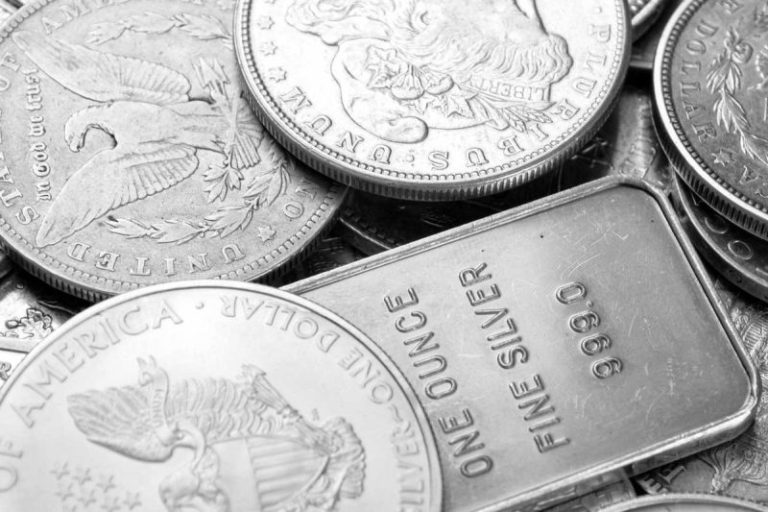
The silver price hit a new all-time high on Monday (December 1), rising as high as US$58.83 per ounce.

The white metal’s rise continues a breakout that began on November 28 after CME Group (NASDAQ:CME) halted trading on the Comex, citing a ‘cooling issue’ at a CyrusOne data center located in a Chicago suburb.

All markets were open and trading by 5:46 a.m. PST that day, but the disruption raised concerns among traders — according to Reuters, the outage was one of the longest in years for CME Group.

Adding fuel to the fire on Monday were increased expectations for an interest rate cut from the US Federal Reserve.

The Fed’s next meeting is set to run from December 9 to 10, and while market participants were previously divided on whether another cut is coming, CME Group’s FedWatch tool now shows strong expectations for a reduction.

Target rate probabilities for December Fed meeting.

Chart via CME Group.

In addition to that, US President Donald Trump said on Sunday (November 30) that he has decided who the next Fed chair will be. While he didn’t give a name, people familiar with the news told Bloomberg that Kevin Hassett, director of the White House’s National Economic Council, is seen as the likely candidate.

Trump has frequently criticized current Fed Chair Jerome Powell for not lowering rates quickly enough, and Powell’s replacement is widely expected to be more in line with Trump’s views.

Speaking on CBS on Sunday, Hassett was relatively tight-lipped about the Fed chair position.

“I think that the American people could expect President Trump to pick somebody who’s going to help them have cheaper car loans and easier access to mortgages at lower rate,” he commented.

“That’s what we saw in the market response to the rumor about me.”

Silver price chart, November 30 to December 1, 2025.

Silver and its sister metal gold tend to fare better when rates are lower, meaning that December rate cut expectations coupled with the Hassett rumor have helped to stoke prices for the precious metals.

While silver is known for lagging behind gold before outperforming, it’s now ahead in terms of percentage gains — silver is up about 97 percent year-to-date, while gold has risen around 60 percent. The yellow metal broke back above US$4,200 per ounce on November 28 and stayed above that level on Monday, but remains below its all-time high.

In addition to rate-related factors, silver’s breakout this year has been driven by various elements.

As a precious metal, it’s influenced by many of the same factors as gold, but its October price jump, which took it past the US$50 level, was also driven by a lack of liquidity in the London market.

While that issue appears to have resolved, a new situation has recently emerged — Bloomberg reported on November 25 that Chinese silver stockpiles are now at their lowest level in a decade after huge shipments to London.

Tariff concerns and silver’s new status as a critical mineral in the US have also provided support in 2025.

The white metal’s industrial side also shouldn’t be forgotten — according to the Silver Institute, industrial demand for silver reached a record 680.5 million ounces in 2024, driven by usage in grid infrastructure, vehicle electrification and photovoltaics. Total silver demand was down 3 percent year-on-year in 2024, but still exceeded supply for the fourth year in a row, resulting in a deficit of 148.9 million ounces for the year.

Watch five experts share their thoughts on the outlook for silver.

Time will tell what’s next for silver, but some experts see it continuing to outperform gold in 2026.

‘The sure money is made in the gold sector, but the big money is made in the silver sector — that’s proven true over the last couple of precious metals cycles. I believe it will be true in this one as well,’ said Jay Martin of VRIC Media.

Securities Disclosure: I, Charlotte McLeod, hold no direct investment interest in any company mentioned in this article.

This post appeared first on investingnews.com

Centurion Minerals Ltd. (TSXV: CTN) (‘Centurion’ or the ‘Company’) announces that the British Columbia Securities Commission, as principal regulator, has granted the Company a management cease trade order (the ‘MCTO’). As previously announced on November 14, 2025 and further clarified on November 27, 2025 (the ‘Announcement’), the Company applied for the MCTO due to a delay in the filing of its audited annual financial statements, management’s discussion and analysis and related certifications for the financial year ended July 31, 2025 (collectively, the ‘Required Filings’), which were due on November 28, 2025.

During the MCTO, the general investing public will continue to be able to trade in common shares in the capital of the Company listed on the TSX Venture Exchange (the ‘TSXV‘); however, the MCTO restricts the Chief Executive Officer and Chief Financial Officer from trading in the securities of the Company until such time the Required Filings have been filed by the Company and the MCTO has been lifted.

The Company and its auditor continue to work diligently toward completing the Required Filings as soon as possible. The anticipated delay was solely related to the payment of outstanding fees previously owed to its auditor in relation with the audit. These fees have since been paid, and the audit has commenced.

The Company currently expects that it will be in a position to file the Required Filings on or before January 27, 2026 and will issue a news release announcing completion of such filings once completed. Until the Company files the Required Filings, it will comply with the alternative information guidelines set out in National Policy 12-203 – Management Cease Trade Orders (‘NP 12-203‘). These guidelines require the Company to issue bi-weekly default status reports by way of a news release during the period of the MCTO. The Company confirms that since the date of the Announcement: (i) there has been no material change to the information set out in the Announcement that has not been generally disclosed; (ii) there has not been any other specified default by the Company under NP 12-203; (iii) the Company is not subject to any insolvency proceedings; and (iv) there is no material information concerning the affairs of the Company that has not been generally disclosed.

About Centurion Minerals Ltd.

Centurion Minerals Ltd. is a Canadian-based company with a focus on precious mineral asset exploration and development in the Americas. Centurion can earn a 100% interest in the Casa Berardi West Gold Project which is located in the prolific gold-producing, greenstone belt of the central Abitibi Subprovince of north-eastern Ontario.

‘David G. Tafel’
CEO and Director

For Further Information Contact:
David Tafel
604-484-2161

FORWARD-LOOKING INFORMATION

This news release contains ‘forward-looking information’ and ‘forward-looking statements’ (collectively, ‘forward-looking information‘) within the meaning of applicable securities laws. Forward-looking information is generally identifiable by use of the words ‘believes,’ ‘may,’ ‘plans,’ ‘will,’ ‘anticipates,’ ‘intends,’ ‘could’, ‘estimates’, ‘expects’, ‘forecasts’, ‘projects’ and similar expressions, and the negative of such expressions. Forward-looking information in this news release includes statements about the expected filing of the Required Filings.

Forward-looking information is subject to known and unknown risks, uncertainties and other factors that may cause the Company’s actual results, level of activity, performance, or achievements to be materially different from those expressed or implied by such forward-looking information. Forward-looking information is based on the reasonable assumptions, estimates, analysis and opinions of management made in light of its experience and perception of trends, current conditions and expected developments, and other factors that management believes are relevant and reasonable in the circumstances at the date such statements are made including, without limitations, information based on the current status of the Required Filings and discussions with the auditor of the Company. Although the Company has attempted to identify important factors that could cause actual results to differ materially from those contained in forward-looking information, there may be other factors that cause results not to be as anticipated. There can be no assurance that such information will prove to be accurate, as actual results and future events could differ materially from those anticipated in such information, and there is no guarantee the Required Filings will be made on the timeline currently expected or at all. If the Required Filings are not filed on time or are subject to additional delays, the securities of the Company could be subject to a cease trade order or other actions taken by the securities regulators and/or the TSXV. Accordingly, readers should not place undue reliance on forward-looking information. All forward-looking information herein is qualified in its entirety by this cautionary statement, and the Company disclaims any obligation to revise or update any such forward-looking information or to publicly announce the result of any revisions to any of the forward-looking information contained herein to reflect future results, events, or developments, except as required by law.

Neither the TSX Venture Exchange nor its Regulation Services Provider (as that term is defined in the policies of the TSX Venture Exchange) accepts responsibility for the adequacy or accuracy of this release.

To view the source version of this press release, please visit https://www.newsfilecorp.com/release/276559

News Provided by Newsfile via QuoteMedia

This post appeared first on investingnews.com

Amar Subramanya joins as vice president of AI, reporting to Craig Federighi

Apple® today announced John Giannandrea, Apple’s senior vice president for Machine Learning and AI Strategy, is stepping down from his position and will serve as an advisor to the company before retiring in the spring of 2026. Apple also announced that renowned AI researcher Amar Subramanya has joined Apple as vice president of AI, reporting to Craig Federighi. Subramanya will be leading critical areas, including Apple Foundation Models, ML research, and AI Safety and Evaluation. The balance of Giannandrea’s organization will shift to Sabih Khan and Eddy Cue to align closer with similar organizations.

Since joining Apple in 2018, Giannandrea has played a key role in the company’s AI and ML strategy, building a world-class team and leading them to develop and deploy critical AI technologies. This team is currently responsible for Apple Foundation Models, Search and Knowledge, ML Research, and AI Infrastructure.

Subramanya brings a wealth of experience to Apple, having most recently served as corporate vice president of AI at Microsoft, and previously spent 16 years at Google, where he was head of engineering for Google’s Gemini Assistant prior to his departure. His deep expertise in both AI and ML research and in integrating that research into products and features will be important to Apple’s ongoing innovation and future Apple Intelligence features.

‘We are thankful for the role John played in building and advancing our AI work, helping Apple continue to innovate and enrich the lives of our users,’ said Tim Cook, Apple’s CEO. ‘AI has long been central to Apple’s strategy, and we are pleased to welcome Amar to Craig’s leadership team and to bring his extraordinary AI expertise to Apple. In addition to growing his leadership team and AI responsibilities with Amar’s joining, Craig has been instrumental in driving our AI efforts, including overseeing our work to bring a more personalized Siri to users next year.’

These leadership moves will help Apple continue to push the boundaries of what’s possible. With Giannandrea’s contributions as a foundation, Federighi’s expanded oversight and Subramanya’s deep expertise guiding the next generation of AI technologies, Apple is poised to accelerate its work in delivering intelligent, trusted, and profoundly personal experiences. This moment marks an exciting new chapter as Apple strengthens its commitment to shaping the future of AI for users everywhere.

Apple revolutionized personal technology with the introduction of the Macintosh in 1984. Today, Apple leads the world in innovation with iPhone, iPad, Mac, AirPods, Apple Watch, and Apple Vision Pro. Apple’s six software platforms — iOS, iPadOS, macOS, watchOS, visionOS, and tvOS — provide seamless experiences across all Apple devices and empower people with breakthrough services including the App Store, Apple Music, Apple Pay, iCloud, and Apple TV. Apple’s more than 150,000 employees are dedicated to making the best products on earth and to leaving the world better than we found it.

NOTE TO EDITORS: For additional information visit Apple Newsroom ( www.apple.com/newsroom ), or email Apple’s Media Helpline at media.help@apple.com .

© 2025 Apple Inc. All rights reserved. Apple, the Apple logo, and Apple Intelligence are trademarks of Apple. Other company and product names may be trademarks of their respective owners.

View source version on businesswire.com: https://www.businesswire.com/news/home/20251201260097/en/

Jacqueline Roy
Apple
jacqueline_roy@apple.com

News Provided by Business Wire via QuoteMedia

This post appeared first on investingnews.com

Bitcoin, the most well-known cryptocurrency, paved the way for the cryptocurrency asset class.

Now the cryptocurrency of choice, its meteoric rise has been unlike any other commodity, resource or asset. Bitcoin’s price rose more than 1,200 percent from March 2020 to reach US$69,044 on November 10, 2021.

The coin showcased its famous volatility in the following year, falling as low as US$15,787 by November 2022 amid economic uncertainty and a wave of negative media coverage.

Bitcoin started 2024 just below US$45,000 and made substantial gains in remainder of the year. Following Donald Trump’s victory over Vice President Kamala Harris in the US presidential election, Bitcoin soared to US$103,697 on December 4, 2024.

The first quarter of 2025 saw the price of Bitcoin decline by more than 25 percent to a low for the year of US$75,004 in early April. Since then, rising institutional demand and an emerging industry-friendly US regulatory environment have poured rocket fuel into the digital assets value.

Bitcoin reached its new all-time high price of US$126,198.07 on October 6, 2025, before closing at US$124,752.53.

However, the digital currency faced a larger than a 30 percent drop in value in November, dropping as low as US$80,659.81 per Bitcoin on November 21 as part of a larger risk-off sentiment pervading the markets.

For frequent updates on the biggest news of the crypto sector, check out our Crypto Market Recap, with updates multiple times per week.

Where did Bitcoin start, and what has spurred its price movements since its launch? Read on to find out.

In this article

    What is Bitcoin and who invented it?

    Created as a response to the 2008 financial crisis, the concept of Bitcoin was first introduced in a nine-page white paper titled “Bitcoin: A Peer-to-Peer Electronic Cash System” on October 31, 2008, on a platform called Metzdowd.

    The manifesto was penned by a notoriously elusive person (or persons) who used the pseudonym Satoshi Nakamoto. The author(s) laid out a compelling argument and groundwork for a new type of cyber-currency that would revolutionize the monetary system.

    Cryptographically secured, Bitcoin was designed to be transparent and resistant to censorship, using the power of blockchain technology to create an immutable ledger preventing double-spending. The true allure for Bitcoin’s early adopters was in its potential to wrestle power away from banks and financial institutes and give it to the masses.

    This was especially enticing as the fallout from the 2008 financial collapse ricocheted internationally. Described as the worst financial crisis since the Great Depression, US$7.4 billion in value was erased from the US stock market in 11 months, while the global economy shrank by an estimated US$2 trillion.

    On January 3, 2009, the Genesis Block was established, marking the beginning of Bitcoin’s blockchain, onto which all additional blocks have been added. The Genesis Block contained the first 50 Bitcoins ever created and a simple message: “The Times 03/Jan/2009 Chancellor on the brink of second bailout for banks.”

    Many believe the message hints at Bitcoin’s mission, as it references an article in The London Times that criticized the British government’s inadequate response to the financial crisis of 2007 to 2008, particularly the government’s inability to provide effective relief and support to the struggling economy.

    What was Bitcoin’s starting price?

    When Bitcoin started trading in 2009, its starting price was a minuscule US$0.0009.

    On January 12, 2009, Nakamoto made the first Bitcoin transaction when they sent 10 Bitcoins to Hal Finney, a computer scientist and early Bitcoin enthusiast, marking a crucial milestone in the cryptocurrency’s development and adoption.

    News of the cryptocurrency continued to spread around the Internet, but its value did not rise above US$0 until October 12, 2009, when a Finnish software developer sent 5,050 Bitcoins to New Liberty Standard for US$5.02 via PayPal Holdings (NASDAQ:PYPL), thereby establishing both the value of Bitcoin and New Liberty Standard as a Bitcoin exchange.

    The first time Bitcoin was used to make a purchase was on May 22, 2010, when a programmer in Florida named Laszlo Hanyecz offered anyone who would bring him a pizza 10,000 Bitcoin in exchange. Someone accepted the offer and ordered Hanyecz two Papa John’s pizzas for US$25. The 10,000 Bitcoin pizza order essentially set Bitcoin’s price in 2010 at around US$0.0025.

    Bitcoin’s price finally broke through the US$1 mark in 2011, and moved as high as US$29.60 that year. However, in 2012 Bitcoin pulled back and remained relatively muted.

    Bitcoin’s price saw its first significant growth in earnest in 2013, the year it broke through both US$100 and US$1,000. It climbed all the way to US$1,242 in December 2013.

    From that peak, Bitcoin’s price began to fall, and it spent most of 2015 in the US$200 range, but it turned around in December 2015 and began to climb again, ending the year at around US$430.

    Bitcoin price chart from August 2011 to December 31, 2015.

    Chart via TradingEconomics.com.

    When did the Bitcoin price start to grow?

    January 1, 2016, marked the beginning of Bitcoin’s sustained price rise. It started the year at US$433 and ended it at US$989 — a 128 percent value increase in 12 months.

    That year, several contributing factors led to Bitcoin’s rise in mainstream popularity. The stock market experienced one of its worst first weeks ever in 2016, and investors began turning to Bitcoin as a “safe-haven” stock amidst economic and geopolitical uncertainty.

    2016 also saw the Brexit referendum in the UK in June and the election of Donald Trump to the White House in November, both events that coincided with a bump in Bitcoin’s price.

    Bitcoin continued its ascent, while various industries continued to take an interest in blockchain technology, particularly technology and finance. In February, a group of investors that included IBM (NYSE:IBM) and Goldman Sachs (NYSE:GS) invested US$60 million in a New York firm developing blockchain technology for financial services, Dig Asset Holdings. Bitcoin was trading at US$368.12 on February 2, down a bit from January, but two months later it was US$418.

    In May the price of Bitcoin experienced a significant price increase, rising by 21 percent to US$539 at the end of the month. Its price went higher into June, peaking at US$764 on June 18. After that, it fell sharply and spent the summer in the high US$600 range. It dropped to US$517 on August 1 and started its climb all over again.

    Microsoft (NASDAQ:MSFT) and Bank of America Merrill Lynch partnered for a finance transacting endeavor in September. Not much price movement was observed, but Bitcoin remained on a steady upward trajectory after that. In October, Ripple partnered with 12 banks in a trial that used its native digital currency token XRP to facilitate cross-border payments. Institutional investment bolstered investor confidence, and Bitcoin went from US$629 to US$736 between October 20 and November 20.

    Bitcoin’s popularity continued into 2017, and it rose from US$1,035.24 in January to US$18,940.57 in December. Futures contracts began trading on the Chicago Mercantile Exchange in December 2017, and Bitcoin began to be more widely perceived as a legitimate investment rather than a passing fad. FOMO flooded the market. What ensued was a frenzy of media coverage featuring celebrity endorsements and initial coin offerings (ICOs) that spilled into 2018.

    Regulators began to take notice and issued warnings and guidelines meant to protect investors and mitigate risks associated with digital assets, which only seemed to make people want them more.

    Through it all, Bitcoin remained the “gold standard” of cryptocurrencies, yet its price was subject to extreme volatility. At the beginning of 2019, it was around US$3,800, it reached nearly US$13,000 in June, but by December 2019 Bitcoin was trading at around US$7,2000.

    Bitcoin price chart from January 1, 2016, to December 31, 2019.

    Chart via TradingEconomics.com.

    What factors led to Bitcoin’s rise in the early 2020s?

    2020 proved a testing ground for the digital coin’s ability to weather financial upheaval. Starting the year at US$6,950.56, a widespread selloff in March triggered by the pandemic brought its value to US$4,841.67 — a 30 percent decline.

    The low created a buying opportunity that helped Bitcoin regain its losses by May. The rally continued throughout 2020, and the digital asset ended the year at US$29,402.64, a 323 percent year-over-year increase and a 507 percent rise from its March drop.

    By comparison, gold, one of the best-performing commodities of 2020, added 38 percent to its value from the low in March through December, setting what was then an all-time high of US$2,060 per ounce in August.

    Bitcoin’s ascent continued in 2021, rallying to an all-time high of US$68,649.05 in November, a 98.82 percent increase from January. Much of the growth in 2021 was attributed to risk-on investor appetite.

    Increased money printing in response to the pandemic also benefited Bitcoin, as investors with more capital looked to diversify their portfolios. The success of the world’s first cryptocurrency amid the market ups and downs of 2020 and 2021 led to more interest and investment in other coins and digital assets as well. For example, 2021 saw the rise of non-fungible tokens (NFTs), unique crypto assets that are stored, sold and traded digitally using blockchain technology.

    Almost immediately following its record close above US$69,000 in November 2021, Bitcoin’s value began to fall once again. Market uncertainty weighed especially heavily on Bitcoin in 2022. During the second quarter of that year, values dived below US$20,000 for the first time since December 2020.

    On May 7, 2022, Curve Whale Watching posted the first sign that confidence in Terra Luna, a cryptocurrency pegged to the US dollar, was waning after 85 million of its stablecoin UST exchanged for less than the 1:1 ratio it was supposed to maintain. This triggered a massive sell-off that brought Luna’s value down 99.7 percent and eventually resulted in the Terra tokens ceasing to be traded on major crypto exchanges.

    Terra’s collapse had a domino effect on the industry as investors’ faith in crypto crumbled. In July, the Celsius network, a platform where users could deposit crypto into digital wallets to accrue interest, halted all transfers due to “extreme market conditions”, driving down the price of Bitcoin even further to US$19,047, a 60 percent decline from January 2022. In July, Celsius filed for Chapter 11 bankruptcy.

    However, the biggest shake-up to the industry came in November when CoinDesk published findings that cryptocurrency trading firm Alameda Research led by Sam Bankman-Fried had borrowed billions of dollars of customer funds from crypto exchange and sister company FTX. Over a third of Alameda’s assets were tied up in FTT, the native cryptocurrency of FTX.

    Once this news broke, investors withdrew their funds en masse, causing a liquidity crunch that collapsed FTX. Bankman-Fried was later arrested and sentenced to 25 years in federal prison on counts of money laundering, wire fraud and securities fraud.

    Although Bitcoin was never implicated, the fallout of the FTX scandal led to a crisis of confidence across the sector and increased scrutiny from regulators and law enforcement. By the end of 2022, prices for Bitcoin had moved even lower to settle below US$17,000.

    Bitcoin price chart from January 1, 2020, to December 31, 2022.

    Chart via TradingEconomics.com.

    Bitcoin’s powerful performance cannot be understated as evidenced by its price performance in the later half of 2023 and so far in 2024.

    Concerns with the banking system led the price of Bitcoin to rally in March 2023 to US$28,211 by March 21 after the failure of multiple US banks alarmed investors.

    In Q2 2023, Bitcoin continued its ascent, stabilizing above US$25,000 even as the US Securities Exchange Commission (SEC) filed lawsuits against Coinbase Global (NASDAQ:COIN), along with Binance and its founder Changpeng Zhao.

    Although it looked like bad news for the sector, Bitcoin stayed steady, holding above US$25,000. This was supported by BlackRock (NYSE:BLK), the world’s largest asset manager, filing for a Bitcoin exchange-traded fund with the SEC on June 15.

    Bitcoin’s price jumped above US$30,000 on June 21, 2023, and on July 3, 2023, the crypto hit its highest price since May 2022 at US$31,500. It held above US$30,000 for nearly a month before dropping just below on July 16, 2023. By September 11, 2023, prices had slid further to US$25,150.

    Heading into the final months of the year, the Bitcoin price benefited from increased institutional investment on the prospect of the SEC approving a bevy of spot Bitcoin exchange-traded funds by early 2024. In mid-November the price for the popular cryptocurrency was trading up at US$37,885, and by the end of the year that figure had risen further to US$42,228 per BTC.

    2024 Bitcoin price performance

    Bitcoin price chart from January 1, 2024, to November 6, 2024.

    Chart via TradingEconomics.com.

    Once the SEC’s approval of 11 spot Bitcoin ETFs hit the wires, the price per coin jumped again to US$46,620 on January 10, 2024. These investment vehicles were a major driving force behind the more than 42 percent rise in value for Bitcoin in February; it reached US$61,113 on the last day of the month.

    On March 4, Bitcoin surged almost 8 percent in 24 hours to trade at US$67,758, less than 2 percent away from its previous record, and on March 11 it hit a new milestone, surpassing the US$72,000 mark. Three days later, on March 14, Bitcoin reached its highest-ever recorded price of US$73,737.94, surpassing the market cap of silver.

    Bitcoin often surges leading up to the halving events, which is when Bitcoin rewards are halved for miners. The most recent came in April when the reward for completing a block was cut from 6.25 to 3.125 Bitcoin.

    Several sources cited the 2024 halving as one of the forces that drove the price of Bitcoin to its newest high.

    The halving occurred at around 8:10 p.m. EDT on a Friday, and Bitcoin’s price remained stable within the US$63,000 to US$65,000 range over the ensuing weekend. On April 22, the Monday following the halving, it was slightly above US$66,000.

    While Bitcoin’s price stayed relatively stable, the cryptocurrency’s trading volume experienced significant fluctuations through that weekend, with a 45 percent increase from April 19 to April 20 followed by a 68 percent decline on April 21. Between April 30 and May 3, it fell as low as US$56,903 following the Federal Reserve’s April policy meeting, which did not produce a rate cut.

    Reports that the SEC was moving to approve spot Ether ETFs in May sent the price of Bitcoin climbing again alongside that of Ether, the native token of the Ethereum blockchain, which serves as the foundation for these ETFs. Bitcoin passed US$71,000 for the second time ever at 8:00 p.m. EDT on May 20, days before the SEC approved spot Ether ETFs on May 23.

    Bitcoin hovered between US$67,000 and US$69,000 for the remainder of the month and into the middle of June. It fell back below US$67,000 on June 13 and moved lower the next day when the Federal Reserve opted to delay lowering interest rates once again.

    Losses picked up speed through late June and continued in July, with analysts pointing to uncertainty over post-election regulations, Germany’s sell-off of seized Bitcoin assets and concerns about the impact of the defunct trading platform Mt. Gox on the token market. Bitcoin dropped to a two-month low of US$55,880 on July 8, but quickly recovered most of its losses after Federal Reserve Chairman Jerome Powell’s congressional testimony on July 9 that signaled rate cuts may not be far off.

    As crypto gains wider acceptance and accessibility, with more traditional financial institutions and products incorporating digital assets, the type of risk that Bitcoin represents has evolved. Bitcoin was primarily seen as a highly speculative alternative investment. Now, with expanding institutional interest, it is increasingly seen as a ”risk-on” asset – meaning its price movements are influenced by market sentiment, investor confidence and broader economic conditions.

    A rise in Bitcoin’s price ensued after the July 13 assassination attempt of US presidential candidate Donald Trump, who has been actively endorsing the crypto industry for support. Bitcoin rose from US$57,899 to US$66,690 in the week following the incident as the odds of a Trump victory were seen to improve, highlighting the impact of regulatory uncertainty on the market. However, Bitcoin’s price didn’t experience any significant pullbacks in the week after current US President Joe Biden dropped out of the race on July 21 and current Vice President Kamala Harris took over as the new nominee.

    Other significant developments affecting Bitcoin during the summer included the underwhelming performance of spot Ether ETFs, fears of a US government Bitcoin sell-off, Trump’s proposed national Bitcoin stockpile and Trump’s declining chances of winning the election as support for Harris snowballs.

    Bitcoin experienced a tumultuous August, with its price plummeting alongside other digital assets and the stock market on August 5th. Several factors triggered this sell-off, including weaker-than-expected economic data on August 2 and an unexpected interest rate hike in Japan. These events sparked panic in Asian markets, leading investors to liquidate high-risk assets like Bitcoin.

    Despite a brief recovery, Bitcoin continued to fluctuate throughout August, dropping to US$58,430 on the weekend of August 10 and 11, and experiencing further price swings between US$60,700 and US$56,700. While positive inflation data boosted the stock market, Bitcoin struggled to break past a US$60,000 ceiling.

    A brief rally on August 23rd, prompted by the Federal Reserve’s signal to begin lowering interest rates, was quickly followed by another price drop. This pattern of rallies and subsequent declines persisted for the remainder of August and most of September. Bitcoin ended the month at just above US$64,540.

    During the lead up to the 2024 US presidential election had a notable affect on Bitcoin’s price movements, with the Republican party generally seen as more ‘crypto-friendly’ than the Democrats. On October 28, PolyMarket, bettors favored Trump with a 66.1 percent probability of winning compared to Harris’ 33.8 percent. This translated into a 7 percent gain in a little over 24 hours on October 29 to flirt with the previous all-time high, coming in at US$73,295.

    A few days later on November 3, Trump’s lead would seemingly narrow with the gap closing to 55 percent for Trump and 44.3 percent for Harris. The Bitcoin price responded by dropping to US$67,874 on November 4.

    Bitcoin set a then high price on November 6, 2024, when it reached US$76,243 per BTC at 4:00 p.m. EST. This price came after the 45th US President Donald Trump made a stunning political comeback to become the 47th US President. His retaking of the presidency was heralded as hugely positive for the cryptocurrency market.

    “We have a #Bitcoin President,” Michael Saylor, founder of Bitcoin development company Strategy (NASDAQ:MSTR), posted on X.

    Bitcoin crossed the US$100,000 threshold for the first time on December 4, 2024, rising as high as US$103,697.

    What was the highest price for Bitcoin?

    Bitcoin set a new all-time high price on October 6, 2025, when it reached US$126,198.07 per BTC.

    Investor’s Business Daily reported that the spike came as the US government shutdown in a gridlock on the budget. Analysts also noted that October is typically a stellar month for double digit gains in the cryptocurrency.

    You can learn more about the biggest news driving Bitcoin in the October 6 Crypto Market Update.

    What is the Bitcoin price today?

    As of December 1, 2025, Bitcoin is trading around the US$87,000 level after spending much of November on a steady decline.

    Earlier in 2025, Bitcoin demonstrated its volatile nature when the price of the cryptocurrency fell to as low as US$75,000 per coin by April 7. This represented a key buying opportunity as crypto buffs were anticipating further strength in the market under Trump.

    Soon after, the price of Bitcoin was once again on a steady upward path and breached the US$100,000 level on May 8, and reached its new high above US$126,000 in October.

    FAQs for investing in Bitcoin

    What is a blockchain?

    A blockchain is a digitized and decentralized public ledger of all cryptocurrency transactions.

    Blockchains are constantly growing as completed blocks are recorded and added in chronological order. The mechanism by which digital currencies are mined, blockchain has become a popular investment space as the technology is increasingly being implemented in business processes across a variety of industries. These include banking, cybersecurity, networking, supply chain management, the Internet of Things, online music, healthcare and insurance.

    Is Peter Todd Satoshi Nakamoto?

    Canadian software developer Peter Todd has denied he is Satoshi Nakamoto, a claim made by the documentary ‘Money Electric: The Bitcoin Mystery,’ which aired on October 8, based on circumstantial evidence such as posts on an early Bitcoin forum and correspondence between Todd and Hal Finney, who received the first Bitcoin from Satoshi.

    Aired on HBO, the film by Cullen Hoback features interviews with people involved in Bitcoin’s creation and suggests that Todd could be the elusive Satoshi Nakamoto who wrote the 2008 white paper that led to Bitcoin’s launch. Reddit posts dating back to 2015 have also suggested that Todd could be Satoshi.

    Todd has continuously denied the claim, most recently to multiple media outlets, including CoinDesk and Bloomberg.

    How to buy Bitcoin?

    Bitcoin can be purchased through a variety of crypto exchange platforms and peer-to-peer crypto trading apps, and then held in a digital wallet. These include Coinbase Global, CoinSmart Financial (OTC Pink:CONMF,NEO:SMRT), BlockFi, Binance and Gemini.

    What is the Bitcoin halving?

    Unlike traditional currencies that can increase circulation through printing, the number of Bitcoins is finite. This limit is a core function of Bitcoin’s algorithm and was designed to offset inflation by maintaining scarcity. There are 21 million in existence, of which 19,952,398 are in circulation as of November 24. This means there are 1,047,602 still unmined.

    A new Bitcoin is created when a Bitcoin miner uses highly specialized software to complete a block of transaction verifications on the Bitcoin blockchain. Roughly 900 Bitcoins are currently mined per day; however, after 210,000 blocks are completed, a Bitcoin protocol called a halving automatically reduces the number of new coins issued by half. Halving not only counteracts inflation but also supports the cryptocurrency’s value by ensuring that its price will increase if demand remains the same.

    Halvings have occurred every four years since 2012, with the most recent happening on April 19, 2024. The next halving is expected to occur in 2028.

    Bitcoin’s halving has significant implications for the cryptocurrency’s mining activity and supply because of how Bitcoin mining works. Currently, miners are paid 3.125 Bitcoin for every block they complete. After the next halving, the pay rate will lower to 1.5625 Bitcoin for every completed block for the next four years.

    What is Coinbase?

    Coinbase Global is a secure online cryptocurrency exchange that makes it easy for investors to buy, sell, transfer and store cryptocurrencies such as Bitcoin.

    How does crypto affect the banking industry?

    Cryptocurrencies are an alternative to traditional banking, and tend to attract people interested in assets that are outside mainstream systems. According to data from Statista, 53 percent of crypto owners are between the ages of 18 and 34, showing that the industry is drawing younger generations who may be interested in decentralized digital options.

    Privacy is a key draw for cryptocurrency owners, as is the fact that they are separated from third parties such as central banks. Additionally, crypto transactions, including purchases, sales and transfers, are often quick and have fewer associated fees than transactions going through the banking system in the typical manner.

    That said, banks are starting to notice how popular cryptocurrencies are. As Bitcoin and its compatriots become increasingly mainstream, many banks have begun to invest in cryptocurrencies and blockchain companies themselves.

    Is Bitcoin a good investment anymore?

    While Bitcoin has reached new heights in 2025, one of its well-known features is its volatility. Investors who are more accepting of risk could look to the cryptocurrency space as there historically has been money to be made, and Bitcoin is regaining value after plummeting in 2022. However, there is also historically money to be lost, and investors who prefer to take smaller risks should look towards other avenues.

    For more information on investing in Bitcoin right now, check out our article Is Now a Good Time to Buy Bitcoin?

    Who has the most invested in Bitcoin?

    Satoshi Nakomoto, the mysterious founder of Bitcoin, is believed to also be the biggest holder of the coin. Analysis into early Bitcoin wallets has revealed that Nakamoto likely owns over 1 million of the nearly 19.5 million Bitcoins in existence.

    Does Elon Musk own Bitcoin?

    Tesla and Twitter CEO Elon Musk’s association with both Bitcoin and the meme coin Dogecoin is well known, and both his tweets and Tesla’s actions have influenced the cryptocurrencies’ trajectories over the years.

    While it is unknown just how much he owns, Musk has disclosed that he personally has holdings of Bitcoin and Dogecoin, as well as Ether. It was revealed in September 2023 that Musk may be funding Dogecoin on the quiet, according to Forbes.

    As for Tesla, the company purchased US$1.5 billion of Bitcoin in 2021, but sold 75 percent of that the next year. As of November 2025, the EV maker’s Bitcoin holdings were estimated at 11,509 Bitcoin, the twelfth-largest bitcoin holdings for a publicly traded company. In a January 2024 post on his social media platform X, Musk said “I still own a bunch of Dogecoin, and SpaceX owns a bunch of Bitcoin.’

    Securities Disclosure: I, Meagen Seatter, hold no direct investment interest in any company mentioned in this article.

    Ads by Money. We may be compensated if you click this ad.Ad
    This post appeared first on investingnews.com