Altech Batteries (ATC:AU) has announced Altech – Design Completed for UPS Battery System
Download the PDF here.
This post appeared first on investingnews.com

Altech Batteries (ATC:AU) has announced Altech – Design Completed for UPS Battery System
Download the PDF here.

Here’s a quick recap of the crypto landscape for Monday (November 24) as of 9:00 p.m. UTC.
Get the latest insights on Bitcoin, Ether and altcoins, along with a round-up of key cryptocurrency market news.
Bitcoin (BTC) was priced at US$89,102.53, up 1.9 percent in 24 hours.
The cryptocurrency is up after last week’s rout, which saw over US$1.2 billion in spot Bitcoin exchange-traded fund (ETF) outflows, marking the third consecutive week with over US$1 billion in outflows, as per SoSoValue.
Bitcoin price performance, November 24, 2025.
Chart via TradingView.
However, market sentiment remains cautious, with the Fear and Greed Index reading 12 at market close. Increased open interest and large short liquidations suggest potential volatility and possible rebound dynamics.
“In the short term, a rebound is highly likely, but if we fall again and lose the US$80,000 level, the probability of facing a much tougher period becomes significantly higher,” CryptoQuant said in a post on X.
Bitcoin’s relative strength index at 58.52 indicates moderately bullish momentum, but is still comfortably below overbought territory. A -0.005 funding rate shows traders are still somewhat bearish, although short liquidations may start to shift momentum upward. Economic data due later this week could lift markets higher if it reinforces expectations of an interest rate cut from the US Federal Reserve. Market odds for a December rate cut have risen recently, with many sources placing the probability at around 70 to 79 percent.
Meanwhile, ETH (ETH) was US$2,973.36, up by 5.1 percent in 24 hours. Liquidations of US$39.75 million, predominantly in short positions, may have fueled upward price pressure through a short squeeze.
Open interest rose 3.07 percent to US$35.93 billion, suggesting increasing trader engagement and speculative activity in Ether derivatives. A funding rate of zero reflects a balance between bullish and bearish sentiment among traders.
Recent events in the crypto ecosystem have underscored the vulnerabilities and institutional challenges facing DeFi investors. On November 21, Cardano experienced an accidental chain split triggered by a malformed transaction, temporarily dividing the blockchain into two competing chains.
The disruption exposed weaknesses in network resilience and stake pool operations, causing lost block rewards and transaction irregularities in DeFi protocols dependent on Cardano’s network stability.
Then, Etherscan unexpectedly cut off API access to roughly 10 percent of its blockchains and networks. This sudden outage occurred during the DevConnect conference, impairing developers’ ability to manage smart contracts effectively, further revealing how dependent DeFi investors are on the reliability of ancillary infrastructure.
These events came amid growing tensions involving JPMorgan Chase (NYSE:JPM).
The banking giant has drawn ire from the crypto community for reportedly influencing MSCI to exclude digital asset treasury companies holding more than 50 percent of their assets in cryptocurrencies.
JPMorgan’s research warns that the exclusion could trigger forced selloffs potentially totaling up to US$8.8 billion, with Strategy (NASDAQ:MSTR) alone possibly facing US$2.8 billion in outflows.
The final decision will be announced on January 15 ,with changes taking effect in February.
The bank then upgraded ratings on Monday for Bitcoin-mining companies Cipher Mining (NASDAQ:CIFR) and CleanSpark (NASDAQ:CLSK) to overweight from neutral, citing strong momentum in high-performance computing partnerships and long-term cloud and colocation deals that improve revenue visibility.
JPMorgan’s stance highlights the institutional and regulatory tensions complicating the interface between traditional finance and the fast-evolving crypto ecosystem.
The Franklin XRP ETF (ARCA:XRPZ) and the Grayscale XRP Trust ETF (ARCA:GXRP) both launched on Monday, providing new regulated investment options for XRP exposure.
Investor response was prompt, with early trading volumes indicating strong demand and positive sentiment around XRP’s future prospects as reflected in the market’s reception to both ETFs.
Market watchers see this dual launch as a major step toward integrating crypto assets like XRP into traditional finance frameworks, enhancing liquidity and investor confidence.
Ray Youssef, CEO of peer-to-peer crypto app NoOnes, said a wave of altcoin ETF launches could bring a much-needed dose of optimism back into the market if investors interpret new listings as implicit regulatory approval.
“As market sentiment has been so underwhelming in recent times, the ETF season hitting the market at its current condition may be when they can make the most significant contribution to the digital asset economy this year.”
Youssef added that the launch of altcoin ETFs is creating a steady flow of capital into the digital asset market, providing a liquidity buffer. This momentum could lead to an end-of-year rally for altcoins.
Michael Burry, best known for his prescient bet against the US housing market in 2008, has launched a paid Substack newsletter not long after closing his hedge fund, Scion Asset Management.
In his introductory post, Burry emphasizes that the move does not mark a retirement, but rather a shift toward writing without the regulatory constraints that accompany professional money management.
Priced at US$39 per month, the newsletter has quickly drawn more than 21,000 subscribers.
Early essays revisit his trading history during the dot-com era and outline why he views today’s artificial intelligence boom as a supply-glutted bubble primed for correction.
With Scion now closed, Burry says the newsletter will become his primary outlet for analysis as he continues to track what he views as speculative excess building across technology markets.
Securities Disclosure: I, Giann Liguid, hold no direct investment interest in any company mentioned in this article.
Securities Disclosure: I, Meagen Seatter, hold no direct investment interest in any company mentioned in this article.
Further to its announcement on 20 October 20251, Jindalee Lithium Limited (ASX: JLL, OTCQX: JNDAF) (Company) is pleased to advise the results of its Share Purchase Plan (SPP). The SPP closed for applications on 20 November 2025, and the Company has today completed the allocation and issuance of shares and options under the SPP, raising total proceeds of $1.5 million.
The SPP, which targeted to raise up to $1 Million, was met with strong demand and closed oversubscribed. In accordance with the SPP Offer Booklet2, the Board exercised its discretion to accept oversubscriptions, resulting in total proceeds of $1.5 million. To ensure a fair allocation, applications for amounts greater than $5,000 were scaled back on a pro-rata basis. Excess application monies will be refunded to applicants in line with the SPP terms2.
A total of 2,720,065 fully paid ordinary shares (Shares) were issued at $0.55 per Share. Eligible shareholders also received one (1) option for every one (1) Share allotted, exercisable at $0.825 and expiring 30 November 2028 (Option), for nil upfront consideration. Participants in the placement announced on 20 October 2025 will also receive Options on the same basis as SPP participants, to be issued subject to shareholder approval at the Company’s general meeting to be held on 10 December 2025.
Funds raised will be used to advance the McDermitt Lithium Project, including exploration drilling, metallurgical testwork, and working capital to progress the proposed United States special purpose acquisition company (SPAC) transaction3.
Commenting on the SPP, Ian Rodger, the Company’s Managing Director and CEO, said “We are grateful for the outstanding support from our shareholders. The strong response to the SPP reflects confidence in Jindalee and the strategic importance of the McDermitt Project. On behalf of the Board, we thank you for your continued support.”
Click here for the full ASX Release
Locksley Resources (LKY:AU) has announced Drill Program Operations Commence at El Campo
Download the PDF here.

Here’s a quick recap of the crypto landscape for Wednesday (November 26) as of 9:00 p.m. UTC.
Get the latest insights on Bitcoin, Ether and altcoins, along with a round-up of key cryptocurrency market news.
Bitcoin’s (BTC) price climbed from around US$87K to close at US$89,903.49 on Wednesday afternoon, a three percent increase in 24 hours.
Bitcoin price performance, November 26, 2025.
Chart via TradingView.
However, a 1.55 percent increase in open interest during the same four hour window suggests fresh buying interest, while a positive funding rate of 0.002 reflects modestly bullish market sentiment. A relative strength index of 62.56 for Bitcoin indicates that the asset is in moderately bullish territory but not yet overbought.
Despite optimism of a possible temporary reset, investors warn that a decisive break below US$80,000 could expose Bitcoin to a slide toward the US$69,000 to US$62,000 support range.
As analyst Ted Pillows wrote on X, “$BTC is facing a lot of resistance around the $88,000–$90,000 zone. If BTC doesn’t break above this level soon, expect a sweep of the lows again.”
“Notably, what makes this episode different from past crypto winters is the investor base. BTC is now held by ordinary investors in their mainstream portfolios. So many are treating it like any other high-beta risk asset,’ she said.
“This behavior means that current price action is more of a classic de-risking phase. Rate-cut expectations change quickly, so investors opt for assets they perceive as core ballast. Given that, the picture suggests a complementary reading rather than a simple “either/or.” Gold acts as the insurance that central banks are still actively adding. In turn, Bitcoin is the high-risk component that investors reduce first when volatility rises,’ added Chen.
Meanwhile, Ether (ETH) closed at US$3,025.84, a 3.1 percent increase in 24 hours. ETH also showed strong bullish momentum, with a 2.7 percent rise in open interest and liquidations predominantly on the short side, signaling a short squeeze; however, a positive funding rate of 0.008 underscores traders’ optimism.
Strategy (NASDAQ:MSTR) reiterated that its balance sheet can withstand a deep Bitcoin drawdown, telling investors in a recent X post that its collateral coverage would remain at 2.0x even if Bitcoin dropped to US$25,000.
The company disclosed updated calculations showing that its convertible debt remains overcollateralized despite the stock’s 49 percent slide and the risk of an MSCI index removal next year.
With 649,870 BTC — worth roughly US$57 billion — the firm remains the largest corporate holder of Bitcoin globally. Strategy maintains that this overcollateralization gives it room to manage volatility and refinance maturities that run through 2032. Despite the reassurances, the company continues to face pressure from index committees and investors reevaluating the long-term role of a Bitcoin-heavy corporate treasury.
Recently, S&P Dow Jones Indices left Strategy off its latest round of S&P 500 additions, choosing to elevate SanDisk instead despite Strategy’s market capitalization placing it within the top tier of US public companies.
Strategy’s bid for inclusion has been complicated by its reliance on Bitcoin holdings, which some index members argue behaves more like an investment vehicle than a traditional operating company.
For its part, Strategy insists that its software business, alongside its Bitcoin strategy, qualifies it as an operating firm under the index rules. Chairman Michael Saylor pushed back against the characterization, stressing on X that Strategy is “not a fund, not a trust, and not a holding company.”
Japan’s Financial Services Agency has finalized plans to move digital assets under the Financial Instruments and Exchange Act, marking the country’s most sweeping crypto regulatory overhaul in years.
The shift reclassifies crypto assets as investment products and subjects issuers and exchanges to disclosure and conduct standards similar to those governing securities.
The changes affect over 13 million Japanese crypto accounts that collectively hold more than ¥5 trillion, prompting concerns from local exchanges about higher compliance burdens.
The FSA’s working group outlined new obligations, including clearer disclosure of token supply, governance structures, project risk assessments, and issuer responsibilities.
In addition, exchanges will also be required to maintain reserve funds to cover potential hacking incidents. Regulators plan to crack down on unregistered offshore platforms that continue marketing to Japanese users without approval.
The legislative package is expected to be submitted during the 2026 Diet session.
In a historic move, the government of Bolivia is preparing to integrate cryptocurrencies and stablecoins, according to an announcement from the country’s economic minister, Jose Gabriel Espinoza.
“You can’t control crypto globally, so you have to recognize it and use it to your advantage,” Espinoza reportedly said, according to Reuters. With stablecoins like USDT already being used for cross-border payments and as a hedge against the local currency’s depreciation, banks will soon be allowed to custody crypto, as well as offer crypto-based savings accounts, credit cards, and loans.
A Spanish parliamentary bloc has introduced new tax amendments that would significantly increase the burden on Bitcoin, Ether, and other non-financial-instrument crypto assets.
The proposal would shift gains from crypto into the general personal income tax base, which carries rates of up to 47 percent — far above the current 30 percent maximum applied to savings-based income.
Lawmakers also want corporate crypto gains taxed at 30 percent and are pushing for a nationwide “traffic light” risk label that would appear on trading platforms.
Tax specialists argue the reforms would be difficult to implement, with some calling the package legally unworkable and likely to generate administrative chaos. Investors are likewise already expressing concern after a recent case in which a trader was taxed 9 million euros on a transaction that produced no profit, highlighting flaws in current enforcement.
If enacted, analysts further warn that the new measures could accelerate capital flight from Spain’s retail crypto market.
Grayscale submitted a Form S-3 registration statement to the US Securities and Exchange Commission on Wednesday, signaling the firm’s intention to convert its fund tied to Zcash into a spot exchange-traded fund.
Securities Disclosure: I, Giann Liguid, hold no direct investment interest in any company mentioned in this article.
Securities Disclosure: I, Meagen Seatter, hold no direct investment interest in any company mentioned in this article.

Silver Dollar Resources Inc. (CSE:SLV)(OTCQX:SLVDF)(FSE:4YW) (‘Silver Dollar’ or the ‘Company’) is pleased to report underground sample assay results and preliminary geologic modeling of existing high-grade drill results in support of an exploration and mining strategy shift from open pit to underground at its 100%-owned La Joya Silver (Cu-Au) Project (the ‘Property’) in the state of Durango, Mexico.
Figure 1: La Joya plan view showing mineralized areas and location of underground sampling.
A total of 16 channel samples were collected from the historic La Embotelladora mine workings, showing mineralization localized in ENE and NNE structural zones. Sample R-300 returned 2,753 grams per tonne (g/t) silver equivalent (AgEq) over 0.4 metres (m) representing the NNE trending zone. Sample R-291 returned 328 g/t AgEq over 0.4m representing the ENE structural zone (Table 1). These data combined with existing drilling results are aiding in the Company’s ongoing strategy of transitioning La Joya from an open pit to an underground project by confirming high grade mineralization localization in a network of prospective structures. Ongoing geologic modeling will focus on validating this thesis through re-focused exploration planning.
Photo 1: Underground sampling of the historic La Embotelladora Mineworkings.Figure 2: Plan view showing recent channel sample assay results and existing drilling results.
|
Sample ID |
Width (m) |
Ag g/t |
Au g/t |
Cu g/t |
Pb g/t |
Zn g/t |
AgEq g/t |
|
R-289 |
0.4 |
2 |
0.0 |
387 |
26 |
171 |
6 |
|
R-290 |
0.6 |
5 |
0.3 |
464 |
17 |
158 |
21 |
|
R-291 |
0.4 |
166 |
0.2 |
23,110 |
43 |
153 |
328 |
|
R-292 |
1.1 |
11 |
0.1 |
1,900 |
14 |
186 |
26 |
|
R-293 |
0.7 |
4 |
0.4 |
606 |
13 |
145 |
23 |
|
R-294 |
0.6 |
2 |
0.0 |
254 |
9 |
153 |
5 |
|
R-295 |
0.6 |
2 |
0.1 |
448 |
9 |
163 |
7 |
|
R-296 |
0.85 |
5 |
0.1 |
457 |
369 |
1,620 |
13 |
|
R-297 |
0.8 |
5 |
0.1 |
689 |
292 |
4,440 |
18 |
|
R-298 |
0.3 |
1 |
0.1 |
367 |
11 |
156 |
6 |
|
R-299 |
0.85 |
26 |
0.0 |
2,160 |
20 |
204 |
41 |
|
R-300 |
0.4 |
1,800 |
0.6 |
139,860 |
1,340 |
4,550 |
2,753 |
|
R-301 |
0.95 |
148 |
0.1 |
13,870 |
36 |
234 |
244 |
|
R-302 |
0.32 |
34 |
0.5 |
416 |
15 |
129 |
57 |
|
R-303 |
0.4 |
9 |
1.1 |
460 |
4 |
182 |
54 |
|
R-304 |
0.26 |
3 |
0.2 |
549 |
58 |
364 |
15 |
Table 1: Assay results from underground sampling campaign.
Silver equivalent is calculated using the following metal prices in USD: Au $1,750/oz, Ag $22/oz, Pb $1.25/lb, Zn $1.50/lb, Cu $4.30/lb. Recoveries of Au 66%, Ag 93%, Pb 87%, Zn 84%, Cu 70% historically reported from Pan American Silver’s La Colorada mine and Southern Silver’s Cerro Minitas mine (Cu only) have been used in the AgEq calculation, and are assumed to be comparable to anticipated recoveries at La Joya.
Figure 3: La Joya preliminary numerical model of AgEq trended to apparent E-W structural network.
Silver Dollar has also completed preliminary numerical modeling of existing drillhole assay data to identify additional high-grade mineralization. Numerical models were trended using preliminary vein modeling, which focused on a series of emerging E-W trends. Ongoing geologic modeling will incorporate other local trends, including a NNE structural trend, and the impact of stratigraphic-structural intersections on plunging mineral trends.
‘With silver, copper, and gold prices all reaching record highs this year, it’s an opportune time to re-conceptualize La Joya from a new underground perspective,’ said Greg Lytle, President of Silver Dollar. ‘The goal of our geological modeling is to assess La Joya’s underground potential based on a compilation of all historical data, consider hypothetical underground mining methods, and identify high-priority exploration targets to add value to the Project.’
Procedure, quality assurance/quality control and data verification:
All rock samples were collected, described, photographed, and bagged on-site. The samples were delivered by Silver Dollar staff to ActLabs in Zacatecas, Mexico for analysis. ActLabs is ISO 9001:2015 certified. Rock samples were crushed, pulverized and screened to -80 mesh at the lab, prior to analysis. Gold is analyzed by a 30g Fire Assay with AA (atomic absorption spectroscopy) finish, then gravimetric finish if greater than 10ppm Gold. Silver and 34 other elements were analyzed using a four-acid digestion with an ICP-OES (Inductively Coupled Plasma Optical Emission spectroscopy) finish. Silver, lead, zinc, and copper over limits were re-assayed using an ore-grade four-acid digestion with ICP-AES (Inductively coupled plasma atomic emission spectroscopy) finish. Control samples comprising certified reference samples and blank samples were systematically inserted into the sample stream and analyzed as part of the Company’s quality assurance and quality control protocol.
About the La Joya Property:
La Joya is an advanced exploration stage property consisting of 15 mineral concessions totaling 4,646 hectares and hosts the Main Mineralized Trend (MMT), Santo Nino, and Coloradito deposits.
The previous operator, Silvercrest Mines, released a Preliminary Economic Assessment (PEA) NI 43-101 Technical Report on the La Joya Property in December 2013. The PEA included a mineral resource estimate (MRE) on the MMT and Santo Nino deposits (See Historical MRE Table) that was based on 89 holes totaling 30,085 m of Silvercrest’s drilling between 2010 and 2012 (See Historical MRE Model). The MRE was reported to conform to CIM definitions for resource estimation; however, a qualified person of Silver Dollar has not done sufficient work to classify the historical resource, and the Company is not treating it as a current mineral resource. Independent data verification and an assessment of the mineral resource estimation methods are required to verify the historical mineral resource.
The Property is situated approximately 75 kilometres southeast of the Durango state capital city of Durango in a high-grade silver region with past-producing and operating mines, including Silver Storm’s La Parrilla Mine, Industrias Penoles’ Sabinas Mine, Grupo Mexico’s San Martin Mine, Sabinas Mine, First Majestic’s Del Toro Mine, and Pan American Silver’s La Colorada Mine (Figure 4).
Figure 4: La Joya location and historical and operating mines in the area.
Dale Moore, P.Geo., an independent Qualified Person (QP) as defined in NI 43-101, has reviewed and approved the technical contents of this news release on behalf of the Company.
About Silver Dollar Resources Inc.
Silver Dollar is a dynamic mineral exploration company focused on two of North America’s premier mining regions: Idaho’s prolific Silver Valley and the Durango-Zacatecas silver-gold belt. Our portfolio includes the advanced-stage Ranger-Page and La Joya projects, as well as the early-stage Nora project. The Company’s financial backers include renowned mining investor Eric Sprott, our largest shareholder. Silver Dollar’s management team is committed to an aggressive growth strategy and is actively reviewing potential acquisitions with a focus on drill-ready projects in mining-friendly jurisdictions.
For additional information, you can visit our website at silverdollarresources.com, download our investor presentation, and follow us on X at x.com/SilverDollarRes.
ON BEHALF OF THE BOARD
Signed ‘Gregory Lytle’
Gregory Lytle,
President, CEO & Director
Silver Dollar Resources Inc.
Direct line: (604) 839-6946
Email: greg@silverdollarresources.com
179 – 2945 Jacklin Road, Suite 416
Victoria, BC, V9B 6J9
Forward-Looking Statements:
This news release may contain ‘forward-looking statements.’ Forward-looking statements involve known and unknown risks, uncertainties, assumptions, and other factors that may cause the actual results, performance or achievements of the Company to be materially different from any future results, performance or achievements expressed or implied by the forward-looking statements. Any forward-looking statement speaks only as of the date of this news release and, except as may be required by applicable securities laws, the Company disclaims any intent or obligation to update any forward-looking statement, whether as a result of new information, future events or results or otherwise.
The Canadian Securities Exchange (operated by CNSX Markets Inc.) has neither approved nor disapproved of the contents of this news release.

Canada is preparing to unveil a multibillion-dollar uranium export agreement with India, marking the strongest sign yet that the two countries are rebuilding ties after a two-year diplomatic freeze.
Two people familiar with the negotiations revealed that the deal, valued at roughly US$2.8 billion, would run for up to a decade and position Canadian producer Cameco (TSX:CCO,NYSE:CCJ) as a long-term supplier to India’s expanding nuclear power sector.
The final terms are still being refined, the sources cautioned, but the agreement is expected to be announced in the coming days.
The deal, if it pushes through, would form part of the formal attempt of both parties to revive economic cooperation after a period of political strain.
This culminated last weekend in a decision by Prime Minister Mark Carney and Indian Prime Minister Narendra Modi to restart long-stalled trade talks. The former has also accepted the latter’s invitation to visit India in 2026.
Both leaders signaled their intention to pursue a comprehensive economic partnership as they seek alternatives to increasingly unpredictable US trade policy.
According to two sources, the new agreement will not be a renewal but an entirely separate, larger commitment.
The pending export deal would go well beyond the countries’ previous uranium pact: a five-year, roughly US$350-million arrangement signed in 2015 that allowed India to buy Cameco uranium for civilian nuclear use.
In a recent press release, India’s Ministry of External Affairs also noted that “both sides reaffirmed their longstanding civil nuclear cooperation and noted the ongoing discussions on expanding collaboration, including through long-term uranium supply arrangements.”
India’s interest reflects its growing nuclear-power ambitions. The country operates about 25 reactors—many based on the Canadian-designed CANDU system—with six more under construction.
As electricity demand climbs and the government pushes to reduce carbon emissions, securing reliable uranium supplies has become a strategic priority for New Delhi. Expanded cooperation with Canada could also extend into small modular reactors, an area Ottawa has been promoting as part of its clean energy strategy and transition.
For Canada, the deal furthers its goals of developing a stable domestic nuclear supply. The country is the world’s second-largest producer of uranium, responsible for about 13 percent of global output, and holds some of the highest-grade deposits in the world.
Nearly 85 percent of Canadian uranium is exported primarily from mines in northern Saskatchewan. The industry generates around US$800 million in annual economic activity and employs more than 2,000 people, including many Indigenous and northern workers.
The diplomatic significance of the deal is equally notable. Relations between Canada and India plummeted in September 2023 after then-prime-minister Justin Trudeau accused New Delhi of involvement in the killing of Canadian Sikh activist Hardeep Singh Nijjar, an allegation India rejected.
The allegations led to trade talks being suspended, and political contact between the two countries sharply diminished.
While Canadian authorities continue to investigate the matter, Carney has signaled that he wants to move economic relations forward, particularly as he seeks to diversify exports away from the US under President Donald Trump.
Securities Disclosure: I, Giann Liguid, hold no direct investment interest in any company mentioned in this article.

Strategic Minerals plc (AIM: SML; USOTC: SMCDF), an international mineral exploration and production company, is delighted to announce that its wholly owned subsidiary, Cornwall Resources Limited (‘CRL’), has received standout drillhole assay results from CRD034b, including very high-grades and multiple thick intersections. CRD034b was the second drill hole of the ongoing drilling campaign at the Redmoor Tungsten-Tin-Copper Project (‘Redmoor’) in southeast Cornwall.
Downhole Composite Highlights:
Very High-Grade
Significant Widths
Copper and Tin
Silver
|
Figure 1: Highlighted high-grade intersection of containing 10.00 m @ 0.92% WO3, 0.02% Sn & 0.78% Cu (1.15% WO3.Eq) from 578.00 m from a zone of multiple stacked mineralised veins and wall rock within the Redmoor SVS deposit. This high-grade intersection (yellow arrows) comprises 10 individual sample sections (small double arrows) detailed in Appendix 1 below. Including1.10 m @ 7.19% WO3, 0.02% & 1.11% Cu (7.51% WO3.Eq*1) from 579.93 m These samples were visibly logged by CRL geologists containing wolframite, chalcopyrite and cassiterite. |
Dennis Rowland, CRL Managing Director, said:
‘These results highlight downhole intersections of impressive length and grade, up to 15.00 m at nearly 1% WO3, and significant single sample zones reaching 7.19% WO3 – amongst the top 10 sample intervals by grade recorded at Redmoor to date by the Company.
‘The new results reported outside the existing Redmoor resource model indicate strong potential for material resource growth. Ongoing analysis of samples from additional drillholes is expected to further refine and enhance the understanding of Redmoor’s resource potential.
‘The continuation of very high-grade mineralisation in CRD034b reinforces Redmoor’s status as Europe’s highest-grade undeveloped tungsten resource, and among the highest-grade globally.’
Mark Burnett, SML Executive Director, said:
‘The Board is pleased with the impressive results reported from this drillhole, which highlight the exceptional nature of the Redmoor deposit. Overall, CRD034b has proved very valuable in the short-range continuity test as well as in finding excellent grade intersections. Redmoor sits in a commanding position to be a secure supply of minerals deemed critical to the UK and its peers.’
Cllr Tim Dwelly, Cornwall Council’s Cabinet Member for Economic Regeneration and Investment, said:
‘We’ve invested almost £765,000 through our Good Growth Programme to support the latest drilling operation at Redmoor, and it’s encouraging to see these latest results. Cornwall’s critical minerals sector has enormous potential to create high-quality jobs, attract further private investment and strengthen security of supply for the minerals our economy increasingly relies on. That’s why we’re backing responsible critical minerals projects that we believe can deliver long-term economic value for Cornwall, while helping to meet national demand and deliver against the government’s Industrial Strategy.’
Highlight of CRD034b Intersections:
Laboratory assay results for drillhole CRD034b, the second hole of the 2025 drilling programme, confirm wide zones of high grade mineralisation and multiple sub-zones of very high-grade tungsten mineralisation, including copper, tin and silver, throughout the Redmoor Sheeted Vein System (‘SVS’) deposit intercepted by the drillhole, and also additional mineralised zones outside of the SVS (see Table 2 for sample intersection details), with highlights including:
Detail of analytical results form CRD034b
CRD034b was drilled south to intersect the Redmoor SVS mineralisation. Details of the collar and survey setup are provided in Table 1.
Table 1: Drillhole collar data for CRD034b, drilled from the same pad as previously reported CRD033
|
Pad Number |
Collar |
Orientation at Collar |
Total Depth (m) |
|||
|
Easting (m) |
Northing (m) |
Elevation (m) |
Azimuth (⁰) |
Dip (⁰) |
||
|
1 |
235802.1 |
71341.02 |
185 |
135 |
58 |
608.20 |
Laboratory assay results for drillhole CRD034b have returned further exceptional results from the current drilling programme, containing very-high-grade results, with tungsten (WO3) grades reaching 7.19%, copper (Cu) grades reaching 4.73% and tin (Sn) grades reaching 1.01%, from a zone of the deposit known to be lower in tin concentrations, coupled with silver (Ag) grades of up to 84.8 g/t correlated with copper mineralisation. The silver mineralisation encountered is highly encouraging and is currently undergoing further metallurgical testwork to confirm its economic importance with regards to the Redmoor project, prior to modelling as part of the forthcoming Mineral Resource estimate (‘MRE’) update, with further updates and commentary expected soon.
These results continue to exhibit the strong continuity of structure and grade within the SVS orebody, with mineralised continuity confirmed eastwards and correlated to high-grade zones previously drilled in CRD033. The final 35.00 m of CRD034b was successful in drilling a previously untested portion of a projected high-grade zone, this section returned the wide, high-grade interval of 10.00 m @ 0.92% WO3, 0.02% Sn & 0.78% Cu (1.15% WO3.Eq) from 578.00 m, including 1.10 m @ 7.19% WO3, 0.02% & 1.11% Cu (7.51% WO3.Eq*1) from 579.93 m, along with strong grades of silver (Ag) up to 84.8 g/t (Figure 1, above).
Figure 2, include a drillhole trace of CRD034b, the hole was planned as an infill hole to test short spaced continuity of structure and grade between other nearby spaced drillholes. The data from CRD034b and other holes will be used in the assessment for future drill spacings. It also serves to demonstrate that the SVS within this portion of the deposit is wider than previously modelled, containing further high-grade zones of mineralisation.
Figure 2: Plan view of the deposit with the route of CRD034b (in Red), with previous CRL and South West Minerals drillholes (in Black). CRD034b is an infill hole aimed at testing short spaced continuity of structure and grade.
Figure 3, includes a cross-section of the borehole, highlighting reported intersections and the previously modelled high-grade zones that form the basis of the 2019 Redmoor MRE.
Figure 3: Cross-section of CRD034b, including sample intersection grades, and grade bars representing WO3 results. Zones in pink represent the previously modelled high-grade zones that form the basis of Redmoor mineral resource. The modelled high-grade zones towards the bottom of the hole, falls short of the drill holes trajectory, and following the intersection of a further significant width high grade intersection in CRD034b highlights the potential for resource growth should the zone be extended.
Table 2 below, contains the details of the composite sample intersections including sample depths, thickness, metal content, and tungsten equivalent calculations, as well as the mineralisation style recorded by CRL geologists. The tungsten equivalent (WO3. Eq.) highlights the value-add from tin and copper to the tungsten grades of the sample intervals. Appendix 1 includes full details of each sample included in these composite intersections.
Table 2: Highlights of downhole composite sample intersections returned from recently received results from drillhole CRD034b, showing interval lengths and subsequent assay results for WO3, Sn & Cu. A tungsten equivalent results has also been calculated. Composited values use a downhole length weighted average of grades.
|
Sample Start |
From (m) |
To (m) |
Interval (m) |
WO3 % |
Cu % |
Sn % |
WO3. Eq. % |
Comments |
|
CRL005376-79 |
92.00 |
100.00 |
8.00 |
0.01 |
0.01 |
0.20 |
0.18 |
Lode-Style Cu Mineralisation |
|
incl. CRL005367 |
92.00 |
94.00 |
2.00 |
0.00 |
0.01 |
0.45 |
0.38 |
Lode-Style Cu Mineralisation |
|
CRL005413-14 |
291.55 |
295.00 |
3.45 |
0.48 |
0.41 |
0.01 |
0.60 |
S.V.S Mineralisation |
|
incl. CRL005414 |
293.00 |
295.00 |
2.00 |
0.62 |
0.56 |
0.01 |
0.78 |
S.V.S Mineralisation |
|
CRL005425 |
309.70 |
311.00 |
1.30 |
0.21 |
0.41 |
0.01 |
0.33 |
S.V.S Mineralisation |
|
CRL005486-5501 |
456.04 |
471.50 |
15.46 |
0.72 |
0.66 |
0.04 |
0.93 |
S.V.S Mineralisation |
|
incl. CRL005486-88 |
456.04 |
459.57 |
3.53 |
1.67 |
0.27 |
0.02 |
1.76 |
S.V.S Mineralisation |
|
cont. CRL005488 |
458.52 |
459.57 |
1.05 |
4.93 |
0.03 |
0.01 |
4.94 |
S.V.S Mineralisation |
|
incl. CRL005493-96 |
463.54 |
467.00 |
3.46 |
1.25 |
1.93 |
0.08 |
1.84 |
S.V.S Mineralisation |
|
cont. CRL005496 |
466.00 |
467.00 |
1.00 |
2.73 |
0.11 |
0.03 |
2.78 |
S.V.S Mineralisation |
|
incl. CRL005501 |
470.54 |
471.50 |
0.96 |
0.50 |
0.31 |
0.03 |
0.60 |
S.V.S Mineralisation |
|
CRL005513-15 |
484.00 |
488.00 |
4.00 |
0.51 |
0.42 |
0.03 |
0.65 |
S.V.S Mineralisation |
|
incl. CRL005514 |
485.73 |
486.43 |
0.70 |
2.65 |
2.07 |
0.14 |
3.32 |
S.V.S Mineralisation |
|
CRL005527-28 |
501.54 |
504.35 |
2.81 |
0.06 |
0.17 |
0.14 |
0.22 |
S.V.S Mineralisation |
|
incl. CRL005528 |
503.47 |
504.35 |
0.88 |
0.14 |
0.52 |
0.42 |
0.63 |
S.V.S Mineralisation |
|
CRL005537-38 |
515.00 |
517.85 |
2.85 |
0.15 |
0.90 |
0.36 |
0.69 |
Lode-Style Cu Mineralisation |
|
incl. CRL005538 |
515.00 |
516.00 |
1.00 |
0.00 |
2.14 |
1.00 |
1.40 |
Lode-Style Cu Mineralisation |
|
CRL005545 |
523.85 |
525.00 |
1.15 |
0.38 |
0.00 |
0.01 |
0.39 |
S.V.S Mineralisation |
|
CRL005555-56 |
534.00 |
535.55 |
1.55 |
0.64 |
0.08 |
0.01 |
0.67 |
S.V.S Mineralisation |
|
incl. CRL005556 |
534.00 |
534.50 |
0.50 |
1.96 |
0.09 |
0.01 |
1.99 |
S.V.S Mineralisation |
|
CRL005562-64 |
540.00 |
543.90 |
3.90 |
0.21 |
0.02 |
0.01 |
0.22 |
S.V.S Mineralisation |
|
incl. CRL005564 |
543.25 |
543.90 |
0.65 |
0.70 |
0.04 |
0.00 |
0.71 |
S.V.S Mineralisation |
|
CRL005595-5605 |
578.00 |
588.00 |
10.00 |
0.92 |
0.78 |
0.02 |
1.15 |
S.V.S Mineralisation |
|
incl. CRL005596 |
579.93 |
581.03 |
1.10 |
7.19 |
1.11 |
0.02 |
7.51 |
S.V.S Mineralisation |
|
incl. CRL005599 |
583.30 |
584.05 |
0.75 |
1.21 |
4.73 |
0.05 |
2.53 |
S.V.S Mineralisation |
|
incl. CRL005605 |
587.50 |
588.00 |
0.50 |
0.27 |
0.64 |
0.01 |
0.45 |
S.V.S Mineralisation |
|
CRL005613-14 |
596.00 |
597.92 |
1.92 |
0.22 |
0.13 |
0.02 |
0.27 |
S.V.S Mineralisation |
|
incl. CRL005613 |
596.00 |
596.60 |
0.60 |
0.65 |
0.23 |
0.03 |
0.73 |
S.V.S Mineralisation |
Note*1 Tungsten Equivalent (WO3.Eq) Calculation: WO₃ (EQ)% = WO₃%+(Sn% x 0.82) + (Cu% x 0.27)
Commodity price assumptions: WO₃ US$ 43,000/t, Sn US$ 32,525/t, Cu US$ 9,429/t. Using the 12-month average to September 2025. Recovery assumptions: total WO₃ recovery 72%, total Sn recovery 68% and total Cu recovery 85%. Payability assumptions of 81%, 90% and 90% respectively.
Competent Person Statement:
The information in this announcement that relates to Sampling Techniques and Data and Exploration Results has been reviewed and approved by Mr Laurie Hassall, MSci (Geology), FIMMM, QMR, FGS, who is a full-time employee of Snowden Optiro. Mr Hassall holds a Master of Science degree in Geology from the University of Southampton and is a Fellow of the Institute of Materials, Minerals and Mining (FIMMM), through which he is also accredited as Qualified for Minerals Reporting (QMR). He is also a Fellow of the Geological Society of London (FGS).
Snowden Optiro has been engaged by Cornwall Resources Limited to provide independent technical advice. Mr Hassall, a full-time employee of Snowden Optiro, is acting as the Competent Person and is independent of Cornwall Resources Limited. He has sufficient experience that is relevant to the style of mineralisation and type of deposit under consideration, and to the activity being undertaken, to qualify as a Competent Person as defined in the 2012 Edition of the Australasian Code for Reporting of Exploration Results, Mineral Resources and Ore Reserves (JORC Code), and under the AIM Rules.
Mr Hassall consents to the inclusion in this announcement of the matters based on his information, in the form and context in which it appears. He confirms that, to the best of his knowledge, there is no new information or data that materially affects the information contained in previous market announcements, and that the form and context in which the information is presented has not been materially modified.
|
For further information, please contact: |
||
|
Strategic Minerals plc |
+44 (0) 207 389 7067 |
|
|
Mark Burnett |
||
|
Executive Director |
||
|
Website: |
www.strategicminerals.net |
|
|
Email: |
info@strategicminerals.net |
|
|
Follow Strategic Minerals on: |
||
|
X: |
@StrategicMnrls |
|
|
LinkedIn: |
https://www.linkedin.com/company/strategic-minerals-plc |
|
|
SP Angel Corporate Finance LLP |
+44 (0) 20 3470 0470 |
|
|
Nominated Adviser and Broker |
||
|
Matthew Johnson/Charlie Bouverat/Grant Barker Zeus Capital Limited Joint Broker Harry Ansell/Katy Mitchell |
+44 (0) 203 829 5000 |
|
|
Vigo Consulting |
+44 (0) 207 390 0234 |
|
|
Investor Relations |
||
|
Ben Simons/Peter Jacob/Anna Sutton |
||
|
Email: |
strategicminerals@vigoconsulting.com |
Notes to Editors
About Strategic Minerals plc and Cornwall Resources Limited
Strategic Minerals plc (AIM: SML; USOTC: SMCDY) is an AIM-quoted, producing minerals company, actively developing strategic projects in the UK, United States and Australia.
In 2019, the Company completed the 100% acquisition of Cornwall Resources Limited and the Redmoor Tungsten-Tin-Copper Project.
The Redmoor Project is situated within the historically significant Tamar Valley Mining District in Cornwall, United Kingdom, with a JORC (2012) Compliant Inferred Mineral Resource Estimate published 14 February 2019:
|
Cut-off (SnEq%) |
Tonnage (Mt) |
WO3 % |
Sn % |
Cu % |
Sn Eq1 % |
WO3 Eq % |
|
>0.45 <0.65 |
1.50 |
0.18 |
0.21 |
0.30 |
0.58 |
0.41 |
|
>0.65 |
10.20 |
0.62 |
0.16 |
0.53 |
1.26 |
0.88 |
|
Total Inferred Resource |
11.70 |
0.56 |
0.16 |
0.50 |
1.17 |
0.82 |
1 Equivalent metal calculation notes; Sn(Eq)% = Sn% x 1 + WO3% x 1.43 + Cu% x 0.40. WO3(EQ)% = Sn% x 0.7 + WO3 + Cu% x 0.28. Commodity price assumptions: WO₃ US$ 33,000/t, Sn US$ 22,000/t, Cu US$ 7,000/t. Recovery assumptions: total WO3 recovery 72%, total Sn recovery 68% & total Cu recovery 85% and payability assumptions of 81%, 90% and 90% respectively
More information on Cornwall Resources can be found at: https://www.cornwallresources.com
In September 2011, Strategic Minerals acquired the distribution rights to the Cobre magnetite project in New Mexico, USA, through its wholly owned subsidiary Southern Minerals Group. Cobre has been in production since 2012 and continues to provide a sustainable revenue stream for the Company.
In March 2018, the Company completed the acquisition of the Leigh Creek Copper Mine situated in the copper rich belt of South Australia. The Company has entered into an exclusive Call Option with South Pacific Mineral Investments Pty Ltd trading as Cuprum Metals to acquire 100% of the project.
About the CIOS Good Growth Fund and UK Shared Prosperity Fund
This project is part-funded by the UK Government through the UK Shared Prosperity Fund. Cornwall Council is responsible for managing projects funded by the UK Shared Prosperity Fund through the Cornwall and the Isles of Scilly Good Growth Programme.
Cornwall and Isles of Scilly has been allocated £184 million for local investment through the Shared Prosperity Fund. This new approach to investment is designed to empower local leaders and communities, so they can make a real difference on the ground where it’s needed the most.
The UK Shared Prosperity Fund proactively supports delivery of the UK-government’s five national missions: pushing power out to communities everywhere, with a specific focus to help kickstart economic growth and promoting opportunities in all parts of the UK.
For more information, visit
https://www.gov.uk/government/publications/uk-shared-prosperity-fund-prospectus
For more information, visit https://ciosgoodgrowth.com
Source

CopAur Minerals Inc. (TSXV: CPAU) (‘CopAur’ or the ‘Company’) announces that pursuant to the press release on November 24th, 2025, by Omega Pacific Resources Ltd (CSE: OMGA) (‘Omega’), that CopAur and Omega (the ‘Parties’) have completed an amendment of the Williams Property (the ‘Property’) Option/Joint Venture Agreement (the ‘Option Agreement’) to accelerate Omega’s acquisition of a 100% interest in the Property.
On February 29, 2024, the Parties entered into an Option Agreement (see CopAur’s March 1st, 2024, press release) whereby Omega could earn up to a 100% interest in the Williams Property. On April 24th, 2024, CopAur announced the receipt of $1 million in cash and 3 million Omega shares from Omega, which along with agreed upon exploration expenditures and other considerations, allowed Omega to earn a 51% interest in the Williams property. On November 12th, 2024, Omega exercised its option to acquire a 51% interest in the property.
On November 20th, 2025, the Parties entered into a second amendment to the Option Agreement whereby Omega has the option to acquire the remaining 49% interest in the Williams Property from CopAur on or before December 4th, 2025, by issuing to CopAur, 3.3 million common shares in the capital of Omega.
‘CopAur is confident that the Williams Property, located in BC’s re-emerging Toodoggone District and the Golden Horseshoe, which is widely regarded as a tier-one exploration region, holds tremendous, untapped mineral value as confirmed during Omega’s 2024 drill program that returned values of 1.69 g/t Au over 104 metres and 2.16 g/t Au. over 96.9 metres. Omega has the requisite skill set to further develop this property, and this agreement allows CopAur to concentrate our efforts on our Nevada properties. We look forward to following developments at the Williams Property as a significant shareholder of Omega,’ commented Andrew Neale, CEO.
About CopAur
CopAur is a mine development company focused on projects within the emerging, mineral-rich gold mining regions of Nevada. The Company is backed by a dynamic and experienced team of resource professionals advancing its projects in Nevada with the flagship project being Kinsley Mountain Gold Project, a Carlin-style project located in the Kinsley Mountains in Eastern Nevada, approximately 80 km SSW of West Wendover.
ON BEHALF OF THE BOARD OF COPAUR MINERALS INC.
Andew Neale, Chief Executive Officer
For more information, please contact:
Andrew Neale, Chief Executive Officer
Email: ir@copaur.com
Neither the TSX Venture Exchange nor its Regulation Services Provider (as that term is defined in the policies of the TSX Venture Exchange) accepts responsibility for the adequacy or accuracy of this news release.
Forward-Looking Information
This news release contains forward-looking statements. All such statements involve substantial known and unknown risks, uncertainties and other factors which may cause the actual results to vary from those expressed or implied by such forward-looking statements. Forward-looking statements involve significant risks and uncertainties, they should not be read as guarantees of future performance or results and they will not necessarily be accurate indications of whether or not such results will be achieved. Actual results could differ materially from those anticipated due to a number of factors and risks. Although the forward-looking statements contained in this news release are based upon what management of the Company believes are reasonable assumptions on the date of this news release, the Company cannot assure investors that actual results will be consistent with these forward-looking statements. The forward-looking statements contained in this press release are made as of the date hereof and the Company disclaims any intention or obligation to update or revised any forward-looking statements whether as a result of new information, future events or otherwise, except as required under applicable securities regulations.
Source
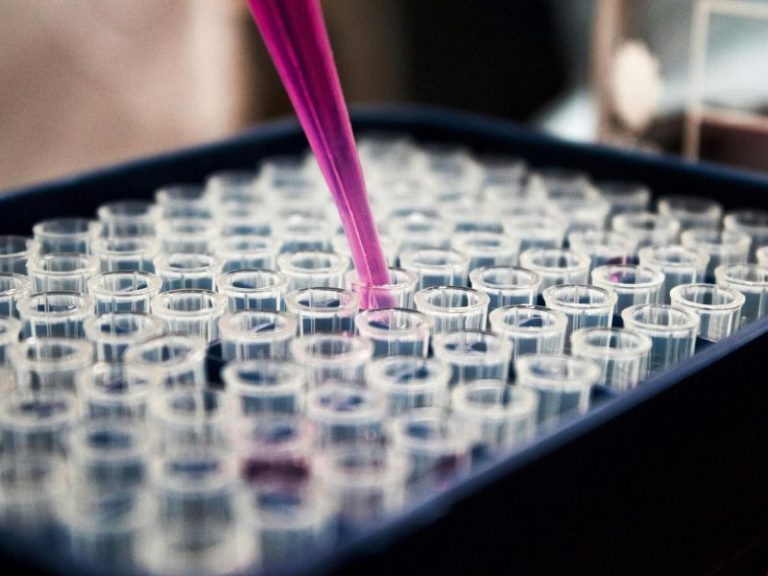
Artificial intelligence (AI) is fundamentally reshaping biotechnology and healthcare, unlocking the secrets hidden within complex biological data.
Machine learning in genomics and proteomics is transforming how diseases are detected, monitored and treated. Central to this revolution are innovative platforms tackling some of medicine’s toughest challenges, integrating AI with molecular biology to accelerate drug development, improve diagnostics and personalize patient care.
This wave of AI-driven biotechnology not only promises to improve lives by addressing unmet medical needs but also offers investors a rare opportunity to support scalable, data-rich solutions, setting the stage for potential disruptive growth in healthcare.
The challenge of interpreting vast amounts of biological data, which has long slowed progress in disease detection and drug discovery, is precisely where AI offers a valuable solution.
For example, liquid biopsy, which analyzes DNA fragments circulating in the blood, exemplifies AI’s power to break new ground. Unlike invasive tissue biopsies, liquid biopsy offers a minimally invasive window into the body’s molecular makeup.
However, signals in blood can be extremely subtle, especially for chronic diseases like liver conditions, which have eluded detection with older methods. Transformer-based AI models adapted to biological data can analyze millions of molecular interactions simultaneously, uncovering faint patterns and signatures that traditional methods miss, enabling early detection and personalized diagnostics that can dramatically improve outcomes.
Hepta, a liquid biopsy company developed by experts from Illumina (NASDAQ:ILMN) and GRAIL, Inc. (NASDAQ:GRAL), has created an AI platform that analyzes epigenetic patterns in circulating cell-free DNA.
The company recently came out of stealth mode with US$6.7 million in seed funding led by Felicis Ventures and Illumina Ventures, among others. Its technology is designed to replace invasive biopsies with simple blood draws, showing strong early clinical results for detecting liver disease.
CEO Hamed Amini described how Hepta’s platform is uniquely designed from the ground up to deliver a specialized approach that sets it apart from earlier AI tools used in cancer research, opening the door to new possibilities for broad applications.
“I think in the not-distant future, we’re going to be at a place where generating ample genomic data is truly not going to be a cost barrier anymore,” he said. “Once you get there, I envision a super comprehensive central assay that captures all this epigenetic signal from a blood sample (to determine patient eligibility for certain treatments). You can expand this to oncology and other chronic diseases down the line, hopefully.’
AI is also drastically transforming cancer care by accelerating drug discovery and development, with the potential to revolutionize medicine, according to an editorial in the Lancet Oncology. Author Abhishek Mehta observes that many academic cancer centers are collaborating with private companies to use AI for optimizing drug development, trials and analytics.
For example, the cancer drug BBO-10203 was developed by researchers at Lawrence Livermore National Laboratory and Frederick National Laboratory for Cancer Research in collaboration with private biotech company BridgeBio Oncology Therapeutics. Developers used advanced computing and AI to go from conception to human trials in just six years. This is a stark improvement to the 10 to 15-year timeline of the traditional drug development process.
Other key innovators include Rakovina Therapeutics (TSXV:RKV), a Canadian biotech company, which is using its AI platforms, Deep-Docking and Enki, to help discover drugs that target the DNA damage repair process in cancer cells.
One of its main programs is a therapy that blocks a key protein that cancer cells need to survive. Rakovina has found promising candidates and is working with top cancer research centers to move these treatments toward human trials.
Recently, it has partnered with a biotech company specializing in advanced lipid nanoparticle technology designed with AI assistance to develop AI-discovered cancer therapies. The company has also expanded access for US investors through new trading eligibility.
Beyond optimizing drug candidates and delivery mechanisms, AI is also being deployed to develop targeted therapeutic strategies.
“The next improvement in human life and survival comes from the next platform shift, and we really believe that metabolism is that, and this trial would allow us to really open that door for people in their minds,” Parikh explained, adding that the complexity of metabolic function necessitates the need for machine learning. “There are no approaches around metabolism and cancer that can thrive and survive and be reproducible without leveraging machine learning.”
Looking ahead, AI is reshaping drug development pipelines, with techniques like DeepDR and SNF-CVAE expected to enhance drug discovery and repurposing, speeding up clinical timelines.
For investors, the economic implications of such efficiency gains are profound: faster approvals and lower development costs can significantly increase returns while reducing risk.
Not only will AI tools help pharmaceutical companies select promising candidates faster and design smarter trials, but industry insiders maintain that they can eventually help physicians personalize therapies to patient-specific profiles.
In Faeth’s case, its AI-driven MetabOS platform reduces the data related to cancer metabolism to a smaller, more tractable set of potential targets. Then, CRISPR gene-editing technology allows further experimental validation and refinement to identify the most promising therapeutic candidates with high precision.
“There’s a cohort of patients .. .that are really benefiting,” Parikh said of the DICE trial. “And so we’re going to figure out who those patients are, and then make sure physicians are getting those patients on it early so they can derive the maximum benefit.”
However, widespread adoption faces hurdles, including regulatory pathways and data quality standards; still, growing investor interest and strategic partnerships indicate strong momentum in overcoming these barriers. As Parikh said, “If the data … (are good), more capital will come.”
For example, Danish medical AI company Corti is increasingly finding traction by offering healthcare institutions “AI infrastructure” designed specifically for medical use cases
Governments are also investing heavily in AI for disease research, exemplified by the US$500 billion US Stargate Project, which includes funding allocated to AI-driven biomedical research and infrastructure development; and the UK’s £19 million PharosAI initiative supporting AI-powered cancer research and clinical innovation.
AI-driven platforms are on the frontline of healthcare innovation.
For investors with an eye toward the future, this is an opportunity to support transformative science while participating in a market with tremendous growth potential. This is not just about technology; it’s about changing how medicine is practiced and ultimately, how lives are improved and saved.
Securities Disclosure: I, Meagen Seatter, hold no direct investment interest in any company mentioned in this article.