Author

admin

Browsing

For years, rare earths have been discussed mostly in times of crisis — a supply scare here, a geopolitical flare there. This year, the strategic minerals are again taking center stage as China reasserts control over the sector.

The latest round of rare earths policy shifts has put new attention on how producers outside China are positioning themselves. For MP Materials (NYSE:MP), 2025 has been less about responding to market turbulence and more about testing what a viable, strategically resilient rare earths supply chain could look like beyond China’s dominance.

“We’ve been talking about these issues for many, many years,” CFO Ryan Corbett said during a fireside chat at the Benchmark Week conference in Marina del Rey, California.

“But the export controls in April put everything in stark relief.” The result, he told the audience, has been a level of public and government attention he has “never seen before.”

And the attention is coming at a pivotal moment for the US-based company.

This year marked five years since MP went public, an anniversary the team celebrated by ringing the bell at the New York Stock Exchange, as well as the culmination of several major announcements aimed at strengthening rare earths production, processing and magnet making outside of China.

The long road from mine to magnet

Corbett is the first to admit that the broader conversation around rare earths often oversimplifies the challenge. Headlines usually focus on mining or magnets, but the real bottlenecks, he stressed, live in the middle.

“You don’t magically take NdPr oxide and turn it into a magnet in a magnet factory,” he said. The process includes converting oxide to metal, metal to alloy flake, flake to powder, then pressing, sintering, slicing and grinding. Each step requires specific infrastructure, technical expertise and — perhaps most critically — experience.

Corbett sees this gap clearly in the wake of announcements from companies claiming to have plans for large-scale magnet facilities. “We see all these announcements — ‘We’re going to do a 10,000 ton magnet plant.’ They’ve never made metal before,” he said. “Good luck. It takes time. It takes investment. It takes R&D.”

When MP listed publicly five years ago, it was still producing only rare earths concentrate. The company told investors it would revisit magnet-making discussions around 2025.

Geopolitical urgency pushed MP to accelerate that timeline, leading to the company’s fully integrated US facility in Fort Worth, where metal, alloy and finished magnets are now all made domestically.

“It is critical that we master all of them at scale,” Corbett said. Without that know-how, any new facility will be vulnerable to single-point failures, the same dynamic that has left the industry heavily reliant on China.

Where the real rare earths bottleneck lies

When asked what truly slows down western rare earths supply chain development, Corbett didn’t point to mining. Instead, he pointed to refining, a stage China has dominated for decades.

“China doesn’t have 99 percent of the upstream reserves,” he noted. “They have the refining capacity and capability.”

That distinction is shaping MP’s next major step: a new world-scale refining facility in Saudi Arabia, built in partnership with Maaden and backed by the US Department of Defense (DoD).

The project is designed to process feedstocks from around the world, including materials that are too small, too short-lived or too geographically constrained to justify their own refineries.

Crucially, the new plant is being built with capital from the US government, not MP. “We didn’t want to be putting more capital at risk overseas while we’re fulfilling promises in the US,” Corbett said.

He added that the government wanted the facility built, and MP brought the technical and operational capability; the equity investment from the DoD bridged the gap.

The structure is unusual. According to Corbett, this is the first time since World War II that the DoD has taken an equity stake in a private enterprise. But he argued that the situation demands it.

“From a supply chain and national security perspective, we are that far behind.”

A price floor that reshapes incentives

The DoD’s involvement isn’t limited to the Saudi facility.

This past summer, the department also struck a landmark agreement with MP, establishing a price floor for NdPr oxide, the high-value rare earths ingredient inside permanent magnets.

The deal is “absolutely transformational,” Corbett said.

Rare earths prices have historically been highly vulnerable to sudden moves from China, a fact that has long posed an existential risk to western refiners. “What good is it to invest billions of dollars if the second you turn your refinery on, prices go from US$170 to US$45?” questioned Corbett.

The agreement is structured to avoid distorting the downstream market. MP still sells oxide at market prices; the government covers the difference only when prices fall below the negotiated threshold.

“It doesn’t impact the pricing of our magnets at all,” Corbett explained. “That was really important to us.”

If prices soar — something Corbett says he would welcome — MP would pay the government.

“I hope five years from now I’m being accosted by investors for taking this deal, because prices are so high we’re cutting checks back to the government,” he said.

Apple, recycling and the next phase

Also over the summer, MP announced another milestone — a major partnership with Apple (NASDAQ:AAPL) to source 100 percent recycled rare earth materials for the tech giant’s devices.

Recycling is often framed as a threat to miners. Corbett argues the opposite.

“It’s still a game of scale and expertise in refining,” he said. “It’s just a different feedstock.”

In many ways, recycled magnets are easier to process than raw ore. The challenge is achieving sufficient volume and consistency, something MP believes Mountain Pass is uniquely positioned to enable.

“Integration matters,” Corbett said. By blending recycled materials with the mine’s large, steady feedstock, MP can smooth out the variability inherent in end-of-life magnets.

A new playbook for national resources?

Taken together, MP’s 2025 announcements point toward a broader shift in how western governments approach critical minerals supply chains moving forward. Heavy government involvement through frameworks like equity stakes, price floors and international partnerships may represent a new template.

“This administration is approaching it with the mentality that it’s going to take real dollars to make this happen,” Corbett said. And if its investments pay off, he argued, they could help rebuild an industrial base the US hasn’t had in decades as MP positions itself to offer the full value chain, from mining and refining to producing finished magnets.

“Once the flywheel gets going,” Corbett said, “You’re onto something.”

Securities Disclosure: I, Georgia Williams, hold no direct investment interest in any company mentioned in this article.

This post appeared first on investingnews.com

Homerun Resources Inc. (TSXV: HMR,OTC:HMRFF) (OTCQB: HMRFF) (‘Homerun’ or the ‘Company’) is pleased to announce that it has received TSXV conditional approval for its previously announced financing, originally announced on June 16, 2025, with an arm’s length institutional investor, Sorbie Bornholm LP (the ‘Investor’) in connection with a proposed financing for CDN$6,000,000.00 (the ‘Offering’) at a price of $1.00 per unit (‘Unit’).

The Offering will consist of the issuance of 6,000,000 Units. Each Unit shall be comprised of one (1) common share (‘Shares‘) of the Company and one (1) common share purchase warrant (‘Warrants‘). The proceeds from the Offering will be used to advance the Company’s vertically integrated silica to solar and energy storage business, supporting business development and scaling of revenues and for general working capital purposes.

Brian Leeners, CEO of Homerun stated, ‘We are thrilled to welcome this particular Institutional Investor as they have chosen Homerun to be their inaugural investment with a company trading on the TSX Venture Exchange. Their innovative investment model provides capital over 24 months keeping our team focused on the execution of our plans and deliverables. We have confidence that this financing based on its unique model, will provide capital premiums to the original financing amount over that 24-month period as we continue to de-risk our business and transition into a high-growth, revenue-generating Company with exceptional long-term potential.’

Sorbie Bornholm Managing Director Whitney Kofford commented, ‘Sorbie is proud to announce this new investment in Homerun Resources and to provide Homerun with flexible, growth-linked capital over the next two years through our unique Sharing Agreement. The global energy transition requires bold thinking and the ability to execute on transformative ideas. Homerun’s integrated strategy for high-purity silica and advanced energy solutions is a prime example of just that – innovation meeting opportunity. We applaud Homerun’s consistent track record of hard work and determination, and we look forward to supporting the Company over the longer-term throughout their growth trajectory.’

Pursuant to the terms and conditions of a Sharing Agreement between the parties, the following structure and sequence will take effect under the Offering:

  • The Investor will deposit CDN$6,000,000 into a third-party escrow account.
  • The Company will issue the 6,000,000 Shares into escrow and the Warrants will be issued to Sorbie on each monthly settlement date.
  • Over a 24-month period, the cash and Shares will be released monthly based on the Company’s market price at each release date.
  • The Investor will immediately receive upon closing 1,500,000 Warrants exercisable at CDN$1.18 for three (3) years.
  • The Investor will also receive up to 4,500,000 additional Warrants, issued monthly over 24 months, priced at a 20% premium to the 5-day VWAP at the time of each issuance and exercisable for three (3) years from issuance.
  • The Company will pay the Investor a corporate finance fee of 360,000 Shares and a due-diligence deposit of 100,000 Shares, both subject to the same escrow and release schedule.
  • The Warrants will also include an equity blocker provision that prohibits the Investor from exercising any portion of the Warrants if such exercise would result in the holder owning more than 9.99% of the Company’s outstanding Shares.

The Company intends to rely on the listed issuer financing exemption under Part 5A of National Instrument 45-106 – Prospectus Exemptions, as amended by Coordinated Blanket Order 45-935 – Exemptions from Certain Conditions of the Listed Issuer Financing Exemption, for the Offering, and the Shares and Warrants will not be subject to restrictions on resale. There will be an offering document related to the Offering that will be available under the Company’s profile at www.sedarplus.ca and at www.homerunresources.com. Prospective investors should read this offering document before making an investment decision. Closing of the Offering is subject to several conditions, including receipt of all necessary corporate and regulatory approvals, including the TSXV.

The Offering is expected to close on or about November 30, 2025, or such other date as the Company may determine, and is subject to certain conditions including, but not limited to, the receipt of all necessary regulatory and other approvals, including the final approval of the TSX Venture Exchange. There are no finder’s fees payable to any parties under the Offering.

About Homerun (www.homerunresources.com)

Homerun is building the silica-powered backbone of the energy transition across four focused verticals: Silica, Solar, Energy Storage, and Energy Solutions. Anchored by a unique high-purity low-iron silica resource in Bahia, Brazil, Homerun transforms raw silica into essential products and technologies that accelerate clean power adoption and deliver durable shareholder value.

  • ⁠Silica: Secure supply and processing of high-purity low-iron silica for mission-critical applications, enabling premium solar glass and advanced energy materials.
  • Solar: Development of Latin America’s first dedicated 1,000 tonne per day high-efficiency solar glass plant and the commercialization of antimony-free solar glass designed for next-generation photovoltaic performance.
  • Energy Storage: Advancement of long-duration, silica-based thermal storage systems and related technologies to decarbonize industrial heat and unlock grid flexibility.
  • Energy Solutions: AI-enabled energy management, control systems, and turnkey electrification solutions that reduce costs and optimize renewable generation for commercial and industrial customers.

With disciplined execution, strategic partnerships, and an unwavering commitment to best-in-class ESG practices, Homerun is focused on converting milestones into markets-creating a scalable, vertically integrated platform for clean energy manufacturing in the Americas.

On behalf of the Board of Directors of Homerun Resources Inc.:

‘Brian Leeners’

Brian Leeners, CEO & Director
brianleeners@gmail.com / +1 604-862-4184 (WhatsApp)

Tyler Muir, Investor Relations
info@homerunresources.com / +1 306-690-8886 (WhatsApp)

FOR THE ADEQUACY OR ACCURACY OF THIS RELEASE

The information contained herein contains ‘forward-looking statements’ within the meaning of applicable securities legislation. Forward-looking statements relate to information that is based on assumptions of management, forecasts of future results, and estimates of amounts not yet determinable. Any statements that express predictions, expectations, beliefs, plans, projections, objectives, assumptions or future events or performance are not statements of historical fact and may be ‘forward-looking statements’.

Neither the TSX Venture Exchange nor its Regulation Services Provider (as that term is defined in policies of the TSX Venture Exchange) accepts responsibility for the adequacy or accuracy of this release.

This news release does not constitute an offer to sell or a solicitation of an offer to buy any securities in the United States. The securities have not been and will not be registered under the United States Securities Act of 1933, as amended (the ‘U.S. Securities Act’) or any state securities laws and may not be offered or sold within the United States or to U.S. Persons unless registered under the U.S. Securities Act and applicable state securities laws or an exemption from such registration is available.

To view the source version of this press release, please visit https://www.newsfilecorp.com/release/275995

News Provided by Newsfile via QuoteMedia

This post appeared first on investingnews.com

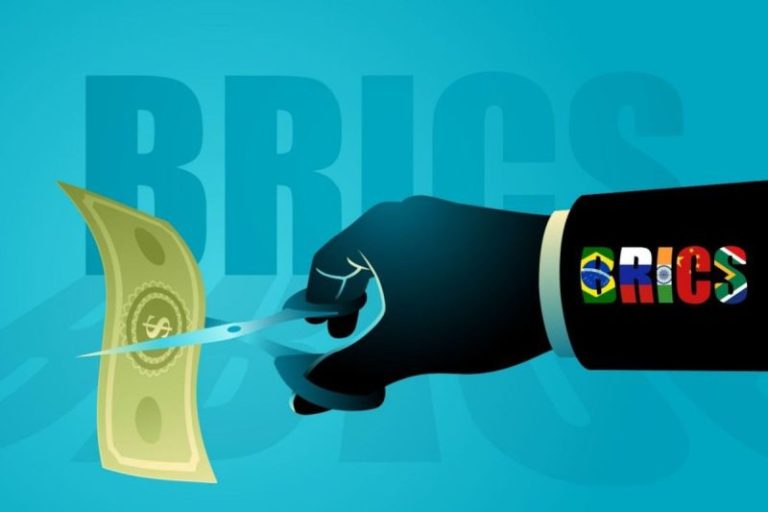
The BRICS nations, originally composed of Brazil, Russia, India, China and South Africa, have had many discussions about establishing a new reserve currency backed by a basket of their respective currencies.

The creation of a potentially gold-backed currency, known as the ‘Unit,’ as a US dollar alternative is also under consideration by BRICS members. However, whether or not these countries can fully separate themselves from the ruling global currency is up for debate even amongst themselves.

At the 2024 BRICS Summit, the movement away from US dollar supremacy really came to a head when Russian President Vladimir Putin appeared on stage holding what appeared as a prototype of a possible BRICS banknote.

However, he soon backed away from his previous aggressive calls for de-dollarization, stating the goal of the BRICS member nations is not to move away from the US dollar-dominated SWIFT platform, but rather to deter the ‘weaponization’ of the US dollar by developing alternative systems for using local currencies in financial transactions between BRICS countries and with trading partners.

‘We are not refusing, not fighting the dollar, but if they don’t let us work with it, what can we do? We then have to look for other alternatives, which is happening,’ Putin told listeners.

A potential BRICS currency would allow these nations to assert their economic independence while competing with the existing international financial system. The current system is dominated by the US dollar, which accounts for about 89 percent of all currency trading. Traditionally, nearly 100 percent of oil trading was conducted in US dollars; however, in 2023, one-fifth of oil trades were reportedly made using non-US dollar currencies.

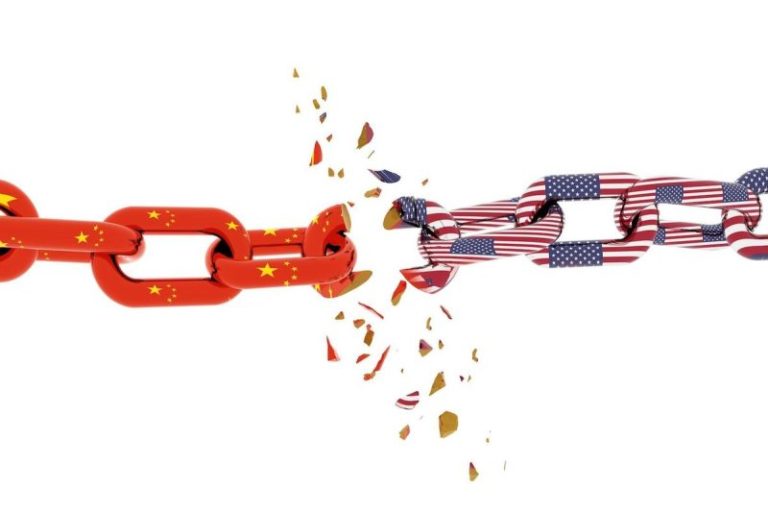
Central to this situation is the US trade war with China, as well as US sanctions on China and Russia. Should the BRICS establish a new reserve currency, it would likely significantly impact the US dollar, potentially leading to a decline in demand, or what’s known as de-dollarization. In turn, this would have implications for the US and global economies.

If BRICS watchers were hoping for more fireworks at the 2025 BRICS meeting held in Brazil this July, they were sorely disappointed. Putin and Chinese President Xi Jinping were not in attendance, and talk of a BRICS currency was much more muted. On top of this, according to Modern Diplomacy, that topic may be even less of a concern at next year’s BRICS meeting; it will be held in India, which has sought to distance itself from a move away from the US dollar.

It’s still too hard to predict if and when a BRICS currency will be released, but it’s a good time to look at the potential for a BRICS currency and its possible implications for investors.

In this article

    Why do the BRICS nations want to create a new currency?

    The BRICS nations have a slew of reasons for wanting to set up a new currency, including recent global financial challenges and aggressive US foreign policies. They want to better serve their own economic interests while reducing global dependence on the US dollar and the euro.

    In recent years, the US has placed numerous sanctions on Russia and Iran. The two countries are working together to bring about a BRICS currency that would negate the economic impacts of such restrictions, as per Iranian Ambassador to Russia Kazem Jalal, speaking at a press conference during the Russia-Islamic World: KazanForum in May 2024.

    Some experts believe that a BRICS currency is a flawed idea, as it would unite countries with very different economies. There are also concerns that non-Chinese members might increase their dependence on China’s yuan instead. That said, when Russia demanded in October 2023 that India pay for oil in yuan as Russia is struggling to use its excess supply of rupees, India refused to use anything other than the US dollar or rupees to pay.

    When will a BRICS currency be released?

    There’s no definitive launch date as of yet, but the countries’ leaders have discussed the possibility at length.

    During the 14th BRICS Summit, held in mid-2022, Russian President Vladimir Putin said the BRICS countries plan to issue a ‘new global reserve currency,’ and are ready to work openly with all fair trade partners.

    In April 2023, Brazilian President Luiz Inacio Lula da Silva showed support for a BRICS currency, commenting, “Why can’t an institution like the BRICS bank have a currency to finance trade relations between Brazil and China, between Brazil and all the other BRICS countries? Who decided that the dollar was the (trade) currency after the end of gold parity?”

    In the lead up to the 2023 BRICS Summit, there was speculation that an announcement of such a currency could be on the table. This proved to be wishful thinking, however. ‘The development of anything alternative is more a medium to long term ambition. There is no suggestion right now to creates a BRICS currency,’ Leslie Maasdorp, CFO of the New Development Bank, told Bloomberg at the time. The bank represents the BRICS bloc.

    Government officials in Brazil, which took the rotating presidency of the BRICS group for 2025, have said there are no plans to take any significant steps toward a BRICS currency.

    However, measures to reduce the reliance on the US dollar are very much on the table with cross-border payment systems, including exploring blockchain technology, a major theme at the 2025 BRICS summit, reported Reuters.

    As mentioned, in 2026, the BRICS Summit will be held in India, which earlier this year distanced itself from the idea of a move away from the US dollar. Speaking at an event in London in March 2025, India’s External Affairs Minister S. Jaishankar stated, ‘I don’t think there’s any policy on our part to replace the dollar. The dollar as the reserve currency is the source of global economic stability, and right now what we want in the world is more economic stability, not less. I don’t think there’s a unified BRICS position on this. I think BRICS members, and now that we have more members, have very diverse positions on this matter.’

    Which nations are members of BRICS?

    As of 2025, there are 10 BRICS member nations: Brazil, Russia, India, China, South Africa, Egypt, Ethiopia, Indonesia, Iran and the United Arab Emirates (UAE). This expanded group of 10 full member countries is sometimes referred to as BRICS+.

    The group was originally composed of the four nations of Brazil, Russia, India and China and called BRIC, which changed to BRICS when South Africa joined in 2010.

    At the 2023 BRICS Summit, six countries were invited to become BRICS members: Argentina, Egypt, Ethiopia, Iran, Saudi Arabia and the UAE. All countries but Argentina and Saudi Arabia officially joined the alliance in January 2024, and in 2025, Indonesia became the 10th full member of BRICS.

    Additionally, at the 2024 BRICS Summit, 13 nations signed on as BRICS partner countries, although they are not yet full-fledged members: Algeria, Belarus, Bolivia, Cuba, Kazakhstan, Malaysia, Nigeria, Thailand, Turkey, Uganda, Vietnam and Uzbekistan.

    Saudi Arabia has seemingly been on the fence about joining the BRICS. The Crown Prince Mohammed bin Salman’s November 19, 2025, announcement of a US$1 trillion investment in the US economy during a visit to the White House may signal something about the Middle Eastern country’s allegiance.

    What would the advantages of a BRICS currency be?

    A new currency could have several benefits for the BRICS countries, including more efficient cross-border transactions and increased financial inclusion. By leveraging blockchain technology, digital currencies and smart contracts, the currency could revolutionize the global financial system. Thanks to seamless cross-border payments, it could also promote trade and economic integration among the BRICS nations and beyond.

    A new BRICS currency would also:

    • Strengthen economic integration within the BRICS countries
    • Reduce the influence of the US on the global stage
    • Weaken the standing of the US dollar as a global reserve currency
    • Encourage other countries to form alliances to develop regional currencies
    • Mitigate risks associated with global volatility due to unilateral measures and the diminution of dollar dependence

    What is Donald Trump’s stance on a BRICS currency?

    Trump has not been shy about upping the ante on American protectionism with tariffs. During the first US presidential debate between him and Vice President Kamala Harris on September 10, 2024, Trump doubled down on his pledge to punish BRICS nations with strict tariffs if they seek to move away from the US dollar as the global currency.

    He originally took a particularly strong stance against China, threatening to implement 60 percent to 100 percent tariffs on Chinese imports, although these hefty tariffs would be paid by American companies and consumers purchasing Chinese products, not by China itself.

    In early December 2024, Trump posted an even more direct threat to BRICS nations on Truth Social:

    “We require a commitment from these countries that they will neither create a new Brics currency nor back any other currency to replace the mighty US dollar or they will face 100% tariffs and should expect to say goodbye to selling into the wonderful US economy.’

    In response to Trump demanding a ‘commitment’ from BRICS nations not to challenge the supremacy of the US dollar, Kremlin spokesperson Dmitry Peskov sounded less than threatened.

    ‘More and more countries are switching to the use of national currencies in their trade and foreign economic activities,’ Peskov said, per Reuters. ‘If the U.S. uses force, as they say economic force, to compel countries to use the dollar it will further strengthen the trend of switching to national currencies (in international trade).’

    In July 2025, President Trump took it a step further by threatening to slap an extra 10 percent in tariffs on countries who side with BRICS policies, although this has not been implemented as of November 2025. ‘Any country aligning themselves with the Anti-American policies of BRICS, will be charged an ADDITIONAL 10% tariff. There will be no exceptions to this policy,’ he wrote in a social media post.

    This additional BRICS targeted tariff has not yet been implemented as of November 2025.

    How will Trump’s tariffs affect BRICS nations?

    If US President Donald Trump were to come through on his promise to enact 100 percent tariffs on BRICS nations the outcome could prove costly for all parties involved.

    “The action would result in slower growth and higher inflation than otherwise in the US and most of the targeted economies,” according to analysis by the Peterson Institute for International Economics.

    China would likely experience the worst slowing of its GDP growth as the US is its largest trading partner. One silver lining for China is that its disciplined central bank will help to save it from accelerated inflation.

    While neither the 100 percent or 10 percent tariffs specifically targeting BRICS countries for their membership have been implemented, the countries still face many other tariffs from the US.

    Trump’s blanket 50 percent tariffs on steel and aluminum imports, set on June 3, 2025, impact Brazil, China and the UAE. Brazil is a top three source for US steel imports, while China and the UAE are significant sources of US aluminum imports.

    In late July, Brazil was also saddled with a 50 percent tariff on a broader range of goods, which US President Donald Trump inflicted on the nation in response to the trial of former President Jair Bolsonaro for his alleged coup attempt.

    Trump’s tariffs could have a significant impact on Brazil’s economy, which is the largest in Latin America. However, most of the key trading sectors between the two nations are exempt from the tariff, including “civil aircraft, pig iron, precious metals, wood pulp, energy and fertilizers,” states Reuters.

    India is another BRICS nation facing 50 percent tariffs. The sectors targeted span from textiles, garments and footwear to food, leather goods, gems and automobiles. Key industries such as pharmaceuticals and computer chips.

    One of the major sticking points for the Trump administration is India continuing to purchase Russian oil. India and China are the two largest buyers of Russian oil, but the US has yet to punish China for purchasing oil from Russia.

    Although China is the US’s biggest economic rival on the global stage, Trump hit the pause button on the escalating tariff war between the two nations until November 10, 2026.

    In the meantime, the US’s 30 percent tariff on Chinese goods remains in place. Negotiations are underway, including on a proposed 245 percent tariff on Chinese electric vehicle imports.

    In July, the Trump Administration imposed 30 percent tariffs on South Africa, the US’s second biggest trading partner. The African nation’s agriculture, mining and manufacturing sector are at significant risk from the tariffs, but there are exceptions in place for “copper, pharmaceuticals, semiconductors, some critical minerals, stainless steel scrap and energy products,” reports the BBC.

    How are BRICS nations responding to US tariffs?

    Brazilian President Luiz Inacio Lula da Silva convened an online BRICS summit on September 8, 2025, to address the threat of US trade policies and tariffs to member nations.

    “Tariff blackmail is being normalized as an instrument to seize markets and interfere in domestic affairs,” stated Lula, according to a prepared statement from the Brazilian government.

    “Our countries have become victims of unjustified and illegal trade practices.”

    Both Lula and Jinping called upon their BRICS peers to stand together and push back against unfair trade practices, and strengthen trade and cooperation between member nations.

    However, the South China Morning Post reports that summit attendees fell short of directly criticizing US President Donald Trump in a bid not to further stoke his ire. That may also be why most BRICS members are trying to negotiate with the US rather than fight back with retaliatory tariffs.

    Critics have suggested Trump’s tariffs are having the undesirable effect of driving major trading partners like Brazil, India and South Africa further into the arms of US rivals China and Russia.

    While currently only 9 percent of China’s exports are to other BRICS members, according to Reuters, trade between China and Russia reached a record US$244.8 billion in 2024.

    In addition, China is Brazil’s largest trading partner, importing 70 percent of its soybeans from the Latin American country. In fact, 28 percent of Brazil’s total exports go to China and 24 percent of its imports are from China.

    BRICS trade relations may strengthen as the bloc seeks to mitigate the economic impact of US tariffs.

    How would a new BRICS currency affect the US dollar?

    RomanR / Shutterstock

    For decades, the US dollar has enjoyed unparalleled dominance as the world’s leading reserve currency. According to the US Federal Reserve, between 1999 and 2019, the dollar was used in 96 percent of international trade invoicing in the Americas, 74 percent in the Asia-Pacific region and 79 percent in the rest of the world.

    According to the Atlantic Council, as of November 2025 the US dollar is used in approximately 89 percent of currency exchanges, and 56 percent of all foreign currency reserves held by central banks. Due to its status as the most widely used currency for conversion and its use as a benchmark in the forex market, almost all central banks worldwide hold dollars.

    Additionally, the dollar is used for the vast majority of oil trades.

    Although the dollar’s reserve currency share has decreased as the euro and yen have gained popularity, the dollar is still the most widely used reserve currency, followed by the euro, the yen, the pound and the yuan.

    The potential impact of a new BRICS currency on the US dollar remains uncertain, with experts debating its potential to challenge the dollar’s dominance. However, if a new BRICS currency was to stabilize against the dollar, it could weaken the power of US sanctions, leading to a further decline in the dollar’s value. It could also cause an economic crisis affecting American households. Aside from that, this new currency could accelerate the trend toward de-dollarization.

    Nations worldwide are seeking alternatives to the US dollar, with examples being China and Russia trading in their own currencies, and countries like India, Kenya and Malaysia advocating for de-dollarization or signing agreements with other nations to trade in local currencies or alternative benchmarks.

    While it is unclear whether a new BRICS currency would inspire the creation of other US dollar alternatives, the possibility of challenging the dollar’s dominance as a reserve currency remains.

    And, as countries continue to diversify their reserve holdings, the US dollar could face increasing competition from emerging currencies, potentially altering the balance of power in global markets.

    However, a study by the Atlantic Council’s GeoEconomics Center released in June 2024 shows that the US dollar is far from being dethroned as the world’s primary reserve currency. ‘The group’s ‘Dollar Dominance Monitor’ said the dollar continued to dominate foreign reserve holdings, trade invoicing, and currency transactions globally and its role as the primary global reserve currency was secure in the near and medium term,’ Reuters reported.

    Warwick J. McKibbin and Marcus Noland of the Peterson Institute for International Economics agree with this sentiment, writing in their analysis of the impacts of US tariffs on BRICS nations that ‘the BRICS pose no serious threat to the dollar’s dominance.’

    Ultimately, the impact of a new BRICS currency on the US dollar will depend on its adoption, its perceived stability and the extent to which it can offer a viable alternative to the dollar’s longstanding hegemony.

    Will the BRICS have a digital currency?

    BRICS nations do not as of yet have their own specific digital currency, but a BRICS blockchain-based payment system is in the works, according to Kremlin aide Yury Ushakov in March 2024.

    Known as the BRICS Bridge multi-sided payment platform, it would connect member states’ financial systems using payment gateways for settlements in central bank digital currencies. The planned system would serve as an alternative to the current international cross-border payment platform, the SWIFT system, which is dominated by US dollars.

    “We believe that creating an independent BRICS payment system is an important goal for the future, which would be based on state-of-the-art tools such as digital technologies and blockchain,’ Ushakov said in an interview with Russian news agency TASS, emphasizing that it should be convenient, as well as cost effective and free of politics.

    While development is underway, it has been a slow go and implementation isn’t likely before the end of the decade.

    Another dollar-alternative digital currency cross-border payment system in the works is Project mBridge, which is under development via a collaboration between the Hong Kong Monetary Authority, the Bank of Thailand, the Digital Currency Institute of the People’s Bank of China and the Central Bank of the UAE. Saudi Arabia joined the project in 2024.

    The central bank digital currencies traded on the platform would be backed by gold and local currencies minted in member nations.

    In June 2024, Forbes reported that the mBridge platform had reached a significant milestone by completing its minimal viable product stage (MVP).

    ‘The MVP platform can undertake real-value transactions (subject to jurisdictional preparedness) and is compatible with the Ethereum Virtual Machine (EVM), a decentralized virtual environment that executes code consistently and securely across all Ethereum nodes,’ the publication stated. ‘MVP thus is suitable as a testbed for new use cases and interoperability with other platforms.’

    How does the BRICS Unit relate to Project mBridge?

    Watch the full interview with Andy Schectman.

    ‘(New Development Bank President Dilma Rousseff) came out and publicly said that there has been an agreement in principle to use a new settlement currency called the Unit, which will be backed 40 percent by gold and 60 percent by the local currencies in the BRICS union — the BRICS+ countries. That gold will be in the form of kilo bars and will be deliverable or redeemable for those entities,’ Schectman said.

    ‘The basket of gold and the basket of currencies will be minted in the member countries … it will be put into an escrow account, taken off the ledger so to speak — off of their balance sheet and put onto the mBridge ledger, and held in an escrow account in their own borders. It doesn’t need to be sent to a central authority.’

    How would a BRICS currency impact the economy?

    A potential shift toward a new BRICS currency could have significant implications for the North American economy and investors operating within it. Some of the most affected sectors and industries would include:

    • Oil and gas
    • Banking and finance
    • Commodities
    • International trade
    • Technology
    • Tourism and travel
    • The foreign exchange market

    A new BRICS currency would also introduce new trading pairs, alter currency correlations and increase market volatility, requiring investors to adapt their strategies accordingly.

    How can investors prepare for a new BRICS currency?

    Adjusting a portfolio in response to emerging BRICS currency trends may be a challenge for investors. While it does not currently seem like a BRICS currency is on the immediate horizon, Trump’s aggressive trade tactics have pushed allies away from the US, making diversification important.

    Several strategies can be adopted to capitalize on these trends and diversify your portfolio:

    • Gain exposure to BRICS equity markets through stocks and ETFs that track BRICS market indexes.
    • Consider alternative investments such as real estate or private equity in the BRICS countries.

    Prudent investors will also weigh these strategies against their exposure to market, political and currency fluctuations.

    In terms of investment vehicles, investors could consider ETFs such as the iShares MSCI BIC ETF (ARCA:BKF) or the Pacer Emerging Markets Cash Cows 100 ETF (NASDAQ:ECOW). They could also invest in mutual funds such as the T. Rowe Price Emerging Markets Equity Fund, or in individual companies within the BRICS countries.

    Simply put, preparing for a new BRICS currency or potential de-dollarization requires careful research and due diligence by investors. Diversifying currency exposure, and investing in commodities, equity markets or alternative investments are possible options to consider while being mindful of the associated risks.

    Investor takeaway

    While it is not certain whether the creation of a BRICS reserve currency will come to pass, its emergence would pose significant implications for the global economy and potentially challenge the US dollar’s dominance as the primary reserve currency. This development would present unique investment opportunities, while introducing risks to existing investments as the shifting landscape alters monetary policy and exacerbates geopolitical tensions.

    For those reasons, investors should closely monitor the progress of a possible BRICS currency. And, if the bloc does eventually create one, it will be important watch the currency’s impact on BRICS member economies and the broader global market. Staying vigilant will help investors to capitalize on growth prospects and hedge against potential risks.

    FAQs for a new BRICS currency

    Is a BRICS currency possible?

    Some financial analysts point to the creation of the euro in 1999 as proof that a BRICS currency may be possible. However, this would require years of preparation, the establishment of a new central bank and an agreement between the five nations to phase out their own sovereign currencies; it would most likely also need the support of the International Monetary Fund to be successful internationally.

    The impact of its war on Ukraine will continue to weaken Russia’s economy and the value of the ruble, and China is intent on raising the power of the yuan internationally. There is also a wide chasm of economic disparity between China and other BRICS nations. These are no small obstacles to overcome.

    Would a new BRICS currency be backed by gold?

    Additionally, speaking at the New Orleans Investment Conference 2023, well-known author Jim Rickards gave a detailed talk on how a gold-backed BRICS currency could work. He suggested that if a BRICS currency unit is worth 1 ounce of gold and the gold price goes to US$3,000 per ounce, the BRICS currency unit would be worth US$3,000, while the dollar would lose value compared to the BRICS currency as measured by the weight of gold.

    Importantly though, he doesn’t see this as a new gold standard, or the end of the US dollar or the euro.

    “(With) a real gold standard, you can take the currency and go to any one of the central banks and get some gold,” Rickards said at the event. “With BRICS they don’t have to own any gold, they don’t have to buy any gold, they don’t have to prop up the price. They can just rise on the dollar gold market.’

    How much gold do the BRICS nations have?

    The combined central bank gold holdings of the original BRICS nations plus Egypt (the only nation of the five new additions to have central bank gold reserves) accounts for more than 20 percent of all the gold held in the world’s central banks. Russia, India and China rank in the top 10 for central bank gold holdings.

    Russia controls 2,329.63 metric tons (MT) of the yellow metal, making it the fifth largest for central bank gold reserves. China follows in the sixth spot with 2,303.51 MT of gold and India places eighth with 880.18 MT. Brazil and South Africa’s central bank gold holdings are much smaller, coming in at 145.14 MT and 125.47 MT, respectively. New BRICS member Egypt’s gold holdings are equally small, at 128.82 MT.

    Securities Disclosure: I, Melissa Pistilli, hold no direct investment interest in any company mentioned in this article.

    This post appeared first on investingnews.com
    This press release is issued pursuant to the requirements of National Instrument 62-103 – The Early Warning System and Related Take-Over Bid and Insider Reporting Issues

    In accordance with the requirements of Section 3.1 of National Instrument 62-103 – The Early Warning System and Related Take-Over Bid and Insider Reporting Issues, Matthew J. Mason announces that, in connection with the closing of the Technology Licensing Agreement (the ‘Agreement’) with Stallion Uranium Corp. (TSXV: STUD,OTC:STLNF) (OTCQB: STLNF) (FSE: B76) (the ‘Issuer’), he has acquired 3,750,000 Common Shares of the Issuer at a deemed price of $0.12 per Common Share.

    Immediately before the closing of the Agreement: (i) Mr. Mason held an aggregate of 20,825,000 Common Shares, representing approximately 17% of the Issuer’s issued and outstanding Common Shares on an undiluted basis; and (ii) assuming the exercise in full of all of the convertible securities of the Issuer held by Mr. Mason, being 15,137,500 Warrants to purchase an additional 15,137,500 Common Shares, Mr. Mason would have held an aggregate of 35,962,500 Common Shares, representing approximately 29% of the Issuer’s issued and outstanding Common Shares on a partially diluted basis.

    Immediately after the closing of the Agreement: (i) Mr. Mason held an aggregate of 24,575,000 Common Shares, representing approximately 19% of the Issuer’s issued and outstanding Common Shares on an undiluted basis; and (ii) assuming the exercise in full of all of the convertible securities held by Mr. Mason, being 15,137,500 Warrants to purchase an additional 15,137,500 Common Shares, Mr. Mason would hold a total of 39,712,500 Common Shares, representing approximately 30% of the Issuer’s issued and outstanding Common Shares on a partially diluted basis.

    Mr. Mason acquired such Common Shares for investment purposes and may, from time to time, acquire additional securities of the Issuer or dispose of such securities as he may deem appropriate, on the basis of his assessment of market conditions and in compliance with applicable securities regulatory requirements. A copy of the early warning report filed by Mr. Mason may be obtained on the Issuer’s SEDAR+ profile at www.sedarplus.ca.

    For more information, please contact the Acquiror at 925 West Georgia Street, Vancouver, British Columbia V6C 3L2.

    NOT FOR DISTRIBUTION TO UNITED STATES NEWSWIRE SERVICES OR FOR DISSEMINATION IN THE UNITED STATES

    To view the source version of this press release, please visit https://www.newsfilecorp.com/release/275960

    News Provided by Newsfile via QuoteMedia

    This post appeared first on investingnews.com

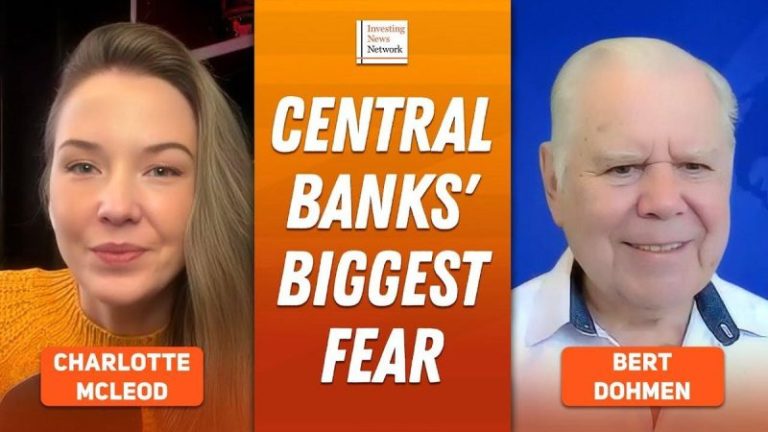
    Bert Dohmen, founder and CEO of Dohmen Capital Research, discusses precious metals.

    He believes gold’s fundamentals support ‘much higher prices’ for a number of years, and sees silver doing even better as the US faces down the specter of potential deflation.

    Securities Disclosure: I, Charlotte McLeod, hold no direct investment interest in any company mentioned in this article.

    This post appeared first on investingnews.com

    (TheNewswire)

    LiDAR, or Light Detection and Ranging, is a remote sensing technology that uses laser light to ‘see through’ vegetation and soil cover to measure distances, with 15-30 cm scale accuracy, to underlying rock surfaces.  In this way, it can map out features such as structures and lithological contacts that can be related to mineralization but may not be exposed at surface.  The survey also included colour aerial photography with 10-15 cm resolution that will assist in surface exploration and planning of infrastructure upgrades.

    ‘Although we have been able to follow and map out the Dos de Mayo vein system along strike for approximately 1,600 metres so far, our geologists are restricted by the amount of outcrop exposure ,’ stated Robert Archer, Pinnacle’s President & CEO.  ‘The LiDAR survey should allow us to ‘connect the dots’ along this structural trend and allow us to better define not only the main vein but parallel and splay veins nearby.  This knowledge, along with additional features such as flexures and fault offsets in the vein structures, will be crucial for interpreting the geological environment and planning the surface drill program.  In addition, LiDAR is known for its ability to detect subtle and sometimes buried features such as old mine workings, overgrown pits and trenches that could lead to the discovery of previously unknown mineralization.’

    Qualified Person

    Mr. Jorge Ortega, P. Geo, a Qualified Person as defined by National Instrument 43-101, and the author of the NI 43-101 Technical Report for the Potrero Project, has reviewed, verified and approved for disclosure the technical information contained in this news release.

    About the Potrero Property

    El Potrero is located in the prolific Sierra Madre Occidental of western Mexico and lies within 35 kilometres of four operating mines, including the 4,000 tonnes per day (tpd) Ciénega Mine (Fresnillo), the 1,000 tpd Tahuehueto Mine (Luca Mining) and the 250 tpd Topia Mine (Guanajuato Silver).

    High-grade gold-silver mineralization occurs in a low sulphidation epithermal breccia vein system hosted within andesites of the Lower Volcanic Series and has three historic mines along a 500 metre strike length.  The property has been in private hands for almost 40 years and has never been systematically explored by modern methods, leaving significant exploration potential.

    A previously operational 100 tpd plant on site can be refurbished / rebuilt and historic underground mine workings rehabilitated at relatively low cost in order to achieve near-term production once permits are in place. The property is road accessible with a power line within three kilometres.

    Pinnacle will earn an initial 50% interest immediately upon commencing production.  The goal would then be to generate sufficient cash flow with which to further develop the project and increase the Company’s ownership to 100% subject to a 2% NSR.  If successful, this approach would be less dilutive for shareholders than relying on the equity markets to finance the growth of the Company.

    About Pinnacle Silver and Gold Corp.

    Pinnacle is focused on the development of precious metals projects in the Americas.  The high-grade Potrero gold-silver project in Mexico’s Sierra Madre Belt hosts an underexplored low-sulphidation epithermal vein system and provides the potential for near-term production . In the prolific Red Lake District of northwestern Ontario, the Company owns a 100% interest in the past-producing, high-grade Argosy Gold Mine and the adjacent North Birch Project with an eight-kilometre-long target horizon . With a seasoned, highly successful management team and quality projects, Pinnacle Silver and Gold is committed to building long -term , sustainable value for shareholders.

    Signed: ‘Robert A. Archer’

    President & CEO

    For further information contact :

    Email: info@pinnaclesilverandgold.com

    Tel.:  +1 (877) 271-5886 ext. 110

    Website: www.pinnaclesilverandgold.com

    Neither the TSX Venture Exchange nor the Investment Industry Regulatory Organization of Canada accepts responsibility for the adequacy or accuracy of this release .

    Copyright (c) 2025 TheNewswire – All rights reserved.

    News Provided by TheNewsWire via QuoteMedia

    This post appeared first on investingnews.com

    Locksley Resources Ltd. (ASX: LKY,OTC:LKYRF; OTCQX: LKYRF) announced the company has appointed Stacy Newstead to its advisory board as Strategic Advisor-Materials Strategy.

    Ms. Newstead brings more than 20 years of experience across U.S. government, defense and industrial sectors. She currently serves as Materials Strategy and Risk Manager at Lockheed Martin, where she leads initiatives to secure domestic and allied sources of key materials vital to U.S. defense manufacturing and national security. Her work focuses on assessing and mitigating material pricing and geopolitical risk across supply chains that underpin critical technologies including munitions, batteries, and aerospace systems. Her prior roles include senior program leadership at Huntington Ingalls Industries and Textron Systems, as well as CEO of the U.S. subsidiary of Evolution Energy Minerals, where she led onshoring initiatives for graphite and advanced battery materials. More information can be found here:  https://cdn-api.markitdigital.com/apiman-gateway/ASX/asx-research/1.0/file/2924-03026929-6A1298599&v=undefined.

    ‘Stacy’s appointment strengthens Locksley’s ability to engage with U.S. partners and access federal programs supporting domestic critical mineral supply chains,’ said Kerrie Matthews, Locksley CEO. ‘Her deep understanding of defense material supply chains, coupled with her leadership at Lockheed Martin, brings exceptional strategic value to Locksley as we advance our mine-to-market development of American sourced antimony and rare earths.’

    Matthews added that Newstead’s perspective on material security and risk is expected to help guide engagement with U.S. industry and government stakeholders as Locksley scales from pilot to commercial operations.

    Locksley Resources (https://www.locksleyresources.com.au) is focused on critical minerals in the U.S. The company is actively advancing the Mojave Project in California, targeting rare earth elements (REEs) and antimony. Locksley is executing a mine-to-market strategy for antimony, aimed at reestablishing domestic supply chains for critical materials, underpinned by strategic downstream technology partnerships with leading U.S. research institutions and industry partners. This targeted approach, combined with resource development with innovative processing and separation technologies, positions Locksley to play a key role in advancing U.S. critical materials independence.

    Contact: Beverly Jedynak, beverly.jedynak@viriathus.com, 312-943-1123; 773-350-5793 (cell)

    View original content:https://www.prnewswire.com/news-releases/locksley-strengthens-us-defense-supply-chain-strategy-with-appointment-of-lockhead-martin-materials-leader-to-advisory-board-302624138.html

    SOURCE Locksley Resources

    News Provided by PR Newswire via QuoteMedia

    This post appeared first on investingnews.com

    Here’s a quick recap of the crypto landscape for Monday (November 24) as of 9:00 a.m. UTC.

    Get the latest insights on Bitcoin, Ether and altcoins, along with a round-up of key cryptocurrency market news.

    Bitcoin and Ether price update

    Bitcoin (BTC) was priced at US$86,884.76, down by 1 percent over 24 hours. Its lowest price of the day was US$85,545.99, and its highest was US$87,995.12.

    Bitcoin price performance, November 24, 2025.

    Chart via TradingView

    Ether (ETH) was at US$2,835.53, down 0.2 percent over 24 hours. Its lowest price on Monday was US$2,770.21 and its highest was US$2,881.29.

    Altcoin price update

    • XRP (XRP) was priced at US$2.07, up by 1.2 percent over 24 hours. Its lowest price of the period was US$2.03 and its highest was US$2.10.
    • Solana (SOL) was trading at US$130.37, down by 0.7 percent over 24 hours. Its lowest price of the day was US$128.65 and its highest was US$133.96.

    Today’s crypto news to know

    Wall Street firms scale back MicroStrategy exposure

    Fresh filings show major US asset managers cut their exposure to Strategy (NASDAQ:MSTR) (formerly MicroStrategy) through the third quarter, reducing positions by more than US$5 billion as the stock’s premium to its Bitcoin holdings continued to compress.

    The company’s mNAV multiple has fallen close to parity as the market reassesses how much extra value investors are willing to assign to a Bitcoin-heavy corporate balance sheet. Pressure intensified after JPMorgan warned clients that MSCI is weighing whether companies with more than half of their assets in crypto should remain eligible for major equity indexes.

    Index exclusion would not affect operations, Strategy chairman Michael Saylor said, but it has accelerated debate about the long-term viability of the digital-asset-treasury model.

    Filings indicate that investment firms like BlackRock, Vanguard, and Capital International all pared their holdings, even as Bitcoin remained relatively stable earlier in the quarter.

    Analysts say institutional investors could continue reducing exposure to corporate BTC proxies if volatility persists, as Bitcoin now faces one of its sharpest drawdowns since 2022.

    JPMorgan hit by backlash After new debanking allegations

    JPMorgan Chase & Co. (NYSE:JPM) is facing an uproar from Bitcoin advocates after Strike CEO Jack Mallers disclosed that the bank abruptly closed his personal accounts in September without explanation.

    According to a report by the The Street, the news came just days after a JPMorgan research note highlighted MSCI’s proposal to exclude companies holding more than 50 percent. of their assets in crypto from its flagship indexes.

    The move was widely interpreted as targeting Bitcoin-treasury firms such as Strategy. Crypto advocates quickly labeled the developments a revival of “Operation Chokepoint 2.0,” arguing that major banks and regulators are again restricting access to financial services for digital-asset firms and their executives.

    The controversy has prompted calls across Bitcoin forums and social media for a coordinated boycott of JPMorgan, echoing earlier grievances about sudden account closures dating back to 2017.

    Michael Burry debuts newsletter after Scion shutdown

    Michael Burry, best known for his prescient bet against the US housing market in 2008, has launched a paid Substack newsletter soon after closing his hedge fund, Scion Asset Management.

    In his introductory post, Burry emphasized that the move does not mark retirement but rather a shift toward writing without the regulatory constraints that accompany professional money management.

    Priced at US$39 per month, the newsletter quickly drew more than 21,000 subscribers. Early essays revisit his trading history during the dot-com era and outline why he views today’s AI-driven boom as a supply-glutted bubble primed for correction.

    With Scion now closed, Burry says the newsletter will become his primary outlet for analysis as he continues to track what he views as speculative excess building across technology markets.

    Securities Disclosure: I, Giann Liguid, hold no direct investment interest in any company mentioned in this article.

    Securities Disclosure: I, Meagen Seatter, hold no direct investment interest in any company mentioned in this article.

    This post appeared first on investingnews.com
     FPX Nickel Corp. (TSXV: FPX) (OTCQB: FPOCF) (‘FPX’ or the ‘Company’) is pleased to announce that it has successfully obtained UL Solutions ECOLOGO® certification, a leading third-party verification program for sustainable practices in the mineral exploration sector.

    ‘Securing ECOLOGO® certification from UL Solutions is a significant achievement for FPX,’ said Martin Turenne, FPX’s President and CEO. ‘It demonstrates our team’s commitment to going beyond regulatory requirements and embedding sustainable practices into our work. Importantly, this certification underscores our respect for Indigenous rights and the communities where we operate, and reflects our belief that responsible exploration is the foundation of successful project development.’

    The ECOLOGO® certification is administered by UL Solutions and is recognized across Canada as a rigorous standard for environmental, social, and governance (‘ESG‘) performance. Designed to promote responsible natural resource development, the ECOLOGO® program assesses exploration companies against criteria such as environmental protection, health and safety, respect for Indigenous rights, and community engagement.

    ‘Earning UL Solutions ECOLOGO® certification empowers mineral exploration companies to demonstrate independently verified leadership in environmental stewardship,’ said Ranee Valles, director and general manager of the Product Sustainability group at UL Solutions. ‘In an era where transparency drives investor confidence and regulatory compliance is non-negotiable, this certification not only differentiates certified companies in the marketplace but also fosters stronger trust with stakeholders and local communities.’

    The certification process involved a comprehensive desktop audit of corporate policies and practices, as well as a field audit conducted during the 2025 Baptiste exploration program, to ensure alignment with leading ESG benchmarks. Significantly, FPX is the first company in Canada to achieve ECOLOGO® certification for a company with operations located outside of Quebec. FPX is also pleased to report that the certification process was completed from July to September 2025, reflecting strong corporate and field ESG policies and practices supporting an efficient and timely audit process.

    For First Nations and local communities, ECOLOGO® certification provides assurance that FPX will continue to operate with transparency, accountability, and with a focus on minimizing environmental impacts. For investors, certification represents an additional layer of due diligence, strengthening the Company’s ESG profile and positioning it for success in an evolving investment landscape. FPX believes that responsible exploration is essential to building trusted relationships and to advancing projects that can deliver both economic and social value. The Company will continue to work closely with Indigenous rights holders, regulators, and local communities to ensure its activities align with the sustainability standards and best practices.

    About the Baptiste Nickel Project

    The Company’s Baptiste Nickel Project represents a large-scale greenfield discovery of nickel mineralization in the form of a sulphur-free, nickel-iron mineral called awaruite (Ni3Fe) hosted in an ultramafic/ophiolite complex.  The absence of sulphur and our ability to connect to the BC Hydro grid means that Baptiste has the potential to be one of the lowest carbon-intensive nickel producers in the world and will produce a very high-grade product that does not require any intermediate smelting or complex refining.  The Baptiste mineral claims cover an area of 453 km2 west of Middle River and north of Trembleur Lake, in central British Columbia.  In addition to the Baptiste Deposit itself, awaruite mineralization has been confirmed through drilling at several target areas within the same claims package, most notably at the Van Target which is located 6 km to the north of the Baptiste Deposit.  Since 2010, approximately US$55 million has been spent on the exploration and development of Baptiste.

    FPX has conducted mineral exploration activities to date subject to the conditions of agreements with First Nations and keyoh holders. In 2024, the Province of British Columbia identified the Baptiste Nickel Project as the first project to be included in the Province’s new Critical Minerals Office (‘CMO’) concierge service initiative, a provincial strategy action to enable the prioritization of critical minerals projects in B.C. The CMO initiative is providing an excellent structure to proactively identify and address issues and opportunities ahead of the Project’s entry into the environmental assessment process.

    About FPX Nickel Corp.

    FPX Nickel Corp. is focused on the exploration and development of the Baptiste Nickel Project, located in central British Columbia, and other occurrences of the same unique style of naturally occurring nickel-iron alloy mineralization known as awaruite.  For more information, please view the Company’s website at https://fpxnickel.com/.

    On behalf of FPX Nickel Corp.

    ‘Martin Turenne’
    Martin Turenne, President, CEO and Director

    Forward-Looking Statements

    Certain of the statements made and information contained herein is considered ‘forward-looking information’ within the meaning of applicable Canadian securities laws. These statements address future events and conditions and so involve inherent risks and uncertainties, as disclosed in the Company’s periodic filings with Canadian securities regulators. Actual results could differ from those currently projected. The Company does not assume the obligation to update any forward-looking statement.

    Neither the TSX Venture Exchange nor its Regulation Services Provider accepts responsibility for the adequacy or accuracy of this release.

    SOURCE FPX Nickel Corp.

    View original content to download multimedia: http://www.newswire.ca/en/releases/archive/November2025/24/c5350.html

    News Provided by Canada Newswire via QuoteMedia

    This post appeared first on investingnews.com
    Glenstar Minerals Inc. (CSE: GSTR) (OTCQB: GSTRF) (FSE: VO20) (‘Glenstar’ or the ‘Company’) announces that it has granted a permit by the Bureau of Land Management (the ‘BLM’) to conduct the Phase 2 drill program at its Green Monster Project in southwestern Nevada.

    The permit allows the Company to drill nine (9) holes over four (4) locations on the property and will be comprised of approximately 300 metres of strike length exploration. As currently planned, Glenstar will collar two (2) holes in the area of the primary drilling undertaken in the Phase 1 drill program; three (3) holes will focus on the area that is considered the ‘discovery’ zone 150 metres to the west of the primary Phase 1 drill site, and two (2) holes each at two (2) sites will be situated further west along what is believed to be the mineralized east-west trending belt.

    The precise location of each drill hole is yet to be determined and will be decided upon review of the data gleaned from the previously announced Hybrid-Source Audio-Magnetotellurics Survey (the ‘HSAMT‘ or ‘Survey‘) that was conducted by Hasbrouck Geophysics, Inc. (‘Hasbrouck‘) of Prescott, Arizona and Advantage Geophysics, Inc. (‘Advantage‘) of Phoenix Arizona. This survey has now concluded and the results, along with the various data sets, will be contained in a final report that will be provided to the Company by Hasbrouck. This report is expected to be completed in early December and the results will be instrumental in determining the best, and most advantageous, location for each hole of the Phase 2 drill program.

    The survey data was acquired at intervals of 50 metres along 13 lines and was conducted by a 3-person field team from Advantage, in conjunction with Hasbrouck. The data collected is currently being analysed and interpreted using sophisticated software that will convert it into two- and three-dimensional cross-sections in depth and/or elevation formats. The complete data set will be interpolated into a rectangular cube and horizonal depth slices, referenced to the surface. The final report will detail the methodology, data acquisition, processing, modeling, and interpretation of the data (see news release dated October 29, 2025) and will provide Glenstar’s geologic team with the information it needs to best determine the location of each drill hole in the Phase 2 program.

    Glenstar CEO, Dave Ryan, stated, ‘The completion of the geophysical field work is an important milestone. Once we have the final report from Hasbrouck we will use this data to target sulfide facies mineralization in the area of the oxide mineralization that was intersected last summer.’

    Project Background & Recent Exploration Work

    The Green Monster Property is comprised of 35 federal lode claims covering ~700 acres located in Clark County, Nevada, on the west trending spur of the Spring Mountains and is approximately 40 miles southwest of Las Vegas. Until the recent drill program in May of 2025, no drilling was ever conducted on the property, but the Company’s previous identification of robust nickel-copper with anomalous cobalt from sampling work done in 2022 indicated that several targets were ideal for shallow RC drilling (see news releases dated May 28, 2025, and July 16, 2025).

    Glenstar acquired the Green Monster Property and conducted initial groundwork in 2022 that included reconnaissance geologic mapping, surface rock sampling, soil sampling, and a drone magnetic survey. Channel sampling across the exposed back of a raise off the main shaft returned 1.18 meters of 3.77% Cu (Copper), 3.06% Ni (Nickel), 0.21% Co (Cobalt) and 6.83% Zn (Zinc). These values are well in excess of select dump samples from historical underground workings and represent in-place, vein style mineralization. Sampling of oxide and sulfide bearing boulders directly downhill of the patented workings has confirmed the presence of very high zinc (>10%) and silver (>200ppm), as well as copper, uranium, and lead. (Sampling results provided above were previously published in the Green Monster Project NI 43-101 Technical Report dated June 20, 2023, Section 7.5).

    About Glenstar Minerals Inc.

    Glenstar is a mineral exploration company with a focus on polymetallic minerals. These elements are classified as critical minerals and are essential in the manufacturing of sophisticated electronics and other vital energy technologies. The Company’s mission is to leverage its knowledge and connections to explore, acquire, and develop critical mineral and energy metal properties throughout the world.

    Glenstar’s shares trade on the Canadian Securities Exchange (CSE) under the symbol ‘GSTR’, on the Frankfurt Stock Exchange under the symbol ‘VO20’, and on the Over-the-Counter market (OTCQB) in the United States under the symbol ‘GSTRF’.

    Robert Marvin, P.Geo (ONT) is the qualified person as defined by National Instrument 43-101 and is the independent consulting geologist for Glenstar Minerals Inc., who has examined the Green Monster and Wildhorse properties on the ground numerous times since 2022 and 2024 respectively. All fieldwork relating to geologic observations and sampling as reported herein, has been directly overseen by Mr. Marvin who supervised the preparation of, and has reviewed and approved, the technical information in this release.

    ON BEHALF OF THE BOARD,

    ‘David Ryan’
    President & CEO

    Further information regarding the Company can be found on SEDAR+ at www.sedarplus.ca, by visiting the Company’s website at www.glenstar.ca or by contacting the Company directly at 604-449-2810.

    Neither Canadian Securities Exchange nor its Regulation Services Provider (as that term is defined in policies of the Canadian Securities Exchange) accepts responsibility for the adequacy or accuracy of this release.

    Cautionary Statement Regarding Forward-Looking Information Certain information contained in this news release constitutes ‘forward-looking information’ or ‘forward-looking statements’ (collectively, ‘forward- looking information’). Without limiting the foregoing, such forward-looking information includes statements regarding the process and completion of any Offering, the use of proceeds of the Offering and any statements regarding the Company’s business plans, expectations and objectives. In this news release, words such as ‘may’, ‘would’, ‘could’, ‘will’, ‘likely’, ‘believe’, ‘expect’, anticipate’, ‘intend’, ‘plan’, ‘estimate’ and similar words and the negative form thereof are used to identify forward-looking information.

    Forward-looking information should not be read as guarantees of future performance or results, and will not necessarily be accurate indications of whether, or the times at or by which, such future performance will be achieved. Mineral exploration is subject to risks and uncertainties and there is no assurance that any potential results or findings that may be suggested in this press release will ultimately happen. Forward-looking information is based on information available at the time and/or the Company management’s good faith belief with respect to future events and is subject to known or unknown risks, uncertainties, assumptions and other unpredictable factors, many of which are beyond the Company’s control. For additional information with respect to these and other factors and assumptions underlying the forward-looking information made in this news release, see the Company’s most recent Management’s Discussion and Analysis and financial statements and other documents filed by the Company with the Canadian securities commissions and the discussion of risk factors set out therein. Such documents are available at www.sedarplus.ca under the Company’s profile and on the Company’s website. The forward-looking information set forth herein reflects the Company’s expectations as at the date of this news release and is subject to change after such date.

    This release may contain certain forward‐looking statements with respect to the financial condition, results of operations and business of the Company and certain of the plans and objectives of the Company with respect to the same. By their nature, forward‐looking statements involve risk and uncertainty because they relate to events and depend on circumstances that will occur in the future and there are many factors that could cause actual results and developments to differ materially from those expressed or implied by these forward‐looking statements.

    This press release shall not constitute an offer to sell or the solicitation of an offer to buy any securities, nor shall there be any sale of securities in any state in the United States in which such offer, solicitation or sale would be unlawful. The securities referred to herein have not been and will not be registered under the United States Securities Act of 1933, as amended, and may not be offered or sold in the United States absent registration or an applicable exemption from registration requirements. This release may contain statements within the meaning of safe harbour provisions as defined under securities laws and regulations. We seek safe harbour.

    To view the source version of this press release, please visit https://www.newsfilecorp.com/release/275670

    News Provided by Newsfile via QuoteMedia

    This post appeared first on investingnews.com