Author

admin

Browsing

Investor Insight

With strategic, US-based assets, Trigg Minerals is well-positioned to become a cornerstone supplier of antimony and tungsten into the United States and allied markets. With a sharpened focus on critical minerals in Tier-1 jurisdictions, Trigg is executing a strategy that aligns with urgent national security and energy transition needs.

Overview

Trigg Minerals (ASX:TMG,OTCQB:TMGLF) is an emerging leader in the global critical minerals space, focused exclusively on the development of antimony and tungsten assets in the US – both metals designated as critical minerals by the United States, Canada, Australia and the European Union for its role in national defense, energy transition technologies, and advanced industrial applications.

Global supply of both antimony and tungsten is highly concentrated, with more than 80 percent controlled by China and Russia. Export restrictions, sanctions and the depletion of strategic stockpiles have created acute shortages, driving demand for alternative, conflict-free sources. This geopolitical backdrop creates a once-in-a-generation opportunity for new suppliers to anchor Western supply chains.

Trigg’s strategy is firmly focused on developing critical minerals projects in Tier-1 US jurisdictions, where stable regulatory frameworks, established infrastructure and strong government support provide a competitive advantage.

The company’s flagship Antimony Canyon project in Utah is one of the largest undeveloped antimony systems in the country, now secured through patented mining claims that streamline the pathway to production. Complementing this is the Tennessee Mountain tungsten project in Nevada, a historic tungsten district with confirmed high-grade mineralisation, and the newly acquired Central Idaho antimony project, which offers district-scale potential in a historically productive region.

By advancing this portfolio, Trigg aims to establish itself as a vertically integrated supplier, from mine development through to downstream smelting and refined metal production. With strong shareholder support, active engagement with US government and defence stakeholders, and membership in international industry associations, Trigg Minerals is positioned to play a leading role in rebuilding secure Western supply of antimony and tungsten.

Company Highlights

  • ASX-listed explorer advancing critical mineral projects in the United States, with a focus on antimony and tungsten.
  • Antimony Canyon Project (Utah) – flagship project with patented claims, high grades and a streamlined pathway to development.
  • Tennessee Mountain Project (Nevada) – historic tungsten district with confirmed high-grade mineralisation.
  • Central Idaho Antimony Project – district-scale landholding with grades up to 17.6 percent antimony.
  • Optionality in Australia, including Wild Cattle Creek, one of the world’s highest-grade undeveloped antimony resources.
  • Strong financial position and strategic investment support, including backing from Tribeca Investment Partners.
  • Proposal to rebrand as American Antimony and Tungsten at the November 2025 AGM to reflect US focus.

Key Project

Antimony Canyon Project

Antimony Canyon, located in Utah, is Trigg’s flagship project and one of the largest undeveloped antimony systems in the United States. Historically mined during the 20th century but never subject to modern exploration, the district hosts multiple high-grade stibnite deposits. In 2025, Trigg consolidated control through the acquisition of 20 patented claims, giving the company full ownership of both surface and mineral rights. This control materially de-risks permitting by allowing the project to proceed under Utah’s streamlined Mined Land Reclamation Act, avoiding lengthy federal processes.

An exploration target of 6.1 to 6.9 million tonnes (Mt) at 1.4 to 2.3 per cent antimony, containing between 86,000 and 158,000 tonnes of antimony metal, has been established on these claims. Sampling programs have confirmed exceptional grades, including channel results up to 33.2 percent antimony. With no active US antimony production, Antimony Canyon offers a unique opportunity to establish domestic supply, with Trigg advancing studies for a pilot-scale mining operation and downstream smelting in partnership with Metso, leveraging Ausmelt technology for the production of refined antimony metal.

Tennessee Mountain Tungsten Project

In August 2025, Trigg expanded into tungsten through the acquisition of the Tennessee Mountain project in Nevada, another Tier-1 US jurisdiction. This historic mining district hosts the Garnet Mine and widespread skarn-hosted tungsten mineralisation. Historical trenching and drilling reported thick intersections of mineralised zones, including 24.9 metres at 0.65 percent tungsten trioxide and 10.67 metres at 0.98 percent tungsten trioxide. A non-JORC historical estimate of 0.71 Mt, grading 0.3 to 0.5 percent tungsten trioxide, underscores the scale and potential of the system. With tungsten also recognised as a critical mineral for defence and clean energy technologies, Tennessee Mountain provides diversification and growth within Trigg’s US portfolio.

Central Idaho Antimony Project

In September 2025, Trigg acquired the Central Idaho antimony project, located within the historically productive Swanholm Mining District. Early fieldwork has already confirmed very high-grade mineralisation, including assays up to 17.6 percent antimony from surface samples, with associated gold values. The project covers a district-scale landholding in an area geologically analogous to Perpetua Resources’ Stibnite gold project, which has received substantial US federal support. With minimal historic disturbance and no legacy tailings, the project offers a clean environmental baseline and a potentially straightforward permitting pathway.

Australian Projects

While Trigg’s near-term focus is firmly in the US, the company maintains optionality through its Australian portfolio. The Wild Cattle Creek deposit in New South Wales contains a JORC 2012 resource of 1.52 Mt at 1.97 percent antimony, representing ~30,000 tonnes of contained metal and ranking as one of the world’s highest-grade undeveloped antimony deposits. Additional Australian projects, including Taylors Arm, Spartan and Nundle, as well as the Drummond gold project in Queensland, provide longer-term exploration upside.

Management Team

Timothy Morrison – Executive Chairman

Tim Morrison is a highly experienced executive in the Australian resource and capital markets sector. With a background in law and investment banking, Morrison has held senior roles in both private and public resource companies, including those focused on critical minerals, base metals, and energy. His leadership at Trigg is defined by a clear strategic focus: unlock value from the Wild Cattle Creek deposit and position the company as a cornerstone in the global antimony supply chain. Morrison brings extensive experience in stakeholder engagement, project financing, and government relations, having previously led funding rounds, IPOs, and major project negotiations across multiple jurisdictions. His vision for Trigg is underpinned by a disciplined growth strategy and sovereign supply positioning.

Jonathan King – Chief Geologist

Jonathan King is a seasoned geologist with over 20 years of experience in mineral exploration and resource development. He has worked across a broad range of commodities including antimony, gold, copper, and rare earths, and has been instrumental in leading exploration teams across Australia, Southeast Asia and Africa. At Trigg, King is responsible for designing and executing the company’s exploration programs, including the upcoming high-impact drill campaign at Wild Cattle Creek. His technical leadership ensures that resource expansion is driven by rigorous geoscientific methodology, with a focus on unlocking district-scale potential across the broader Achilles project area.

Andre Booyzen – Non-executive Director

Andre Booyzen is an experienced mine operator and leader and has 25+ years of experience in operational, senior and executive roles, and is a specialist in antimony mining. He brings extensive experience in mine development, operational strategy, and off-take agreements. Booyzen previously served vice-president of Mandalay Resources (TSX:MND,OTCQB:MNDJF), where he had full strategic and operational control including product sales, off takes and funding negotiations at the Costerfield gold-antimony mine in Victoria, currently Australia’s only producer of antimony concentrate. Booyzen also served on the board of the Minerals Council of Australia (Victoria) for more than five years and was chairman for three of those.

Chris Gregory – Non-executive Director

Chris Gregory is a highly accomplished global mining executive and geologist with over 30 years of experience. He has an extensive leadership track record in discovery, development, mine operation and strategic growth across a wide range of commodities and jurisdictions. Gregory’s career included 22 years with Rio Tinto, where he led the discovery and evaluation of Sepon gold/copper deposit in Laos. He was vice-president, exploration and geology at Mandalay Resources, where he was instrumental in the success of the Costerfield Antimony/Gold mine in Victoria for more than 10 years up to 2022.

Nicholas Katris – Non-executive Director and Company Secretary

Nicholas Katris has over 15 years of experience in corporate advisory and public company management, having begun his career as a chartered accountant. He has been actively involved in the financial management of public companies within the mineral and resources sector, holding roles on both the board and executive management teams. His expertise spans the advancement and development of mineral resource assets, as well as business development. Throughout his career, Katris has worked across Australia, Africa, Brazil and Canada, gaining extensive experience in financial reporting, capital raising, and treasury management for resource companies. He currently serves as company secretary for Leeuwin Metals (ASX:LM1) and Perpetual Resources (ASX:PEC).

James Graf – Non-executive Director

James Graf has over 35 years of international capital markets, M&A and corporate management experience, including roles as CEO, CFO and/or board director of eight US-listed special purpose acquisition companies, and as a managing director at Deutsche Bank in Hong Kong and Merrill Lynch in Singapore. Graf currently serves as CEO and board director of Graf Global (NYSE:GRAF) and as interim CFO of NKGen Biotech (OTC:NKGN). He was previously a board director of Velodyne Lidar (Nasdaq:VLDR) and also founded an enterprise software company with operations in the US, Malaysia and Ukraine.

This post appeared first on investingnews.com

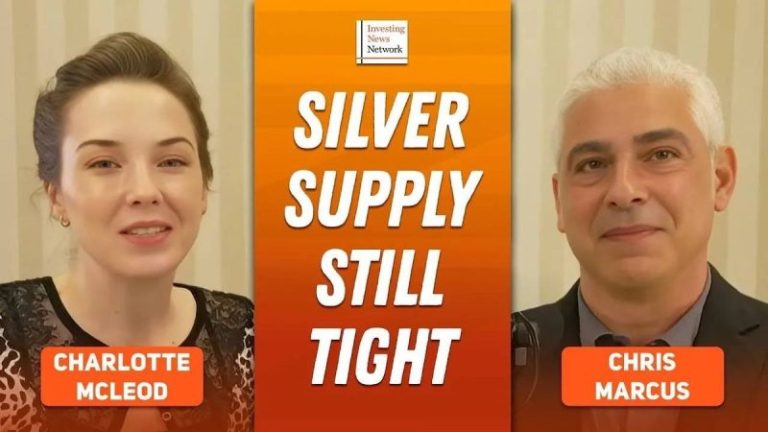
Chris Marcus, founder of Arcadia Economics, shares his thoughts on silver and gold.

While it’s impossible to know exactly how precious metals prices will move in the short term, he’s confident they will maintain an upward trajectory in the long term.

Securities Disclosure: I, Charlotte McLeod, hold no direct investment interest in any company mentioned in this article.

This post appeared first on investingnews.com

Chile’s state-owned copper giant Corporación Nacional Del Cobre de Chile (Codelco) and local lithium producer Sociedad Quimica y Minera (SQM) (NYSE:SQM) cleared the final major hurdle for a long-planned partnership after China’s antitrust regulator granted conditional approval to the venture.

The green light allows the joint venture to move forward, pending formal authorization from Chile’s comptroller, which is widely expected by year-end.

The joint venture will operate in Chile’s Salar de Atacama, one of the richest lithium brine sources globally, to provide critical components for electric vehicles and battery storage.

China’s State Administration for Market Regulation said in a statement that Codelco and SQM must continue supplying Chinese customers on “fair, reasonable and non-discriminatory” terms, honoring existing commitments.

The regulator also required the companies to avoid sharing sensitive information with competitors and to follow specified corporate governance practices.

“In the event of a major supply change, both sides should make reasonable and best efforts to continue the supply of lithium carbonate products to Chinese customers … they should not turn down, restrict or delay supply to Chinese clients,” the statement added. Details of the conditions were kept confidential.

The joint venture will operate in two phases. SQM will oversee management through 2030, after which Codelco will take control for the remaining 30 years.

Codelco will contribute a production quota of up to 300,000 metric tons to the venture, while current output remains below 200,000 metric tons. Production gains are expected to come from technological improvements and efficiency measures rather than expanded brine extraction.

Analysts say the partnership could provide greater supply certainty to battery makers, even as lithium prices remain more than 80 percent below their late-2022 peak amid a global surplus.

Chile’s Economy Minister Álvaro Garcia said in August that he expected the deal to close before the current administration leaves office in 2026.

Multiple international regulators, including those in the European Union, Brazil, Japan, South Korea and Saudi Arabia, have already signed off.

For China, securing supply from Chile remains critical. The antitrust conditions reflect Beijing’s interest in maintaining steady imports while preventing the venture from disrupting market prices.

Currently, China is the world’s largest battery metal consumer and a major buyer of Chilean lithium.

Securities Disclosure: I, Giann Liguid, hold no direct investment interest in any company mentioned in this article.

This post appeared first on investingnews.com

Uncertainty over the autonomy of the Federal Reserve under US President Trump echoes historical executive overreach, and is boosting gold’s safe-haven appeal.

In its annual Precious Metals Investment Focus report, published on October 25, Metals Focus highlighted a number of factors amplifying gold’s safe haven appeal and driving prices above US$4,000 per ounce.

One of the factors was fears over the independence of the Fed. As the agency tasked with setting the country’s monetary policy, the Fed is coming under increasing political pressure by Trump to lower interest rates.

“Concerns over the Fed’s independence and the challenges concerning US fiscal policy have eroded confidence in the US dollar, while geopolitical risks have also provided support,” stated the firm “These factors have boosted demand for gold for portfolio diversification, with gold’s strong price performance further enhancing its appeal to investors.”

The Fed’s independence has long been a cornerstone of US monetary policy. Its purview includes managing the country’s money supply, setting interest rates as well as buying and selling of US Treasury securities on the open market.

In order to protect both democracy and the integrity of the capital market system from political pressures, the Fed must be free to conduct these operations independently from the president or Congress.

Trump spars with Powell over interest rates

Trump appointed Powell as Fed chair during his first presidential term, but nevertheless took to Twitter in August 2019 to ask, “who is our bigger enemy, Jay Powell or Chairman Xi?”

The statement came after Powell made comments at an annual conference in Jackson Hole, Wyoming, suggesting Trump’s trade policies vis-à-vis China were weighing on economic growth.

More recently, in April of this year, the president blasted Powell for keeping interest rates unchanged: ‘The Fed really owes it to the American people to get interest rates down, that’s the only thing he’s good for.”

While the Fed has cut rates twice this year, it only amounts to 50 basis points, with rates now in a range of 3.75 to 4 percent. Powell has publicly balked at the idea of making deeper cuts — further stoking Trump’s ire.

Following the first rate cut in September, a Politico reporter asked Powell what may signal to Americans that the Fed is no longer acting nonpartisanly. “We don’t frame these questions at all or see them in terms of political outcomes. In another part of Washington, everything is seen through the lens of does it help or hurt this political party, this politicians,” Powell said. “That’s the framework. People find it hard to believe that’s not at all the way we think about things at the Fed. We take a longer perspective, we’re trying to serve the American people as best as we can.”

What history tells us about political pressure, the Fed and stagflation

“There’s no secret as to the president’s feelings towards Chairman Powell. Trump wants lower interest rates and a more accommodative Fed, and has been very vocal in saying that, to the extent that everyone is now saying Fed independence is at risk. And look, it might be, but it’s not like we haven’t been here before,” he said.

A prime example, said Rozencwajg, occurred alongside the Vietnam War in the mid-1960s. President Lyndon B. Johnson bullied Fed Chair William Martin (the longest tenured Fed chair and a man whose father helped draft the Federal Reserve Act) into keeping interest rates low to help the government fund not only the Vietnam War but also social welfare programs at home without the need to upset the voting public with tax hikes.

When Martin didn’t get on board with Lyndon’s “guns and butter” economic policies, the then-president reportedly threatened to replace Martin as Fed chair, cut the Fed’s budget and suffocate it with audits.

At first stalwart in his fight to preserve the value of the dollar, Martin eventually capitulated by delaying further hikes before eventually cutting rates and keeping them low. In doing so, he planted the seed for what’s now called the “Great Inflation.” Between 1965 and 1980, the annual average US inflation rate rose from 1.6 percent to a peak of 13.5 percent.

Lyndon’s successor Richard Nixon is another prime example of a US president bullying the Fed to lower rates in order to advance politically with disastrous consequences.

This time the Fed chair was Arthur Burns, another believer in the importance of Fed independence. However, Nixon felt Burns owed him a debt of loyalty for making him an economic advisor and later appointing him as Fed chair. Heading into the 1972 election season, Nixon wanted Burns to lower rates in order to juice the economy in the short-term.

“I respect Burns’s independence. But I hope that independently he will conclude that my views are the ones that should be followed,” said Nixon, who also used US Treasury Security John Connally to further put the squeeze on Burns.

Like Martin, he would eventually cave by slashing rates and expanding the money supply far above the Fed’s stated targets. This led to what’s known as the “Nixon Shock,” which brought about the collapse of the Bretton Woods system of fixed exchange rates and ended the convertibility of US dollars into gold.

This resulted in the devaluation of the US dollar and ultimately sank the economy deeper into the Great Inflation to the point that stagflation (inflation + no economic growth) took hold.

“(Arthur Burns) had a tough job and was under a huge amount of pressure, and was a very astute economist and Fed chairman,” said Rozencwajg. “But nevertheless, he probably wins the award for the worst Fed chairman in history, just because he was there and it all happened under his watch.”

Once decoupled from the dollar, the price of gold surged from the decades-long fixed price of US$35 per ounce under the Bretton Woods system to more than US$600 by the spring of 1980. The gold price would manage to retain that level for much of the year before starting a downward slide to half that value by mid-1982. The yellow metal would not achieve that high again until the spring of 2006 on renewed inflationary fears and a weaker US dollar.

To tame the inflation beast of the 1970s, Fed Chair Paul Volcker (serving from 1979 to 1987) had to raise interest rates to 20 percent. While his plan, known as the “Volker Shock,” did eventually curb inflation down to 3 percent by 1983, it also brought about two recessions and unemployment over 10 percent.

Trump to replace Powell with political loyalist

A modern day example of the executive branch threatening the independence of the Fed is now playing out for us to watch in real time. Today, the players are Trump and Powell. This time, the president is pushing the Fed chair to lower rates at a faster pace in order to support his tariff-based economic policies as the threat of stagflation looms.

Powell’s comments following the 0.25 percent rate cut on October 29 show he isn’t likely to play ball. “In the committee’s discussions at this meeting, there were strongly differing views about how to proceed in December,” he said. “A further reduction in the policy rate at the December meeting is not a foregone conclusion. Far from it.”

Rozencwajg believes Powell wants to be remembered in the same vein as Volcker, not as Burns. “But there’s a third option, which I don’t think anyone’s really considered, which is that he’ll go down as Martin, the guy who tried his best and ultimately was pressured out and whose views were then completely undone in the chairmanship after,” he added.

By the end of this year, Trump intends to announce a replacement for Powell, whose term expires in May 2026. Echoing LBJ and Nixon’s threats to the Fed, Trump exclaimed at a business leaders dinner in Tokyo in October, “We have an incompetent head of the Fed … but he’ll be out of there in a few months, and we’ll get somebody new’.

US Secretary of the Treasury Scott Bessent has announced a shortlist of candidates to take the stop spot, including Fed Governors Christopher Waller and Michelle Bowman, National Economic Council Director Kevin Hassett, former Fed Governor Kevin Warsh and BlackRock (NYSE:BLK) executive Rick Rieder.

“In the 1970s they didn’t believe that the money supply was responsible for higher prices in the economy, and the current Fed doesn’t believe that their own policies of printing money are responsible for increased prices,” he said. “There were some very dovish people appointed to the Fed in the 1970s who allowed politicians to strong arm them into dovish low interest rate policies … President Obama, President Biden and now President Trump are loading up the Federal Reserve with monetary doves who will cut interest rates and expand the money supply at the drop of a hat.”

Regardless, Powell’s days at the Fed are numbered. “President Trump’s going to replace him with another dove, who’s going to be even more aggressive with monetary policy,” said Thornton.

Both Thornton and Rozencwajg believe the bull market for gold has much further to go. With another dove at the helm of the Fed, lower interest rates are on the horizon. Lower interest rates make gold a much more attractive investment option than yield-bearing assets. The promise of higher inflation and continued economic uncertainty will also likely continue incentivizing both investors and central banks to pile into safe-haven gold.

Securities Disclosure: I, Melissa Pistilli, hold no direct investment interest in any company mentioned in this article.

This post appeared first on investingnews.com

Investor Insight

Australia’s ongoing energy supply challenges continue to highlight the need for innovative, low-carbon energy solutions. BPH Energy’s strategic investments in natural gas, hydrogen and emerging technologies position it to participate in this transition and capture value from a rapidly expanding clean energy market.

Overview

Australia is on the verge of an energy crisis. Inaction by the Australian government on gas and energy security has resulted in a gas market that is very nearly running on empty, with extreme price hikes and the possibility of significant losses in employment and capital. Against the backdrop of a global clean energy transition, natural gas represents a critical fuel for this transition. The switch to renewable energy cannot occur overnight, and natural gas offers an avenue for a gradual transition.

Natural gas represents a low-carbon, low-emission alternative to traditional energy sources, and could even be leveraged for sustainable energy.

BPH Energy (ASX:BPH) intends to do precisely that. An investment company headquartered in Western Australia, BPH has already invested in two highly promising businesses in the energy sector. The first, Advent Energy, is an unlisted oil and gas exploration and production company.

The second, Clean Hydrogen Technologies, has developed a CO2-free method of processing gas into hydrogen and conductive carbon.

BPH has a diversified portfolio with an investment in medical technology company Cortical Dynamics, providing yet another avenue for potential growth.

In the financial year ended 30 June 2025, BPH remained profitable, reporting a 49 percent increase in net profit after tax to AU$6.8 million. The improvement was driven by fair value gains from its strategic investments, particularly in Clean Hydrogen Technologies and Cortical Dynamics. The company’s net tangible asset backing also rose to 3.2 cents per share, reflecting stronger asset valuations and a solid balance sheet position

Company Highlights

  • BPH Energy holds a 35.8percent interest in Advent Energy, and together with Advent holds a combined 20.5 percent interest in Clean Hydrogen Technologies. It also holds 16.4 percent interest in Cortical Dynamics.
  • Clean Hydrogen Technology is in the process of upscaling into a much larger commercial operation.
  • Cortical Dynamics has the potential to expand its technology not just into the EU marketplace, but globally thanks to a licence and cooperation agreement with Philips.
  • Due to the predicted gas supply shortfall, Advent Energy’s PEP11 asset has generated significant interest among investors and displays the potential for a significant uplift in value.
  • PEP11 also has the potential to fill the gap represented by the impending gas shortage.
  • Cortical Dynamics’ BARM system has received FDA 510(k) clearance in the USA for version 1, and the company has now completed development of its next-generation AI-enhanced BARM 2.0, with clinical trials and regulatory submissions now being initiated.internationally.
  • Delivered strong FY2025 financial performance, with net profit up 49 percent to AU$6.8 million and higher net tangible assets per share.

Key Investments

Advent Energy

An unlisted oil and gas exploration company based in Western Australia, Advent maintains two major assets: Retention Lease 1, an onshore permit in the Bonaparte Basin, and the offshore Petroleum Export Permit 11 (PEP11) in the Sydney Basin, representing its most compelling asset.

Jointly owned by Advent subsidiary Asset Energy (85 percent) and Bounty Oil & Gas NL,(15 percent) the exploration area covers 4,649 square kilometers.

PEP11’s estimated prospective recoverable gas resources is 5.7 trillion cubic feet. With this resource alone, BPH and Advent could potentially fulfill the energy needs of most of Victoria and New South Wales for the next several decades.

While PEP-11 remains a key asset within BPH’s energy portfolio, the permit has been subject to an extended regulatory process and legal review regarding its renewal. Advent, through Asset Energy, has lodged a judicial review application in the Federal Court challenging the Joint Authority’s January 2025 decision to refuse renewal of the permit. The Court has suspended that decision pending a full hearing, now scheduled for February 2026. PEP-11 remains in force during this process.

Highlights:

Well-positioned Assets: PEP11 is situated less than 50 kilometers from the Sydney-Newcastle greater metropolitan area. In addition to this:

  • The Sydney Basin is a proven hydrocarbon basin with excellent potential for further discovery of natural gas.
  • It represents the closest potential carbon storage (geosequestration) area to NSW carbon sources which collectively represent 30 percent of Australia’s total CO2 output.
  • PEP11 may also have potential as a CCS (geosequestration) project in the Sydney Basin.

A Proven Petroleum Basin: Ongoing hydrocarbon seeps have been confirmed in PEP11 along with geophysical indications of escaping gas. The asset’s prospectivity is supported by the seismically-indicated gas features historically observed by Advent and a 2011 geochemical report.

Clean Hydrogen Technologies

Based in the United States, Clean Hydrogen Technologies (CHT) continues to advance its proprietary thermo-catalytic pyrolysis process, which converts natural gas into hydrogen and conductive carbon without producing CO₂ emissions.

Following successful pilot operations in India, CHT has entered the commercialization phase, designing production plants in both India and the United States. The company plans to begin limited hydrogen and carbon composite output within months of securing final project funding.

Highlights:

• Patents: Two comprehensive US patents filed, with additional filings planned as part of ongoing R&D.

• Expansion: Commercial facilities under design in India (Maharashtra) and the US (likely Louisiana).

• Ownership: BPH Energy now holds a 16.2 percent direct interest in CHT, and together with Advent Energy (4.3 percent) holds a combined 20.5 percent stake in the company.

Medical Technology Investment: Cortical Dynamics

Cortical Dynamics is an Australian neurotechnology developer and medical device manufacturer focused on developing the next generation brain function monitors by employing the latest theories and technologies in the field.

Headquartered in Perth, Western Australia, Cortical Dynamics is focused on commercializing its core product, the Brain Anaesthesia Response Monitor System (BARM), which was developed with the objective of better detecting the effect of anesthetic and analgesic agents on human brain activity. BARM aids anesthetists in keeping patients optimally anesthetized and pain-free during operations using general anesthesia.

BARM was specifically developed to solve several problems associated with anesthetic and analgesic delivery in the operating theater and negative post-operative consequences. Its proprietary algorithms are based on innovative developments in understanding how the brain’s rhythmic electrical activity or EEG is produced.

Highlights:

  • Physiology-based algorithm: Unlike other monitors, BARM’s algorithms are based on the individual patient’s physiological processes that produce electrical activity in the brain, providing more interpretable and personalized monitoring of their response to anesthetic agents.
  • Global patents: Cortical has an extensive and growing global patent portfolio, and has secured FDA 510(k) clearance in the USA for its flagship technology, the Brain Anaesthesia Response Monitor or BARM system version 1.
  • Regulatory Approvals: BARM version 1 is approved by regulatory bodies in Australia, the European Union and Korea.
  • Recent Progress: Cortical has completed technical development of its next-generation AI-enhanced BARM 2.0 system, which unifies hypnotic depth and pain response monitoring. Clinical trials are now plannedin the US and the Netherlands, to be followed by global regulatory submissions.
  • World-class Team: A team of experienced researchers, biomedical engineers and corporate financiers make up Cortical Dynamics, with a global network of key opinion leaders and clinicians advising the company on the development of the BARM technology based on real challenges they face in the operating room.
  • Philips Partnership: Cortical Dynamics has a non-exclusive license and cooperation partnership with global medical industry player Philips Electronics North America to interface the BARM system with Philips’ operating theater monitors.

Management Team

David Breeze — Managing Director and Executive Chairman

David Breeze is a corporate finance specialist with extensive experience in the stock broking industry and capital markets. He has been a corporate consultant to Daiwa Securities, manager of corporate services for Eyres Reed McIntosh, and state manager and associate director for the stock broking firm BNZ Norths. Breeze is a fellow of the Institute of Company Directors of Australia. He has published in the Journal of Securities Institute of Australia and has also acted as independent expert under the Corporations Act. He has worked on the structuring, capital raising and public listing of more than 70 companies involving more than $300 million, covering a range of areas including oil and gas, gold, food, manufacturing and technology. Breeze is chairman of Grandbridge Limited, a public investment and advisory company and MEC Resources, a public company investing in exploration companies that target potentially large energy and mineral resources. He is also chairman of Advent Energy.

Tony Huston

Tony Huston has been involved for over 35 years in engineering and hydrocarbon industries for both on and offshore exploration/development. His early career experience commenced with Fitzroy Engineering, primarily working on the development of onshore oil fields. In 1996, Huston formed his own E&P company on re-entry of onshore wells primarily targeting shallow pay that had been passed or ignored from previous operations. This was successful and the two plays opened up 15 years ago and are still in operation. His focus over the last 10 years has been to utilize new technology for enhanced resource recovery, which has been demonstrated in various fields, including US, Mexico, Oman, Italy and Turkmenistan.

Charles Maling

Charles Maling was formerly the communications officer for the Office of the Western Australian State Government Environmental Protection Authority, advising the chairman of the EPA on media issues. Maling has worked with the Western Australian State Government Department of the Environment for 14 years and a further eight years for the EPA. His administrative roles included environmental research (including a major study on Perth Metropolitan coastal waters and Western Australian estuaries) environmental regulation and enforcement, and media management.

Dr Sunil Nagaraj – Chief Scientist (Cortical Dynamics)

Dr. Sunil Belur Nagaraj obtained his master’s degree from the University of Victoria in Canada in 2010; and doctoral degree from University College Cork, Ireland in 2015. His doctoral research centered around the development of AI-based real-time brain monitoring, utilising EEG recordings to monitor brain activity. After a role as a postdoctoral fellow at the Harvard Medical School/Massachusetts General Hospital in the USA. Nagaraj assumed the position of an assistant professor of medicine at the University Medical Centre Groningen in The Netherlands for two years. Concurrently, he dedicated three years to working as a scientist at Royal Philips, where he specialised in sleep disorders at the Innovation Forum, highlighting its potential to provide future insights into heart-brain connectivity.

This post appeared first on investingnews.com

Investor Insight

ReeXploration offers investors early exposure to the global build-out of secure, Western-aligned critical minerals supply chains. Leveraging proven metallurgy and discovery upside at its high-grade Eureka project in Namibia, the company delivers a rare combination of technical credibility, jurisdictional stability and responsible growth potential.

Overview

ReeXploration (TSXV:REE,FSE:KSi) is a discovery-driven critical minerals company advancing the Eureka rare earths project in central Namibia. The company sits at the intersection of two powerful global forces: the accelerating demand for critical minerals and the urgent drive to diversify supply chains away from China’s dominance in processing and production.

As electrification, renewable energy and defense technologies expand worldwide, governments and industry are investing heavily to secure new, transparent sources of essential materials, such as neodymium and praseodymium. ReeXploration provides investors early exposure to this generational realignment by advancing one of Africa’s most promising rare earths discoveries within a stable, mining-friendly jurisdiction.

The company’s metallurgy-first model flips the conventional exploration sequence by proving processability before scale. Bench-scale testing confirmed that Eureka’s monazite-hosted mineralization yields a clean, Western-standard concentrate, which derisks processing and establishes a strong foundation for growth.

ReeXploration’s Namibian-based technical team, supported by globally recognized critical-minerals experts, ensures efficient on-the-ground execution, strong stakeholder relationships, and alignment with Namibia’s national development priorities. Its ESG principles, centered on low-radioactivity mineralogy, transparent community engagement and environmental stewardship, position the company as a partner of choice for governments and end-users seeking secure, sustainable supply chains.

Company Highlights

  • Strategic Exposure: Positioned at the heart of the global critical minerals transformation as governments race to diversify supply chains away from China.
  • Proven Technical Base: Metallurgy-first strategy has already demonstrated clean, Western-standard concentrate production from monazite-hosted mineralization, reducing risk and accelerating timelines.
  • High-grade Discovery: Eureka hosts a maiden resource of ~310,000 tonnes @ 4.8 percent total rare earth oxides (TREO), with multiple undrilled anomalies and clear expansion potential.
  • Jurisdictional Advantage: Operating in Namibia, one of Africa’s most stable, mining-friendly jurisdictions with world-class infrastructure and transparent regulations.
  • Disciplined Value Model: Advances assets through discovery and early development, where re-rating potential is highest, while preserving capital efficiency and ESG integrity.

Key Project: Eureka Rare Earths Project

Located near Usakos in central Namibia, the Eureka Project is the cornerstone of ReeXploration’s growth strategy and a foundation for Western-aligned rare earths supply.

Namibia is widely recognized as one of Africa’s most stable and mining-friendly jurisdictions, with transparent regulations, strong rule of law and a skilled workforce rooted in decades of uranium and diamond production. Its established infrastructure, including paved roads, rail, power, water and port access, provides a low-risk operating environment rarely matched elsewhere in the critical minerals sector.

Eureka’s geology, technical foundation, and location combine to make it a standout rare earths asset in Africa, offering early proof of processability, a clean mineralogy aligned with Western standards, and room for significant resource growth.

Project Highlights

  • Resource Base: NI 43-101 resource of 310 kt @ 4.8 percent TREO (0.7 percent neodymium + praseodymium), anchored by magnet metals critical to EV, renewable energy and defense applications.
  • Geology: Monazite-hosted carbonatite system with low impurities and low radioactivity across 14 identified dykes, open along strike and depth.
  • Metallurgy: SGS testing confirmed production of a clean monazite concentrate grading ~60 percent TREO at ~65 percent recovery, with neodymium and praseodymium representing ~50 percent of basket value.
  • Exploration Upside: 13 km x 6 km mineralized dome with multiple geochemical and radiometric anomalies; trenching shows REE mineralization in 18 of 19 trenches. Follow-up drilling is underway to expand known zones.
  • Infrastructure: Situated 2 km from the Trans-Kalahari Highway with access to rail, power, water and the deep-water port at Walvis Bay, minimizing capital requirements and execution risk.
  • ESG Integration: Low-radioactivity mineralogy simplifies permitting; environmental clearance certificates are in place; and ongoing engagement ensures alignment with community and government priorities.

Management Team

Chris Drysdale – Interim CEO

Chris Drysdale is an experienced mining executive and the current CEO of Antler Gold. He has international experience in exploration management and business development across Africa and Canada.

Patrick McGrath – Chief Financial Officer

A CPA with extensive financial experience in mining and energy exploration, Patrick McGrath brings strong governance and capital markets expertise, ensuring disciplined execution and shareholder value creation.

Prof. Frances Wall – Director

Professor of Applied Mineralogy, Camborne School of Mines at the University of Exeter, Frances Wall has more than 30 years of research linking geology, mineralogy and responsible sourcing. She is the chair of the British Geological Survey Science Advisory Committee and member of the UK Critical Minerals Expert Committee.

Carl Sheppard – Director

Carl Sheppard is the president and managing partner of Strategic Concepts. He holds a Masters in Development Economics from Dalhousie University, and contributes strategic insight into sustainable growth and stakeholder engagement.

Tolene Kruger – Senior Geologist & Qualified Person

Tolene Kruger is a Namibian geologist with an MSc in Geology from the University of Stellenbosch. Her research focus is on structural controls on mineralization within Namibia’s uranium corridor.

This post appeared first on investingnews.com

ReeXploration (TSXV:REE,FSE:KSi) is a discovery-focused critical minerals company advancing the Eureka rare earths project in Namibia. Strategically positioned, it taps into surging demand for critical minerals and the global push to diversify supply chains beyond China. The company offers early exposure to a generational supply chain shift, advancing a premier African rare earths discovery in a stable, mining-friendly jurisdiction.

Its metallurgy-first strategy derisks development by proving processability upfront, with tests confirming clean, Western-standard monazite concentrate — laying a strong foundation for scale.

Key Project: Eureka Rare Earths Project

The Eureka Project is the cornerstone of ReeXploration’s growth strategy and a foundation for Western-aligned rare earths supply. Eureka’s geology, technical foundation, and location combine to make it a standout rare earths asset in Africa, offering early proof of processability, a clean mineralogy aligned with Western standards, and room for significant resource growth.

Company Highlights

  • Strategic Exposure: Positioned at the heart of the global critical minerals transformation as governments race to diversify supply chains away from China.
  • Proven Technical Base: Metallurgy-first strategy has already demonstrated clean, Western-standard concentrate production from monazite-hosted mineralization, reducing risk and accelerating timelines.
  • High-grade Discovery: Eureka hosts a maiden resource of ~310,000 tonnes @ 4.8 percent total rare earth oxides (TREO), with multiple undrilled anomalies and clear expansion potential.
  • Jurisdictional Advantage: Operating in Namibia, one of Africa’s most stable, mining-friendly jurisdictions with world-class infrastructure and transparent regulations.
  • Disciplined Value Model: Advances assets through discovery and early development, where re-rating potential is highest, while preserving capital efficiency and ESG integrity.

This ReeXploration profile is part of a paid investor education campaign.*

Click here to connect with ReeXploration (TSXV:REE) to receive an Investor Presentation

This post appeared first on investingnews.com

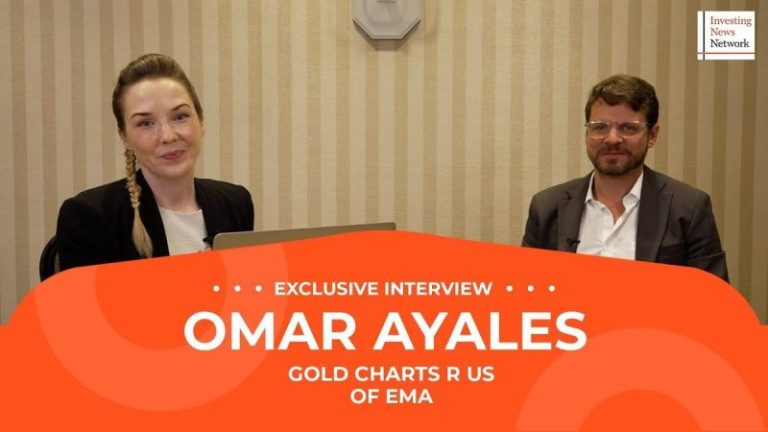
Is gold’s price pullback a buying opportunity, or the end of its run?

Omar Ayales of Gold Charts R Us weighs in, saying either scenario is possible. He’s watching factors like the US dollar’s performance in order to determine what comes next.

Securities Disclosure: I, Charlotte McLeod, hold no direct investment interest in any company mentioned in this article.

This post appeared first on investingnews.com